Quick Answer: Is an Electric Farm Tractor Right for Your Operation?
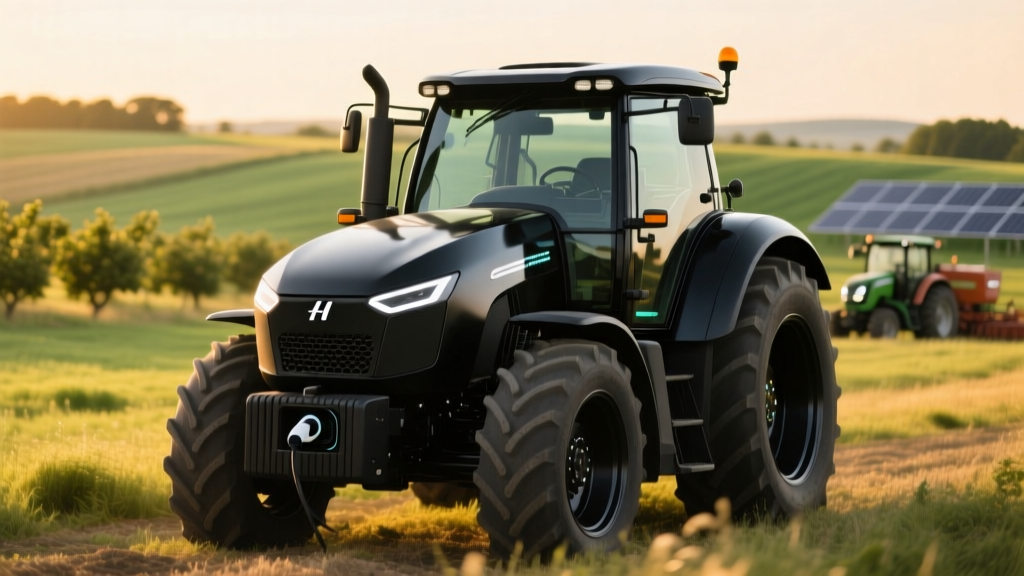
Electric farm tractors in 2026 are viable for light-to-medium duty tasks on farms with reliable 240V or three-phase power access — think loader work, mowing, spraying, and short-row tillage under ~40 continuous horsepower. Models like the Monarch eUtility and Solectrac eTrac deliver 40–70 kWh battery packs, 4–8 hours of mixed-duty runtime, and eliminate diesel fuel costs entirely. However, for heavy continuous-draw PTO work (deep plowing, baling, large-acre harvesting), diesel still dominates. Expect to pay $45,000–$95,000 upfront (vs. $25,000–$50,000 for a comparable diesel compact), but recoup through $3,000–$6,000/year in fuel savings and near-zero drivetrain maintenance.
The Current Electric Farm Tractor Landscape in 2026
The electric farm tractor market has matured significantly since early prototypes. Today's buyers can choose from several production-ready models spanning sub-compact utility tractors through mid-range row-crop machines. Unlike passenger EVs where the EPA publishes standardized range figures, tractor runtime depends heavily on implement load, terrain, and duty cycle — making honest specs critical for buyers.
Here's how the leading models stack up on paper and in the field:
| Model | Battery (kWh) | Chemistry | Motor HP (Peak) | PTO HP | Runtime (Mixed Duty) | Charge Time (240V L2) | Base MSRP |
|---|---|---|---|---|---|---|---|
| Monarch eUtility (2026) | 60 kWh usable | LFP | 70 HP | ~40 HP | 5–8 hours | ~6 hours (10 kW) | $68,000 |
| Solectrac eTrac 40 | 48 kWh usable | LFP | 40 HP | ~25 HP | 4–6 hours | ~5 hours (10 kW) | $52,000 |
| Fendt e100 Vario (EU/import) | 100 kWh usable | NMC | 75 HP | ~55 HP | 4–6 hours (heavy) | ~5 hours (22 kW) | ~$92,000 |
| Kubota LXe-261 (Compact) | 28 kWh usable | LFP | 26 HP | ~17 HP | 3–5 hours | ~3.5 hours (8 kW) | $45,500 |
Key terminology reminder: kW (kilowatts) measures power — how fast you charge or how much instantaneous force the motor delivers. kWh (kilowatt-hours) measures energy capacity — the size of the "fuel tank." A 60 kWh battery charged at 10 kW takes roughly 6 hours from empty.
Electric vs Diesel Tractor: The Numbers That Matter
The decision between an electric farm tractor and a diesel equivalent comes down to duty cycle, power access, and how you value operating cost versus upfront investment. Here's a direct comparison using a 40 HP class tractor as baseline:
| Metric | Electric (40 HP Class) | Diesel (40 HP Class) |
|---|---|---|
| Purchase Price | $52,000–$68,000 | $28,000–$42,000 |
| Fuel/Energy Cost per Hour | $1.50–$3.00 (at $0.12–$0.18/kWh) | $6.00–$9.00 (at $4.00/gal diesel, 1–1.5 gal/hr) |
| Annual Fuel Cost (500 hrs/yr) | $750–$1,500 | $3,000–$4,500 |
| Annual Maintenance | $200–$500 (no oil, filters, DEF) | $800–$1,500 (oil, filters, DEF, coolant) |
| Drivetrain Service Intervals | Battery check + gear oil every 2,000 hrs | Full service every 250–500 hrs |
| Noise Level (operator) | ~65 dB | ~85–95 dB |
| Exhaust Emissions at Point of Use | Zero | NOx, particulates, CO₂ |
| Instant Torque Delivery | 100% at 0 RPM | Peak at ~1,500–2,000 RPM |
| Cold-Weather Starting | Immediate (battery preconditioning helps) | Block heater often required below 20°F |
The fuel savings alone can recover $2,000–$4,000 per year, meaning a 5-year payback on the price premium is realistic for operations running 400–600 hours annually. For lower-use operations (under 200 hours/year), the payback stretches to 8–12 years — making diesel still the pragmatic choice.
Real-World Runtime: What the Battery Specs Actually Mean
Manufacturer runtime claims assume mixed-duty cycles: alternating between light travel, moderate loader work, and idle periods. In practice, your actual runtime varies dramatically based on implement demand:
- Light duty (mowing flat pasture, spraying, light hauling): Expect 80–100% of advertised runtime. A 60 kWh pack might deliver 7–8 hours.
- Moderate duty (loader work, discing, tilling small plots): Expect 60–75% of claimed runtime. That same pack delivers 4–6 hours.
- Heavy continuous PTO (baling, deep subsoiling, running a large rotary cutter): Expect 40–55% of claimed runtime. You may deplete in 2.5–4 hours.
Real-World Runtime Reality Check: A Monarch eUtility rated at 5–8 hours mixed duty will realistically deliver about 3.5–4.5 hours under continuous heavy PTO load. If your operation requires 8+ hours of unbroken heavy drawbar work, you'll need either a battery swap system (Monarch offers this), a second battery pack, or a diesel for that specific task. Plan your work blocks around charging windows.
LFP (lithium iron phosphate) chemistry dominates this segment for good reason: it offers 3,000+ charge cycles before 80% capacity retention, handles daily full-depth discharges better than NMC, and is inherently more thermally stable — critical for equipment parked in metal barns or near hay storage. The trade-off is slightly lower energy density, meaning heavier battery packs for the same kWh.
Charging Infrastructure: What Your Farm Actually Needs
This is where many electric farm tractor buyers hit their first real obstacle. Unlike passenger EVs that can rely on public charging networks, farm equipment charges almost exclusively on-site. Your electrical infrastructure determines whether an electric tractor is practical.
| Charging Level | Power (kW) | Voltage/Amps Required | Miles/Hours Added per Hour of Charging | Typical Install Cost |
|---|---|---|---|---|
| Level 1 (Standard Outlet) | 1.4–1.9 kW | 120V / 15–20A | ~0.5–1 hr runtime per hr charging | $0 (existing outlet) |
| Level 2 (Farm-Grade) | 7.2–19.2 kW | 240V / 30–80A single-phase | ~2–5 hr runtime per hr charging | $1,500–$5,000 |
| Three-Phase Fast | 22–50 kW | 480V three-phase | ~6–12 hr runtime per hr charging | $8,000–$25,000+ |
Most farms will need a Level 2 installation at minimum. Here's what that typically costs:
| Component | Low-End Estimate | High-End Estimate | Notes |
|---|---|---|---|
| EVSE / Charger Unit | $600 | $2,500 | Farm-rated, weatherproof enclosures add cost |
| Electrical Panel Upgrade | $0 (if capacity exists) | $4,000 | Many older farm panels lack spare 60A+ capacity |
| Wiring & Conduit Run | $500 | $3,000 | Distance from panel to barn/shop is the key variable |
| Licensed Electrician Labor | $800 | $3,500 | Rural rates vary; some co-ops offer EV infrastructure programs |
| Permit & Inspection | $100 | $500 | Varies by county/jurisdiction |
| Total Typical Range | $2,000–$8,000 | Three-phase installations can push $15,000–$25,000 | |
Critical consideration: If your farm lacks three-phase power (most small-to-mid operations do), you're limited to single-phase Level 2 charging at 10–19 kW. That means overnight charging is mandatory for daily-use tractors. Plan your operation so the tractor charges during the 10–14 hour off-work window.
Some rural electric cooperatives now offer agricultural EV rate schedules with off-peak charging discounts as low as $0.06–$0.08/kWh. Contact your co-op before purchasing — this can cut your energy cost in half versus standard residential rates.
Total Cost of Ownership: The 5-Year Picture
| Cost Category | Electric Tractor (40 HP) | Diesel Tractor (40 HP) | 5-Year Difference |
|---|---|---|---|
| Purchase Price | $58,000 | $35,000 | +$23,000 (electric) |
| Fuel/Energy (500 hrs/yr × 5 yrs) | $5,500 | $18,750 | −$13,250 (electric saves) |
| Maintenance (5 yrs) | $1,800 | $5,500 | −$3,700 (electric saves) |
| Charging Infrastructure | $3,500 (one-time) | $0 | +$3,500 (electric) |
| Insurance (estimated) | $4,200 | $3,500 | +$700 (electric) |
| Residual Value (estimated) | −$22,000 | −$18,000 | −$4,000 (diesel retains more) |
| Net 5-Year Cost | $51,000 | $44,750 | +$6,250 electric premium |
At 500 hours/year, the electric tractor still carries a modest cost premium at the 5-year mark. But push to 700+ hours annually and the math flips — the fuel savings alone close the gap by year 4. Operations running 1,000+ hours/year (market gardens, diversified farms, landscaping businesses) typically break even by year 3.
Federal incentives can shift this equation. While the IRS §30D Clean Vehicle Credit applies to on-road vehicles, electric farm tractors may qualify under §45W Commercial Clean Vehicle Credit (up to $7,500 for vehicles under 14,000 lbs GVWR, $40,000 for heavier) or through USDA REAP grants and state-level agricultural electrification programs. Always consult a tax professional for your specific operation — eligibility depends on business structure, equipment classification, and current-year sourcing rules.
Common Misconceptions About Electric Farm Tractors
| Myth | Fact |
|---|---|
| "Electric tractors don't have enough torque for real farm work" | Electric motors deliver 100% torque at zero RPM. A 70 HP electric motor can produce instant torque figures that rival 90+ HP diesel engines at stall. The limitation is sustained energy draw, not peak force. |
| "Batteries won't last in farm conditions" | LFP cells are rated for 3,000+ full cycles before hitting 80% capacity. At one full cycle per day, that's 8+ years. Most manufacturers warranty the battery for 5–8 years or 5,000–10,000 hours. Sealed, IP67-rated packs handle dust, rain, and vibration. |
| "You'll be stranded in the field with a dead battery" | Modern tractor BMS (battery management systems) provide precise state-of-charge readouts and low-battery warnings at 15% and 5%. Smart operators plan work blocks around remaining charge, just as diesel operators plan around fuel gauge readings. |
| "Cold weather kills the battery" | LFP batteries lose 15–25% usable capacity below 20°F. Preconditioning systems (available on Monarch and Fendt) warm the pack before operation. Cold affects runtime, not the ability to work — just budget 20% less runtime in deep winter. |
| "Electric tractors are unproven and unreliable" | Production models have been in field use since 2021–2022. Fleets at vineyards, organic farms, and municipal operations have logged thousands of hours. The electric drivetrain has fewer moving parts than diesel — no injectors, no turbo, no DPF regeneration events. |
Decision Framework: Should You Go Electric?
Choose an electric farm tractor if:
- Your typical workday is under 6 hours of mixed-duty operation
- You have 240V single-phase power (or three-phase) accessible at your barn or shop
- You run 400+ hours per year (making fuel savings meaningful)
- You operate in noise-sensitive areas (vineyards near tasting rooms, suburban-adjacent farms, livestock operations where diesel noise stresses animals)
- You want zero on-site exhaust emissions (organic certification optics, greenhouse use, confined animal facilities)
- Your tasks are loader work, mowing, spraying, light tillage, or material handling
Stick with diesel (or wait) if:
- You need 8+ hours of continuous heavy PTO work daily (large-acre baling, deep ripping, combining)
- Your farm lacks adequate electrical service and upgrading would cost $15,000+
- You operate across multiple remote fields with no charging access between sites
- You need over 80 continuous drawbar HP for primary tillage on heavy soils
- Your annual usage is under 200 hours (payback period exceeds practical ownership horizon)
- You rely on a single tractor for every task and cannot afford any downtime during charging windows
What First-Time Electric Tractor Buyers Need to Know
Start with a task audit. Before evaluating models, log your actual tractor use for two weeks: hours per day, implements used, and whether work is continuous or intermittent. This data — not marketing claims — determines whether electric is viable.
Get an electrical assessment before you buy. Have a licensed electrician evaluate your farm's panel capacity, available amperage, and the distance from panel to your desired charging location. This $200–$400 inspection prevents $10,000 surprises after delivery.
Battery warranty is your most important spec. Look for a minimum 5-year or 5,000-hour battery warranty with a guaranteed capacity retention threshold (80% is industry standard). Ask the manufacturer what a replacement pack costs — current estimates run $8,000–$18,000 depending on kWh capacity.
Consider a hybrid fleet approach. Many successful early adopters run one electric tractor for daily light-to-medium tasks and keep a diesel for peak-season heavy work. This captures most of the fuel savings while eliminating range/runtime anxiety during critical windows like haying or harvest.
Resale value is still uncertain. The used electric tractor market is young. Early depreciation data suggests electric tractors hold value comparably to diesel in the first 3 years, but long-term residual values (7–10 years) remain unproven. Factor conservative resale estimates into your financial model.
Frequently Asked Questions
Can I use solar panels to charge an electric farm tractor?
Yes, and this is one of the strongest use cases. A 10 kW solar array (roughly $18,000–$25,000 installed before incentives) can generate enough daily energy to fully recharge a 48–60 kWh tractor battery during summer months. With the 30% federal solar tax credit, net cost drops to $12,600–$17,500. Many farms already have barn roof space ideal for panels. Pair solar with a battery buffer or time your charging to daylight hours for true sun-to-tractor operation.
How does cold weather affect electric tractor performance?
LFP batteries lose 15–25% of usable capacity in temperatures below 20°F, and charging speeds slow significantly when the pack is cold. Expect winter runtime to drop from 6 hours to roughly 4.5 hours on a 60 kWh pack. Tractors with active thermal management (battery preconditioning) mitigate this — always spec this feature if you operate in northern climates. Unlike diesel, electric motors don't need block heaters or glow plugs to start, but the battery does need to be above ~32°F for optimal performance.
Are there federal tax credits for electric farm tractors?
The IRS §45W Commercial Clean Vehicle Credit may apply to electric tractors classified as off-road or commercial equipment, offering up to $7,500 for qualifying purchases. Additionally, USDA REAP grants can cover up to 50% of eligible energy-efficient agricultural equipment. State-level programs vary widely — contact your state department of agriculture or extension office for current offerings. Always verify eligibility with a tax professional before relying on incentive projections.
What happens when the battery reaches end of life?
LFP batteries in farm tractors are projected to last 8–12 years under normal use before dropping below 80% capacity. At that point, the pack still holds 70–80% of original energy — usable for lighter tasks or repurposed as stationary storage. Full replacement currently costs $8,000–$18,000 depending on capacity, and prices are declining ~5–8% annually. Most manufacturers offer certified replacement programs, and LFP cells are increasingly recyclable through established lithium recovery streams.
Can electric tractors run standard implements?
Yes. Electric farm tractors use standard Category 1 or Category 2 three-point hitches and standard 540/1000 RPM PTO shafts, identical to diesel equivalents. Your existing box blade, rotary cutter, post-hole digger, and sprayer will mount and operate without modification. The key constraint is PTO horsepower — ensure the electric model's PTO HP rating (not peak motor HP) matches your implement requirements.