Quick Answer
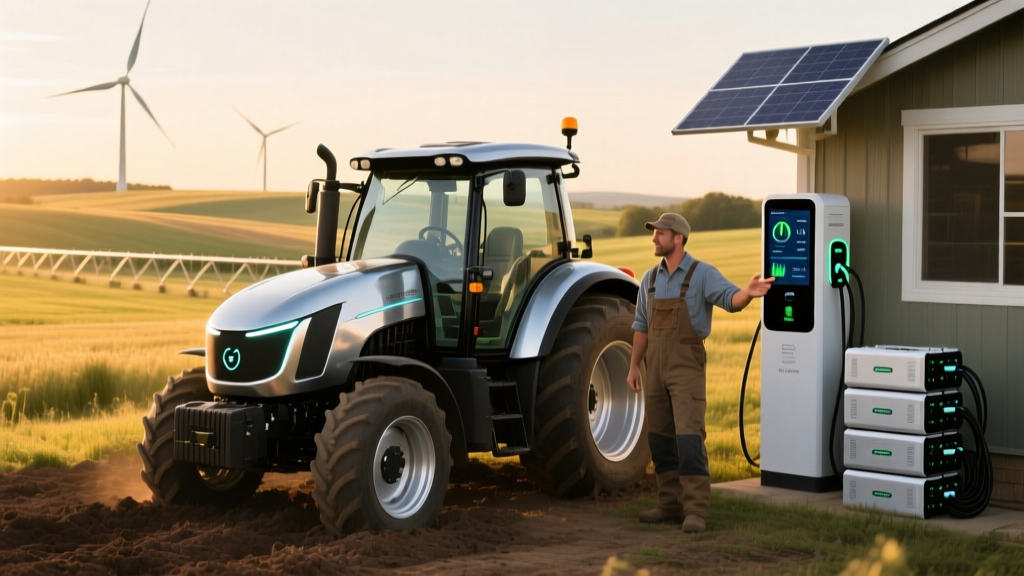
Electric farm equipment in 2026 remains a niche but growing category. Fully electric tractors and utility vehicles are available primarily in compact and sub-compact classes (25–75 HP equivalent) from brands like Solectrac, Monarch Tractor, and Fendt (limited availability). Expect base prices from roughly $35,000 to $90,000+, battery capacities of 30–150 kWh, and operational ranges of 4–10 hours of light-to-moderate fieldwork per charge. Heavy-duty row-crop tractors (150+ HP) remain diesel-dominated, with electric options still in pilot or announced stages. For most farms, electric equipment makes the strongest economic case for light-duty, repetitive tasks near a reliable Level 2 or Level 3 charging source — think orchards, vineyards, greenhouses, and small-acreage diversified operations.
What Electric Farm Equipment Can You Actually Buy in 2026?
The market for electrified agricultural equipment has matured beyond prototypes, but it is far from comprehensive. Here is what is currently orderable or in limited production for the 2026 model year:
Compact & Sub-Compact Electric Tractors
Solectrac eUtilimaster (e25/e40): One of the longest-standing players in the electric tractor space. The eUtilimaster lineup offers 25 and 40 HP equivalents with battery packs ranging from approximately 30 kWh to 60 kWh (LFP chemistry for longevity). Runtime varies from 4–8 hours depending on implement load. MSRP starts around $35,000–$55,000 depending on battery configuration. Charging is via standard Level 2 (240V, up to ~10 kW), taking roughly 5–7 hours from 10–100%.
Monarch Tractor (MK5): Positioned as a smart, optionally driverless-capable electric tractor for vineyards, orchards, and specialty crops. The MK5 features a ~70 HP electric drivetrain with a modular battery system (up to ~150 kWh total with extended packs). Monarch claims up to 10+ hours of runtime in light-duty orchard mowing or spraying, though heavy PTO work cuts that significantly — expect 4–5 hours under continuous heavy load. The MK5 is priced from approximately $68,000 and includes integrated cameras and AI-driven crop monitoring. It supports Level 2 charging and has DC fast-charge capability on higher-spec models (peak ~50 kW DC, 10–80% in roughly 90 minutes for the base pack).
Fendt e100 Vario (announced/pilot): AGCO's Fendt brand has showcased a compact electric tractor concept with a ~100 kWh battery and ~75 HP equivalent. As of early 2026, this remains in limited pilot programs in Europe and is not broadly available for purchase in the U.S. market. Specs are preliminary.
Electric Utility Vehicles (UTVs) and Task-Specific Equipment
Beyond tractors, electric UTVs from Polaris (Ranger XP Kinetic, ~$30,000 MSRP, ~110 HP, 149 kWh-equivalent system with range-extender options) and Club Car offer viable electric options for farm utility tasks — hauling feed, moving between buildings, light towing. These are not tractors but fill an important niche on diversified farms.
What's NOT Yet Available
Full-size row-crop tractors (150–400+ HP) from John Deere, Case IH, or New Holland in fully electric configurations are not commercially available in 2026. John Deere has announced battery-electric and hybrid-electric concepts, and the company's autonomous and electric roadmap points toward future production, but current heavy-duty farm power remains firmly diesel. If your operation requires a 200+ HP tractor for primary tillage or large-acre planting, electric is not yet an option.
Electric vs. Diesel Farm Equipment: The Real Cost Comparison
The upfront cost of electric farm equipment is substantially higher than comparable diesel machines. The question is whether operational savings close the gap over a 5–10 year ownership period.
| Cost Category | Electric (e.g., Solectrac e40) | Diesel (e.g., Kubota L4701) |
|---|---|---|
| Purchase Price (MSRP) | ~$48,000 | ~$28,000 |
| Fuel/Energy (5 yrs, 1,000 hrs/yr) | ~$3,750 ($0.15/kWh avg, 5 kWh/hr avg) | ~$18,750 (~$4.50/gal diesel, ~0.83 gal/hr) |
| Maintenance (oil, filters, fluids) | ~$1,200 (minimal — no engine oil, filters) | ~$5,500 (oil changes, fuel filters, coolant, DEF) |
| Estimated Resale (Year 5) | ~$18,000 (emerging market, uncertain) | ~$16,000 (established used market) |
| Net 5-Year Cost | ~$34,950 | ~$36,250 |
Assumptions: 1,000 operating hours/year, $0.15/kWh blended electricity rate (varies significantly by region and whether you have solar), $4.50/gal diesel. Actual costs vary widely by operation intensity, local energy rates, and climate. Electric resale values are estimates given the thin used market.
The numbers show that the electric tractor's higher purchase price can be largely offset within five years for operations running 1,000+ hours annually, primarily through fuel and maintenance savings. However, the breakeven timeline is highly sensitive to your local electricity rate, annual hours, and whether you can charge from on-site solar (which dramatically reduces per-kWh cost).
Where Diesel Still Wins on Economics
For operations requiring high-HP continuous PTO work (baling, heavy mowing, primary tillage), diesel remains more cost-effective because:
- Diesel energy density is roughly 36 kWh per gallon — a 20-gallon tank holds ~720 kWh of energy. Matching that with batteries would require a battery pack weighing over 5,000 lbs at current cell energy densities.
- Refueling takes 5 minutes vs. hours of charging.
- The used equipment market for diesel tractors is deep and predictable.
Charging Electric Farm Equipment: What You Actually Need
Charging infrastructure is the single biggest practical consideration for electric farm equipment. Unlike passenger EVs, which can rely on public charging networks, farm equipment charges on-site — and that means your electrical service must support it.
Charging Levels for Farm Equipment
| Level | Power (kW) | Typical Charge Time (60 kWh pack, 10–100%) | Infrastructure Needed |
|---|---|---|---|
| Level 1 (120V) | ~1.4 kW | 40+ hours (impractical) | Standard outlet |
| Level 2 (240V) | 7–19 kW | 4–8 hours | Dedicated 240V circuit, 30–80A breaker |
| DC Fast Charge | 25–50+ kW (model-dependent) | 1–2 hours (10–80%) | Commercial-grade service, significant install cost |
Most electric tractors currently on the market charge via Level 2, which means overnight charging is the standard operational pattern. You run the tractor during the day and plug it in at the barn overnight. This works well for operations with predictable daily schedules but is a problem if you need to run equipment in continuous shifts during harvest.
Electrical Service Considerations
Adding a Level 2 charger for farm equipment typically requires:
- Circuit: A dedicated 240V circuit at 40–80 amps, depending on the charger's kW rating.
- Panel capacity: Many older farm buildings have 100A or 200A service panels that may already be near capacity. A panel upgrade to 400A can cost $2,000–$5,000+ depending on the utility and distance from the transformer.
- Installation cost: Expect $1,500–$4,000 for a Level 2 installation in a farm building with adequate existing panel capacity. If trenching new conduit to a remote barn, costs can reach $5,000–$10,000+.
- Solar integration: Farms with existing solar arrays can offset charging costs substantially. A 10 kW solar system producing ~40 kWh/day in summer can nearly cover daily charging for a compact electric tractor.
Tax Credits, Incentives, and Grants for Electric Farm Equipment
The federal §30D Clean Vehicle Credit applies to on-road vehicles and generally does not cover off-road agricultural equipment like tractors. However, other incentive pathways exist:
- USDA REAP Grants: The Rural Energy for America Program offers grants covering up to 50% of eligible project costs for renewable energy systems and energy efficiency improvements. Electric agricultural equipment paired with solar charging may qualify, though eligibility is project-specific. Check the USDA REAP page for current terms.
- NRCS EQIP: The Environmental Quality Incentives Program may provide cost-share funding for equipment that reduces emissions or improves air quality, which can include electric farm equipment in certain states and air-quality districts.
- State and utility incentives: California's CARB and various utility districts (e.g., PG&E, SCE) have offered voucher incentives for zero-emission off-road equipment. Availability and amounts vary by jurisdiction and funding cycle — consult your local air-quality management district and utility for current programs.
- Section 179 / Bonus Depreciation: Electric farm equipment qualifies as depreciable business property under IRS Section 179, allowing you to deduct the full purchase price in the year of acquisition (subject to annual limits). Consult a tax professional for your specific situation.
Note: Incentive programs change frequently. Always verify current eligibility and funding availability with official program sources before making purchase decisions.
Real-World Ownership: What the Brochures Don't Tell You
Battery Degradation and Longevity
Most electric tractors use LFP (lithium iron phosphate) battery chemistry, which is well-suited to farm use. LFP cells offer:
- Cycle life: 3,000–5,000+ cycles to 80% capacity retention — meaning daily charging for 8–13+ years before meaningful degradation.
- Safety: LFP is more thermally stable than NMC, reducing fire risk in dusty, high-temperature barn environments.
- Trade-off: LFP is heavier and less energy-dense than NMC, which matters in weight-sensitive applications but is less critical for tractors where weight aids traction.
Solectrac and Monarch both offer battery warranties typically in the 5-year range, though specific capacity-retention thresholds vary. Ask the manufacturer for the exact warranty terms — specifically, what percentage of original capacity is guaranteed at what year/mileage/hour mark.
Cold-Weather Performance
LFP batteries lose capacity in cold temperatures — expect 15–30% range reduction at freezing (32°F / 0°C) and potentially 40%+ below 10°F. For northern-climate farms, this means winter runtime is significantly shorter. Battery preconditioning (warming the pack before use) helps but draws energy. If you operate in Minnesota or Maine winters, plan for reduced winter capacity or keep equipment in a heated barn.
Implement Compatibility
Electric tractors typically use standard Category 1 or Category 2 three-point hitches and standard PTO shafts, so most existing implements are compatible. However, high-draw PTO implements (large rotary mowers, balers) may exceed what a compact electric tractor's motor can sustain. Check the tractor's continuous PTO HP rating — not just peak HP — against your implement requirements.
Common Misconceptions About Electric Farm Equipment
| Myth | Fact |
|---|---|
| "Electric tractors can't do real fieldwork." | Compact electric tractors (25–70 HP) handle mowing, tilling, spraying, and light hauling effectively. They cannot yet replace 150+ HP diesel tractors for heavy primary tillage. |
| "Batteries won't last and replacement costs a fortune." | LFP batteries are rated for 3,000–5,000+ cycles. Replacement costs vary but are trending downward. A 60 kWh LFP pack replacement in 2026 might cost $12,000–$20,000 — significant, but likely 10+ years out for most users. |
| "You'll save $7,500 with the federal EV tax credit." | The §30D credit applies to on-road vehicles, not off-road farm equipment. Look to USDA REAP, NRCS EQIP, and state programs instead. |
| "Electric equipment is always greener." | The carbon benefit depends on your electricity source. Charging from a coal-heavy grid reduces the advantage. Solar-charged equipment has the lowest lifecycle emissions. |
| "Charging takes too long for farm work." | For single-shift, daytime operations with overnight Level 2 charging, it works. Continuous multi-shift harvest operations are not yet viable with current battery capacities. |
Decision Framework: Is Electric Farm Equipment Right for Your Operation?
Choose Electric Farm Equipment If:
- Your tasks are light-to-moderate duty: Mowing, spraying, light hauling, orchard/vineyard work, greenhouse operations, feed mixing, or property maintenance.
- You operate single shifts: Your equipment runs 4–10 hours per day and can charge overnight.
- You have (or can install) Level 2 charging: Your barn or equipment shed has adequate 240V electrical service, or you're willing to invest in the upgrade.
- You have on-site solar: Solar-charged equipment dramatically improves the economics and environmental benefit.
- Noise and emissions matter: Electric tractors are near-silent and produce no exhaust — critical for greenhouse, indoor, or livestock-adjacent work.
- You want lower maintenance: No engine oil, fuel filters, DEF fluid, or exhaust system maintenance.
Stick With Diesel (or Wait) If:
- You need 100+ HP for heavy fieldwork: Primary tillage, large-scale baling, or heavy-duty planting on large acreage requires diesel energy density and refueling speed.
- You run multi-shift operations: Harvest-season 16+ hour days with no time for multi-hour charging breaks.
- You operate in extreme cold regularly: Winter battery range loss may make electric impractical for northern operations without heated storage.
- Your electrical service is limited and upgrading is cost-prohibitive: Remote operations with weak grid connections may face $10,000–$30,000+ in electrical upgrades.
- You rely on the used equipment market: The used electric tractor market is thin — resale values are uncertain compared to the deep, predictable diesel used market.
Frequently Asked Questions
How long does an electric tractor battery last on a single charge?
Runtime depends heavily on the task. Light-duty mowing or hauling with a 60 kWh pack might yield 8–10 hours. Heavy PTO work (tilling, brush hogging) with the same pack might give 3–5 hours. Always check the manufacturer's runtime estimates for your specific implement load — and plan for 20–30% less in cold weather.
Can I charge an electric tractor from a standard outlet?
Technically yes, via Level 1 (120V), but it is impractical. Charging a 60 kWh battery at 1.4 kW would take over 40 hours. A dedicated 240V Level 2 circuit is essentially mandatory for operational use. Budget $1,500–$5,000 for installation depending on your existing electrical infrastructure.
Are electric tractors powerful enough for real farming?
For their class, yes. A 40 HP electric tractor delivers instant torque and can handle the same Category 1 implements as a 40 HP diesel. The limitation is not peak power but sustained energy — a diesel tractor can run all day and refuel in 5 minutes, while an electric tractor needs hours to recharge. For large-acre row-crop farming requiring 150+ HP, electric options do not yet exist commercially.
What about electric combines, sprayers, and heavy equipment?
Full-electric combines and high-capacity sprayers are not commercially available in 2026. John Deere, CNH Industrial, and AGCO are all investing in electrification, but production-ready electric heavy agricultural equipment is likely still years away. Some companies offer hybrid-electric or battery-assisted systems that supplement diesel power.
How does electric farm equipment compare to diesel on total cost of ownership?
For compact tractors (25–75 HP) running 800–1,500 hours/year, electric can reach cost parity with diesel within 4–7 years, primarily through fuel and maintenance savings. The breakeven is faster if you charge from solar (near-zero marginal energy cost) and slower if you pay high commercial electricity rates. For heavy-duty applications, diesel remains more economical due to higher energy density and faster refueling.
Do electric tractors qualify for the $7,500 federal EV tax credit?
Generally, no. The IRS §30D Clean Vehicle Credit applies to vehicles licensed for on-road use. Off-road agricultural equipment like tractors typically does not qualify. However, USDA REAP grants, NRCS EQIP cost-share, state incentive programs, and Section 179 business deductions may offset costs. Consult a tax professional and check current USDA and state program availability.