Quick Answer: How Much Does the Electric Escalade Weigh?
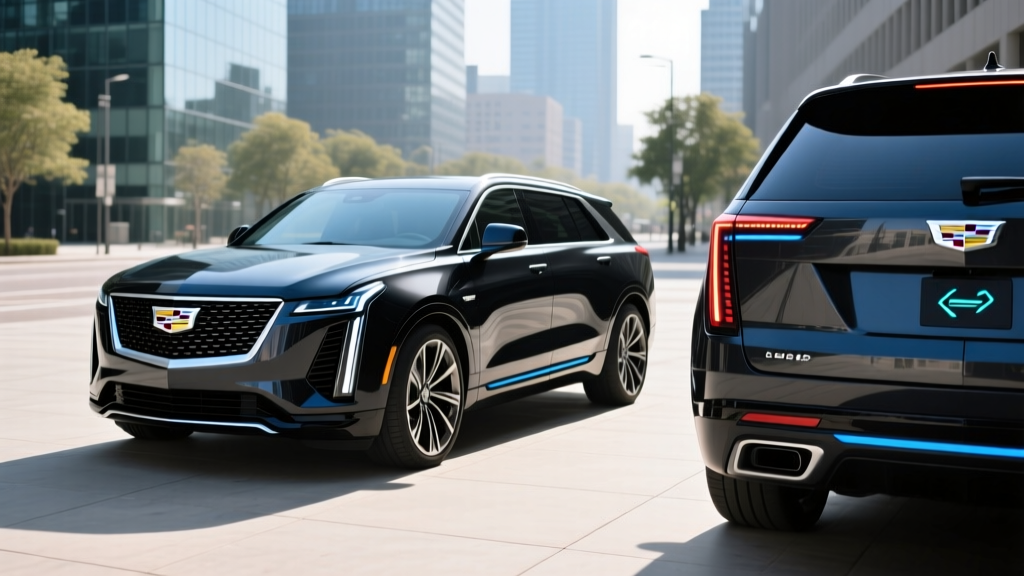
The 2026 Cadillac Escalade IQ has a curb weight of approximately 8,930 pounds (Gross Vehicle Weight Rating around 9,700 lbs). That's roughly 3,100 pounds heavier than the gas-powered 2025 Escalade (~5,820 lbs curb weight). The Escalade IQ's mass comes primarily from its 200+ kWh Ultium battery pack (GM's largest passenger-vehicle battery), dual electric motors, and reinforced body-on-frame architecture. Despite the weight, it delivers an EPA-estimated 460 miles of range and up to 750 horsepower in Velocity Max mode.
Why Electric Escalade Weight Matters for Buyers
Mass is the single most consequential engineering variable in any electric vehicle — and no current-production EV tests that variable more than the Escalade IQ. At nearly 9,000 pounds, this full-size luxury SUV sits at the extreme end of the EV weight spectrum. Understanding what that number means for your daily driving, charging routine, tire costs, and long-term ownership is essential before signing a six-figure purchase order.
Heavier EVs consume more energy per mile (lower MPGe), place greater stress on tires and suspension components, require longer braking distances, and can face access restrictions on certain roads, bridges, and parking structures with posted weight limits. On the flip side, the Escalade IQ's enormous battery gives it class-leading range that largely compensates for the efficiency penalty of carrying all that mass.
Electric Escalade Weight vs. Gas Escalade: Side-by-Side
| Specification | 2026 Escalade IQ (EV) | 2025 Escalade (Gas V8) | Difference |
|---|---|---|---|
| Curb Weight | ~8,930 lbs | ~5,820 lbs | +3,110 lbs (EV) |
| GVWR | ~9,700 lbs | ~7,300 lbs | +2,400 lbs (EV) |
| Powertrain | Dual motor AWD | 6.2L V8 + 10-speed auto | — |
| Horsepower | 680 hp (750 hp Velocity Max) | 420 hp | +260–330 hp (EV) |
| 0-60 mph | ~3.4 sec (Velocity Max) | ~5.9 sec | -2.5 sec (EV) |
| EPA Range / Tank | ~460 miles | ~435 miles (29-gal tank) | Comparable |
| Efficiency | ~76 MPGe (est.) | 16 MPG combined | — |
| Battery / Fuel Capacity | ~200+ kWh (NMC, Ultium) | 24.0 gal gasoline | — |
| Towing Capacity | ~8,000 lbs (est.) | ~8,000 lbs | Comparable |
| Base MSRP | ~$129,990 | ~$83,895 | +$46,095 (EV) |
Sources: Cadillac Escalade IQ specs, fueleconomy.gov. Gas Escalade data reflects 2025 model year EPA figures. EV efficiency estimated based on GM-published kWh/100mi data for Ultium-platform vehicles of similar mass.
How 8,930 Pounds Affects Range, Efficiency, and Charging
Energy Consumption Reality
The Escalade IQ's massive battery is the direct consequence of its weight. To move 8,930 pounds down the road at highway speeds, the dual-motor powertrain consumes roughly 58–65 kWh per 100 miles depending on driving conditions. For context, a Tesla Model Y consumes about 26 kWh/100mi — the Escalade IQ uses roughly 2.5 times more energy per mile. That's why GM equipped it with a battery more than double the capacity of most long-range EVs.
Real-World Range vs. EPA Sticker
EPA Estimate: ~460 miles
Real-World Expectations:
- Highway driving (70-75 mph): ~370–400 miles
- Cold weather (below 32°F): ~320–370 miles (15–25% reduction)
- Towing a 5,000-lb trailer: ~230–280 miles (40–50% reduction)
- City/mixed driving (moderate climate): ~420–460 miles
The low center of gravity from the under-floor battery pack helps with stability, but physics is unforgiving: every additional 1,000 lbs of cargo or passengers will reduce range by roughly 3–5%.
Charging Speed and the Weight Connection
The Escalade IQ supports DC fast charging at up to 350 kW peak on compatible chargers, with a 10–80% charge in approximately 30–35 minutes. The 800-volt Ultium architecture enables this impressive charge rate, but the enormous battery means even at 350 kW, you're still adding energy to a 200+ kWh pack — so fill-up times are longer than lighter EVs with smaller batteries charging at similar rates.
| Charging Level | Power (kW) | Miles of Range Added Per Hour | Time for 10–80% |
|---|---|---|---|
| Level 1 (120V outlet) | ~1.4 kW | ~2–3 mi/hr | Days (impractical) |
| Level 2 (240V, 48A) | ~11.5 kW | ~17–19 mi/hr | ~18–20 hours |
| Level 2 (240V, 80A — Powerup) | ~19.2 kW | ~29–32 mi/hr | ~11–13 hours |
| DC Fast (350 kW peak) | Up to 350 kW | ~500+ mi/hr (peak) | ~30–35 min (10–80%) |
kW vs. kWh reminder: kW (kilowatts) measures power — the rate of energy flow, like water pressure from a hose. kWh (kilowatt-hours) measures energy capacity — the total amount stored, like the size of a bucket. The Escalade IQ has a ~200+ kWh bucket and can accept water at up to 350 kW pressure.
Real Costs of Owning a 9,000-Pound Electric SUV
The purchase price is just the beginning. Here's what a five-year ownership projection looks like, comparing the Escalade IQ to its gas counterpart. Assumptions: 15,000 miles/year, $0.14/kWh home electricity, $3.60/gallon gasoline, national averages.
| Cost Category (5 Years / 75,000 Miles) | Escalade IQ (EV) | Escalade V8 (Gas) | Notes |
|---|---|---|---|
| Purchase Price (base MSRP) | $129,990 | $83,895 | EV premium: ~$46,095 |
| Federal Tax Credit (§30D) | $0 (exceeds MSRP cap) | $0 | See eligibility note below |
| Fuel / Electricity | ~$6,825 | ~$22,275 | EV saves ~$15,450 |
| Maintenance | ~$2,800 | ~$5,200 | No oil changes, fewer wear items on EV |
| Tire Replacement (2 sets) | ~$3,200 | ~$2,200 | EV tires wear faster due to weight + torque |
| Insurance (avg.) | ~$21,000 | ~$15,000 | EV premiums ~30–40% higher |
| Estimated Depreciation | ~$52,000 | ~$38,000 | Luxury EV depreciation still higher |
| Total 5-Year Cost | ~$215,815 | ~$166,570 | EV costs ~$49,245 more |
Tax Credit Reality Check
The Escalade IQ does not qualify for the federal §30D clean vehicle credit. The IRS caps SUV eligibility at an $80,000 MSRP, and the Escalade IQ starts near $130,000. There is no point-of-sale transfer available for this vehicle. Some states offer separate luxury-EV or high-income rebates — check your state's energy office for specifics, but do not factor a $7,500 federal credit into your budget. See current rules at IRS.gov §30D.
Tire Costs: The Hidden Weight Tax
At 8,930 pounds with instant electric torque, the Escalade IQ accelerates tire wear significantly. Expect to replace tires every 20,000–30,000 miles versus 40,000–50,000 miles on a gas Escalade. High-load-rated, EV-optimized tires (like the Michelin Pilot Sport EV or Bridgestone Alenza) run $350–$500 per corner for the 24-inch wheels standard on upper trims. Budget $3,000–$4,000 per set, replaced roughly twice in a five-year ownership cycle.
Common Misconceptions About Heavy EVs
| Myth | Fact |
|---|---|
| "Heavy EVs are unsafe because of their mass." | The Escalade IQ's low battery placement gives it a lower center of gravity than the gas Escalade, reducing rollover risk. Heavier vehicles also have an advantage in multi-vehicle collisions (physics favors mass). GM's Ultium platform includes extensive structural reinforcement. |
| "You can't drive a heavy EV in cold weather." | Cold weather reduces range by 15–25% in all EVs, but the Escalade IQ's 460-mile EPA range means even a 25% loss still leaves ~345 miles — more than most gas SUVs on a tank. The heat pump and battery preconditioning help mitigate losses. |
| "The battery will need replacement and cost a fortune." | GM covers the Ultium battery with an 8-year/100,000-mile warranty (minimum 60% capacity retention). NMC chemistry in this application is liquid-cooled with active thermal management. Based on current Ultium degradation data, expect ~85–90% State of Health at 100,000 miles. Full battery replacement, if ever needed out of warranty, would likely exceed $25,000–$35,000. |
| "Heavy EVs destroy roads and bridges." | At ~8,930 lbs GVW, the Escalade IQ is within the limits of virtually all US road infrastructure. It's comparable to a loaded Ford F-250 or Chevrolet Suburban 2500HD. No US state restricts passenger vehicles at this weight class on standard roads. |
| "You need a commercial-grade charger at home." | A standard 240V Level 2 home charger (48A, ~11.5 kW) adds ~17–19 miles of range per hour. Overnight (10 hours), that's ~175–190 miles — adequate for most daily driving. For faster home charging, GM's Powerup station at 80A/19.2 kW adds ~30 miles per hour, but requires a 100-amp circuit and professional installation ($2,500–$5,000 including panel upgrade if needed). |
Home Charging Setup: What a 200+ kWh Battery Demands
Charging a battery this large at home requires planning. Here's the realistic cost breakdown for a Level 2 installation:
| Item | Standard Install (48A) | High-Speed Install (80A) |
|---|---|---|
| Level 2 Charger (hardware) | $500–$800 | $1,200–$1,800 (GM Powerup) |
| Electrical panel capacity needed | 60-amp breaker | 100-amp breaker |
| Panel upgrade (if needed) | $0–$2,500 | $1,500–$4,000 |
| Wiring & conduit (50-ft run) | $800–$1,500 | $1,200–$2,500 |
| Electrician labor | $500–$1,200 | $800–$2,000 |
| Permits & inspection | $100–$400 | $150–$500 |
| Total Estimated Cost | $1,900–$6,400 | $4,850–$12,800 |
Always get a load calculation from a licensed electrician before choosing 80A service. Many 200-amp home panels cannot support a 100-amp continuous EV circuit without a panel upgrade to 300–400 amps. Final specifications should be determined by a licensed electrician.
Decision Framework: Is the Electric Escalade Right for You?
Choose the Escalade IQ (Electric) If:
- You have reliable home charging — garage or driveway with 240V access is nearly essential given the 200+ kWh battery.
- You drive 30–80 miles daily and want to eliminate gas station visits entirely during the work week.
- You value instant torque and silent operation — 0-60 in 3.4 seconds in a 9,000-lb vehicle is genuinely remarkable.
- You live in a region with high gas prices (California, Northeast) where the per-mile electricity savings are maximized.
- You want 400+ mile road-trip range without needing a long-bed fuel tank.
- Budget allows $130K+ purchase and ~$4,000/year insurance without relying on federal tax incentives.
Choose the Gas Escalade (or Wait) If:
- You lack home charging access — relying solely on public DC fast charging for a 200+ kWh battery is expensive ($0.35–$0.55/kWh = $70–$110 per session) and time-consuming.
- You tow heavy loads frequently — towing slashes EV range by 40–50%, reducing the Escalade IQ to ~230–280 miles between charges.
- You live in a charging desert (rural areas with sparse DC infrastructure) where 350 kW chargers are scarce.
- Total cost of ownership is a primary concern — the gas Escalade costs ~$49,000 less over five years despite higher fuel costs.
- You plan to keep the vehicle 10+ years — long-term EV battery replacement risk and luxury-EV depreciation curves remain uncertain.
First-Time EV Buyer Essentials for Heavy Luxury EVs
If the Escalade IQ would be your first electric vehicle, internalize these realities:
- Plan charging around your life, not the other way around. With a 200+ kWh battery, a full Level 2 home charge takes 11–20 hours. Most owners charge nightly from ~60% to ~80% rather than cycling 0–100%.
- Preconditioning is critical. Use the Escalade IQ's scheduled departure feature to warm the battery before DC fast charging. A cold battery at a fast charger may peak at 50–100 kW instead of 350 kW, tripling your wait time.
- Regenerative braking does more work in heavy EVs. The Escalade IQ's regen system must slow 8,930 pounds, meaning it recovers more energy than lighter EVs during deceleration — but it also means brake-by-wire feel may take adjustment.
- Weight limits matter for accessories. Roof rack load limits, hitch-mounted bike racks, and cargo carrier ratings all need to account for the vehicle's GVWR headroom (~770 lbs of payload after curb weight).
- Insurance quotes before you buy. Get actual quotes from your insurer — luxury EV premiums can range from $3,500 to $6,000+ annually depending on your profile and state.
Frequently Asked Questions
Does the electric Escalade's weight affect its safety rating?
The Escalade IQ had not received full NHTSA or IIHS crash-test ratings as of early 2026. However, heavier vehicles generally perform well in multi-vehicle collisions due to mass advantage, and the Ultium platform's structural battery enclosure adds significant rigidity. The low center of gravity from the floor-mounted battery reduces rollover risk compared to the gas Escalade.
Can I drive the Escalade IQ on roads with weight restrictions?
At ~8,930 lbs curb weight, the Escalade IQ is below the 10,000-lb threshold that triggers most commercial-vehicle road restrictions. It's legal on all US Interstate highways and virtually all bridges. Some private parking garages with 7,000–8,000 lb posted limits could be an issue — check posted signage in older urban structures.
How does the Escalade IQ's weight affect tire wear compared to the gas model?
Expect 20,000–30,000 miles per set of tires versus 40,000–50,000 on the gas Escalade. The combination of 3,100 additional pounds and instant electric motor torque (especially the 750-hp Velocity Max launches) accelerates tread wear. Rotating tires every 5,000 miles and choosing EV-rated high-load tires is strongly recommended.
Is the battery chemistry LFP or NMC?
The Escalade IQ uses GM's Ultium NMC (nickel manganese cobalt) chemistry, not LFP. NMC offers higher energy density — essential for packaging 200+ kWh into a passenger vehicle — but requires more careful State of Charge management for longevity. GM recommends daily charging to ~80% and reserving 100% charges for road trips.
What happens to range if I carry a full load of passengers and cargo?
The Escalade IQ has roughly 770 lbs of payload capacity (GVWR minus curb weight). With seven passengers and luggage (~1,200+ lbs combined, which may exceed rated payload), expect a 5–8% range reduction — roughly 25–40 fewer miles. The air suspension self-levels to maintain ride height, but energy consumption increases linearly with mass.
Does the Escalade IQ support V2H (vehicle-to-home) backup power?
GM has announced Ultium platform support for V2L (vehicle-to-load) and V2H capabilities through the GM Energy ecosystem. With a 200+ kWh battery, the Escalade IQ could theoretically power an average US home (~30 kWh/day) for 5–6 days during an outage — making it one of the most capable backup-power EVs on the market. Confirm feature availability and required hardware (GM Energy Home Power unit) with your dealer at purchase.