Quick Answer: An electric drive motor converts electrical energy from the battery pack into mechanical rotation to move the wheels — replacing the internal combustion engine entirely. Unlike gas engines that need to build RPM to produce peak torque, electric drive motors deliver maximum torque instantly from zero RPM, which is why EVs accelerate so quickly off the line. Most modern EVs use either a Permanent Magnet Synchronous Motor (PMSM) for maximum efficiency or an AC Induction Motor for high-power durability, and many dual-motor vehicles combine one of each to balance range and performance.
What Is an Electric Drive Motor and How Does It Work?
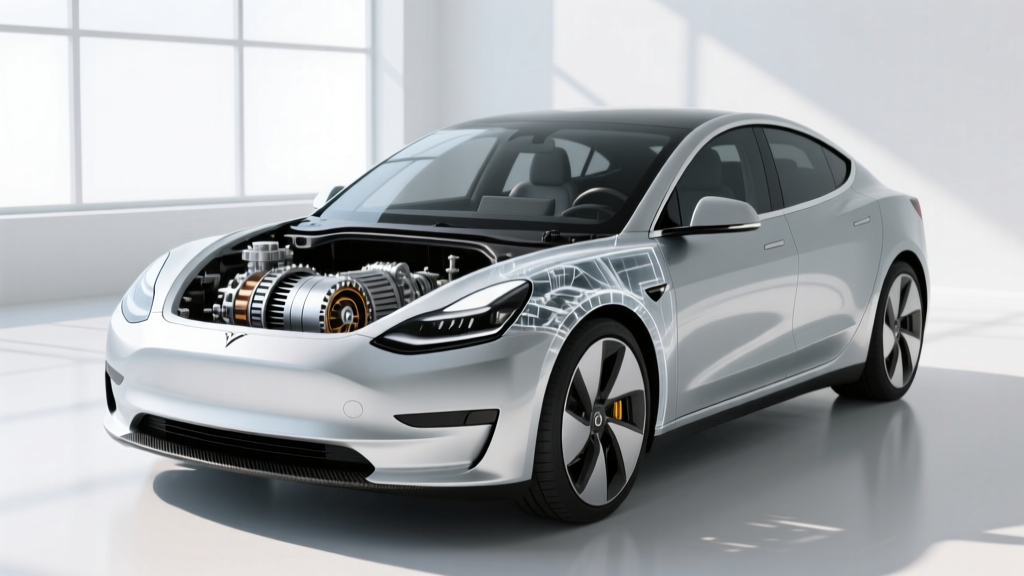
An electric drive motor is the core propulsion unit in any battery-electric vehicle (BEV). It draws current from the high-voltage traction battery — typically a 50 to 100+ kWh lithium-ion pack — and uses electromagnetic force to spin a rotor connected to the drivetrain. The key physics is straightforward: when alternating current flows through copper windings in the stator (the stationary outer ring), it generates a rotating magnetic field that pulls the rotor along, creating torque at the axle.
The power electronics controller — often called the inverter — is the brain between battery and motor. It converts the battery's direct current (DC) into the alternating current (AC) the motor requires, precisely modulating frequency and voltage to control speed and torque. This is why EVs don't need multi-speed transmissions: the motor can operate efficiently across a wide RPM band, typically from 0 to 10,000–20,000 RPM, using a single-speed reduction gear.
During deceleration, the process reverses. The motor becomes a generator, converting kinetic energy back into electricity — this is regenerative braking, which recovers energy that a gas car would waste as heat in the brake pads. Regen efficiency varies by model, but it typically recaptures 15–30% of energy on mixed driving cycles, significantly boosting real-world range in city conditions.
The Two Main Electric Drive Motor Types: PMSM vs. Induction
Not all electric drive motors are identical. Automakers choose between two dominant AC motor architectures, each with distinct engineering trade-offs that directly affect your EV's range, power, and long-term cost.
| Attribute | Permanent Magnet Synchronous (PMSM) | AC Induction Motor |
|---|---|---|
| Efficiency | Higher (94–97% peak) | Slightly lower (90–95% peak) |
| Torque density | Higher — more torque per kg | Moderate |
| Cost | Higher (rare-earth magnets: neodymium, dysprosium) | Lower (no rare-earth materials) |
| High-RPM power | Limited by back-EMF at very high RPM | Excellent sustained high-RPM output |
| Coasting drag | Some cogging torque (magnetic drag when unpowered) | Near-zero drag when de-energized |
| Typical placement | Primary drive axle (range-critical) | Secondary axle in AWD, or high-performance |
| Notable examples | Tesla Model 3 RWD, Hyundai Ioniq 5, Chevrolet Equinox EV | Tesla Model S/X front motor, older Model 3 AWD front |
Why this matters to buyers: If you prioritize maximum range per kWh, a PMSM-driven vehicle typically delivers 3–7% better efficiency on EPA combined cycles. If you prioritize sustained high-speed performance or want AWD without sacrificing front-axle coasting efficiency, a dual-motor setup pairing a PMSM on one axle with an induction motor on the other gives you the best of both. Tesla pioneered this hybrid motor strategy in the Model 3 Performance, and BMW, Hyundai, and Mercedes have adopted similar architectures.
Single Motor vs. Dual Motor: What Changes for the Driver
The number of electric drive motors in your EV directly shapes its power output, traction capability, efficiency, and price. Here's what the data shows across popular 2025–2026 models:
| Model | Motor Config | HP | 0–60 mph | EPA Range | Base MSRP |
|---|---|---|---|---|---|
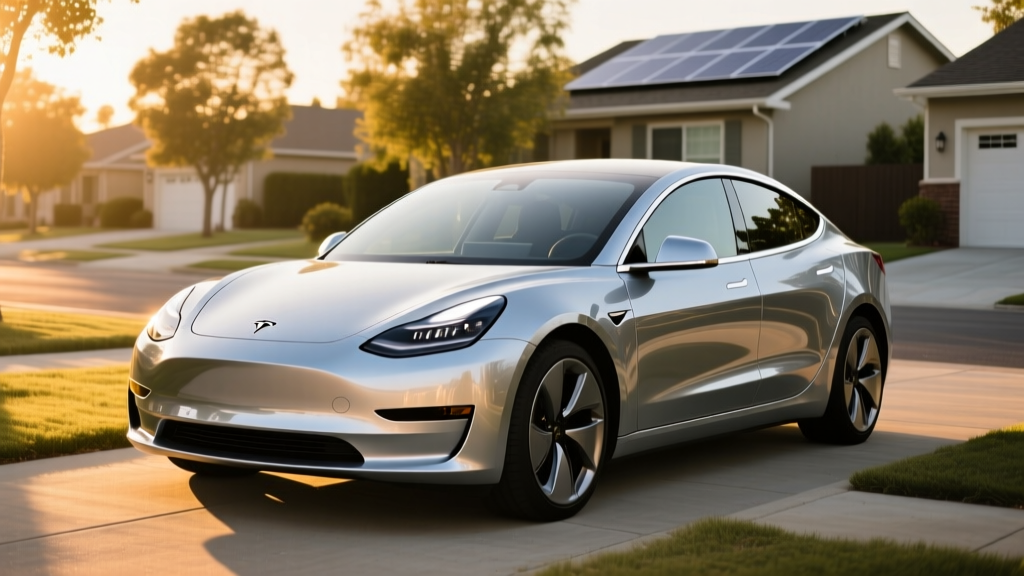
| Tesla Model 3 | Single (RWD, PMSM) | 271 | 5.8 sec | 341 mi | $38,990 |
| Tesla Model 3 | Dual (AWD, PMSM+Induction) | 346 | 4.2 sec | 341 mi | $45,990 |
| Hyundai Ioniq 5 | Single (RWD, PMSM) | 168 | 7.4 sec | 303 mi | $42,500 |
| Hyundai Ioniq 5 | Dual (AWD, 2x PMSM) | 320 | 4.5 sec | 290 mi | $47,000 |
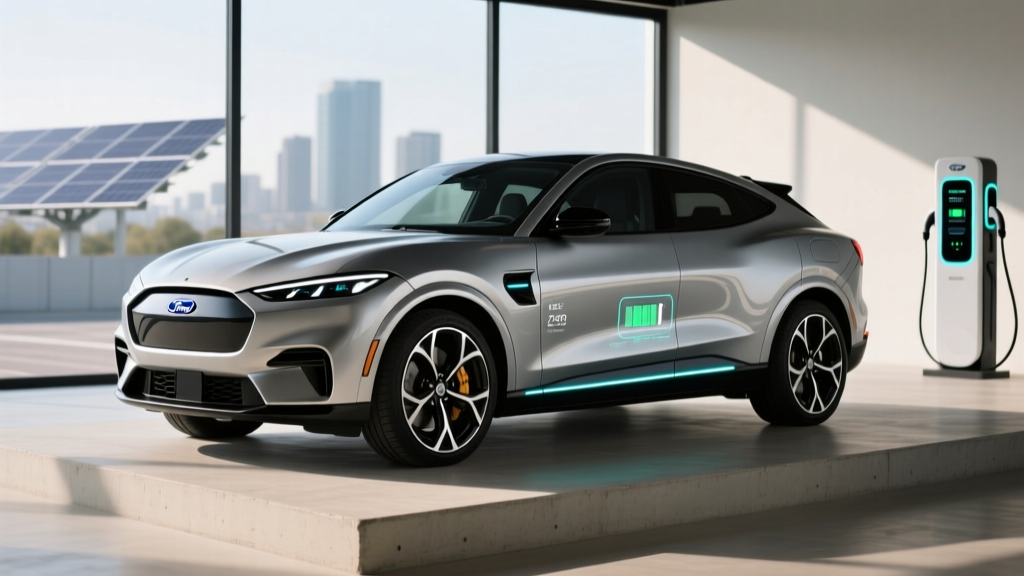
| Ford Mustang Mach-E | Single (RWD, PMSM) | 266 | 6.1 sec | 250 mi | $42,995 |
| Ford Mustang Mach-E | Dual (AWD, 2x PMSM) | 346 | 4.8 sec | 247 mi | $46,995 |
Several patterns emerge from this data. First, adding a second motor typically costs $3,000–$7,000 and sacrifices 5–20 miles of EPA range due to added weight (~100–150 lbs) and mechanical complexity. Second, dual-motor AWD cuts 0–60 times by 1–3 seconds, a dramatic improvement that no gas-engine AWD system can match at this price point. Third, the efficiency penalty of dual motors is narrowing: Tesla's Model 3 Long Range AWD achieves the same 341-mile EPA rating as the single-motor version by using the front induction motor only when traction demands it, disconnecting it during steady-state cruising.
Real-world caveat: EPA range figures assume mixed city/highway driving at moderate temperatures. Expect 10–15% range loss in sustained 70+ mph highway driving and 20–35% loss in sub-freezing temperatures due to battery chemistry limitations and cabin heating demand. A 341-mile EPA vehicle may deliver 230–260 miles in a Minnesota winter.
Electric Drive Motor vs. Gas Engine: The Ownership Cost Reality
The electric drive motor is central to the EV ownership-cost advantage. A gas car's internal combustion engine contains hundreds of moving parts — pistons, valves, timing chains, turbochargers, exhaust systems — all subject to wear, heat degradation, and fluid contamination. An electric drive motor has essentially one moving part (the rotor), no combustion events, no exhaust system, and no multi-speed transmission.
| Cost Category | EV (e.g., Tesla Model 3 RWD) | Gas (e.g., Toyota Camry LE) |
|---|---|---|
| Purchase price (after incentives) | $31,490 (after $7,500 §30D credit) | $28,500 |
| Fuel/energy (75k mi) | $3,750 (home charging at $0.13/kWh, 28 kWh/100mi) | $9,000 (32 MPG avg, $3.84/gal) |
| Maintenance | $1,200 (cabin filter, wipers, brake fluid, tire rotation) | $4,500 (oil changes, filters, spark plugs, brake pads, transmission fluid) |
| Insurance (5-yr avg) | $9,500 | $7,200 |
| Estimated 5-yr total | $45,940 | $49,200 |
Sources: fueleconomy.gov for efficiency data; IRS §30D credit rules; AAA Your Driving Costs 2024 for insurance/maintenance averages. Incentive eligibility varies by income, MSRP cap, and battery sourcing — verify at irs.gov.
The electric drive motor eliminates oil changes, timing belt replacements, exhaust repairs, and transmission service — collectively saving $3,000–$5,000 over five years. The trade-off is higher insurance premiums (15–30% more for EVs due to higher repair costs for collision damage) and a higher initial purchase price that the §30D tax credit partially offsets. Buyers who don't qualify for the full credit due to income caps ($150K single / $300K joint modified AGI) or battery-sourcing requirements will see a narrower cost gap.
Common Misconceptions About Electric Drive Motors
| Myth | Fact |
|---|---|
| "Electric motors wear out quickly and are expensive to replace" | EV drive motors routinely exceed 200,000 miles with no degradation. Unlike gas engines, there's no combustion wear. The motor is typically covered under the federally mandated 8-year/100,000-mile powertrain warranty, and failures before 150K miles are statistically rare. |
| "More motors always means less range" | Dual-motor setups with intelligent disconnect (e.g., Tesla's front induction motor, Hyundai's rear motor disconnect) can match single-motor EPA range. The efficiency penalty is typically under 5% when the secondary motor can fully decouple. |
| "Electric motors are silent, so EVs are dangerous to pedestrians" | Federal law (49 CFR §571.141) requires EVs to emit an artificial sound below 18.6 mph. All 2025+ EVs include pedestrian warning sound generators. At highway speeds, tire and wind noise dominate regardless of powertrain. |
| "EV motors can't handle towing or heavy loads" | Electric motors produce peak torque from 0 RPM, making them excellent for towing. The Ford F-150 Lightning (dual PMSM) tows up to 10,000 lbs. The limitation is battery capacity under load, not motor capability — expect 40–50% range reduction when towing near max capacity. |
| "Rare-earth magnets in PMSMs make EVs environmentally worse" | Valid concern: neodymium mining has environmental costs. However, several manufacturers are reducing or eliminating rare-earth content. BMW's 5th-gen eDrive uses externally excited synchronous motors (no permanent magnets). Tesla's next-gen motor platform targets zero rare-earth content. The lifecycle emissions advantage of EVs over gas cars still holds even accounting for motor material sourcing. |
How Motor Choice Affects Your Charging and Efficiency
The electric drive motor type influences not just acceleration but your daily charging needs and electricity costs. A more efficient motor extracts more miles from each kWh, which directly reduces charging time and cost.
Consider efficiency measured in kWh per 100 miles (lower is better, analogous to higher MPG in a gas car):
- High-efficiency PMSM vehicles: Tesla Model 3 RWD achieves ~25 kWh/100mi (132 MPGe). On a 75 kWh battery, that yields ~300 real-world miles in moderate conditions.
- Dual-motor AWD midsize crossovers: Typically 30–34 kWh/100mi (98–112 MPGe). The Hyundai Ioniq 5 AWD consumes ~32 kWh/100mi.
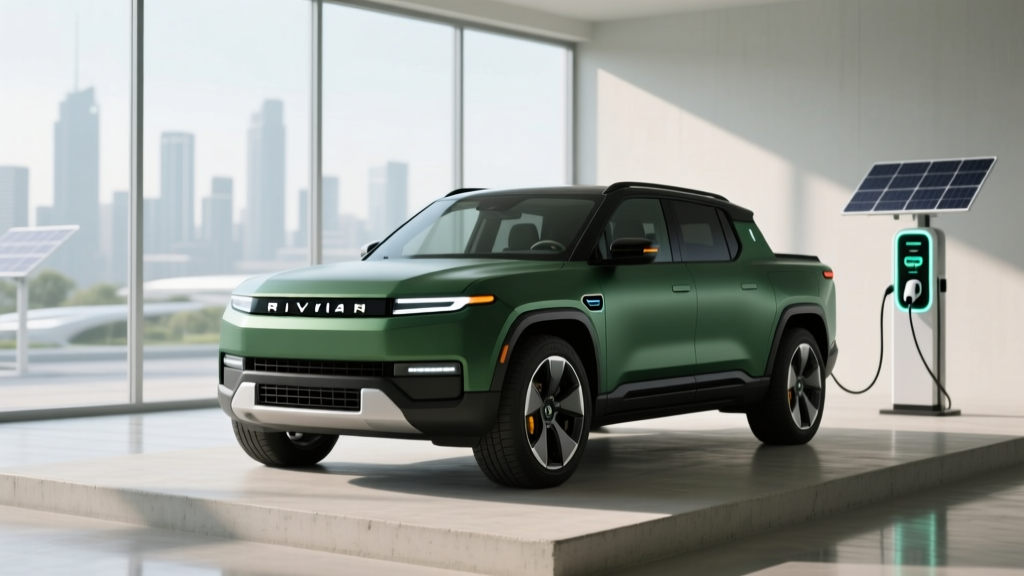
- Heavy dual-motor trucks/SUVs: Rivian R1T and GMC Hummer EV consume 45–53 kWh/100mi due to weight (7,000–9,000 lbs) and aerodynamic drag. Range per kWh drops significantly.
At the national average electricity rate of ~$0.16/kWh (EIA, 2025), a 25 kWh/100mi vehicle costs $4.00 per 100 miles to fuel at home. A 50 kWh/100mi truck costs $8.00 per 100 miles. Both remain cheaper than a 25 MPG gas car at $3.80/gallon ($15.20 per 100 miles), but the gap narrows considerably with heavier, less efficient EVs.
Charging speed interaction: Motor efficiency also determines how quickly you add range at a DC fast charger. A 25 kWh/100mi vehicle charging at 150 kW adds roughly 6 miles of range per minute. A 50 kWh/100mi vehicle at the same charger adds only ~3 miles per minute. So a PMSM-driven, aerodynamically efficient sedan will always recharge range faster than a heavy dual-motor truck, even on identical chargers.
Decision Framework: Which Motor Setup Fits Your Driving Life?
Choose a single-motor RWD EV (PMSM) if:
- You drive primarily in dry or mild climates with rare snow/ice
- Maximizing range per dollar is your top priority
- Your commute is under 60 miles round-trip and you charge at home
- You want the lowest purchase price and insurance cost
- Example picks: Tesla Model 3 RWD ($38,990, 341 mi), Hyundai Ioniq 5 RWD ($42,500, 303 mi)
Choose a dual-motor AWD EV if:
- You regularly drive in snow, ice, or heavy rain
- You need towing capability (motor torque + traction = safe towing)
- Performance matters and you want sub-5-second 0–60 times
- You accept a $3,000–$7,000 price premium and 5–20 mile range trade-off
- Example picks: Tesla Model 3 Long Range AWD ($45,990, 341 mi), Ioniq 5 AWD ($47,000, 290 mi)
Choose a tri-motor or high-performance setup if:
- You want supercar-level acceleration (sub-3-second 0–60) with daily usability
- Budget exceeds $80,000 and efficiency is secondary
- Example picks: Tesla Model S Plaid ($89,990, 396 mi, 1,020 HP, 1.99s 0–60), Lucid Air Sapphire ($249,000, 427 mi, 1,234 HP)
What First-Time EV Buyers Should Know About Motor Longevity
The electric drive motor is the least likely component to fail in your EV. Unlike a gas engine that accumulates carbon deposits, wears piston rings, and degrades seals, an EV motor's primary wear item is the bearing — and modern sealed bearings are rated for 200,000+ miles. The inverter (power electronics) is a slightly higher failure-risk component due to thermal cycling of semiconductors, but it's covered under the same 8-year/100,000-mile federal warranty mandate as the motor and battery pack.
What does degrade over time is the battery pack — not the motor. Expect 8–15% battery capacity loss over 100,000 miles depending on chemistry (LFP degrades slower than NMC), charging habits (frequent 100% charges accelerate degradation), and climate (sustained heat above 95°F is harder on batteries than cold). The motor will likely outlast the battery and the vehicle.
Warranty specifics to verify before purchase:
- Federal minimum: 8 years / 100,000 miles on battery and drive motor (all manufacturers)
- Hyundai/Kia: 10 years / 100,000 miles on EV powertrain
- Tesla: 8 years / 120,000 miles (Model 3 RWD) or 120,000 miles (Long Range/Performance)
- Battery capacity retention threshold: most warranties guarantee 70% capacity — below that triggers a replacement claim
Frequently Asked Questions
Do electric drive motors require any scheduled maintenance?
No. Unlike gas engines, electric drive motors have no oil, no filters, no spark plugs, and no timing belts. The motor itself requires zero scheduled maintenance. Your EV's maintenance schedule covers cabin air filters, brake fluid (every 2–3 years), coolant checks for the thermal management system, tire rotation, and wiper blades. Some manufacturers recommend a reduction-gear fluid check at 60,000–100,000 miles, but this is a minor service (~$100–$150).
Why do some EVs use AC motors while others use DC?
Virtually all modern production EVs use AC motors (either PMSM or induction) because AC motors offer higher power density and efficiency at variable speeds. The battery stores DC, so an inverter converts it to AC for the motor. Early EVs and some low-speed vehicles used DC motors for simplicity, but they're heavier, less efficient, and require brush maintenance. You won't find a DC traction motor in any 2025+ mainstream EV.
Can an electric drive motor be repaired, or must it be replaced as a unit?
Most EV motors are serviced as a complete unit replacement rather than rebuilt, primarily because labor to access the motor is significant and the motor itself is relatively inexpensive compared to the labor. A replacement drive motor for a Tesla Model 3 costs approximately $3,000–$5,000 (parts), and for mainstream EVs ranges from $2,500–$8,000 depending on power rating. However, motor failure is rare — inverter or battery issues are far more common EV service events.
Does motor type affect regenerative braking strength?
Marginally. PMSM motors can generate slightly more regen torque at low speeds due to their permanent magnet field, which contributes to the stronger one-pedal driving feel in vehicles like the Chevrolet Bolt and Nissan Leaf. However, regen strength is primarily controlled by software and the battery's charge-acceptance rate (you can't push regen into a battery that's at 95% SoC or below freezing without preconditioning). The difference between motor types in regen feel is subtle compared to the software tuning the manufacturer chooses.
How does motor efficiency change in cold weather?
The electric drive motor itself remains highly efficient in cold weather (above 90% even at -20°F). The range loss EV owners experience in winter comes primarily from the battery — cold lithium-ion cells have higher internal resistance, reducing usable capacity and charge acceptance — and from cabin heating demand, which can draw 2–5 kW continuously. A heat pump (standard on most 2025+ EVs) reduces heating energy consumption by 30–50% compared to resistive heaters, partially offsetting the cold-weather range penalty.