What Is an Electric Dragster and Should You Buy One?
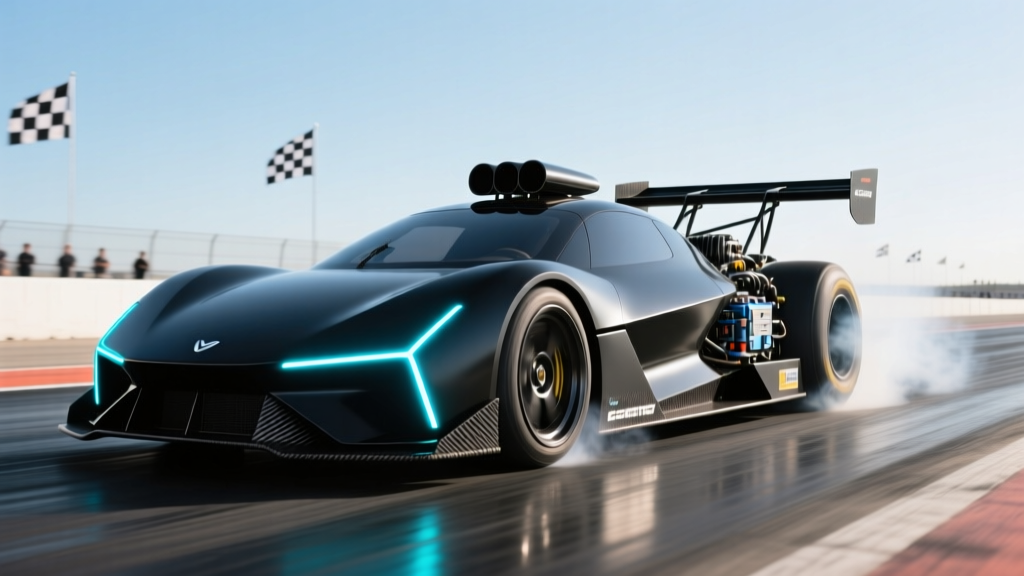
An electric dragster is a purpose-built or heavily modified battery-electric vehicle optimized for straight-line acceleration on a drag strip. Unlike production EVs, dedicated electric dragsters prioritize instantaneous torque delivery, high-discharge battery packs, and minimal weight over range or daily comfort. Entry-level electric drag builds start around $30,000–$50,000 using modified production platforms, while competitive NHRA-legal Top Fuel-style electric dragsters exceed $300,000–$500,000. For most enthusiasts, a modified production EV (such as a Tesla Model S Plaid or Lucid Air Sapphire) offering 0-60 mph times of 1.99–2.0 seconds at $90,000–$130,000 MSRP provides the most practical entry point into electric drag racing.
Electric Dragster Performance: The Numbers That Matter
The appeal of an electric dragster comes down to one thing: torque delivery that internal combustion engines physically cannot match off the line. Electric motors produce peak torque at 0 RPM, eliminating the need to build revs, manage a clutch, or wait for turbo spool. Here is how current electric drag platforms stack up against comparable gas drag setups:
| Metric | Electric Dragster (Production-Based) | Gas Drag Car (Comparable Class) |
|---|---|---|
| 0-60 mph | 1.99–2.5 seconds | 2.8–4.0 seconds (with race prep) |
| 1/4-mile time | 8.8–10.5 seconds | 9.5–11.5 seconds |
| Peak horsepower | 1,020–1,234 HP | 800–1,500 HP (tune-dependent) |
| Torque at launch | 1,050–1,200 lb-ft (instant) | Varies; requires 4,000+ RPM |
| Consistency (pass-to-pass variance) | ±0.02 seconds | ±0.10–0.25 seconds |
| Prep time between passes | 15–30 minutes (battery cooling) | 30–60 minutes (engine cool-down, fuel) |
Production-based electric dragsters like the Tesla Model S Plaid (1,020 HP, 1.99s 0-60, $89,990 MSRP) and the Lucid Air Sapphire (1,234 HP, 1.89s 0-60, $249,000 MSRP) have become the default entry points. Dedicated tube-chassis electric dragsters from builders like Current Performance or EV West push well past 2,000 HP and into 7-second 1/4-mile territory, but these are race-only machines with no street legality.
Real-World Reality Check: A production EV doing drag strip passes will see its battery State of Charge drop rapidly. Expect 3–5 full-throttle 1/4-mile passes on a Tesla Model S Plaid before the battery management system limits power output to protect cell temperatures. Plan for a 45–90 minute cooldown and charge session at a DC fast charger (peak 250 kW on Superchargers, 10–80% in ~27 minutes) between pass sets.
The Real Cost of Electric Dragster Ownership
Buying an electric dragster—or converting a production EV into one—involves costs that extend well beyond the purchase price. Here is a realistic cost breakdown for three common ownership scenarios in 2026:
| Cost Category | Modified Production EV (e.g., Model S Plaid) | Purpose-Built Electric Dragster (Tube Chassis) | Gas Drag Car (Super Comp / Super Gas) |
|---|---|---|---|
| Vehicle / build cost | $89,990–$110,000 | $150,000–$500,000+ | $60,000–$150,000 |
| Tires per season (drag radials/slicks) | $1,200–$2,400 | $3,000–$8,000 | $2,000–$5,000 |
| Energy / fuel per race weekend | $30–$80 (electricity) | $50–$150 (electricity) | $200–$600 (race fuel) |
| Annual maintenance | $500–$1,500 | $5,000–$15,000 | $8,000–$25,000 |
| Battery replacement (if needed) | $12,000–$22,000 (out of warranty) | $20,000–$80,000 (custom packs) | Engine rebuild: $5,000–$20,000 |
| Insurance (specialty/motorsport) | $3,500–$7,000/yr | $5,000–$15,000/yr | $3,000–$8,000/yr |
| Trailer and towing | $0 (driven to strip) | $8,000–$25,000 + truck | $8,000–$25,000 + truck |
Where Electric Dragsters Save Money
The operating cost advantage is substantial. A gas drag car burning C16 or VP Racing fuel at $12–$18 per gallon and getting effectively 2–4 miles per gallon on track spends $200–$600 per weekend on fuel alone. An electric dragster charging at a track-side Level 2 charger (or a DC fast charger nearby) spends $30–$150 for the same weekend. Over a 20-event season, that is a $3,400–$9,000 annual fuel savings.
Maintenance favors electric as well. There are no spark plugs, valve trains, head gaskets, oil changes, or exhaust systems. The primary wear items are tires, brake pads (regen braking extends pad life significantly), and cabin air filters. The big-ticket risk is battery degradation from repeated high-discharge cycles—more on that below.
Where Electric Dragsters Cost More
Upfront purchase price for competitive production-based electric drag platforms is high. Insurance for a 1,020 HP vehicle is not cheap—expect premiums 40–80% above a standard performance car. And if you are tracking a production EV hard, battery thermal management becomes a limiting factor that no amount of money easily solves without aftermarket cooling upgrades.
Battery Degradation and Drag Strip Use: What Buyers Must Know
This is the single most misunderstood aspect of electric dragster ownership. Every full-throttle launch pulls enormous current from the battery pack—often 1,500+ amps for several seconds. This generates significant heat in the cells, and heat is the primary accelerator of lithium-ion battery degradation.
What the data shows: Battery packs in production EVs are designed for sustained moderate discharge (highway driving), not repeated 2C–5C discharge pulses (drag launches). A Tesla Model S Plaid battery pack (approximately 100 kWh usable, NMC chemistry) subjected to frequent drag strip use may degrade 2–4% faster per year than one used only for street driving. Over 5 years of regular track use, expect 15–25% total capacity loss versus 8–12% for normal use.
The critical factor is battery chemistry and thermal management:
- NMC (Nickel Manganese Cobalt): Higher energy density, used in most performance EVs. More sensitive to heat degradation. Found in Tesla Model S Plaid, Lucid Air Sapphire.
- LFP (Lithium Iron Phosphate): Lower energy density but significantly better cycle life and thermal stability. Rarely used in performance EVs due to weight, but ideal for dedicated drag builds where weight is managed separately.
- Active liquid cooling: Non-negotiable for drag use. Vehicles without active battery thermal management (some older or budget EVs) will thermal-throttle after 1–2 passes and risk permanent cell damage.
Warranty implications: Most manufacturer battery warranties (8 years/100,000 miles, 70% capacity retention) contain exclusions for "competition use" or "track use." If you plan to drag race a production EV regularly, assume the battery warranty will not cover track-induced degradation. Budget accordingly for a potential $12,000–$22,000 out-of-pocket pack replacement within 5–8 years.
Charging Infrastructure for Electric Drag Racing
You cannot show up to a drag strip with an electric dragster and expect the venue to have charging ready for you. This is a real ownership consideration that separates electric drag racing from gas:
| Charging Level | Power (kW) | Miles of Range Added Per Hour | Availability at Drag Strips | Practical Use |
|---|---|---|---|---|
| Level 1 (120V household) | 1.2–1.9 kW | 3–5 miles | Common (standard outlets) | Trickle top-off only; useless between pass sets |
| Level 2 (240V) | 7.2–19.2 kW | 20–60 miles | Rare at strips; bring portable unit | Partial recovery over 2–4 hours |
| DC Fast Charge | 50–350 kW | 150–800+ miles (equivalent) | Off-site only (nearest station) | Full recovery in 25–45 minutes |
The practical solution for electric drag racers: arrive with a full charge (charged overnight at home on a Level 2 unit, ideally a 48-amp or 80-amp wall connector), run your pass set, then trailer or drive to the nearest DC fast charger for recovery. Some well-organized race events now arrange temporary DC charging infrastructure, but this is the exception, not the rule.
Home charging requirement: If you do not have access to a dedicated 240V Level 2 circuit at home (or at a private garage), electric drag racing becomes logistically painful. You will be dependent on public charging infrastructure, which adds time, cost, and unpredictability to every track day. Confirm your electrical panel can support a 60-amp or 100-amp dedicated circuit before committing to this path—a panel upgrade from 100A to 200A service can cost $1,500–$4,000.
Electric Dragster vs. Gas Drag Car: Decision Framework
Choose an Electric Dragster If:
- You value pass-to-pass consistency over peak top-end speed (electric excels in the 1/8-mile and early 1/4-mile)
- You want to drive your drag car to the track and home (production-based EVs)
- Your local noise ordinances or track rules are becoming restrictive (electric is near-silent off-throttle)
- You are willing to invest in home Level 2 charging infrastructure ($500–$2,500 installation)
- You prioritize lower per-pass operating costs over lower upfront build cost
- You want minimal between-round maintenance (no tuning, no jetting, no valve lash)
Choose a Gas Drag Car If:
- You compete in NHRA classes that do not yet have electric-vehicle categories or parity rules
- You need 10+ full-throttle passes per event without charging downtime
- You are on a sub-$40,000 total build budget
- You lack home charging access and cannot install a 240V circuit
- You want the extensive aftermarket support, tuning community, and parts availability that gas racing offers
- Your track is in a remote area far from DC fast charging infrastructure
Common Electric Dragster Misconceptions
| Myth | Fact |
|---|---|
| "Electric dragsters can't run the full 1/4-mile competitively." | Production-based EVs like the Lucid Air Sapphire have run 8.9-second 1/4-miles. Purpose-built electric dragsters have broken into the 7-second range. The gap to gas Top Fuel (3.6-second range) remains large, but electric is competitive in Sportsman and bracket racing classes. |
| "The battery will be destroyed after one season of racing." | With proper thermal management, cooldown protocols between passes, and avoiding sustained 100% SoC before launches, a battery pack can survive 3–5+ seasons of regular drag use with manageable degradation (15–25% capacity loss). |
| "Electric drag racing is cheaper overall." | Cheaper to operate per pass, yes—significantly. But the upfront vehicle cost is often 2–5x higher than a comparable gas bracket car. Total cost parity typically takes 5–8 years of regular racing to achieve. |
| "You can use any EV for drag racing." | Only EVs with robust active liquid battery cooling and high-discharge-capable inverters can handle repeated drag launches. Many budget and older EVs will thermal-throttle or sustain cell damage after 1–2 hard passes. |
| "The §30D federal tax credit applies to electric dragsters." | The IRS §30D credit applies to new street-legal EVs meeting MSRP caps ($55,000 for sedans, $80,000 for SUVs/trucks), buyer income limits, and battery sourcing requirements. Purpose-built race cars do not qualify. A street-legal Tesla Model S Plaid may qualify depending on current-year sourcing rules and your income—consult a tax professional. |
What First-Time Electric Dragster Buyers Should Know
If you are entering electric drag racing for the first time, here is a practical priority list:
- Start with a production EV, not a custom build. A Model S Plaid or similar gives you seat time, data, and seat-of-the-pants understanding of electric drag dynamics before you invest in a six-figure tube-chassis build.
- Install home Level 2 charging before your first track day. A 48-amp or higher wall connector on a dedicated 60-amp circuit is the minimum practical setup. Budget $800–$2,500 for equipment and licensed electrician installation.
- Monitor battery State of Health (SoH) obsessively. Use your vehicle's built-in telemetry or third-party apps to track capacity retention over time. Log every track pass against SoH data to understand your personal degradation rate.
- Never launch at 100% State of Charge. Charge to 90–95% maximum before passes. The top 5–10% of SoC puts cells at maximum voltage, where they are most vulnerable to heat damage during high-current discharge.
- Plan your charging logistics for every event. Identify the nearest DC fast charger (ideally 150+ kW) to the track before you arrive. Apps like PlugShare or A Better Routeplanner make this straightforward.
- Budget for tire costs. Electric dragsters eat tires. The instant torque at launch is harder on rubber than any gas car launch with a slipping clutch. Expect to replace drag radials every 30–60 passes depending on compound and prep.
- Check your insurance policy. Standard auto insurance policies typically exclude competition use. You need a specialty motorsport policy or a track-day rider. IIHS ratings on the base vehicle matter for street-driven electric dragsters but do not affect track-only insurance.
Frequently Asked Questions
How fast can an electric dragster go in the 1/4-mile?
Production-based electric vehicles like the Lucid Air Sapphire have achieved 8.9-second 1/4-mile passes at over 155 mph. Purpose-built electric dragsters in NHRA experimental and exhibition classes have reached the 7-second range at 190+ mph. For context, NHRA Top Fuel dragsters (nitromethane-powered) run 3.6-second passes at 335+ mph—a gap that electric technology has not yet closed.
Can I daily-drive my electric dragster?
If it is a modified production EV like a Tesla Model S Plaid, absolutely. These are fully street-legal with 350–400 miles of EPA-rated range, full interiors, and driver-assistance features. Purpose-built tube-chassis electric dragsters are trailer-only race cars with no street legality, no airbags, and no comfort amenities.
What happens if the battery overheats during a pass?
Modern EV battery management systems (BMS) actively monitor cell temperatures and will cut power output—sometimes abruptly—if thresholds are exceeded. This is called thermal throttling. It protects the cells from permanent damage but can result in a sudden loss of power mid-pass. Always allow adequate cooldown time (15–30 minutes minimum) between passes, and never override factory thermal limits with aftermarket tuning software.
Are there NHRA classes for electric dragsters?
As of 2026, the NHRA has been gradually expanding electric vehicle categories, primarily in Sportsman and bracket racing formats. Some regional tracks host dedicated EV drag racing events. The NHRA Summit Racing Series allows electric vehicles in certain bracket classes. Full parity with established gas classes is still developing—check current NHRA rulebooks for your specific region and class.
How much does it cost to convert a gas car to an electric dragster?
A basic conversion using a salvaged EV drivetrain (motor, inverter, and battery modules) into a lightweight drag chassis starts around $25,000–$50,000 in parts alone, plus hundreds of hours of fabrication labor. Professional conversions from shops like EV West or Current Performance typically run $80,000–$200,000+ depending on target power level and battery capacity. For most buyers, purchasing a used performance EV and modifying it is more cost-effective than a ground-up conversion.