Quick Answer: Can You Daily-Drive an Electric Drag Racing Car?
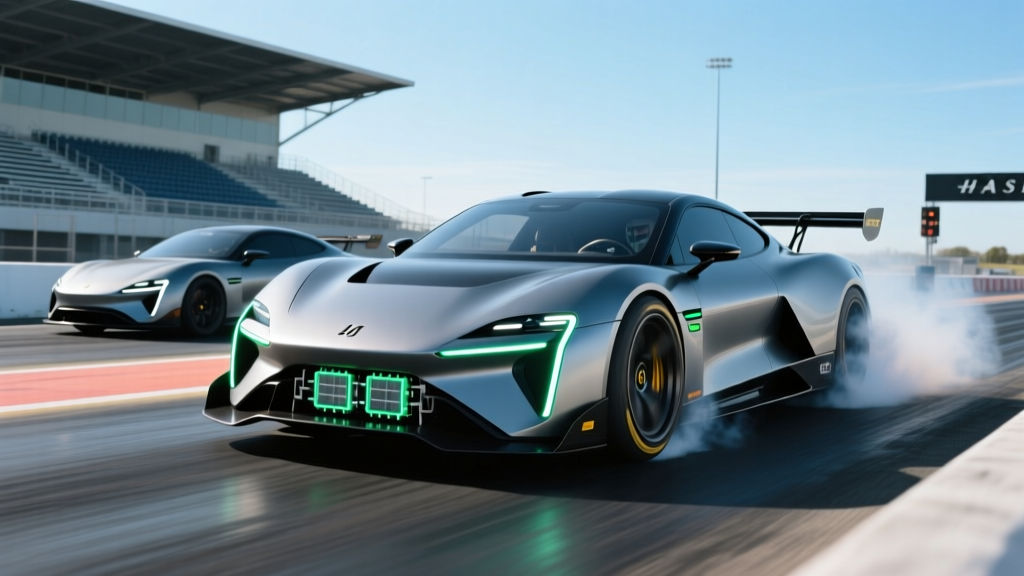
Yes — but with major trade-offs. The fastest street-legal EVs in 2026 (Tesla Model S Plaid, Lucid Air Sapphire, Rimac Nevera) deliver quarter-mile times between 8.58 and 9.25 seconds and 0-60 mph sprints under 2.0 seconds. However, repeated hard launches overheat battery packs, temporarily reducing power output after 2-3 consecutive runs. These are not purpose-built drag cars; they are luxury sedans and hypercars that happen to be devastatingly quick. Expect EPA ranges of 320-396 miles, base prices from $89,990 to $2.2 million, and insurance premiums 40-80% higher than comparable gas sports cars.
The 2026 Electric Drag Racing Car Lineup: Exact Specs
Electric motors deliver peak torque at zero RPM — no powerband to build, no turbo lag, no traction-management dance off the line. This physics advantage makes EVs inherently suited for drag racing. But not all fast EVs are created equal. Battery chemistry, thermal management, inverter capacity, and tire compound all determine whether a car can actually hook up and run consistent times at the strip.
| Model | 0-60 mph | ¼-Mile ET | Horsepower | Battery (kWh) | EPA Range | Base MSRP |
|---|---|---|---|---|---|---|
| Tesla Model S Plaid | 1.99 sec | 9.25 sec @ 152 mph | 1,020 hp | 100 kWh (NMC) | 396 mi | $89,990 |
| Lucid Air Sapphire | 1.89 sec | 8.95 sec @ 158 mph | 1,234 hp | 118 kWh (NMC) | 427 mi | $249,000 |
| Rimac Nevera | 1.74 sec | 8.58 sec @ 167 mph | 1,914 hp | 120 kWh (NMC) | N/A (limited) | $2,200,000 |
| Porsche Taycan Turbo GT (w/ Weissach) | 2.1 sec | 9.4 sec @ 150 mph | 1,092 hp | 105 kWh (NMC) | 305 mi | $230,000 |
| Chevrolet Corvette ZR1 (E-Ray AWD) | 2.5 sec | 10.1 sec @ 138 mph | 655 hp (combined) | 1.9 kWh (PHEV assist) | N/A (hybrid) | $105,000 |
Sources: Manufacturer press specifications; fueleconomy.gov for EPA range data.
EV vs. Gas Drag Cars: The Physics and the Numbers
At the drag strip, EVs hold a structural advantage in the first 60 feet. Electric motors produce maximum torque from a standstill, while internal combustion engines must build RPM to reach their powerband. A gas car making 700 hp might only deliver 300-400 hp to the wheels at launch; an EV delivers its full rated torque instantly.
| Metric | Tesla Model S Plaid ($89,990) | Dodge Challenger SRT Demon 170 (~$96,000 MSRP*) |
|---|---|---|
| 0-60 mph | 1.99 sec | 1.66 sec (on prepped surface, E85) |
| ¼-Mile ET | 9.25 sec | 8.91 sec |
| Peak Horsepower | 1,020 hp | 1,025 hp (E85) |
| Consistent Back-to-Back Runs | Power derates after 2-3 runs (heat) | Consistent with adequate cool-down |
| Fuel/Energy Cost per Pass | ~$0.40 (3-4 kWh) | ~$2.50-4.00 (E85) |
| Daily Drivability | 396-mi range, 4-door sedan | Low ground clearance, RWD, poor visibility |
| Street Legality | Fully compliant, no cage required | Fully compliant, no cage required |
*Demon 170 production ended; used-market pricing varies significantly.
The Demon 170 still edges out the Plaid on a prepped drag surface running E85, but it requires specific conditions: drag radials, a VHT-treated track surface, and E85 fuel. The Plaid achieves its times on street tires (Michelin Pilot Sport 4S) on unprepped concrete. For bracket racing or casual test-and-tune nights, the EV advantage in consistency and zero-prep convenience is real.
Real Ownership Costs: Beyond the Sticker Price
Buying an electric drag racing car means absorbing costs that go well beyond MSRP. Battery thermal stress from repeated hard launches accelerates degradation, insurance companies price these vehicles aggressively, and home charging infrastructure is mandatory if you want to avoid public-charging costs that erase any fuel savings.
| Cost Category | Tesla Model S Plaid | BMW M5 CS (Gas Baseline) |
|---|---|---|
| Purchase Price (MSRP) | $89,990 | $142,000 |
| Federal Tax Credit (§30D) | $0 (MSRP cap for sedans is $55,000; Plaid exceeds) | $0 |
| Insurance (5 yrs avg) | $28,000 ($5,600/yr) | $19,500 ($3,900/yr) |
| Fuel/Energy (5 yrs, 60k mi) | $4,800 (home L2 @ $0.13/kWh) | $14,400 (premium @ $4.50/gal, 16 mpg) |
| Maintenance (5 yrs) | $2,200 (tires, cabin filter, brake fluid) | $7,800 (oil, brakes, belts, fluids) |
| Tire Replacement (drag use) | $4,800 (2 sets of rear PS4S) | $4,200 (2 sets of rear P Zero) |
| Estimated Depreciation | $38,000 | $52,000 |
| 5-Year Total | $131,790 | $240,100 |
The Plaid's lower purchase price and dramatically lower fuel/maintenance costs offset its higher insurance premiums. But the federal §30D tax credit does not apply here: the IRS §30D rules cap sedan eligibility at $55,000 MSRP and buyer modified adjusted gross income at $300,000 (joint). No production electric drag racing car currently qualifies for the full $7,500 credit.
Battery Degradation Under Drag Racing Stress
This is where most EV drag racing content gets vague. Here are concrete numbers: a full-throttle launch from a standstill in a Model S Plaid draws approximately 800-900 kW of instantaneous power from the battery pack — roughly 8-9C discharge rate for the 100 kWh pack. For context, normal highway driving draws about 25-30 kW (0.25-0.3C).
NMC (nickel manganese cobalt) chemistry, used in all current production electric drag racing cars, handles high C-rate discharge but generates significant heat. Tesla's thermal management system actively cools the pack, but after 2-3 consecutive hard launches, the battery management system (BMS) will reduce peak power output to protect cell longevity. Expect roughly 15-20% power reduction until the pack cools below its target threshold (~95°F / 35°C cell temperature).
Long-term degradation from occasional drag use (1-2 track nights per month) adds approximately 1-3% additional capacity loss per year over normal driving. Tesla's battery warranty covers 8 years / 150,000 miles with a 70% minimum capacity retention threshold. Track use does not void the warranty, but documented abuse patterns (excessive thermal events logged by the BMS) could complicate claims.
Common Misconceptions About Electric Drag Racing Cars
| Myth | Fact |
|---|---|
| "EVs can't do back-to-back passes" | They can, but power derates after 2-3 full-power launches due to thermal protection. Allow 5-10 minutes of cool-down between runs for consistent times. |
| "Drag racing voids the battery warranty" | Manufacturer warranties cover defects, not specific driving styles. However, repeated thermal abuse logged by the BMS may affect claim outcomes. No major EV maker has publicly denied a warranty claim solely for track use. |
| "You need a cage or special license" | NHRA rules require a roll cage for cars running quicker than 9.99 seconds in the quarter mile. The Lucid Air Sapphire (8.95 sec) and Rimac Nevera (8.58 sec) technically require a cage and competition license for sanctioned NHRA events. The Model S Plaid (9.25 sec) does not. |
| "EVs are heavier, so they're slower in the back half" | True at extreme speeds. The Model S Plaid (4,766 lbs) loses ground to lighter gas cars above 140 mph. But within the quarter mile, instantaneous torque offsets the weight penalty. |
| "Home charging is too slow for track prep" | A Level 2 home charger (11.5 kW / 48A) fully recharges a Plaid's 100 kWh pack in about 9-10 hours overnight. That's more than adequate for next-day track use. |
What First-Time EV Drag Car Buyers Must Know
If you're considering an electric vehicle specifically for drag racing, these practical realities will determine whether the experience is thrilling or frustrating:
Home charging is non-negotiable. Public DC fast charging at 250 kW costs $0.35-0.48/kWh nationally ( Electrify America, EVgo). Charging a 100 kWh pack from 20-80% costs $21-29 per session. Home Level 2 charging at $0.13/kWh costs $7.80 for the same energy. Over a year of weekly track nights, the difference is $700-1,100.
Preconditioning matters for consistency. Battery temperature directly affects power output. Tesla's "Drag Strip" mode (Model S Plaid) actively preconditions the battery to optimal temperature (~95-104°F / 35-40°C) over 15-30 minutes before launch. Skipping preconditioning costs you 0.2-0.4 seconds in the quarter mile.
Tires are your biggest consumable. EVs are 500-800 lbs heavier than comparable gas cars, and instant torque accelerates rear tire wear significantly. Expect 8,000-12,000 miles from a set of rear Michelin Pilot Sport 4S tires with regular drag use — roughly half the lifespan under normal driving. Budget $2,000-2,800 per axle replacement.
Cold weather kills your times. Below 40°F (4°C), battery internal resistance increases and peak power output drops 10-15%. A Plaid that runs 9.25 in July may run 9.6-9.8 in December, even with preconditioning. Plan your serious track days for warm months.
Decision Framework: Should You Buy an Electric Drag Racing Car?
Choose Your Path
Choose the Tesla Model S Plaid if:
- You want sub-10-second quarter-mile capability under $100,000
- You need a practical 4-door daily driver with 396 miles of EPA range
- You plan to attend casual test-and-tune nights, not NHRA competition
- You have access to home Level 2 charging (240V, 48A minimum recommended)
Choose the Lucid Air Sapphire if:
- Budget is secondary to performance (MSRP $249,000)
- You want the quickest production sedan ever built (8.95-sec ¼-mile)
- You value 427 miles of range alongside extreme performance
- You accept limited service center availability outside major metro areas
Choose the Porsche Taycan Turbo GT if:
- Track handling matters as much as straight-line speed
- You want Porsche's 800V architecture (peak 320 kW DC charging, 10-80% in ~18 minutes)
- You prefer traditional sports-car build quality and dealer service
- You accept a slightly slower quarter-mile (9.4 sec) for superior chassis dynamics
Stick with a gas drag car (Demon 170, Shelby GT500) if:
- You compete in NHRA-sanctioned classes requiring consistent back-to-back passes
- You need to run quicker than 9.99 seconds without installing a roll cage
- You lack reliable home charging access
- You want the sound, mechanical engagement, and established aftermarket support of ICE drag racing
Charging Infrastructure for Track Day Logistics
Getting to the drag strip and back is where real-world EV ownership meets performance enthusiasm. Here's what a typical track day looks like for a Model S Plaid owner:
Assume a 150-mile round trip to your local drag strip. The Plaid's 396-mile EPA range drops to approximately 280-310 miles at sustained 75-80 mph highway speeds (aerodynamic drag dominates at speed). Add in 10-15 quarter-mile passes consuming roughly 3-4 kWh each (40-60 kWh total), and you're looking at 200-220 miles of effective range for the day. That leaves a comfortable 60-100 mile buffer — no mid-day charging required for most owners.
If your track is further away, the Plaid's 250 kW peak DC fast charging capability adds approximately 200 miles of range in 15 minutes (10-80% in about 27 minutes at a V3 Supercharger). Note that charging speed tapers significantly above 80% SoC — plan your stops to charge only to 80% for maximum efficiency.
The Bottom Line on Electric Drag Racing Cars
Street-legal electric drag racing cars have crossed from novelty to genuine threat against established gas performance cars. The Tesla Model S Plaid remains the value proposition at $89,990 — nothing else delivers a 9.25-second quarter mile with 396 miles of range and four doors for under six figures. The Lucid Air Sapphire is the ultimate expression at $249,000, and the Rimac Nevera exists in a hypercar stratosphere that few will ever access.
But these are still EVs first and drag cars second. Thermal management limits consecutive passes, battery degradation accelerates under high C-rate abuse, and the NHRA's 9.99-second cage rule will soon require modifications for the quickest production EVs. Buy one because it's a devastatingly quick daily driver that can embarrass supercars on Wednesday night — not because it will replace a purpose-built drag car at a Sportsman bracket race.
Do electric drag racing cars need special tires?
Not strictly required, but highly recommended. The instant torque of a 1,000+ hp EV overwhelms standard all-season tires. Most owners run Michelin Pilot Sport 4S or Pirelli P Zero Trofeo R for street-and-strip use. Dedicated drag radials (Mickey Thompson ET Street) provide better 60-foot times but are not DOT-legal for highway use and reduce wet-weather safety.
How many consecutive passes can an EV make before power drops?
Typically 2-3 full-power launches before the battery management system reduces output by 15-20% to protect cell temperature. Cooldown periods of 5-10 minutes (idle, not driving) between runs allow thermal management to recover. Some owners report the Porsche Taycan Turbo GT's 800V system manages heat slightly better, allowing 3-4 consistent runs.
Does drag racing affect my EV's battery warranty?
Manufacturer battery warranties (8 years / 100,000-150,000 miles, 70% capacity retention) do not explicitly exclude track use. However, BMS data logs record thermal events, and documented repeated abuse could complicate a degradation claim. No major automaker has publicly denied a warranty claim solely based on drag strip use as of early 2026.
What's the cheapest electric car that can run a sub-12-second quarter mile?
The Tesla Model 3 Performance (2026, $54,990 MSRP) runs approximately 11.8 seconds in the quarter mile with 450 hp and all-wheel drive. It's the most accessible entry point into electric drag racing, though it lacks the Plaid's Drag Strip mode and preconditioning sophistication.
Can I charge an electric drag car at the track?
Most drag strips do not have EV charging infrastructure. Some facilities near major metros have added Level 2 chargers (typically 7.2-11.5 kW), which add roughly 25-45 miles of range per hour — useful for topping off but not for full recharges. Plan to arrive with sufficient charge for the day and charge at home or at a DC fast charger on the route home.