Quick Answer: What Is an Electric Door Car?
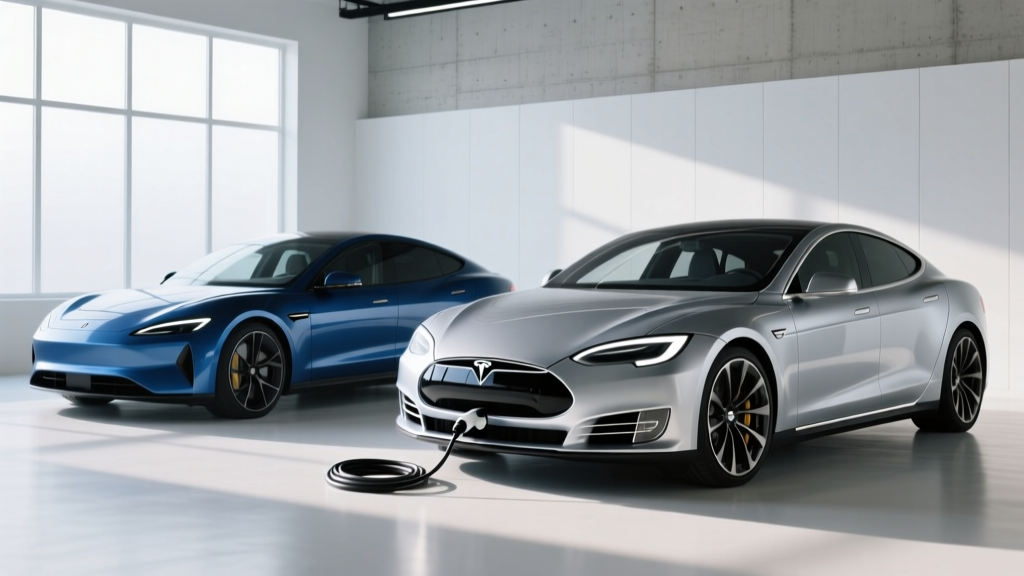
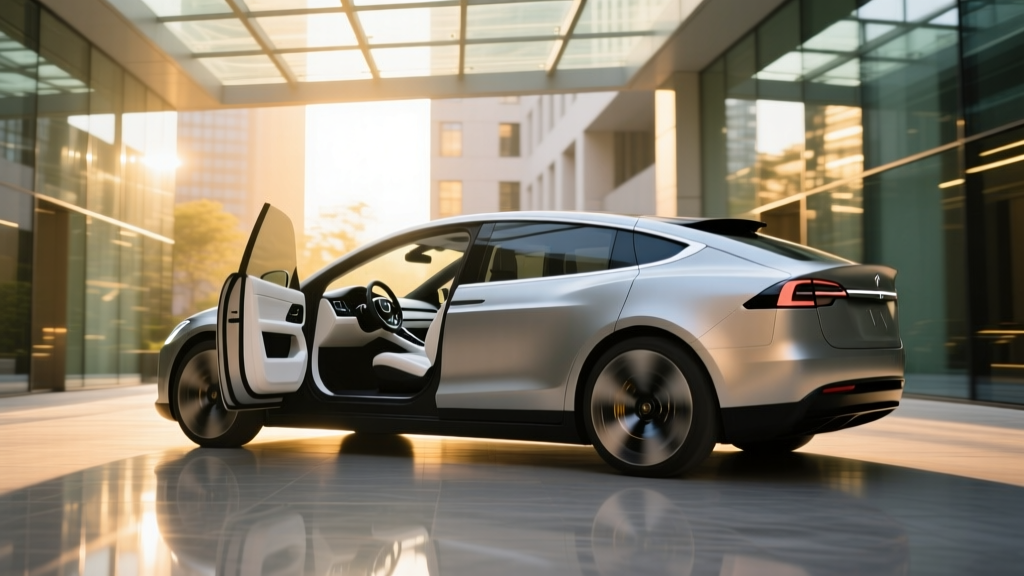
The term "electric door car" most commonly refers to an electric vehicle (EV) equipped with power-operated doors — doors that open and close automatically via button, key fob, or smartphone app. Some buyers also use the phrase to describe any battery-electric vehicle (BEV). In 2026, true power-door systems are available on models like the Tesla Model X (front and rear power doors), Mercedes-Benz EQS SUV (power rear doors), and the Zeekr 009 minivan. Most mainstream EVs — including the Tesla Model Y, Hyundai IONIQ 5, and Ford Mustang Mach-E — use conventional manual doors with electronic latches, not full power-open/close mechanisms.
Which EVs Actually Have Power-Operated Doors?
Power doors remain a premium feature in 2026, typically found on luxury EVs and high-end trims. Here's what's available on the current market:
| Model | Door Type | Base MSRP (2026) | EPA Range | Battery (kWh) |
|---|---|---|---|---|
| Tesla Model X | Power front + falcon-wing rear | $79,990 | 335 mi | 100 kWh (NMC) |
| Mercedes-Benz EQS SUV | Power rear doors (optional) | $105,550 | 305 mi | 108.4 kWh (NMC) |
| Zeekr 009 | Power sliding minivan doors | ~$72,000 (import) | ~280 mi (WLTP) | 116 kWh (NMC) |
| Rolls-Royce Spectre | Power coach doors | $420,000 | 264 mi | 102 kWh (NMC) |
| Tesla Model Y | Electronic latch, manual open | $44,990 | 320 mi | 75 kWh (LFP/NMC) |
| Hyundai IONIQ 5 | Electronic latch, manual open | $42,600 | 318 mi | 84 kWh (NMC) |
Sources: fueleconomy.gov, manufacturer press sites. Ranges are EPA estimates; real-world highway range is typically 10-15% lower.
An important distinction: many EVs feature electronic door latches (push-button release) rather than true power doors. The Tesla Model Y, for example, uses e-latches that electronically unlatch the door, but you still physically push it open. True power doors use motors to swing or slide the door open and closed without manual force.
EV vs Gas Car: Do Power Doors Change the Ownership Math?
Power doors add convenience — especially for families loading children or groceries — but they come with trade-offs in cost, weight, and repair complexity. Here's how a luxury EV with power doors compares to a similarly priced gas SUV:
| Factor | Tesla Model X (EV, Power Doors) | BMW X5 xDrive40i (Gas) |
|---|---|---|
| Base MSRP | $79,990 | $66,600 |
| EPA Fuel Economy | 102 MPGe combined | 24 MPG combined |
| Annual Fuel/Energy Cost | ~$650 (at $0.16/kWh) | ~$2,400 (at $3.50/gal) |
| 5-Year Fuel Savings (EV) | ~$8,750 saved over gas | |
| Annual Maintenance | ~$300 | ~$900 |
| Power Door Repair (out of warranty) | $800–$2,500 per door actuator | N/A (manual doors) |
| Insurance (annual avg.) | ~$3,100 | ~$2,200 |
| 0-60 mph | 3.8 sec (Dual Motor) | 5.2 sec |
The EV saves substantially on fuel and maintenance over five years, but the higher purchase price, insurance premiums, and potential power-door repair costs narrow the gap. According to IRS §30D rules, the Model X does not qualify for the $7,500 federal tax credit because its MSRP exceeds the $80,000 SUV cap when options are added, and battery sourcing requirements further limit eligibility. Always verify current-year rules before purchasing.
Real Costs of Owning an Electric Door Car in 2026
| Cost Category | Year 1 | Year 3 | Year 5 |
|---|---|---|---|
| Purchase (after any credits) | $79,990 | — | — |
| Home Level 2 Charger Install | $800–$2,200 | — | — |
| Electricity (charging) | $650 | $1,950 | $3,250 |
| Insurance | $3,100 | $8,800 | $14,500 |
| Maintenance | $300 | $900 | $1,800 |
| Estimated Depreciation | — | ~$18,000 | ~$32,000 |
| 5-Year Total (approx.) | ~$135,000 (including purchase) | ||
For comparison, a gas BMW X5 over five years runs approximately ~$118,000 total including purchase, fuel, insurance, and maintenance. The EV's fuel savings are real, but higher insurance, depreciation, and upfront cost keep total ownership competitive rather than decisively cheaper at this luxury tier.
Charging Costs in Practice
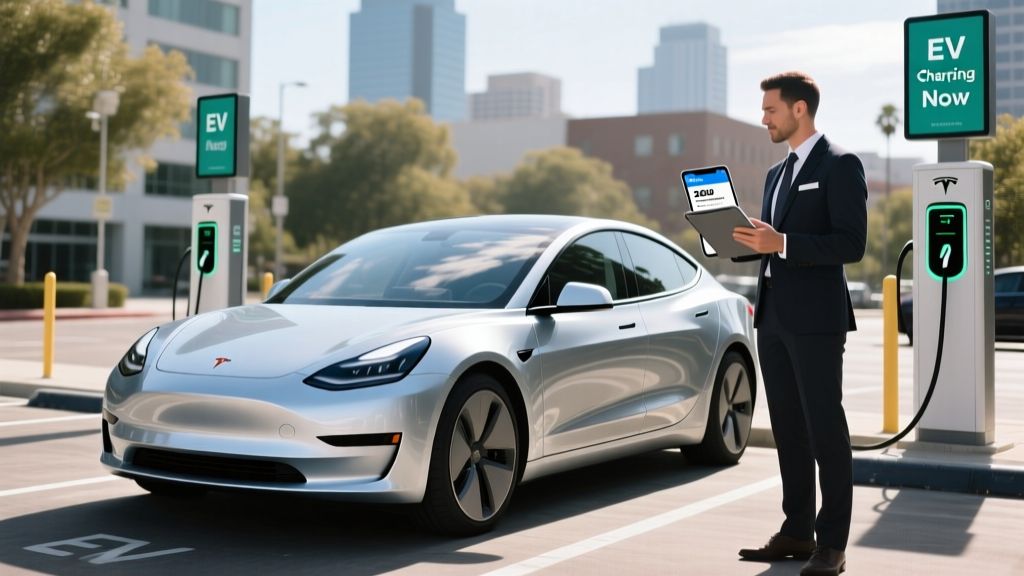
Charging a 100 kWh battery like the Model X's from 10% to 80% at home (Level 2, 11.5 kW) takes about 6 hours and costs roughly $11.20 at the national average of $0.16/kWh. At a DC fast charger (Tesla Supercharger at ~$0.30/kWh), that same session costs about $21.00. The Model X peaks at 250 kW DC charging, reaching 10-80% in approximately 30 minutes, though the charge curve tapers significantly above 60% SoC.
Common Misconceptions About Electric Door Cars
| Myth | Fact |
|---|---|
| "All EVs have automatic doors." | Most EVs use manual doors with electronic latches. True power doors are limited to luxury models like the Model X and EQS SUV. |
| "Power doors drain the EV battery." | Door actuators draw negligible energy — roughly 50-100 watts per cycle. Over a year, this adds less than 1 mile of range loss total. |
| "EVs with power doors qualify for the $7,500 tax credit." | Most power-door EVs exceed the IRS §30D MSRP cap ($80,000 for SUVs, $55,000 for sedans) or fail critical-mineral sourcing requirements. Verify at irs.gov. |
| "Power doors are unreliable in cold weather." | Modern systems include thermal protection and obstacle detection. However, ice buildup around seals can impede movement — preconditioning the cabin helps. |
| "Any EV is an 'electric door car.'" | The term is ambiguous. If you want power-operated doors specifically, you must check the trim-level spec sheet — it's never standard on mainstream EVs. |
What First-Time EV Buyers Should Know About Power Doors
If you're shopping for an EV and the power-door feature matters to you, keep these practical realities in mind:
- Home charging is essential. Without Level 2 home charging (240V, 32-48A), owning any EV becomes significantly less convenient. Budget $800–$2,200 for professional installation of a ChargePoint Home Flex or Tesla Wall Connector, plus potential panel upgrades ($1,500–$3,500) if your home has a 100A service panel.
- Cold weather reduces range 15-30%. The Model X's EPA 335-mile range drops to roughly 235–285 miles in sub-freezing temperatures, depending on cabin heating use and whether the vehicle has a heat pump (the 2026 Model X does).
- Insurance is higher. EVs cost 20-40% more to insure than comparable gas vehicles due to repair complexity, battery replacement costs, and specialized labor. Get quotes before committing.
- Power doors add repair risk post-warranty. Tesla's basic warranty covers 4 years/50,000 miles. After that, a single falcon-wing door actuator replacement can cost $1,500–$2,500 including labor. Extended warranties are worth considering.
- Real-world highway range is lower than EPA. At sustained 75 mph highway speeds, expect roughly 270–290 miles from the Model X before needing to charge — and DC fast charging from 10-80% takes ~30 minutes, not the "5 minutes like filling gas" experience.
Decision Framework: Should You Buy an Electric Door Car?
Choose an EV with power doors if:
- You need hands-free door operation for accessibility (wheelchair users, parents with car seats, mobility limitations)
- You're already shopping in the $70,000+ luxury EV segment and value the feature
- You have reliable Level 2 home charging and your daily commute is under 200 miles
- You understand the post-warranty repair cost risk and budget accordingly
Choose a mainstream EV with electronic latches (no power doors) if:
- You want EV efficiency and performance without the luxury price premium
- Tax credit eligibility matters — models like the Hyundai IONIQ 5 ($42,600) and Tesla Model Y ($44,990) may qualify for up to $7,500 under §30D depending on sourcing and income
- You prefer lower repair complexity and insurance costs
- Power doors are a "nice to have" rather than a necessity
Stick with a gas or hybrid vehicle if:
- You lack home charging access and live in an area with sparse public DC fast-charging infrastructure
- You regularly drive 400+ miles in a single day or tow heavy loads in cold weather
- Your budget is under $35,000 and you need maximum range flexibility
Frequently Asked Questions
Are power doors on EVs safe in an emergency?
Yes. All EVs sold in the U.S. must meet NHTSA crash-safety standards, which include manual door-release mechanisms. Even EVs with electronic latches or power doors include mechanical backup releases — usually a physical pull lever inside the door panel — to ensure occupants can exit after a collision or power loss. Check your owner's manual for the location of manual releases.
Can I add power doors to an EV that doesn't have them?
Aftermarket power-door kits exist, but they are not recommended for EVs. Modifying door mechanisms can interfere with crash-safety systems, void your warranty, and potentially compromise the vehicle's structural integrity. No major aftermarket solution is certified for EV-specific door architectures like Tesla's falcon-wing design.
Do power doors affect an EV's range or efficiency?
The impact is negligible. A power door actuator uses approximately 50–100 watts per open/close cycle. Even with 20 cycles per day, annual energy consumption from door motors totals under 1 kWh — effectively zero impact on your vehicle's 300+ mile range.
What's the difference between electronic door latches and power doors?
Electronic latches (found on the Tesla Model Y, Model 3, and many modern EVs) replace the traditional mechanical handle with a push-button that electronically releases the latch. You still push or pull the door open yourself. Power doors use electric motors to physically swing or slide the door open and closed — a significantly more complex and expensive system.
Which mainstream EVs might add power doors in the future?
As of 2026, no mainstream automaker has announced power doors on vehicles under $60,000. The cost, weight, and repair complexity make them unlikely to appear on budget-oriented EVs. Minivans and large SUVs are the most probable candidates for power-door expansion, given the accessibility use case.