The Electric Dodge Ram, Explained in 60 Seconds
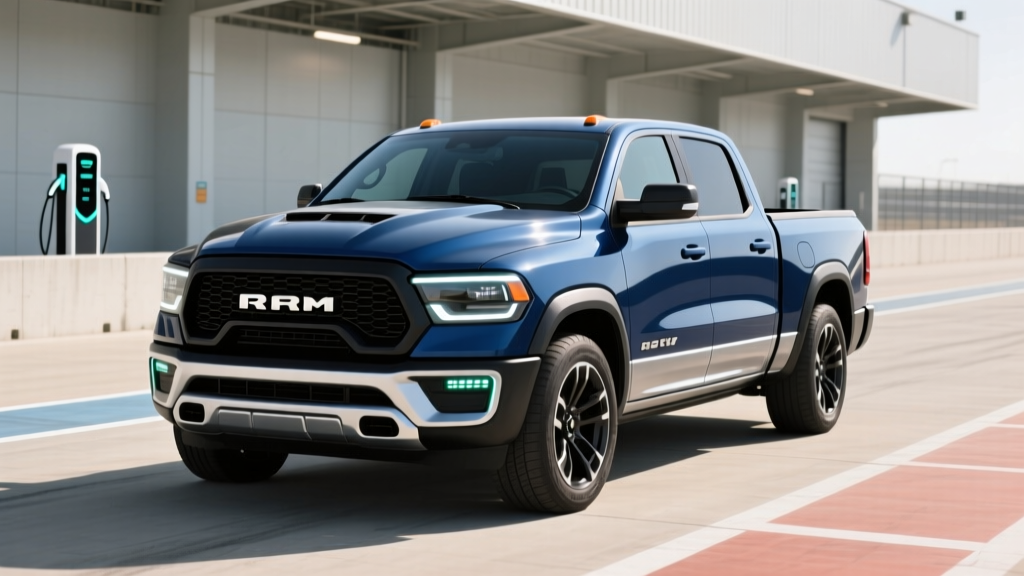
The electric Dodge Ram is officially the Ram 1500 REV, a battery-electric full-size pickup from Stellantis. As of early 2026, Ram has pushed the REV's production timeline multiple times, with the truck now expected to reach dealers as a 2027 model-year vehicle. When it arrives, the standard-range variant targets an EPA-estimated 350 miles of range from a ~168 kWh battery pack, while an extended-range option aims for up to 500 miles using a ~229 kWh pack. Pricing is anticipated to start near $58,000 before incentives. If you need an electric truck today, the Ford F-150 Lightning and Rivian R1T are currently in production and delivering; the Ram 1500 REV remains an announced, not-yet-on-sale vehicle with preliminary specifications.
What Is the Electric Dodge Ram (Ram 1500 REV)?
Search for "electric Dodge Ram" and you'll land on the Ram 1500 REV—Stellantis's answer to the Ford F-150 Lightning, Chevrolet Silverado EV, and Rivian R1T. The REV rides on Stellantis's STLA Frame platform, a dedicated EV skateboard architecture supporting body-on-frame trucks and large SUVs.
Ram initially unveiled the REV concept in late 2022 and confirmed production plans through 2023 and 2024. However, production delays—driven by battery supply-chain challenges, shifting EV demand, and Stellantis's strategic pivot toward its Ram 1500 Ramcharger extended-range electric vehicle (EREV)—have pushed the pure-battery REV further out. As of this writing, the REV is announced but not available for purchase. All specifications below reflect Ram's published targets and should be treated as preliminary until EPA certification and official pricing are released.
Range, Battery, and Charging: The Numbers That Matter
For truck buyers, range under load matters more than commuter efficiency. Here's what Ram has targeted for the 1500 REV:
| Specification | Standard Range (Target) | Extended Range (Target) |
|---|---|---|
| Battery Capacity (usable) | ~168 kWh | ~229 kWh |
| Battery Chemistry | NMC (Nickel Manganese Cobalt) | NMC |
| EPA Range (Estimated) | ~350 miles | ~500 miles |
| Peak DC Fast Charge Rate | Up to 350 kW | Up to 350 kW |
| 10–80% DC Charge Time | ~30 minutes (target) | ~45 minutes (target) |
| Level 2 AC Charge Rate | 11.5 kW (est.) | 11.5 kW (est.) |
| Miles Added per Hour (L2) | ~25–30 mi/hr | ~25–30 mi/hr |
Real-World Range Reality Check
The 350-mile and 500-mile targets are ambitious, but real-world truck usage changes the math significantly:
- Highway driving at 70+ mph: Expect 15–20% range reduction vs. EPA combined figures, putting the standard pack closer to 280–300 miles on a road trip.
- Towing a 5,000-lb trailer: Range typically drops 40–55% when towing at highway speeds. That 350-mile truck becomes a 160–200-mile truck under load.
- Cold weather (below 32°F): NMC batteries lose 20–30% range in freezing temperatures. Combined with highway speeds and cabin heating, plan for 220–260 miles usable range from the standard pack in winter.
- Charging curve taper: The 350 kW peak rate won't sustain from 10% to 80%. Expect the charge rate to taper significantly above 60% SoC, which is why the 10–80% time stretches to ~30 minutes despite the impressive peak number.
The 800-volt architecture enables the 350 kW peak charge capability, which requires a compatible DC fast charger (currently limited to select Electrify America and Tesla Supercharger V4 stations with NACS or CCS adapters). On a typical 150 kW public charger, expect closer to 45–55 minutes for a 10–80% session on the standard-range pack.
Towing, Payload, and Performance Specs
Truck buyers need capability, not just efficiency. Here's what Ram has published for the 1500 REV:
| Capability Metric | Target Specification |
|---|---|
| Maximum Towing Capacity | Up to 14,000 lbs |
| Maximum Payload | Up to 2,700 lbs |
| Horsepower | ~654 hp (dual motor AWD) |
| Torque | ~620 lb-ft |
| 0–60 mph | ~4.4 seconds (est.) |
| Drivetrain | Dual-motor AWD standard |
| Frunk (Front Trunk) | Yes, lockable, weather-sealed |
| Vehicle-to-Home (V2H) / V2L | Planned (bidirectional capable) |
The 14,000-lb towing target would position the REV as the most capable electric pickup on paper, exceeding the F-150 Lightning's 10,000-lb max and the Silverado EV's 13,000-lb rating. However, max towing ratings assume specific configurations, proper equipment, and relatively short trips—as noted above, sustained towing at that capacity will drastically compress range and require careful route planning around DC fast charging infrastructure.
The bidirectional charging capability (V2H/V2L) could let the REV power tools at a job site or serve as backup home power during outages—similar to what the F-150 Lightning offers with its Pro Power Onboard and Ford Intelligent Backup Power systems.
Pricing, Tax Credits, and What You'll Actually Pay
Since the Ram 1500 REV is not yet on sale, pricing remains preliminary. Based on Ram's earlier announcements and competitive positioning:
| Trim (Anticipated) | Est. Starting MSRP | Notes |
|---|---|---|
| Tradesman (base) | ~$58,000 | Fleet-oriented, standard range |
| Big Horn / Laramie | ~$65,000–$72,000 | Mid-tier comfort and tech |
| Limited / Top Trim | ~$85,000+ | Extended range, luxury features |
Federal Tax Credit Eligibility (§30D)
The IRS §30D clean vehicle credit offers up to $7,500 for qualifying new EVs, but eligibility is far from guaranteed for the REV:
- MSRP cap: Pickup trucks must have an MSRP at or below $80,000 to qualify. Higher trims of the REV may exceed this threshold.
- Buyer income limits: Modified adjusted gross income must not exceed $150,000 (single), $225,000 (head of household), or $300,000 (joint filers).
- Battery sourcing requirements: The battery's critical minerals and components must meet escalating domestic-content and free-trade-partner thresholds that tighten each year. By the time the REV reaches market, these requirements will be stringent.
- Point-of-sale transfer: Qualified buyers can transfer the credit to the dealer at purchase, reducing the out-of-pocket price immediately rather than waiting for a tax refund.
Because Stellantis has not published final battery sourcing details for the REV, do not assume the $7,500 credit will apply. Consult a tax professional and check the fueleconomy.gov tax credit tracker once the vehicle is EPA-certified.
Electric Dodge Ram vs. Gas Ram 1500: Cost of Ownership
How does the electric Dodge Ram compare to the gas-powered Ram 1500 that dominates sales today? Let's break down five-year costs using realistic assumptions.
| Cost Category (5 Years) | Gas Ram 1500 (5.7L HEMI V8) | Ram 1500 REV (Standard Range, Est.) |
|---|---|---|
| Purchase Price (MSRP) | $55,000 | $65,000 |
| Federal Tax Credit | $0 | $0–$7,500 (pending eligibility) |
| Fuel / Electricity (75,000 mi) | $12,500 (17 MPG, $3.50/gal) | $3,400 (home L2 at $0.14/kWh) |
| Maintenance (5 yr) | $4,200 (oil, filters, brakes) | $1,800 (tires, cabin filter, wipers) |
| Insurance (avg) | $9,500 | $11,000 (EV premium ~15%) |
| Home Charger Install | $0 | $1,200–$2,500 (240V/48A L2) |
| Estimated 5-Year Total | ~$81,200 | ~$74,900–$81,200 |
Key takeaways:
- The REV's higher purchase price is offset by dramatically lower "fuel" costs—about $9,100 in energy savings over five years when charging primarily at home.
- Maintenance savings of ~$2,400 come from eliminating oil changes, transmission fluid, spark plugs, and reduced brake wear thanks to regenerative braking.
- Insurance is typically 10–20% higher for EVs due to repair costs and battery replacement risk. Get quotes before committing.
- If you rely entirely on public DC fast charging (at $0.35–$0.50/kWh), your 5-year energy cost rises to roughly $7,500–$10,500, erasing much of the fuel-cost advantage.
Real-World Ownership: What First-Time EV Truck Buyers Must Know
Home Charging Is Non-Negotiable for Most Truck Owners
A 168 kWh battery is enormous. On a standard 120V household outlet (Level 1), you'd add roughly 3–4 miles per hour—meaning a full charge would take over 40 hours. That's impractical for truck duty.
You need a Level 2 home charger (240V, 48 amps) to recover ~25–30 miles per hour, filling the standard-range pack in roughly 6–7 hours overnight. Installation costs typically run $1,200–$2,500 if your electrical panel has capacity. If you need a panel upgrade from 100A to 200A service, add $1,500–$3,500.
Without reliable home charging, owning a large-battery EV truck becomes a logistical burden. Public DC fast charging is expensive, time-consuming, and—depending on your area—unreliable.
Charging Infrastructure for Trucks Is Still Sparse
Most public charging stalls were designed for passenger cars, not full-size pickups. Pulling a trailer into a charging stall often means blocking multiple spots or being unable to reach the cable. Networks like Electrify America and Tesla Supercharger are gradually adding pull-through stalls, but coverage remains limited in rural areas where trucks are most common.
Cold Climate Ownership
If you live where winters regularly drop below freezing, expect meaningful range loss. The REV's NMC battery will lose capacity in cold temperatures, and using cabin heat draws significant power. A heat pump (expected but not confirmed) would mitigate but not eliminate this. Garage parking and preconditioning while plugged in become essential habits.
| Common Misconception | The Reality |
|---|---|
| "500 miles means I can tow 500 miles." | Towing at highway speeds cuts range roughly in half. Plan for 200–250 miles max when towing. |
| "The $7,500 tax credit applies automatically." | Eligibility depends on MSRP, buyer income, and battery sourcing. Many EVs don't qualify. |
| "I can charge from any regular outlet." | Level 1 adds ~3 miles/hour. A 168 kWh truck battery would take 40+ hours on a standard outlet. |
| "Electric trucks can't do real work." | The REV targets 14,000 lbs towing and 2,700 lbs payload—competitive with half-ton gas trucks. The limitation is range under load, not capability. |
| "EV batteries need replacing every few years." | Modern NMC packs are warrantied for 8 years/100,000 miles at ≥70% capacity retention. Degradation is typically 10–15% over 150,000+ miles. |
Should You Wait for the Electric Dodge Ram or Buy Now?
Decision Framework: Wait for the REV or Buy an Available EV Truck?
Wait for the Ram 1500 REV if:
- You're loyal to the Ram brand and want the RAMchargER ecosystem and Ram's interior quality.
- You need maximum towing capacity (14,000 lbs target exceeds current EV trucks).
- You don't need an electric truck for at least 12–18 months and can absorb further production delays.
- The 500-mile extended-range option is critical for your use case.
Buy an available electric truck now (F-150 Lightning, Rivian R1T, Silverado EV) if:
- You need an electric truck within the next 6 months for work or personal use.
- You want proven real-world data on range, towing, and reliability rather than preliminary targets.
- Home charging is already installed or you're ready to set it up immediately.
- You want to lock in current §30D tax credit eligibility before sourcing rules tighten further.
- The F-150 Lightning's 10,000-lb towing or the Rivian R1T's adventure capability meets your needs.
Consider the Ram 1500 Ramcharger (EREV) instead if:
- You want electric driving for daily commuting but need gas-engine range for long towing hauls.
- You live in a charging desert or regularly travel routes without DC fast charging.
- Range anxiety under towing conditions is a dealbreaker for pure battery-electric.
What About the Ram 1500 Ramcharger?
Stellantis has shifted significant focus to the Ram 1500 Ramcharger, an extended-range electric vehicle (EREV) that pairs a smaller battery with an onboard gasoline generator. The Ramcharger is expected to offer roughly 145 miles of electric-only range from a ~92 kWh battery, with the 3.6L V6 generator extending total range to 690+ miles. This model is expected to reach market before or alongside the pure-electric REV and addresses the range-under-load concern that plagues battery-electric trucks during towing.
For many truck buyers who tow frequently or drive in areas with sparse charging, the Ramcharger may prove more practical than the pure-electric REV—offering EV daily driving without the range compromise.
Frequently Asked Questions
Is the electric Dodge Ram available to buy right now?
No. As of early 2026, the Ram 1500 REV is an announced vehicle that has not entered production. Ram has delayed the REV multiple times, and it is now expected as a 2027 model-year vehicle. The Ford F-150 Lightning, Rivian R1T, and Chevrolet Silverado EV are currently available.
How much will the electric Dodge Ram cost?
Estimated pricing starts around $58,000 for a base Tradesman trim and climbs to $85,000+ for top-tier Limited trims with the extended-range battery. Final MSRP has not been confirmed. Higher trims may exceed the $80,000 MSRP cap for federal tax credit eligibility.
What is the real-world range when towing with the Ram 1500 REV?
Based on real-world testing of competing electric trucks, expect roughly 40–55% range reduction when towing at highway speeds. The standard-range REV (350-mile EPA target) would likely deliver 160–200 miles of range while towing a 5,000-lb trailer. The extended-range variant would fare better at roughly 225–280 miles.
Can I charge the Ram 1500 REV at home?
Yes, but you'll need a Level 2 (240V) home charger for practical use. A 48-amp Level 2 unit adds roughly 25–30 miles of range per hour, filling the standard pack overnight in 6–7 hours. Expect $1,200–$2,500 for installation if your electrical panel supports it; a panel upgrade adds $1,500–$3,500.
Will the electric Dodge Ram qualify for the $7,500 federal tax credit?
It's uncertain. Eligibility under IRS §30D depends on the vehicle's final MSRP (must be ≤$80,000 for trucks), the buyer's income, and battery component/critical-mineral sourcing requirements that tighten annually. Wait for EPA certification and IRS listing before assuming credit eligibility.
How does the electric Ram compare to the gas Ram 1500 for daily driving?
For daily commuting and light-duty use, the REV offers a smoother, quieter ride with instant torque, lower per-mile energy costs (~$0.045/mile on home electricity vs. ~$0.17/mile on gas at 17 MPG), and reduced maintenance. The gas Ram 1500 wins on refueling speed, long-distance towing range, and lower upfront cost.
What battery warranty will the Ram 1500 REV have?
Federal law mandates a minimum 8-year/100,000-mile warranty on EV battery packs with at least 70% capacity retention. Stellantis has not published REV-specific warranty terms, but expect compliance with this standard and possibly more generous coverage to match competitors.