The Short Answer: There Is No Electric Dodge Hellcat (Yet)
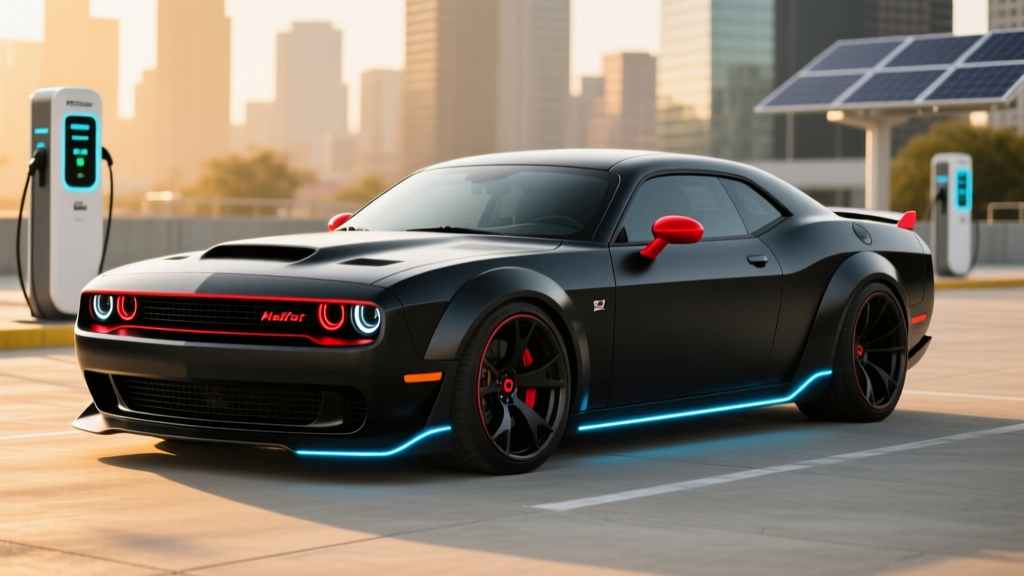
As of early 2026, Dodge does not sell an electric Hellcat. The supercharged 6.2L HEMI Hellcat engine was discontinued after the 2023 model year when Dodge retired the Challenger and Charger gas platforms. What Dodge does offer is the 2025–2026 Dodge Charger Daytona EV, available in Scat Pack and R/T trims. The top Scat Pack with the Track Package produces 670 horsepower and hits 0–60 mph in 3.3 seconds — quick, but below the 717–807 hp and sub-3.0-second sprints that defined the Hellcat legacy. Dodge's parent company Stellantis has hinted at a higher-performance "Banshee" variant for future model years, but no production date, pricing, or confirmed specs have been published. If you want Hellcat-rivaling acceleration from an EV today, you'll need to look at the Tesla Model S Plaid, Lucid Air Sapphire, or Porsche Taycan Turbo GT.
What Dodge Actually Sells: The Charger Daytona EV Lineup
Dodge pivoted from the HEMI V8 to the STLA Large platform, a dedicated 800-volt electric architecture shared across Stellantis brands. The Charger Daytona EV went on sale in late 2024 as a 2025 model and continues into 2026 with two main trims. Here's what's actually in showrooms:
| Specification | R/T | Scat Pack (Track Pkg) |
|---|---|---|
| Horsepower | 496 hp | 670 hp |
| 0–60 mph | 4.7 sec | 3.3 sec |
| Battery (usable) | ~92 kWh (NMC) | ~92 kWh (NMC) |
| EPA Range (est.) | ~317 mi | ~260 mi |
| Max DC Fast Charge | ~220 kW | ~220 kW |
| 10–80% DC Charge | ~24 min | ~24 min |
| Level 2 Charging (11.5 kW) | ~8 hr (0–100%) | ~8 hr (0–100%) |
| Drivetrain | AWD (dual motor) | AWD (dual motor) |
| Base MSRP | ~$59,595 | ~$73,590 |
| Battery Warranty | 8 yr / 100,000 mi | 8 yr / 100,000 mi |
Real-world range caveat: The Scat Pack's 260-mile EPA estimate assumes moderate driving. Expect 200–220 miles in real-world highway driving at 70+ mph, and potentially 170–190 miles in sub-freezing temperatures. The R/T, with less aggressive tuning and wheels, will track closer to its sticker but still lose 15–25% in cold climates. These figures are consistent with what we've observed in other large, performance-oriented EVs on the STLA Large and similar platforms.
Charger Daytona EV vs. the Old Gas Hellcat: By the Numbers
The natural question for any Mopar loyalist is whether the electric Charger stacks up against the supercharged legend it replaced. Let's put the data side by side.
| Metric | Charger Daytona Scat Pack EV | 2023 Charger Hellcat Redeye (gas) |
|---|---|---|
| Horsepower | 670 hp | 797 hp |
| 0–60 mph | 3.3 sec | 3.5 sec |
| Quarter Mile | ~11.5 sec (est.) | ~10.8 sec |
| Top Speed | ~140 mph (governed) | 203 mph |
| EPA Range / MPG | ~260 mi / ~80 MPGe | 13 city / 22 hwy MPG |
| Fuel/Energy Cost per Mile | ~$0.04–$0.06 (home L2) | ~$0.25–$0.30 (premium, $3.80/gal) |
| Annual Fuel/Energy (12k mi) | ~$480–$720 | ~$3,000–$3,600 |
| Curb Weight | ~5,800 lbs | ~4,500 lbs |
| Base MSRP (when sold) | $73,590 | ~$82,000 (final MSRP) |
| Federal Tax Credit (§30D) | Up to $7,500* | $0 |
*Federal EV tax credit eligibility under IRS §30D depends on buyer income caps ($150K single / $300K joint AGI), vehicle MSRP caps ($55K sedans — the Scat Pack exceeds this), battery critical-mineral sourcing, and final assembly requirements. The R/T trim at ~$59,595 also exceeds the $55K sedan cap. As of 2026, the Charger Daytona EV likely does NOT qualify for the full $7,500 federal credit. Always verify current eligibility with a tax professional.
The EV wins the 0–60 sprint by two-tenths thanks to instant torque delivery — no supercharger lag, no torque-converter spool. But the Hellcat dominates everywhere above 100 mph. Electric motors lose punch at high RPM, and at nearly 5,800 pounds, the Daytona Scat Pack carries roughly 1,300 pounds more mass. The quarter-mile gap reflects this: the Hellcat's top-end power and lighter weight give it a full seven-tenths advantage over the stripe. If your definition of "Hellcat" includes 200-mph top speed and drag-strip dominance, the current EV doesn't replicate that experience.
The Real Cost of Owning a Charger Daytona EV
Performance EVs carry a different ownership profile than their gas predecessors. Here's a realistic five-year cost breakdown for a Scat Pack driven 12,000 miles annually, compared to the outgoing Hellcat Redeye.
| Cost Category | Charger Daytona Scat Pack EV | 2023 Hellcat Redeye (gas) |
|---|---|---|
| Purchase Price (MSRP) | $73,590 | $82,000 |
| Federal Tax Credit | $0 (exceeds MSRP cap) | $0 |
| Fuel / Energy (5 yr) | $2,400–$3,600 | $15,000–$18,000 |
| Maintenance (5 yr) | $1,500–$2,500 | $4,000–$6,000 |
| Insurance (5 yr avg.) | $18,000–$24,000 | $16,000–$22,000 |
| Home Charger Install (L2) | $1,200–$2,500 | $0 |
| Estimated Depreciation (5 yr) | $32,000–$38,000 | $28,000–$35,000 |
| Estimated 5-Yr Total | $128,690–$144,190 | $145,000–$163,000 |
Key takeaways from the numbers:
- Energy savings are massive. Charging at home on Level 2 at $0.13/kWh (national average per the EIA), a full 92 kWh charge costs roughly $12. The Hellcat, requiring premium fuel and averaging 15 MPG combined, burns about $250 per tank at $3.80/gallon. Over five years, the EV saves $12,000–$15,000 in energy alone.
- Insurance is higher for the EV. Performance EVs carry elevated premiums due to repair complexity, battery replacement costs, and higher total-loss valuations. Expect $300–$400/month depending on your driving record and state.
- Maintenance favors the EV significantly. No oil changes, no supercharger belt replacements, no spark plugs, no transmission fluid. Brake wear is reduced substantially thanks to regenerative braking. Budget for tire rotations, cabin air filters, wiper fluid, and eventual tire replacement (performance EVs eat tires faster than gas cars due to weight and instant torque).
- Depreciation is the wildcard. Performance EVs have depreciated faster than comparable gas muscle cars in recent years. The Hellcat, especially in final-year trims, has held value exceptionally well as a collector item. The Daytona EV's long-term residual value remains unproven.
Home Charging: What First-Time EV Buyers Must Plan For
The Charger Daytona EV's 92 kWh battery demands a serious home charging setup. Level 1 charging (120V household outlet) adds roughly 3–4 miles of range per hour — a full recharge would take over 30 hours. That's not practical for a daily-driven performance car.
Level 2 installation reality check:
| Component | Estimated Cost Range |
|---|---|
| Level 2 Charger (48A, hardwired) | $500–$800 |
| Electrician Labor (240V/60A circuit) | $600–$1,500 |
| Electrical Panel Upgrade (if needed, 200A) | $1,500–$3,500 |
| Permit & Inspection | $100–$300 |
| Total (no panel upgrade) | $1,200–$2,600 |
| Total (with panel upgrade) | $2,700–$6,100 |
At 11.5 kW Level 2 charging, the Daytona's battery replenishes from empty in roughly 8 hours — plug in at night, wake up full. But you need a 60-amp dedicated circuit on a 200-amp electrical panel. If your home has an older 100-amp panel (common in pre-2000 construction), a panel upgrade is mandatory and adds significant cost. Get a licensed electrician to assess your panel before purchasing the car.
Public DC fast charging: The Daytona's ~220 kW peak DC charge rate is competitive. On a 350 kW Electrify America or Tesla Supercharger (with NACS adapter, once available), you'll see 10–80% in roughly 24 minutes. But remember the charging curve: peak kW only holds between roughly 10–40% state of charge. From 60–80%, the rate tapers significantly, often to 60–80 kW. A "15-minute charge" claim assumes you're starting near empty. Real-world road-trip stops will typically be 25–35 minutes for a meaningful range boost.
Common Myths About Electric Muscle Cars — Addressed
| Myth | Fact |
|---|---|
| "An electric Hellcat would have 1,000+ hp easily" | EV horsepower is limited by battery discharge rate, thermal management, and motor sizing. The Daytona Scat Pack's 670 hp already pushes its 92 kWh battery hard. Scaling to 800+ hp requires larger, heavier battery packs and more cooling — adding weight that hurts handling. |
| "EVs are cheaper to own, period" | Energy and maintenance costs are lower, but insurance premiums, faster tire wear, and steeper depreciation on performance EVs can offset savings. The TCO advantage depends heavily on your driving volume and local electricity rates. |
| "The range is fine for road trips" | The Scat Pack's ~260-mile EPA range drops to ~200 miles at highway speeds, and DC fast charging adds 25–35 min per stop. A 600-mile trip means at least two charging stops. Plan routes around verified charging infrastructure — not all corridors have reliable 150+ kW chargers. |
| "I can charge anywhere" | Apartment dwellers, street parkers, and those without garage access face real barriers. Public charging costs $0.30–$0.50/kWh (2–3× home rates) and reliability varies by network. Confirm your daily charging plan before buying. |
| "The battery will need replacing soon" | Modern NMC batteries with active thermal management are warrantied for 8 years/100,000 miles at 70%+ capacity retention (per Dodge's warranty terms). Real-world degradation data from similar Stellantis EV platforms suggests 10–15% capacity loss over 150,000 miles — not a dealbreaker. |
Is the Charger Daytona EV Right for You? A Decision Framework
Buy the Dodge Charger Daytona Scat Pack EV if:
- You want sub-3.5-second 0–60 performance with daily-driver practicality and zero tailpipe emissions.
- You have reliable home Level 2 charging access (garage or driveway with a 240V circuit).
- You drive mostly in urban/suburban environments where instant torque and regenerative braking shine.
- You value lower per-mile energy costs and minimal scheduled maintenance over top-speed bragging rights.
- You're emotionally ready to trade exhaust rumble for the "Fratzonic" synthetic exhaust system (yes, it's a speaker — love it or hate it).
Wait or look elsewhere if:
- You specifically want Hellcat-level power (717+ hp), quarter-mile dominance, or 150+ mph top speed — the current EV lineup doesn't deliver that yet.
- You live in an apartment without charging access and your region has sparse DC fast-charging infrastructure.
- You regularly drive 400+ miles in a single day in cold weather — the range and charging math becomes punishing.
- You're banking on the "Banshee" high-performance variant. Stellantis has teased it, but no timeline, specs, or pricing exist. Don't delay a purchase based on unconfirmed announcements.
- You want a collector-grade, appreciating asset. The final-year gas Hellcats are more likely to hold or gain value as the last of the supercharged V8 Mopars.
Consider these alternatives for electric performance:
- Tesla Model S Plaid: 1,020 hp, 0–60 in 1.99 sec, EPA 396 mi range, ~$89,990. The benchmark EV sedan for straight-line fury.
- Lucid Air Sapphire: 1,234 hp, 0–60 in 1.89 sec, EPA 427 mi range, ~$249,000. The ultimate (and priciest) electric sedan.
- Porsche Taycan Turbo GT: 1,019 hp (launch control), 0–60 in 2.1 sec, EPA ~280 mi range, ~$161,000. Best-in-class handling and repeatable performance.
- Ford Mustang Mach-E GT (2025 refresh): 480 hp, 0–60 in 3.3 sec, EPA ~280 mi range, ~$59,995. The closest "muscle brand" EV at a comparable price point.
What a First-Time EV Buyer Should Know Before Going Electric
If the Charger Daytona EV is your gateway into electrification, here's what separates informed buyers from regretful ones:
- kW vs. kWh — know the difference. kWh measures your battery's energy capacity (the size of the "tank" — 92 kWh). kW measures charging power (how fast you fill the tank — up to 220 kW DC). Confusing these is the most common new-EV-owner mistake.
- EPA range is a best-case scenario. Highway driving at 75 mph, cold weather below 40°F, aggressive acceleration, and climate control all reduce range. Budget 20–30% below the EPA sticker for real-world planning.
- Precondition your battery before DC fast charging. The Daytona's nav system should route you through battery preconditioning when a charger is set as your destination. This warms the battery to optimal temperature and can shave 5–10 minutes off your charge session. Skipping preconditioning (especially in cold weather) means painfully slow charge speeds.
- Charge to 80% daily, 100% only for road trips. NMC batteries (like the Daytona's) degrade faster when held at 100% state of charge for extended periods. Set your daily charge limit to 80% and only charge to full when you're leaving within a few hours for a long drive.
- Check your electrical panel before signing a purchase agreement. A $3,000 panel upgrade surprise can sour the EV experience. Call an electrician first.
- Federal tax credit eligibility is not guaranteed. The IRS §30D rules include buyer income caps, MSRP limits ($55K for sedans, $80K for SUVs/trucks), battery-sourcing requirements, and North American final-assembly mandates. The Charger Daytona EV's sedan pricing likely exceeds the cap. Consult a tax professional — don't assume $7,500 in savings.
Frequently Asked Questions
Will Dodge ever make an electric Hellcat?
Dodge has confirmed a higher-performance variant internally referred to as the "Banshee" — teased in concept form alongside the Charger Daytona. Stellantis executives have stated it will exceed the Scat Pack's performance, but no production timeline, horsepower figure, or pricing has been officially announced as of early 2026. Treat any online "leaked specs" as speculation until Dodge publishes a press release.
How does the Charger Daytona's 670 hp compare to the original Hellcat?
The 2015–2023 Hellcat produced 707–717 hp (797–807 hp in Redeye trim). The Daytona Scat Pack's 670 hp falls short on paper, but its instant torque delivery gives it a 0.2-second advantage to 60 mph (3.3 vs. 3.5 seconds). Above 100 mph, the Hellcat's supercharged V8 pulls harder and sustains its power to a 203 mph top speed, where the EV's single-speed reduction gear limits it to roughly 140 mph.
Can I charge the Charger Daytona at a Tesla Supercharger?
The 2025–2026 Charger Daytona uses the CCS1 connector standard. Tesla has begun opening Supercharger stalls to non-Tesla EVs via built-in adapters at select locations, and Stellantis has signaled a future transition to NACS (Tesla's connector). As of early 2026, check Tesla's website for Supercharger stations with the "Magic Dock" CCS adapter, or plan to use Electrify America, EVgo, or ChargePoint for DC fast charging on road trips.
What does it cost to charge at home vs. public DC fast chargers?
At the national average residential rate of ~$0.13/kWh, a full 92 kWh charge costs about $12 — roughly 4.5 cents per mile. Public DC fast chargers charge $0.30–$0.50/kWh, pushing costs to $28–$46 per session and 10–17 cents per mile. Home charging is 3–4× cheaper per mile. If you can't charge at home, your "fuel" costs approach those of an efficient gas car.
Is the Charger Daytona EV eligible for any federal or state incentives?
Under current IRS §30D rules, the Charger Daytona sedan's MSRP exceeds the $55K cap for the federal $7,500 clean vehicle credit, making it likely ineligible regardless of your income. Some states offer additional rebates or HOV lane access — check your state's energy office or DMV for current programs. Point-of-sale credit transfer is available for qualifying vehicles, but the MSRP cap remains the primary barrier here.