Quick Answer: Is the Electric Dodge Charger Worth It?
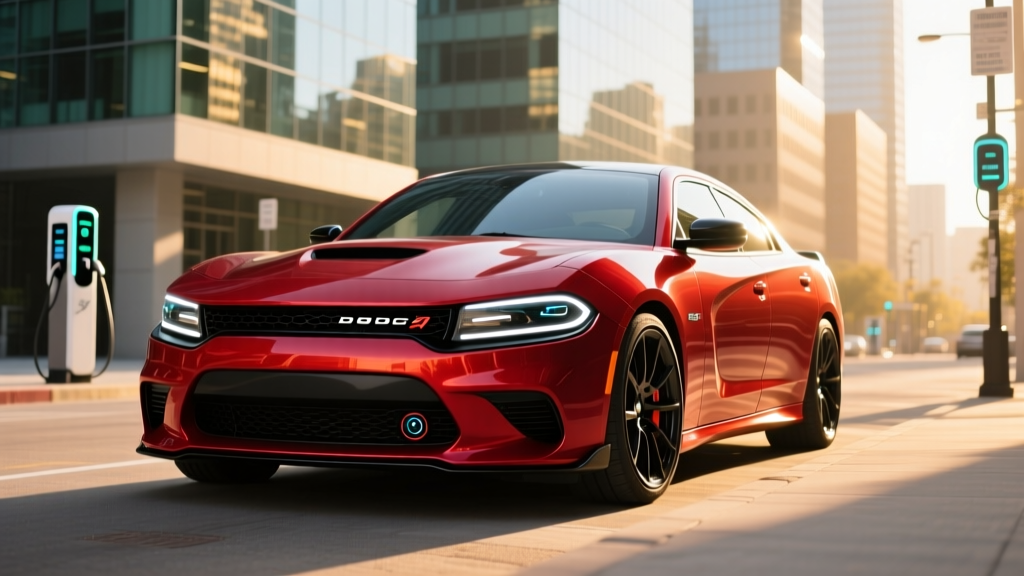
The 2026 Dodge Charger Daytona is the first all-electric American muscle car, built on Stellantis' STLA Large platform with an 800-volt architecture. The R/T trim delivers 496 HP and up to 317 miles of EPA-estimated range, while the Scat Pack pushes 670 HP with a 260-mile range estimate. Pricing starts at approximately $59,590 (R/T) and $72,590 (Scat Pack) before destination. Real-world highway range drops to roughly 250–270 miles for the R/T and 200–220 for the Scat Pack. DC fast charging peaks at over 200 kW, reaching 10–80% in approximately 27 minutes. Federal §30D tax credit eligibility is limited: the R/T may qualify for up to $7,500 depending on battery sourcing and your income, but the Scat Pack's MSRP exceeds the $55,000 sedan cap — though coupe classification could change that. Verify current eligibility on IRS.gov before purchasing.
Range and Efficiency: EPA vs. Real-World Numbers
The Charger Daytona uses a 100.6 kWh (gross) battery pack with NMC (nickel-manganese-cobalt) chemistry, managed by an 800V electrical architecture that enables faster charging and more efficient power delivery than older 400V systems. Here's what the EPA sticker says versus what you'll actually see:
| Trim | EPA Range | Real-World Highway | Cold Weather (20°F) | Combined MPGe | kWh/100mi |
|---|---|---|---|---|---|
| Daytona R/T (AWD) | 317 mi | ~250–270 mi | ~210–235 mi | ~92 MPGe | ~36 |
| Daytona Scat Pack (AWD) | 260 mi | ~200–220 mi | ~170–190 mi | ~82 MPGe | ~40 |
Real-world range reality: The 317-mile EPA figure on the R/T assumes mixed driving at moderate speeds. On a sustained 75 mph highway run in 85°F heat, expect closer to 260 miles. In winter conditions (20–30°F), lithium-ion chemistry slows and cabin heating draws significant energy — budget for 30–35% range loss, landing around 210–235 miles. The Scat Pack's wider tires and higher-output motors compound this loss. If your commute is under 80 miles round-trip with home charging, this is a non-issue. For road trips exceeding 200 miles between chargers, route planning matters.
The Charger Daytona includes a standard heat pump, which improves cold-weather efficiency compared to resistive cabin heaters. Preconditioning the battery while plugged in (via the Dodge app) before departure mitigates much of the winter range penalty and primes the pack for faster DC charging.
Charging Speeds: 800V Architecture in Practice
The 800V platform is the Charger's charging ace. Here's what each charging level delivers:
| Level | Power (kW) | Charge Time | Miles Added per Hour |
|---|---|---|---|
| Level 1 (120V household) | ~1.4 kW | ~72 hours (10–80%) | ~4 mi/hr |
| Level 2 (240V, 48A home charger) | ~11.5 kW | ~8.5 hours (0–100%) | ~32 mi/hr |
| DC Fast Charge (peak) | ~200+ kW | ~27 min (10–80%) | N/A |
Understanding kW vs. kWh: kW (kilowatts) measures the rate of energy flow — how fast you're charging. kWh (kilowatt-hours) measures total energy stored — your battery's capacity at 100.6 kWh. Think of kW as water pressure and kWh as the size of the tank.
The 800V architecture means the Charger can accept higher charge rates at lower current, reducing heat and improving sustained charging speeds. On a 350 kW Electrify America or Tesla Supercharger (with NACS adapter, expected for future models), you'll see peak rates above 200 kW between roughly 10–40% state of charge. Above 60%, the charge curve tapers significantly — 80–100% can take as long as 10–80%. This is standard for NMC chemistry to protect long-term battery health.
Home charging setup: A Level 2 home charger (hardwired 48A/240V circuit) is practically essential for daily ownership. Budget $800–$1,500 for the charger unit and $500–$2,500 for professional electrician installation, depending on your panel's capacity. Homes with 100A service panels may require a $1,500–$3,000 panel upgrade to 200A. Consult a licensed electrician for your specific situation.
Performance: Electric Muscle Car Numbers
Dodge built the Charger Daytona to prove electric doesn't mean boring. The performance specs are genuinely impressive:
| Spec | R/T | Scat Pack |
|---|---|---|
| Horsepower | 496 HP | 670 HP |
| Torque | 404 lb-ft | 627 lb-ft |
| 0–60 mph | ~4.7 sec | ~3.3 sec |
| Drivetrain | AWD (dual motor) | AWD (dual motor) |
| Drive Modes | Auto, Sport, Track, Wet/Snow | Auto, Sport, Track, Wet/Snow, Drag |
| Top Speed | ~137 mph | ~140 mph |
The Scat Pack's 3.3-second 0–60 time places it firmly in supercar territory, rivaling the outgoing Hellcat-powered Challenger in straight-line acceleration while adding all-wheel-drive traction. Dodge's "Fratzonic" exhaust sound system generates synthetic engine notes through a chambered speaker system — polarizing among muscle car purists but genuinely immersive in Sport and Track modes. The system can also be turned off for silent cruising.
One-pedal driving with aggressive regenerative braking is available, and the steering-wheel-mounted regen paddle lets you dial in deceleration from light coasting to near-one-pedal driving on the fly.
EV vs. Gas Charger: The Cost Comparison That Matters
The most common question from Charger shoppers: does going electric actually save money? Here's a five-year cost comparison between the electric Daytona R/T and a comparably equipped gas V8 Charger (using the 2024 5.7L HEMI V8 as a baseline, since the gas Charger is being redesigned):
| Cost Factor (5 Years / 75,000 mi) | Charger Daytona R/T (EV) | Gas V8 Charger (Baseline) |
|---|---|---|
| Purchase Price (MSRP) | $59,590 | $48,500 |
| Federal Tax Credit (§30D) | Up to -$7,500 (if eligible) | $0 |
| Effective Purchase Price | ~$52,090 | $48,500 |
| Fuel/Energy (75k mi) | ~$5,400 (home charging avg) | ~$11,250 (22 MPG, $3.30/gal) |
| Maintenance | ~$1,800 | ~$4,500 |
| Insurance (avg annual) | ~$2,400/yr ($12,000 total) | ~$1,900/yr ($9,500 total) |
| Estimated Depreciation | ~$22,000 | ~$18,000 |
| Total 5-Year Cost | ~$93,290 | ~$81,750 |
The honest verdict: The electric Charger costs roughly $11,500 more over five years, driven primarily by higher upfront cost, steeper depreciation (EVs are still normalizing in the used market), and higher insurance premiums. However, the $5,850 fuel savings and $2,700 maintenance savings (no oil changes, no transmission fluid, fewer brake replacements thanks to regen) are real and recurring. If you qualify for the full $7,500 credit and charge predominantly at home, the gap narrows to under $4,000. The Scat Pack comparison is even tighter against a gas Hellcat, where fuel costs exceed $15,000 over 75,000 miles at 16 MPG combined.
Charging cost assumption: $0.14/kWh national average for home electricity (per EIA data). Public DC fast charging at $0.35–$0.50/kWh raises the EV fuel cost to ~$7,500–$9,000 if you rely heavily on road-trip charging.
Federal Tax Credit: What You Actually Qualify For
The §30D federal clean vehicle credit is not a guaranteed $7,500 for every buyer. Current rules impose multiple gates:
- MSRP Cap: Sedans must be under $55,000; SUVs, trucks, and vans under $80,000. The Charger Daytona coupe classification is key — if Dodge classifies it as a sedan, the R/T at $59,590 exceeds the cap. Stellantis has indicated the Charger qualifies; confirm the IRS listing at fueleconomy.gov.
- Buyer Income Cap: Modified AGI must not exceed $150,000 (single), $225,000 (head of household), or $300,000 (joint).
- Battery Sourcing: At least 60% of critical minerals must be sourced from the US or FTA partners, and at least 60% of battery components must be manufactured or assembled in North America (2026 thresholds). Sourcing requirements tighten annually.
- Point-of-Sale Transfer: You can transfer the credit to the dealer at purchase, reducing your out-of-pocket cost immediately — or claim it on your tax return via IRS Form 8936.
- One Credit Per VIN: The vehicle must be new, purchased for personal use, and primarily used in the United States.
Always verify eligibility against the current IRS vehicle list and consult a tax professional — rules change and manufacturer sourcing compliance can shift mid-year.
Common Misconceptions: Myth vs. Fact
| Myth | Fact |
|---|---|
| "The electric Charger has no soul — it's just an appliance." | The Scat Pack's 3.3-second 0–60, AWD launch control, and track-tuned suspension deliver genuine muscle car dynamics. The Fratzonic sound system is synthetic but configurable, and the instant torque (627 lb-ft from 0 RPM) is something no gas V8 can replicate. |
| "317 miles of range means I can drive 317 miles before stopping." | EPA range assumes mixed driving at moderate speeds. Sustained highway driving at 75+ mph, cold weather, and aggressive acceleration all reduce range 20–35%. Plan road trips with a 20–25% buffer below EPA range. |
| "I don't need home charging — public chargers are everywhere." | Public DC charging at $0.35–$0.50/kWh costs nearly as much per mile as gasoline. Home Level 2 charging at $0.14/kWh is where 80%+ of your savings come from. Without home charging access, the economic case weakens significantly. |
| "The battery will need replacing in 5 years and cost $20,000." | Stellantis provides an 8-year/100,000-mile battery warranty (capacity retention above 70%). NMC batteries in modern thermal-managed packs typically degrade 8–15% over 8 years based on industry data. Full replacement, while rare, currently runs $15,000–$22,000 but costs continue declining. |
| "EVs are worse in winter." | Range drops 20–35% in sub-freezing temps — that's real. But AWD traction, instant cabin heating (no waiting for coolant to warm up), and preconditioning while plugged in make the Charger Daytona a capable winter daily driver. Just budget for the range reduction. |
Real Ownership Considerations Before You Buy
Before signing, honestly assess these factors:
Home charging access: Do you own your home or have landlord permission for a Level 2 install? Garage or driveway access for overnight charging? Without this, you'll rely on public infrastructure at 3–4x the cost and significant time inconvenience.
Driving patterns: If your daily round-trip commute is under 100 miles, the Charger Daytona's range is more than sufficient with nightly home charging. If you regularly drive 250+ miles between stops (rural routes, frequent road trips through charging deserts), the Scat Pack's ~200-mile real-world highway range will require careful route planning around Electrify America, EVgo, or Tesla Supercharger stations.
Climate: Owners in the Sun Belt will see range closest to EPA estimates. Those in the Upper Midwest and Northeast should plan for 25–35% winter range loss and verify that public charging infrastructure along their common routes is reliable year-round.
Insurance: EV insurance premiums run 15–30% higher than gas equivalents due to higher repair costs and battery replacement risk. Get quotes from your insurer before purchasing — Geico, Progressive, and State Farm all offer EV-specific policies.
Maintenance savings: No oil changes, no spark plugs, no transmission fluid, no exhaust system. Brake pad life extends to 80,000+ miles thanks to regenerative braking. Your main recurring costs are tires (EVs wear tires 20–30% faster due to weight and instant torque), cabin air filters, and brake fluid flushes every 2 years.
Decision Framework: Should You Buy the Electric Charger?
Buy the Charger Daytona R/T if:
- You have home Level 2 charging access (or can install it)
- Your daily commute is under 120 miles round-trip
- You want a practical daily-driver muscle car with 300+ mile range
- You qualify for the §30D tax credit (check income and MSRP caps)
- You value lower ongoing fuel and maintenance costs over 5+ years
Buy the Charger Daytona Scat Pack if:
- Performance is the priority — 670 HP and 3.3-second 0–60 are non-negotiable
- You accept ~200-mile real-world highway range as a trade-off
- You're replacing a Hellcat or high-performance gas muscle car
- You primarily drive in urban/suburban environments with charging access
Wait or look elsewhere if:
- You lack home charging access and your area has limited public DC fast chargers
- You regularly take 400+ mile road trips through rural areas (charging deserts remain real)
- Your budget is strictly under $50,000 and you don't qualify for the tax credit
- You need a back seat that adults can comfortably use for long trips (the Charger's coupe roofline limits rear headroom)
Charger Daytona Specs at a Glance
| Specification | Daytona R/T | Daytona Scat Pack |
|---|---|---|
| Battery Capacity | 100.6 kWh (gross) | 100.6 kWh (gross) |
| Battery Chemistry | NMC (Nickel-Manganese-Cobalt) | NMC |
| Architecture | 800V | 800V |
| EPA Range | 317 mi | 260 mi |
| DC Fast Charge (10–80%) | ~27 min | ~27 min |
| Peak DC Charge Rate | ~200+ kW | ~200+ kW |
| Level 2 Charge Rate | ~11.5 kW | ~11.5 kW |
| Horsepower | 496 HP | 670 HP |
| 0–60 mph | ~4.7 sec | ~3.3 sec |
| Drivetrain | AWD (dual motor) | AWD (dual motor) |
| Base MSRP | $59,590 | $72,590 |
| Battery/Powertrain Warranty | 8 yr / 100,000 mi | 8 yr / 100,000 mi |
| Vehicle Warranty | 3 yr / 36,000 mi (basic) 5 yr / 60,000 mi (powertrain) | 3 yr / 36,000 mi (basic) 5 yr / 60,000 mi (powertrain) |
Frequently Asked Questions
Can the electric Dodge Charger do a burnout?
Yes. The Scat Pack includes a dedicated "Donut Mode" and line-lock front brakes for burnouts and launch control for drag-strip-style starts. The dual-motor AWD system can send full torque to the rear wheels when traction control is disengaged. It's not a RWD-only muscle car, but the electronic torque vectoring is sophisticated.
Does the electric Charger qualify for the $7,500 federal tax credit?
It depends on the trim and your situation. The R/T at $59,590 may qualify if Dodge classifies it under a higher MSRP-cap vehicle category and battery sourcing requirements are met. The Scat Pack at $72,590 exceeds the $55,000 sedan cap but may qualify if classified as an SUV/truck (unlikely for a coupe). Always verify on the fueleconomy.gov tax credit listing and consult a tax professional. Income caps also apply.
How long does the battery last?
Stellantis warranties the battery for 8 years or 100,000 miles against degradation below 70% capacity. Industry data from comparable NMC packs suggests 85–92% capacity retention at 100,000 miles under normal use. Avoid frequent DC fast charging above 80% and storing the car at 100% or below 10% state of charge for extended periods to maximize longevity.
What happens if I run out of charge on the road?
The same thing as running out of gas — you call roadside assistance. Dodge includes roadside assistance under the basic warranty. The Charger's navigation system proactively routes you through charging stations and warns when range is insufficient for your destination. Unlike gas cars, you can't carry a spare gallon — but you also start every morning with a "full tank" if you charge at home.
Is the electric Charger heavier than the gas version?
Yes, significantly. The Daytona R/T weighs approximately 5,838 lbs — roughly 1,500 lbs more than a comparable gas Charger. This affects tire wear (budget for replacement every 25,000–35,000 miles), braking distances, and handling feel. The low center of gravity from the floor-mounted battery partially offsets the weight in cornering, but you'll feel the mass in quick direction changes.
What's the difference between kW and kWh?
kW (kilowatts) is a rate — how fast energy flows, like the flow rate of a garden hose. kWh (kilowatt-hours) is total energy — how much is stored, like the size of a water tank. The Charger has a 100.6 kWh battery (tank size) and can charge at up to 200+ kW (flow rate). Confusing the two is the most common EV mistake — a 200 kW charger doesn't deliver 200 kWh; it delivers energy at 200 kW for as long as the battery can accept it.