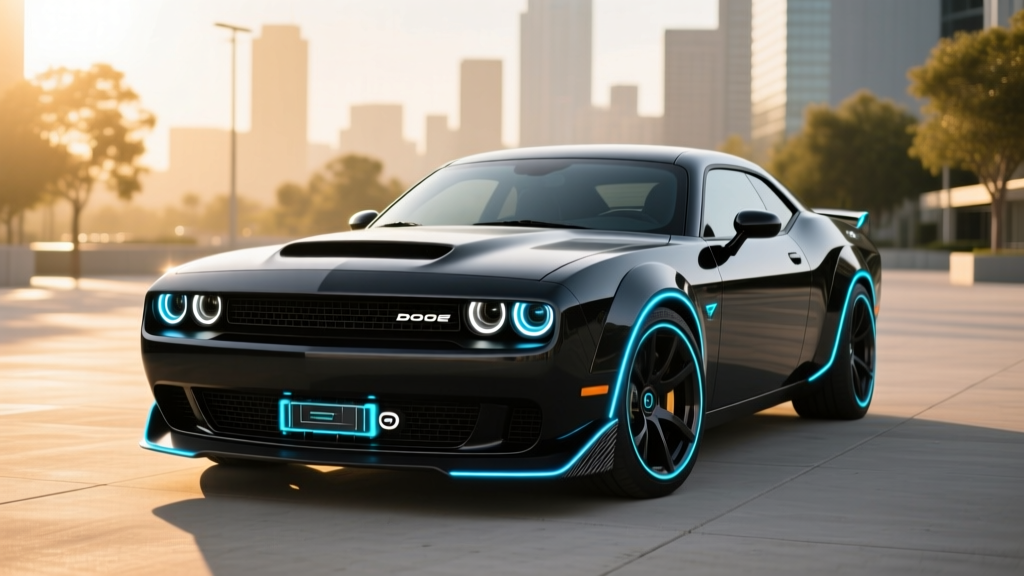
The Short Answer: There Is No Electric Dodge Challenger
Dodge discontinued the gas-powered Challenger after the 2023 model year and did not introduce a direct electric Challenger replacement. Instead, Stellantis launched the Dodge Charger Daytona — a two-door electric muscle car built on the STLA Large platform — as the spiritual and functional successor to the Challenger. If you are searching for an electric Dodge Challenger in 2026, the Charger Daytona (both the all-electric EV and the Hurricane inline-six gas variant) is the model to evaluate. The all-electric Charger Daytona Scat Pack starts at approximately $61,590 (including destination) and delivers up to 670 horsepower, a 0-60 mph time of 3.3 seconds, and an EPA-estimated range of up to 260 miles on the R/T trim with the larger battery pack.
Why Dodge Replaced the Challenger With the Charger Daytona EV
The Challenger ended production in December 2023 as Dodge retired its 6.2L supercharged HEMI V8 lineup. Rather than revive the Challenger nameplate on an electric platform, Dodge consolidated its two-door muscle offering under the Charger name — a decision rooted in brand heritage and market positioning. The 2025-2026 Charger Daytona is available in two powertrain configurations:
- Charger Daytona EV — Battery-electric, available in R/T and Scat Pack trims
- Charger SIXPACK — Gasoline-powered with the 3.0L Hurricane twin-turbo inline-six (up to 550 hp)
For buyers specifically searching for an electric Dodge Challenger, the Charger Daytona EV is the relevant model. It shares the Challenger's core identity: two doors, aggressive styling, rear-wheel-drive bias (with available AWD), and straight-line performance. The key difference is the powertrain — a 100.5 kWh (gross) lithium-ion NMC battery pack replacing the HEMI.
2026 Charger Daytona EV: Full Spec Breakdown
Here are the confirmed specifications for the 2026 Dodge Charger Daytona EV lineup as of early 2026. Note that the R/T trim uses a dual-motor AWD configuration, while the Scat Pack adds a more powerful rear motor for increased output.
| Specification | Daytona R/T | Daytona Scat Pack |
|---|---|---|
| Battery (gross / usable) | 100.5 kWh / ~92 kWh (NMC) | 100.5 kWh / ~92 kWh (NMC) |
| Drivetrain | Dual-motor AWD | Dual-motor AWD (higher-output rear) |
| Horsepower | 496 hp | 670 hp (with Direct Connection Stage 2) |
| Torque | 404 lb-ft | 627 lb-ft |
| 0-60 mph | 4.7 seconds | 3.3 seconds |
| EPA Range (est.) | ~274 miles | ~260 miles |
| Max DC Fast Charge Rate | ~200 kW (peak) | ~200 kW (peak) |
| 10-80% DC Fast Charge | ~27 minutes | ~27 minutes |
| Level 2 Charging (240V) | ~11 kW onboard charger | ~11 kW onboard charger |
| Base MSRP (incl. destination) | ~$51,590 | ~$61,590 |
| Battery/Powertrain Warranty | 8 years / 100,000 miles | 8 years / 100,000 miles |
Real-World Range Expectations
The EPA-estimated 274 miles (R/T) and 260 miles (Scat Pack) assume mixed driving under moderate conditions. In real-world ownership:
- Highway driving at 75+ mph: Expect approximately 210-235 miles (R/T) or 200-220 miles (Scat Pack) due to aerodynamic drag on a large, heavy coupe.
- Cold weather (below 32°F): Range can drop 20-30%, putting effective range at roughly 175-220 miles depending on cabin heating usage and whether preconditioning is active.
- Aggressive driving / launch control: The Scat Pack's 670 hp will consume energy rapidly under hard acceleration. Track use can cut range to under 100 miles.
The Charger Daytona EV weighs over 5,800 pounds — that mass impacts efficiency, particularly at highway speeds where this platform is least efficient compared to lighter EVs like the Tesla Model 3 or Hyundai Ioniq 6.
Charger Daytona EV vs. Gas Challenger vs. Charger SIXPACK: Cost and Performance Comparison
Many buyers cross-shopping an "electric Dodge Challenger" are also considering the used gas Challenger market or the new Hurricane SIXPACK Charger. Here is how the costs and capabilities stack up.
| Metric | 2026 Daytona EV Scat Pack | 2023 Challenger R/T (5.7L HEMI) | 2026 Charger SIXPACK Scat Pack |
|---|---|---|---|
| Powertrain | Dual-motor electric AWD | 5.7L V8, RWD | 3.0L Hurricane I6 TT, AWD |
| Horsepower | 670 hp | 375 hp | 550 hp |
| 0-60 mph | 3.3 sec | ~5.0 sec | ~3.9 sec |
| EPA Range / MPG | ~260 mi / ~85 MPGe | ~16 city / 25 hwy MPG | ~18 city / 27 hwy MPG |
| Starting Price | ~$61,590 | ~$41,000 (2023 MSRP, now used) | ~$57,590 |
| Annual Fuel/Energy (15k mi) | ~$700-$950 | ~$2,400-$2,800 | ~$2,100-$2,500 |
| Annual Maintenance (est.) | ~$200-$350 | ~$600-$900 | ~$500-$750 |
| Federal Tax Credit (§30D) | Up to $7,500 (see eligibility) | $0 | $0 |
Fuel cost methodology: EV energy cost calculated at $0.14/kWh national average (home charging) and assumes ~3.0 miles/kWh efficiency. Gas costs calculated at $3.40/gallon. Actual costs vary significantly by state electricity rates and local fuel prices. Source: fueleconomy.gov and EIA energy price data.
Federal Tax Credit Eligibility: Can You Claim $7,500?
The Charger Daytona EV may qualify for the IRS §30D Clean Vehicle Credit of up to $7,500, but eligibility is not guaranteed for every buyer. As of 2026, the following requirements apply:
§30D Tax Credit Requirements (2026)
- MSRP Cap: The vehicle's base MSRP must not exceed $55,000 for sedans/coupes. The R/T trim (~$51,590) qualifies on price; the Scat Pack (~$61,590) likely exceeds the cap unless reclassified. Verify on the official DOE/IRS vehicle eligibility list.
- Buyer Income Limits: Modified adjusted gross income (MAGI) must not exceed $150,000 (single), $225,000 (head of household), or $300,000 (married filing jointly).
- Battery Sourcing: The $7,500 credit splits into two halves — $3,750 for critical minerals and $3,750 for battery component sourcing. Battery components must be manufactured or assembled in North America, and critical minerals must be sourced from the U.S. or FTA partners. Stellantis has indicated North American battery assembly for the STLA Large platform, but exact mineral sourcing compliance should be verified at purchase via the dealer's IRS point-of-sale documentation.
- Point-of-Sale Transfer: Eligible buyers can transfer the credit to the dealer at purchase, reducing the out-of-pocket price immediately rather than waiting for a tax refund.
- One Vehicle Per VIN: The credit is claimed per vehicle, not per buyer — but each buyer is limited to one new EV credit and one used EV credit per year.
Source: IRS §30D Clean Vehicle Credit guidelines. Tax credit rules change frequently — consult a tax professional and verify eligibility at the point of purchase.
Real-World Ownership: What First-Time EV Buyers Must Know
Buying a 670-hp electric muscle car is not the same as buying a gas Challenger. Here are the ownership realities that matter.
Home Charging Is Essential for This Vehicle
The Charger Daytona EV's 100.5 kWh battery is massive. On a standard 120V Level 1 outlet (1.4 kW), a full charge would take over 60 hours — completely impractical. A Level 2 home charger (240V, 48A circuit) delivering ~11 kW can recharge the battery from empty in approximately 9-10 hours, making overnight charging viable.
| Charging Level | Power (kW) | Miles Added Per Hour | 10-80% Time | Practical Use Case |
|---|---|---|---|---|
| Level 1 (120V) | ~1.4 kW | ~3-4 mi/hr | ~50+ hours | Emergency/trickle only |
| Level 2 (240V, 48A) | ~11 kW | ~28-32 mi/hr | ~7-8 hours | Daily home charging (overnight) |
| DC Fast Charge | Up to ~200 kW | ~150+ mi/hr (peak) | ~27 minutes | Road trips, public stations |
Home installation cost: Expect to pay $800-$2,500 for a Level 2 charger installation if your electrical panel has sufficient capacity (a 60A dedicated circuit is recommended). If your home requires a panel upgrade from 100A to 200A service, add $1,500-$3,500. Always hire a licensed electrician and pull a permit — improper EV charger installation is a fire risk.
Charging Deserts and Road Trips
The Charger Daytona EV uses the CCS1 connector for DC fast charging (Stellantis has not adopted NACS for this platform as of 2026). Public CCS charging infrastructure has improved significantly, but reliability remains inconsistent compared to the Tesla Supercharger network. On long road trips, plan routes around Electrify America, EVgo, or ChargePoint DC fast stations. At a 200 kW charger, the charge curve tapers significantly above 80% state of charge — charging from 80-100% can add another 20-25 minutes. For road trip planning, target 10-80% charges and plan stops every 180-200 real-world miles.
Insurance Costs
High-performance EVs carry higher insurance premiums. The Scat Pack's 670 hp and $61,590 price tag translate to insurance costs that can be 20-40% higher than a comparable gas muscle car, depending on your driving record, age, and state. Get quotes before purchasing — some insurers offer EV-specific discounts, but the performance classification often outweighs them.
Common Misconceptions About the Electric Dodge Challenger Replacement
| Myth | Fact |
|---|---|
| "The electric Challenger is called the Charger Daytona." | Dodge never made an electric Challenger. The Challenger was discontinued; the Charger Daytona EV is a separate model that fills the two-door muscle car role. |
| "It gets 300+ miles of range." | EPA estimates are approximately 260-274 miles depending on trim. Real-world highway and cold-weather range is lower — expect 200-235 miles in typical highway driving. |
| "It charges as fast as a Tesla." | The ~200 kW peak charge rate is respectable but trails the Tesla Model S Plaid's ~250 kW and the Hyundai Ioniq 5's ~240 kW on 800V architecture. The Charger Daytona uses a 400V architecture. |
| "It qualifies for the full $7,500 tax credit automatically." | Eligibility depends on the MSRP cap, buyer income, and battery sourcing compliance. The Scat Pack's MSRP may exceed the $55,000 sedan/coupe cap — verify before purchase. |
| "Electric muscle cars have no soul." | Dodge includes a "Fratzonic" exhaust sound system that simulates engine noise through external speakers. It is synthetic, not a real exhaust note — but the 3.3-second 0-60 time is undeniably real. |
Decision Framework: Is the Charger Daytona EV Right for You?
Choose the Charger Daytona EV If:
- You want a two-door electric muscle car with 496-670 hp and sub-4-second 0-60 performance.
- You have access to Level 2 home charging (garage or dedicated parking with 240V access).
- Your daily commute is under 100 miles round-trip, making overnight home charging sufficient.
- You value instant electric torque and want a performance coupe that costs under $1,000/year to "fuel" at home.
- You are open to CCS charging for road trips and can plan around Electrify America or similar networks.
Choose the Charger SIXPACK (Gas) Instead If:
- You cannot install a Level 2 charger at home and lack reliable public charging access.
- You regularly drive 300+ miles between stops and don't want to plan around DC fast chargers.
- You live in a region with extreme cold (frequent sub-zero temperatures) where EV range loss is significant.
- You prefer a traditional exhaust note and mechanical driving feel over synthetic sound simulation.
- Your budget is closer to $55,000-$58,000 and you want the Hurricane I6 performance without the EV premium.
Look at a Used Gas Challenger Instead If:
- You specifically want the HEMI V8 experience — there is no electric equivalent for that sound and feel.
- You want a proven platform with established aftermarket support and simpler maintenance.
- You are buying primarily for collectibility — the final-year HEMI Challengers (2023) may hold value as enthusiast cars.
5-Year Cost of Ownership Snapshot
| Cost Category | Daytona EV Scat Pack | SIXPACK Scat Pack |
|---|---|---|
| Purchase Price (MSRP) | $61,590 | $57,590 |
| Federal Tax Credit | -$3,750 to -$7,500 (if eligible) | $0 |
| Home Charger Install | $1,200-$2,500 | $0 |
| Fuel/Energy (5 yrs) | $3,500-$4,750 | $10,500-$12,500 |
| Maintenance (5 yrs) | $1,000-$1,750 | $2,500-$3,750 |
| Insurance (5 yrs, est.) | $12,000-$16,000 | $9,000-$13,000 |
| Estimated Depreciation | $22,000-$28,000 | $18,000-$24,000 |
| Total (approx.) | $78,000-$95,000 | $78,000-$94,000 |
Key takeaway: The EV's fuel and maintenance savings ($8,000-$11,000 over 5 years) are largely offset by higher insurance costs, home charger installation, and potentially steeper depreciation. The tax credit narrows the gap further if you qualify. The financial case for the EV is strongest when you have cheap home electricity (under $0.12/kWh), qualify for the full credit, and drive high annual miles.
Frequently Asked Questions
Will Dodge ever make an electric Challenger?
As of 2026, Dodge has not announced plans to revive the Challenger nameplate as an EV. The Charger Daytona EV effectively fills the two-door electric muscle car segment within Stellantis. Dodge CEO Tim Kuniskis has stated the brand will go fully electric by 2027, but future model names have not been confirmed.
Does the Charger Daytona EV have a manual transmission option?
No. Like all current production EVs, the Charger Daytona uses a single-speed reduction gear. There is no manual or multi-speed transmission. Dodge does include paddle-shift-simulated "gear changes" through its Fratzonic system for drivers who want a more engaging feel, but these are purely cosmetic — the powertrain operates as a single-speed EV.
How does the Fratzonic exhaust sound system work?
Fratzonic uses external and internal speakers to generate synthetic sound that mimics a performance exhaust. It responds to throttle input and vehicle speed. You can turn it off entirely for silent electric driving, or set it to various intensity levels. Reviews are mixed — some enthusiasts appreciate the theater, while others find it unconvincing compared to a real V8 exhaust note.
Can the Charger Daytona EV tow?
Dodge has not published an official towing rating for the Charger Daytona EV as of early 2026. As a performance coupe, towing is not a primary use case. If you need towing capacity, consider the Ram 1500 REV or the Jeep Wagoneer S — both STLA-platform EVs with higher towing ratings.
What is the battery warranty, and what happens if it degrades?
The Charger Daytona EV carries an 8-year / 100,000-mile battery and powertrain warranty, consistent with federal requirements for EVs. Stellantis guarantees the battery will retain a minimum percentage of its original capacity (typically 70%) during the warranty period. If the battery degrades below that threshold, Stellantis will repair or replace it at no cost. Full battery replacement outside warranty is estimated at $15,000-$22,000 based on current NMC pack pricing for 100+ kWh batteries, though costs are expected to decline over the vehicle's lifetime.
Is the Charger Daytona EV eligible for state incentives in addition to the federal credit?
Possibly. Many states offer additional EV rebates or tax credits (e.g., California's CVRP, Colorado's $5,000 credit, New York's Drive Clean Rebate). These vary by state, income, and vehicle price. Check your state's energy or environmental agency website for current programs. State incentives can sometimes stack with the federal §30D credit, further reducing your effective purchase price.