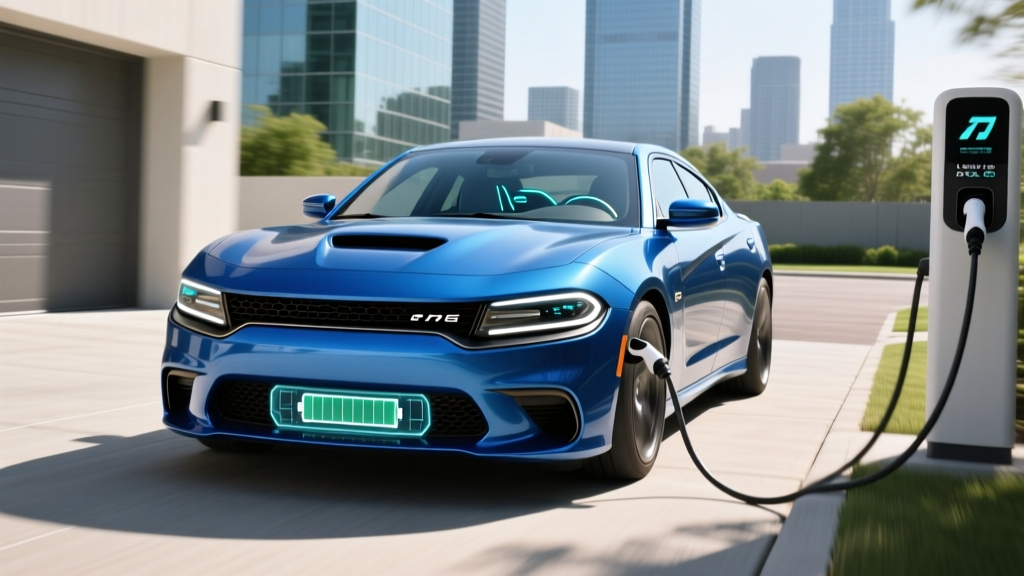
Quick Answer: The 2026 Dodge Charger Daytona is the brand's first all-electric muscle car, built on Stellantis' STLA Large platform. It comes in two main variants: the R/T (496 HP, 319-mile EPA range) starting at $51,990, and the Scat Pack (670 HP, 260-mile EPA range) starting at $59,990. Both use a 100.5 kWh (gross) NMC lithium-ion battery and support up to ~175 kW DC fast charging (10–80% in roughly 27 minutes). Federal tax credit eligibility under IRS §30D is limited — the vehicle exceeds the $55,000 sedan MSRP cap, so the Scat Pack does not qualify, and R/T eligibility depends on final battery sourcing and buyer income limits. If you want muscle-car performance with daily-driver EV practicality, the R/T is the value pick; the Scat Pack trades ~60 miles of range for serious acceleration.
The Electric Dodge Charger Daytona: What Buyers Need to Know
Dodge has spent a decade defining itself with supercharged HEMI V8s. The 2026 Charger Daytona EV marks a hard pivot — and it arrives with genuine performance credentials. The Scat Pack variant hits 0–60 mph in 3.3 seconds with 670 horsepower and 627 lb-ft of torque, numbers that would have required a Hellcat engine just two years ago. The R/T delivers 496 HP and a 0–60 time of approximately 4.7 seconds.
But performance is only part of the ownership equation. This guide covers the real-world numbers that matter once the adrenaline fades: how far you'll actually drive on a charge, what home and public charging cost, whether the federal tax credit applies, and how the Charger Daytona stacks up against the gas-powered Charger and comparable EVs.
Range, Battery, and Charging: The Real Numbers
The Charger Daytona uses a 100.5 kWh gross / ~92 kWh usable battery pack with NMC (nickel manganese cobalt) chemistry. Dodge equips both trims with a dual-motor all-wheel-drive layout and an 800-volt electrical architecture, which enables faster DC charging than the more common 400V systems found in many competitors.
| Specification | R/T (22" Wheels) | Scat Pack (20" Wheels) |
|---|---|---|
| EPA Range | 319 miles | 260 miles |
| Real-World Highway (est.) | ~255–275 miles | ~210–225 miles |
| Real-World Cold Weather (est.) | ~220–245 miles | ~180–195 miles |
| Battery (Gross / Usable) | 100.5 kWh / ~92 kWh | 100.5 kWh / ~92 kWh |
| Chemistry | NMC | NMC |
| Max DC Fast Charge Rate | ~175 kW | ~175 kW |
| 10–80% DC Charge Time | ~27 minutes | ~27 minutes |
| Level 2 (AC) Charge Rate | ~11 kW | ~11 kW |
| Level 2 Full Charge Time | ~9–10 hours | ~9–10 hours |
| Horsepower | 496 HP | 670 HP |
| 0–60 mph | 4.7 sec | 3.3 sec |
| Drivetrain | AWD (dual motor) | AWD (dual motor) |
Real-World Range Reality Check: EPA estimates assume a mix of city and highway driving at moderate temperatures. On a sustained 75 mph highway run in 70°F weather, expect the R/T to deliver roughly 255–275 miles and the Scat Pack around 210–225 miles. In freezing conditions (below 32°F), range drops 20–30% due to battery heating demands and cabin climate use — plan for ~220 miles (R/T) or ~180 miles (Scat Pack) on winter road trips. Preconditioning the battery before fast charging (via the vehicle's navigation-routed preconditioning) recovers some charging speed in cold weather.
Charging speed is where the 800V architecture matters. At a compatible 350 kW DC fast charger (like Electrify America or EVgo's newest stations), the Charger Daytona can sustain peak rates longer than 400V competitors before tapering. However, the ~175 kW peak means you won't see the 270+ kW rates that vehicles like the Hyundai Ioniq 5 or Lucid Air achieve. The charge curve tapers significantly above 80% State of Charge (SoC) — a typical 80–100% top-off adds another 25–35 minutes, so plan your road trips around 10–80% sessions.
Cost Breakdown: Purchase, Charging, and Ownership
The sticker price is just the starting point. Here's what full ownership looks like over five years.
Purchase Price and Tax Credit
| Trim | Base MSRP | Federal §30D Credit | Effective Price |
|---|---|---|---|
| R/T | $51,990 | Up to $7,500* | ~$44,490* |
| Scat Pack | $59,990 | $0 (exceeds $55K sedan cap) | $59,990 |
*R/T credit eligibility depends on battery critical-mineral and component sourcing meeting 2026 IRS requirements, plus buyer income caps ($150K single / $300K joint). The credit can now be transferred to the dealer at point of sale as a purchase-price reduction. Verify current eligibility at IRS.gov §30D before buying. The Scat Pack's MSRP exceeds the $55,000 sedan cap, making it ineligible regardless of sourcing.
Five-Year Cost Comparison: Charger Daytona EV vs. Gas Charger
We compared the Charger Daytona R/T against the 2024 Dodge Charger R/T with the 3.6L Pentastar V6 (the closest gas equivalent still in recent inventory) over 5 years and 75,000 miles. Electricity cost assumes a national average of $0.16/kWh; gasoline assumes $3.50/gallon at 22 MPG combined.
| Cost Category (5 yr / 75K mi) | Charger Daytona R/T (EV) | Gas Charger R/T (3.6L V6) |
|---|---|---|
| Purchase Price (after credit) | ~$44,490 | ~$42,000 |
| Fuel / Electricity | ~$3,100 | ~$11,930 |
| Maintenance | ~$1,500 | ~$4,200 |
| Insurance (avg.) | ~$12,500 | ~$10,800 |
| Estimated Depreciation | ~$18,000 | ~$16,500 |
| Total 5-Year Cost | ~$79,590 | ~$85,430 |
The EV saves roughly $5,800 over five years, primarily through fuel and maintenance reductions. However, insurance runs approximately 15–20% higher for the EV — a common pattern due to higher repair costs and battery replacement risk. Home charging at off-peak utility rates ($0.10–0.12/kWh) widens the fuel savings gap further; exclusive reliance on public DC fast charging ($0.35–0.50/kWh) narrows it significantly.
According to fueleconomy.gov, the Charger Daytona R/T achieves approximately 94 MPGe combined, while the Scat Pack drops to roughly 79 MPGe due to its stickier tires, more aggressive tune, and added weight from performance hardware.
Home Charging Setup: What It Takes
Level 1 charging (120V standard outlet) delivers roughly 1.4 kW — adding about 4–5 miles of range per hour. For a 100 kWh battery, a full charge takes over 60 hours. This works only for very low daily mileage (under 30 miles) and is not a realistic primary strategy.
Level 2 home charging is essential for Charger Daytona ownership. The onboard charger accepts up to ~11 kW (48 amps at 240V), which adds roughly 30–35 miles of range per hour and fully recharges the pack in 9–10 hours — ideal for overnight top-ups.
| Home Charging Component | Estimated Cost Range |
|---|---|
| Level 2 EVSE (ChargePoint, Wallbox, etc.) | $400 – $750 |
| Electrician: 240V/50A circuit install | $800 – $2,000 |
| Electrical panel upgrade (if needed) | $1,500 – $3,500 |
| Permit and inspection | $100 – $300 |
| Total (no panel upgrade) | $1,300 – $3,050 |
| Total (with panel upgrade) | $2,800 – $6,550 |
If your home has a 200-amp electrical panel with spare capacity, expect the simpler end of the range. Older homes with 100-amp service may require a panel upgrade — get a licensed electrician's assessment before committing to the vehicle purchase. Some utilities offer rebates of $250–$1,000 for Level 2 installations; check with your local provider.
For renters or condo owners without dedicated parking, public charging infrastructure becomes critical. Use the Alternative Fuels Data Center map to verify DC fast charger density along your regular routes before buying.
Charger Daytona EV vs. Gas Charger vs. Tesla Model S
Where does the electric Dodge actually fit in the market? Here's how it compares to both its gas predecessor and the closest EV rival.
| Attribute | Dodge Charger Daytona R/T | Dodge Charger R/T (Gas, prior gen) | Tesla Model S LR |
|---|---|---|---|
| Powertrain | Dual-motor AWD EV | 5.7L HEMI V8, RWD | Dual-motor AWD EV |
| Horsepower | 496 HP | 370 HP | 670 HP |
| 0–60 mph | 4.7 sec | 5.2 sec | 3.1 sec |
| EPA Range | 319 mi | ~390 mi (18.5 gal × 21 MPG) | 402 mi |
| Fuel/Energy Cost per Mile | ~$0.041 | ~$0.159 | ~$0.038 |
| Cargo (total) | ~16.4 cu ft (trunk + frunk) | ~16.5 cu ft | ~28 cu ft (trunk + frunk) |
| Base MSRP | $51,990 | ~$44,000 | $74,990 |
| Tax Credit | Up to $7,500* | $0 | $0 (exceeds cap) |
The Charger Daytona R/T outperforms the gas Charger on acceleration while costing roughly 75% less per mile to fuel. It falls short of the Tesla Model S on range and cargo, but undercuts it by over $20,000 before any incentives. The Scat Pack's 3.3-second 0–60 competes directly with the Model S, but the Tesla's 402-mile range and Supercharger network advantage make it the more practical road-trip vehicle.
One critical note: the Charger Daytona charges via CCS1 (with NACS adapter support growing through Stellantis' announced network partnerships). Tesla owners benefit from native Supercharger access; Dodge buyers should verify Electrify America, EVgo, or ChargePoint coverage in their area for reliable DC fast charging.
Common Misconceptions: Myths vs. Facts
| Myth | Fact |
|---|---|
| "The electric Dodge has no soul — it doesn't even sound like a muscle car." | Dodge engineered a "Fratzonic Exhaust" system that generates synthetic engine sounds through external speakers, reaching up to 126 dB. It's not a V8 rumble, but it provides audible feedback during acceleration. You can also turn it off for silent driving. |
| "EV batteries need replacing every few years at huge cost." | Dodge warranties the Charger Daytona battery for 8 years / 100,000 miles with a capacity retention threshold of 70%. NMC batteries in modern thermal-managed packs typically retain 85–90% capacity after 100K miles based on industry data. Full replacement, if ever needed outside warranty, is estimated at $12,000–$18,000. |
| "You can't take an EV on a road trip." | With 260–319 miles of range and 10–80% DC charging in ~27 minutes, road trips require 25–30 minute stops every 2–3 hours — roughly the same cadence as gas stops when you factor in food and rest breaks. The constraint is charger availability, not the vehicle itself. |
| "EVs are worse in winter." | Range drops 20–30% in freezing weather — this is real. However, the Charger Daytona's heat pump and battery preconditioning mitigate some loss. AWD traction in snow is superior to the gas Charger's RWD layout, and instant electric torque eliminates cold-start issues. |
| "The $7,500 tax credit applies to every EV." | Under IRS §30D, the credit requires the vehicle to meet battery sourcing rules (critical minerals + components from the US or FTA partners), the buyer must fall under income caps, and the vehicle MSRP must not exceed $55,000 for sedans. Always verify at IRS.gov before purchasing. |
Decision Framework: Is the Electric Dodge Right for You?
Choose the Charger Daytona R/T if:
- You want muscle-car performance (496 HP, sub-5-second 0–60) with daily-driver efficiency
- You have home Level 2 charging access (or can install it)
- Your daily commute is under 80 miles round-trip
- You value the ~$8,800 five-year fuel savings over maximum acceleration
- You may qualify for the $7,500 federal credit (buyer income under cap, R/T sourcing eligible)
Choose the Charger Daytona Scat Pack if:
- Acceleration is the priority (3.3 sec 0–60, 670 HP) and you accept the 260-mile range trade-off
- You understand the MSRP exceeds the $55K sedan cap — no federal tax credit
- You primarily drive locally and road-trip infrequently
- You're cross-shopping a Tesla Model S Plaid but prefer Dodge styling and ergonomics
Look elsewhere if:
- You need 350+ miles of range for frequent long-distance driving (consider Tesla Model S, Lucid Air, or Hyundai Ioniq 6)
- You lack reliable home or workplace charging access
- Your budget is under $45,000 (explore used EV credits or models like the Chevrolet Equinox EV)
- You want a hands-free driving system — Dodge's ADAS is competent Level 2 but does not match GM Super Cruise or Ford BlueCruise on highway automation
What First-Time EV Buyers Should Know
If the Charger Daytona is your first electric vehicle, prepare for a different ownership rhythm:
- Charge at home overnight: This covers 90%+ of driving. Set your charger to stop at 80% SoC for daily use to extend NMC battery longevity; charge to 100% only before long trips.
- Download charging apps before delivery: PlugShare, Electrify America, and EVgo are essential for finding public chargers. Check real-time availability — a listed charger may be offline.
- Understand kW vs. kWh: kW (kilowatts) measures charging power — how fast energy flows. kWh (kilowatt-hours) measures battery capacity — how much energy is stored. A 175 kW charger fills a 100 kWh battery; the rate tapers as the battery fills, like water pressure dropping as a glass fills.
- Plan winter charging: Cold batteries charge slower. Use the vehicle's navigation to route to a charger — this triggers battery preconditioning, warming the pack for faster DC charging upon arrival.
- Budget for higher insurance: Get quotes before purchasing. EV insurance averages 15–20% higher than comparable gas vehicles due to repair complexity and battery value.
- Tire wear increases: EVs are heavier and deliver instant torque. Expect tire replacement 20–30% sooner than on a gas car. Budget $800–$1,400 for a set of performance all-season tires.
Frequently Asked Questions
Does the Dodge Charger Daytona qualify for the $7,500 federal tax credit?
The R/T trim (MSRP $51,990) falls under the $55,000 sedan cap and may qualify, depending on battery sourcing compliance and buyer income limits ($150K single / $225K head of household / $300K joint). The Scat Pack ($59,990) exceeds the cap and does not qualify. Rules change — verify at IRS.gov before purchase. The credit can be applied as a point-of-sale price reduction through participating dealers.
How long does the Charger Daytona battery last?
Dodge provides an 8-year/100,000-mile battery warranty guaranteeing at least 70% capacity retention. Industry data on NMC packs with active thermal management suggests 85–90% retention at 100K miles is typical. Many EV batteries remain functional well beyond 150K miles with gradual capacity loss.
Can I charge the Charger Daytona at Tesla Superchargers?
Not natively. The Charger Daytona uses CCS1 connectors. Stellantis has announced plans for NACS adapter compatibility, but as of the 2026 model year, CCS networks (Electrify America, EVgo, ChargePoint) remain the primary DC fast-charging option. Check Stellantis' latest announcements for adapter availability.
What's the real cost to charge at home vs. public stations?
At home on a national average rate of $0.16/kWh, a full charge costs roughly $16 for ~300 miles of range — about $0.05 per mile. Public DC fast chargers at $0.35–$0.50/kWh cost $35–$50 for the same session. Compare this to the gas Charger at $3.50/gallon and 21 MPG: roughly $0.17 per mile. Home charging delivers 3–4× fuel savings.
Is the Fratzonic exhaust sound system gimmicky?
Opinions vary. The system generates synthetic powertrain sounds calibrated to vehicle speed and throttle input, reaching up to 126 dB externally. In testing, it provides useful auditory feedback during spirited driving but lacks the harmonic complexity of a real V8. Most reviewers find it preferable to silence during hard acceleration but unnecessary during cruising. It can be disabled entirely.
How does the Charger Daytona handle in snow?
The dual-motor AWD system provides torque to all four wheels with instant electric response — no lag waiting for a transmission to downshift or a differential to engage. Combined with the vehicle's substantial weight (~5,800 lbs), traction in snow is significantly better than the rear-drive gas Charger. Winter tires further improve braking and cornering grip.