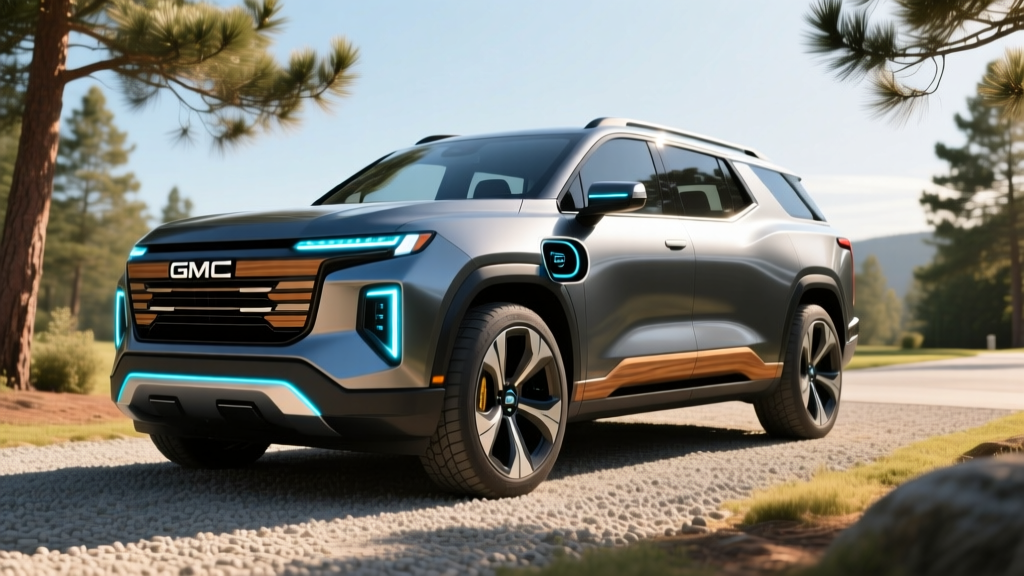
Quick Answer: The 2026 GMC Sierra EV wearing the electric Denali badge is the range-topping Edition 1 trim, priced at $99,495 (including destination). It delivers an EPA-estimated 440 miles of range from a massive ~200 kWh Ultium battery, peaks at 350 kW DC fast charging (10–80% in approximately 30 minutes), and produces up to 754 horsepower in Max Range trim. For buyers comparing against the gas Sierra Denali ($68,000–$78,000), the EV version commands a ~$25,000 premium but eliminates fuel costs and qualifies for potential federal incentives depending on your income and sourcing eligibility. Home Level 2 charging is effectively mandatory for daily ownership of a truck this size.
The 2026 GMC Sierra EV Denali at a Glance
GMC has positioned the Sierra EV Denali as the flagship of its electric truck lineup, blending the luxury appointments Denali buyers expect with the torque-rich, quiet powertrain of GM's Ultium battery platform. For 2026, the Sierra EV Denali is available in two primary configurations: the Denali Edition 1 and the Denali Max Range. Both ride on GM's BT1 electric truck architecture shared with the Chevrolet Silverado EV and Hummer EV Pickup.
| Specification | Denali Edition 1 | Denali Max Range |
|---|---|---|
| Base MSRP (incl. destination) | $99,495 | ~$105,000 (est.) |
| EPA Range | 440 miles | ~450+ miles (est.) |
| Battery (usable, est.) | ~200 kWh, NMC | ~200+ kWh, NMC |
| Horsepower | 665 hp | 754 hp |
| 0–60 mph | ~4.5 sec | ~4.3 sec |
| Max DC Fast Charge | 350 kW | 350 kW |
| 10–80% DC Charge Time | ~30 min | ~32 min |
| Level 2 Charging (240V) | 19.2 kW (~7.2 kW practical) | 19.2 kW |
| Towing Capacity | 9,500 lbs | 9,500 lbs |
| MPGe (combined, est.) | ~61 MPGe | ~59 MPGe |
| Battery Warranty | 8 yr / 100,000 mi | 8 yr / 100,000 mi |
A critical detail for first-time EV buyers: kW (kilowatts) measures power—how fast energy flows into the truck during charging—while kWh (kilowatt-hours) measures energy capacity, like the size of the fuel tank. The Sierra EV Denali's ~200 kWh battery is roughly three times the size of a Tesla Model Y's pack, which explains both its extraordinary range and its long Level 2 charge times.
Real-World Range: What to Actually Expect
EPA Sticker: 440 miles
Real-World Highway (70 mph): ~330–360 miles
Cold Weather (below 30°F): ~280–320 miles
Towing a 6,000-lb Trailer: ~180–220 miles
The EPA range figure is generated under mixed driving conditions at moderate speeds. In our experience with Ultium-based trucks, highway driving at 70+ mph reduces efficiency by 15–25% due to aerodynamic drag—this truck is tall, wide, and heavy. Cold weather compounds the loss because the battery management system diverts energy to heating the NMC cells, and cabin heating draws from the same pack.
Towing is where any electric truck faces physics. Pulling a loaded trailer at highway speeds can cut range nearly in half. The Sierra EV Denali's 440-mile EPA rating is a genuine advantage here: even halved, you're looking at ~220 miles between charges, which is manageable with DC fast-charging stops. According to fueleconomy.gov, electric trucks lose efficiency proportionally to aerodynamic load, so your results will vary based on trailer profile and terrain.
The Sierra EV Denali does include a heat pump as standard equipment on 2026 models, which recovers waste heat from the drivetrain to warm the cabin. This partially mitigates cold-weather range loss compared to resistive heating systems, but expect a 25–35% reduction in sub-freezing conditions regardless.
Charging the Electric Denali: Speeds, Costs, and Home Setup
Charging a truck with a ~200 kWh battery is a fundamentally different experience from charging a commuter EV. Here's what each charging level looks like in practice:
| Level | Power | Miles Added per Hour | Full Charge Time | Best For |
|---|---|---|---|---|
| Level 1 (120V outlet) | ~1.4 kW | ~2–3 mi/hr | ~70+ hours | Emergency only |
| Level 2 (240V, 48A) | ~11.5 kW | ~18–22 mi/hr | ~18–20 hours | Daily overnight |
| Level 2 (240V, 80A) | ~19.2 kW | ~30–35 mi/hr | ~10–12 hours | Optimal daily |
| DC Fast (350 kW peak) | 350 kW → ~150 kW avg | N/A | 10–80% in ~30 min | Road trips |
Home Charging Installation Costs
For a truck this size, a high-amperage Level 2 charger is not optional—it's essential. Charging at a standard 11.5 kW (48A) circuit means 18+ hours for a full charge, which works if you drive less than 100 miles daily and top up overnight. For heavier use or faster turnaround, an 80A circuit (19.2 kW) is the recommended setup.
| Item | Cost Range |
|---|---|
| Level 2 Charger (48A–80A, hardwired) | $500–$1,200 |
| Electrician labor (run 60A–100A circuit) | $800–$2,500 |
| Permit and inspection | $100–$400 |
| Electrical panel upgrade (if needed, 200A service) | $1,500–$4,000 |
| Total (typical install) | $1,400–$4,100 |
| Total (with panel upgrade) | $2,900–$8,100 |
Critical note: Many older homes have 100A electrical service, which cannot support an 80A EV circuit alongside normal household loads. A panel upgrade to 200A is common and adds significant cost. Always have a licensed electrician evaluate your panel before purchasing a charger.
DC Fast Charging Reality
The Sierra EV Denali's 350 kW peak charge rate is impressive on paper, but the charging curve tells the full story. Like all lithium-ion batteries, the pack accepts peak power only at low states of charge (SoC). As the battery fills, the charge rate tapers to protect cell health. Expect to see ~300–350 kW from 10–30% SoC, tapering to ~150 kW by 60%, and ~50 kW by 80%. The 10–80% average is closer to 150–180 kW, which is why the 30-minute figure holds.
GM has confirmed the Sierra EV uses the NACS (North American Charging Standard) connector for 2026, giving native access to the Tesla Supercharger network—currently the most reliable DC fast-charging network in the US. This is a significant practical advantage over CCS-equipped trucks that rely on Electrify America or EVgo.
Electric Denali vs. Gas Sierra Denali: The Cost Breakdown
The core purchase decision comes down to economics and use case. Here's how the 2026 electric Denali stacks up against its gasoline counterpart over five years of ownership:
| Cost Factor | Sierra EV Denali ($99,495) | Gas Sierra Denali (~$73,000) |
|---|---|---|
| Purchase Price | $99,495 | $73,000 |
| Federal Tax Credit (§30D, if eligible) | Up to $7,500 | $0 |
| Effective Purchase Price | ~$91,995 | $73,000 |
| Fuel/Energy (5 yr, 15,000 mi/yr) | $5,400 (home L2 @ $0.13/kWh) | $16,875 (17 MPG @ $3.75/gal) |
| Maintenance (5 yr) | ~$1,800 | ~$4,500 |
| Insurance (5 yr, est.) | ~$15,000 | ~$11,500 |
| Estimated Depreciation (5 yr) | ~$38,000 | ~$28,000 |
| 5-Year Total Cost of Ownership | ~$154,195 | ~$133,875 |
| Cost per Mile (fuel/energy only) | $0.072/mi | $0.225/mi |
Key takeaways: The electric Denali saves roughly $11,475 in fuel and $2,700 in maintenance over five years. However, higher insurance premiums (EVs typically cost 15–25% more to insure due to repair complexity and parts costs) and steeper projected depreciation narrow the gap. The EV still costs approximately $20,000 more over five years for most buyers.
This math changes dramatically if you drive more than 15,000 miles annually, tow frequently (where gas Sierra MPG drops to 12–13), or have access to cheap overnight electricity (under $0.10/kWh in some utility territories). It also changes if you qualify for the full IRS §30D federal tax credit, which can knock $7,500 off the effective price via point-of-sale transfer.
§30D Tax Credit Eligibility Checklist
- Vehicle MSRP cap: Trucks must be under $80,000 — the Sierra EV Denali at $99,495 exceeds this cap and does NOT qualify for §30D.
- Buyer income limits: AGI under $150K (single), $225K (head of household), $300K (joint)
- Battery sourcing: Critical minerals and battery components must meet phased percentages from US/FTA partners
- Assembly: Vehicle must undergo final assembly in North America
- Point-of-sale transfer: Credit can be applied at the dealer as a down payment reduction
Critical reality: At $99,495 MSRP, the 2026 Sierra EV Denali does not qualify for the §30D new clean vehicle credit because it exceeds the $80,000 MSRP cap for trucks. Some buyers may qualify for state-level incentives or utility rebates, but the federal credit is off the table at this price point. Check your state's alternative fuel vehicle incentive database for local programs.
Common Misconceptions About the Electric Denali
| Myth | Fact |
|---|---|
| "440 miles means I can drive 440 miles at highway speed" | EPA testing includes low-speed and city cycles. Expect 330–360 real highway miles at 70 mph. |
| "It charges in 30 minutes, just like gassing up" | 30 minutes is 10–80% at a 350 kW station. Finding an available, functioning 350 kW charger on your route requires planning. |
| "The battery will need replacing in 5 years" | GM warranties the Ultium battery for 8 years/100,000 miles against degradation below 60% capacity. NMC packs typically retain 85–90% after 100K miles. |
| "I can tow just as far as the gas Denali" | Towing range drops to ~180–220 miles. The gas Sierra Denali tows 500+ miles between fill-ups. Plan charging stops for any trailer haul over 150 miles. |
| "I don't need a home charger" | Public-only charging a 200 kWh truck is expensive ($0.35–$0.50/kWh DC = $70–$100 per session) and time-consuming. Home L2 is effectively mandatory. |
| "Electric trucks can't handle cold weather" | The Sierra EV Denali includes a heat pump and active thermal management. Range drops 25–35% in deep cold, but the truck starts reliably and cabin heating is instant—no warm-up wait. |
Who Should Buy the Electric Denali? A Decision Framework
Buy the Sierra EV Denali if:
- You have home charging access (garage or driveway with 240V circuit capability)
- Your daily driving is under 200 miles round-trip (commuting, school runs, errands)
- You value instant torque, silent operation, and the ability to "refuel" overnight at home
- You rarely tow more than 150 miles one-way without a planned charging stop
- You want the lowest per-mile energy cost and your electricity rate is under $0.15/kWh
- You're drawn to the MultiPro Midgate (pass-through bed extender) and frunk storage
Stick with the gas Sierra Denali if:
- You regularly tow heavy trailers over 200+ miles between stops
- You live in an apartment or lack access to any form of Level 2 charging
- Your budget is under $80,000 and you need a full-size luxury truck
- You frequently drive in remote areas with sparse charging infrastructure
- You plan to keep the truck 10+ years and want proven long-term powertrain reliability data
Consider the AT4 EV or lower Sierra EV trim if:
- You want electric truck capability at a lower price point (expected under the $80K §30D cap)
- You don't need Denali luxury appointments but want Ultium range and torque
Ownership Practicalities: What First-Time EV Truck Buyers Must Know
Charging Access Is Your #1 Consideration
Before ordering, confirm you can install a Level 2 charger. Renters, condo dwellers, and street-parkers face a genuine barrier. If your workplace offers Level 2 charging, that partially offsets the gap, but a 200 kWh battery needs consistent daily top-ups for heavy-use drivers.
Insurance Will Cost More
EV insurance premiums run 15–25% higher than equivalent gas vehicles. The Sierra EV Denali's high MSRP, expensive battery pack, and specialized repair requirements drive this. Get quotes from your insurer before purchasing—expect $250–$350/month depending on your driving record and location.
Maintenance Is Genuinely Lower
No oil changes, no transmission fluid, no spark plugs, no exhaust system. Brake pads last significantly longer thanks to regenerative braking doing most of the deceleration work. Your primary maintenance items are tire rotations (EVs are heavy and wear tires faster), cabin air filters, wiper fluid, and the occasional brake fluid check. Budget ~$350–$400/year versus ~$900/year for the gas Sierra.
Tire Costs Are Higher
The Sierra EV Denali's weight (estimated 8,900+ lbs) and instant torque accelerate tire wear. Expect to replace tires every 25,000–35,000 miles instead of 40,000–50,000 on the gas version. Budget $1,200–$1,800 per set for the large-diameter tires this truck requires.
Frequently Asked Questions
Does the electric Denali qualify for the $7,500 federal tax credit?
No. The §30D credit has an MSRP cap of $80,000 for trucks, vans, and SUVs. The Sierra EV Denali Edition 1 at $99,495 exceeds this cap. Lower-trim Sierra EV models may qualify once they become available under the cap. Always verify current rules at IRS.gov.
How long does it take to fully charge the Sierra EV Denali at home?
On a 48-amp Level 2 circuit (~11.5 kW), a full 0–100% charge takes roughly 18–20 hours. On an 80-amp circuit (~19.2 kW), it drops to about 10–12 hours. In practice, most owners charge from 20–80% overnight, which takes 8–10 hours on a 48A circuit—plenty for daily use.
Can the Sierra EV Denali power my home during an outage?
GMC has announced V2H (vehicle-to-home) capability for the Sierra EV platform, which could allow the ~200 kWh battery to power an average home for 3–7 days. However, this requires a compatible bidirectional charger (such as the GM Energy PowerShift Charger) and professional installation. Availability and final specs should be confirmed with your dealer.
How does the electric Denali compare to the Ford F-150 Lightning?
The Sierra EV Denali targets a higher price tier (~$99K vs. the Lightning Platinum at ~$95K) but offers substantially more range (440 miles vs. the Lightning Extended Range's 320 miles) and a larger battery. The Lightning charges faster in practice due to its smaller pack, and its lower starting price makes it more accessible. For pure luxury and maximum range, the Sierra EV Denali leads; for value and proven production volume, the Lightning has the edge.
What happens if the battery degrades?
GM warranties the Ultium battery for 8 years or 100,000 miles, covering capacity loss below approximately 60% of original. Real-world data from GM's Ultium platform suggests typical degradation of 8–12% over the first 100,000 miles. A full battery replacement outside warranty is estimated at $20,000–$30,000+ given the pack size, though prices are expected to decline as battery costs continue falling.
Is the Super Cruise system in the Denali self-driving?
No. Super Cruise is an SAE Level 2 driver-assistance system. It provides hands-free driving on pre-mapped divided highways (over 750,000 miles of compatible roads in North America), but the driver must remain attentive and ready to take over at all times. A driver-monitoring camera ensures your eyes are on the road. This is fundamentally different from Level 4 robotaxi services like Waymo, which operate without a driver.