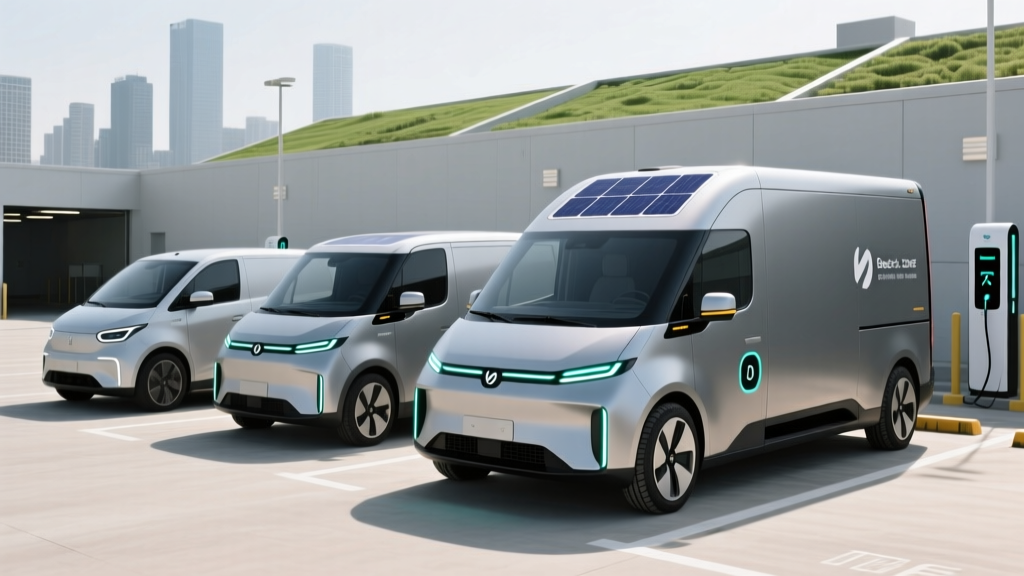
Electric delivery vans have crossed from pilot-project novelty to a genuine fleet procurement option for last-mile and regional routes in 2026. The three dominant platforms — the GM BrightDrop Zevo 600, Ford E-Transit, and Mercedes-Benz eSprinter — now offer between 150 and 272 miles of EPA-estimated range, 1,500–3,800 pounds of payload, and DC fast-charge times of 30–45 minutes (10–80%). For fleets covering under 150 miles per day with depot-based Level 2 charging, the total cost of ownership (TCO) undercuts comparable gas vans by $0.12–$0.18 per mile when factoring fuel, maintenance, and available federal tax credits.
Bottom Line Up Front
If your vans return to a depot nightly, drive under 175 miles/day (including a cold-weather buffer), and your facility can support Level 2 charging infrastructure, an electric delivery van will likely save your fleet money over a 5-year/100,000-mile hold. If your routes are long-haul, irregular, or lack predictable charging access, stick with gas or wait for the next generation of higher-capacity platforms.
The 2026 Electric Delivery Van Landscape
Three models dominate the North American commercial EV van market as of early 2026. Each targets a slightly different duty cycle, and choosing the wrong one for your route profile is the single most common mistake fleet buyers make.
| Spec | BrightDrop Zevo 600 | Ford E-Transit | Mercedes eSprinter (2500) |
|---|---|---|---|
| EPA Range | ~272 mi | ~126 mi (159 mi w/ ext. battery) | ~201 mi |
| Battery (usable) | 165 kWh (NMC) | 68 kWh (NMC) | 113 kWh (NMC) |
| Cargo Volume | 412 cu ft | 246.7 cu ft (LWB high-roof) | 374 cu ft |
| Payload | ~2,000 lbs | ~3,800 lbs | ~2,624 lbs |
| Peak DC Charge | ~120 kW | ~115 kW | ~115 kW |
| 10–80% DC Time | ~75 min | ~45 min | ~42 min |
| Level 2 Rate | ~11.5 kW | ~10.5 kW | ~9.6 kW |
| Motor Output | ~260 hp / 350 lb-ft | ~266 hp / 317 lb-ft | ~201 hp / 332 lb-ft |
| Starting MSRP | ~$85,000 | ~$55,000 | ~$74,000 |
| Battery Warranty | 8 yr / 100,000 mi | 8 yr / 100,000 mi | 8 yr / 100,000 mi |
Sources: fueleconomy.gov, Ford E-Transit specs, BrightDrop, Mercedes-Benz Vans.
Electric vs. Gas Delivery Vans: Real Cost Comparison
The sticker price gap is real: a gas Ford Transit 250 cargo van starts around $49,000, while the E-Transit begins near $55,000. The BrightDrop and eSprinter gaps are wider versus their ICE counterparts. But fleets don't buy on MSRP alone — they buy on cost per mile over the vehicle's service life.
| Cost Factor (5 yr / 100k mi) | EV Van (avg.) | Gas Van (avg.) | Delta |
|---|---|---|---|
| Purchase (after credits) | $52,000 | $49,000 | +$3,000 |
| Fuel / Electricity | $5,400 | $14,500 | −$9,100 |
| Maintenance | $2,800 | $6,200 | −$3,400 |
| Insurance (est.) | $12,500 | $10,800 | +$1,700 |
| Depot Charging Infra (amortized) | $4,200 | $0 | +$4,200 |
| Total 5-Year Cost | $76,900 | $80,500 | −$3,600 |
| Cost per Mile | $0.77 | $0.81 | −$0.04/mi |
Assumptions: electricity at $0.13/kWh (commercial rate), gas at $3.40/gal, van efficiency of 2.0 kWh/mi (EV) and 14 MPG (gas). Federal Commercial Clean Vehicle Credit (§45W) of up to $7,500 applied to EV purchase. Actual savings vary by route profile, local utility rates, and state incentives. Consult IRS §45W guidance for eligibility.
Operational Differences That Matter Daily
| Factor | Electric Van | Gas Van |
|---|---|---|
| "Fueling" Time | 6–10 hrs overnight (L2) or 30–75 min (DC) | 5–10 min at station |
| Cold Weather Range Loss | 20–35% at 20°F | ~5–10% (cabin heat from engine waste) |
| Regenerative Braking | Significant — extends pad life to 100k+ mi | Standard friction braking |
| Idle Cost | Near zero (no motor draw when stopped) | 0.3–0.5 gal/hr idling |
| Noise / Driver Fatigue | Noticeably quieter; less fatigue reported | Engine/drivetrain vibration and noise |
| Route Flexibility | Constrained by battery + charger locations | Go anywhere, refuel in minutes |
Depot Charging: The Infrastructure Reality
The single biggest barrier to electric delivery van adoption isn't the van — it's the charging infrastructure. Every fleet buyer needs to answer three questions before ordering:
- Can your electrical panel handle it? A single Level 2 charger at 11.5 kW draws roughly 48 amps at 240V. A fleet of 10 vans charging simultaneously requires a dedicated 600A+ service or smart load-management software that staggers charging cycles. Panel upgrades can cost $8,000–$30,000 depending on your existing service.
- Do you own or lease the depot? If you lease, negotiate charging infrastructure rights into your lease. Landlord electrical upgrades are a common deal-killer for leased commercial spaces.
- What does your utility charge? Commercial demand charges (per-kW peak fees) can double your effective electricity cost if you don't manage charge timing. Many utilities offer EV-specific commercial tariffs with off-peak rates as low as $0.07/kWh — but only if you enroll.
| Infrastructure Component | Cost per Stall | 10-Stall Fleet Total |
|---|---|---|
| Level 2 Charger (commercial-grade, e.g., ChargePoint CT4000 or EVBox) | $2,500–$5,000 | $25,000–$50,000 |
| Electrical work (conduit, wiring, sub-panel) | $3,000–$8,000 | $30,000–$80,000 |
| Utility service upgrade (if needed) | $5,000–$25,000 | $5,000–$25,000 (shared) |
| Permitting and inspections | $500–$2,000 | $5,000–$20,000 |
| Load management software | — | $3,000–$8,000/yr |
| Total Estimated Range | $68,000–$183,000 |
Many utilities and state agencies offer commercial EV infrastructure rebates that can offset 30–50% of these costs. Check the DOE's Alternative Fuels Data Center for current programs in your state.
Real-World Range vs. EPA Stickers: What Fleet Planners Must Know
The EPA range on a delivery van's window sticker assumes a mixed driving cycle with moderate temperatures. Real last-mile delivery looks nothing like that. Here's what actually happens:
Range Reality Check: BrightDrop Zevo 600
EPA Estimate: ~272 miles
Real-World Urban Delivery Route (65°F, stop-and-go): ~210–240 miles
Highway-Heavy Route (70 mph sustained): ~180–210 miles
Cold Weather (20°F, cabin heat on): ~160–190 miles
Fully Loaded (near max payload): Subtract 8–12%
The Zevo's large 165 kWh battery gives it a buffer that smaller-battery vans simply don't have. For the E-Transit with its 126-mile EPA figure, cold-weather real-world range can dip below 85 miles — making it viable only for tight urban routes under 70 miles round-trip.
Charge-curve taper also matters for any mid-route DC fast-charging stops. All three vans peak at roughly 115–120 kW but sustain that rate only to about 50–60% State of Charge (SoC). From 60–80%, rates drop to 50–70 kW. Plan for 45–75 minutes total if a driver needs a meaningful mid-shift top-up.
Federal Tax Credits and Incentives for Commercial Fleets
The federal incentive landscape for commercial EVs differs from the consumer §30D credit that passenger-car buyers use. Fleet purchasers should focus on:
- §45W Commercial Clean Vehicle Credit: Up to $7,500 for vehicles under 14,000 lbs GVWR (all three vans qualify). No MSRP cap, no buyer income cap, but the vehicle must be used for business and meet battery component/critical-mineral sourcing requirements. See IRS §45W.
- §30C Alternative Fuel Vehicle Refueling Property Credit: Up to $100,000 per item of charging infrastructure placed in service, with prevailing-wage and apprenticeship requirements for commercial installations. This can significantly offset depot build-out costs.
- State and utility incentives: Vary widely. California's HVIP, New York's Truck Voucher Incentive Program, and various utility make-ready programs can stack with federal credits. Consult your state's clean-transportation office for current amounts.
- Depreciation: Commercial EVs may qualify for accelerated depreciation (bonus depreciation) under current tax code, further improving the financial case. Consult a tax professional for your specific situation.
Common Misconceptions About Electric Delivery Vans
| Myth | Fact |
|---|---|
| "EV vans can't handle real payload." | The E-Transit offers 3,800 lbs payload — competitive with a gas Transit 250. Battery weight is offset by the absence of a heavy engine/transmission. |
| "Batteries will need replacing at 100k miles." | NMC batteries in commercial vans are warrantied for 8 years/100,000 miles at ≥70% capacity retention. Fleet data from early adopters (Amazon/Rivian, FedEx/BrightDrop) shows degradation of ~8–12% at 100k miles in moderate climates. |
| "Charging takes too long for commercial use." | For depot-return fleets, overnight Level 2 charging (8–10 hours) fully replenishes even the largest battery. DC fast charging is only needed for mid-day top-ups on longer routes. |
| "EVs don't work in cold climates." | They work, but with 20–35% range loss. The solution is route planning with a cold-weather buffer, not avoidance. Heat-pump-equipped vans (eSprinter, newer Zevo builds) mitigate this loss. |
| "The grid can't support fleet charging." | Most depots can support 5–15 Level 2 chargers with managed charging software and a utility coordination plan. Larger fleets may need a service upgrade — plan for this in year one. |
Decision Framework: Should Your Fleet Go Electric?
Choose an Electric Delivery Van If:
- Your average daily route is under 150 miles (or under 100 miles in cold climates)
- Vans return to a depot nightly for 8+ hours
- You own your depot or have a long-term lease with infrastructure rights
- Your utility offers commercial EV rates or make-ready programs
- Your routes are stop-and-go urban (maximizes regenerative braking savings)
- You plan to hold vehicles 5+ years (amortizes infrastructure investment)
Stick With Gas (or Wait) If:
- Daily routes regularly exceed 180 miles with no mid-day charging option
- Your fleet operates in rural areas with no public DC fast-charging network
- You lease short-term and cannot install depot charging
- Your routes are predominantly highway at sustained 70+ mph (reduces range significantly)
- You need maximum payload and can't accept any range penalty from heavy loads
What First-Time Commercial EV Buyers Should Know
If this is your fleet's first electric vehicle purchase, plan for a learning curve that goes well beyond the vehicle itself:
Start with a pilot, not a full conversion. Order 2–3 vans for your most predictable, shortest routes. Measure actual energy consumption per mile, real-world range in your climate, and driver feedback for 90 days before scaling.
Driver training is non-negotiable. Regenerative braking behavior, one-pedal driving modes, and preconditioning (warming the battery while still plugged in to preserve range) are unfamiliar to most van drivers. Fleets that skip training report 10–15% higher energy consumption in the first six months.
Telematics integration matters. Most commercial EV vans offer built-in telematics (Ford Pro, BrightDrop fleet management, Mercedes PRO Connect) that track SoC, energy efficiency, and charging behavior. Integrate this data into your existing fleet management platform from day one.
Insurance costs are higher — for now. Commercial EV van insurance premiums run 10–20% higher than gas equivalents due to higher repair costs and limited actuarial data. Get quotes before finalizing your purchase decision.
Maintenance savings are real but back-loaded. You'll eliminate oil changes, transmission fluid, and spark plugs. Brake pad replacement intervals extend to 100,000+ miles thanks to regenerative braking. But tire wear can be 10–15% faster due to the vehicle's higher curb weight and instant torque.
Frequently Asked Questions
What is the cheapest electric delivery van available in 2026?
The Ford E-Transit starts around $55,000 before incentives, making it the lowest-cost entry point. After the §45W commercial credit of up to $7,500, effective pricing can drop to ~$47,500. However, its 126-mile EPA range (159 miles with the extended battery option) limits it to shorter urban routes.
Can electric delivery vans tow?
Towing capacity is limited compared to gas equivalents. The E-Transit is rated for up to 7,500 lbs towing, the eSprinter for ~5,000 lbs, and the Zevo 600 for ~7,500 lbs. However, towing significantly reduces range — expect a 30–50% reduction at max tow weight. For heavy towing duty, gas or diesel remains more practical.
How long do electric van batteries last?
All three major platforms carry 8-year/100,000-mile battery warranties guaranteeing at least 70% capacity retention. Real-world fleet data suggests NMC batteries in commercial delivery service retain 85–90% capacity at 100,000 miles in moderate climates. Full battery replacement costs range from $15,000–$30,000 depending on the platform, but this is rarely needed within the vehicle's typical 10-year/200,000-mile service life.
Do I need a special electrical permit for depot chargers?
Yes. Commercial Level 2 installations require electrical permits, inspections, and often a utility interconnection agreement. Work must be performed by a licensed electrician, and many jurisdictions require a PE-stamped (Professional Engineer) load study for installations with more than 4–6 chargers. Budget 4–12 weeks for permitting depending on your municipality.
Which electric van is best for cold-weather routes?
The BrightDrop Zevo 600 is the strongest cold-weather choice due to its large 165 kWh battery — even with 30% cold-weather range loss, you still have ~190 miles of real-world range. The eSprinter's available heat pump also helps preserve range in cold conditions. The E-Transit's smaller battery makes it the most vulnerable to cold-weather range reduction; plan for sub-90-mile range on 20°F days.
How does the §45W Commercial Clean Vehicle Credit work?
The §45W credit provides up to $7,500 for qualifying commercial clean vehicles under 14,000 lbs GVWR. Unlike the consumer §30D credit, there is no MSRP cap and no buyer income limit. The vehicle must be used primarily in a trade or business, and it must meet battery component and critical-mineral sourcing requirements that tighten annually. The credit is claimed on your business tax return — it is not available as a point-of-sale reduction for commercial purchases. Consult IRS guidance and your tax professional for your specific eligibility.