What Is an Electric Cube, and Should You Buy One?
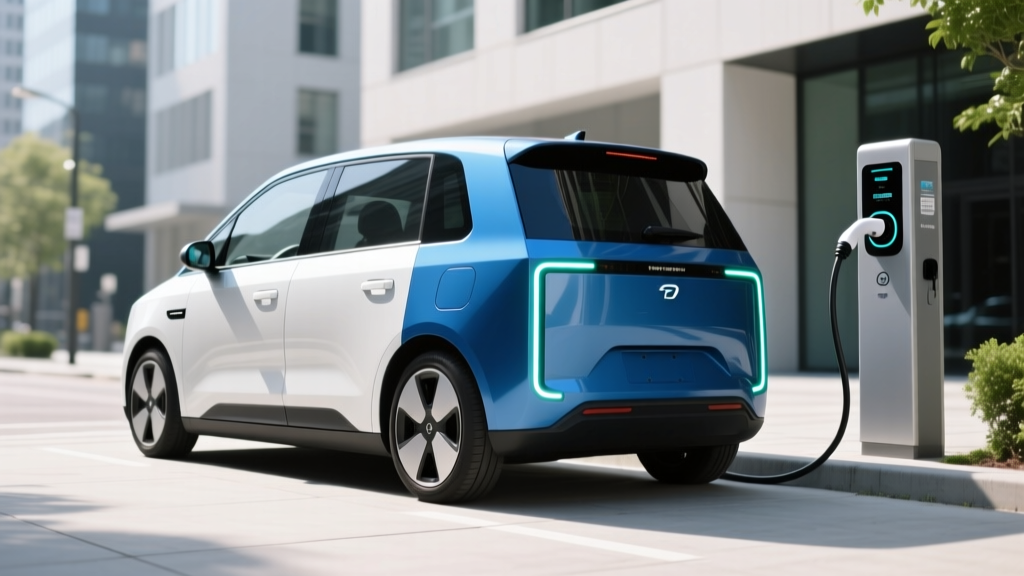
The term electric cube refers to the growing category of box-shaped, space-maximizing electric vehicles — tall-hatch EVs, compact electric vans, and modular micro-EVs that prioritize interior volume over sleek aerodynamics. Think vehicles like the Kia EV9, Hyundai Ioniq 9, VW ID. Buzz, and the wave of Chinese-market micro-EVs (Wuling Hongguang Mini EV class) gaining global attention. For urban and suburban buyers in 2026, electric cube vehicles offer 220–310 miles of EPA range, Level 2 home charging in 7–10 hours, and $0.04–$0.06 per mile in electricity cost versus $0.12–$0.16 per mile for a comparable gas crossover. The trade-off: boxy shapes increase drag, cutting highway efficiency by 8–15% versus a sleeker sedan EV, and cold-weather range loss hits harder on less-aero platforms.
Defining the Electric Cube: What Qualifies?
An electric cube isn't a single model — it's a design philosophy. These vehicles share a few traits:
- One-box or two-box silhouette with a near-vertical rear and flat roofline
- High H-point seating for easy entry and commanding visibility
- Maximized cargo volume per footprint — often 70+ cu ft with seats folded in a midsize footprint
- Flat skateboard platform enabling a low floor and generous cabin height
The appeal is obvious: you get SUV-grade utility in a shorter wheelbase footprint, which helps with city parking. The physics penalty is also real — a taller, blunter frontal area raises the coefficient of drag (Cd), which matters most above 65 mph.
Electric Cube Contenders: 2026 Spec Snapshot
Here's how the main electric cube vehicles on the U.S. market stack up for 2026 model year. All figures are EPA or manufacturer-published; real-world notes follow.
| Model | EPA Range | Battery (kWh usable) | Chemistry | Peak DC Charge kW | 10–80% Min | 0–60 mph | Base MSRP |
|---|---|---|---|---|---|---|---|
| Kia EV9 (Long Range RWD) | 304 mi | 99.8 kWh | NMC | 240 kW | ~24 min | 7.3 sec | $54,900 |
| Hyundai Ioniq 9 (RWD) | ~310 mi (est.) | 110.3 kWh | NMC | 350 kW (800V) | ~18 min | ~7.0 sec | $56,000 (est.) |
| VW ID. Buzz (RWD) | 234 mi | 86 kWh | NMC | 175 kW | ~26 min | 7.9 sec | $59,995 |
| Kia EV4 (Sedan-Hatch, for contrast) | ~300 mi (est.) | 81.2 kWh | NMC | 210 kW | ~22 min | ~6.5 sec | $37,000 (est.) |
Sources: fueleconomy.gov, Kia and Hyundai press spec sheets, VW USA configurator. Ioniq 9 and EV4 figures are preliminary estimates for announced trims as of early 2026.
Real-World Range Reality Check
EPA range assumes mixed driving at moderate temperatures. For electric cube vehicles, expect:
- Highway (70–75 mph): subtract 12–18% — the EV9's 304 mi EPA drops to roughly 250–265 mi on a flat interstate.
- Cold weather (below 30°F): subtract 20–35% depending on heat-pump availability. The ID. Buzz's 234 mi EPA can fall to 155–185 mi in January in northern states.
- Charge-curve taper: peak DC kW is sustained only from ~10–50% SoC; above 80%, speeds drop sharply. A "24-minute 10–80%" claim does not mean 0–100% in 30 minutes.
Electric Cube vs. Gas Minivan/SUV: The Cost Math
Boxy EVs compete directly with gas-powered family haulers like the Honda Odyssey, Toyota Sienna Hybrid, and Kia Telluride. Here's a 5-year cost comparison using the Kia EV9 (RWD) versus the Kia Telluride (V6 AWD) as a representative pairing, assuming 15,000 miles/year and home Level 2 charging at $0.14/kWh national average.
| Cost Category (5-Year) | Kia EV9 (Electric Cube) | Kia Telluride (Gas V6) |
|---|---|---|
| Purchase Price (MSRP base) | $54,900 | $39,590 |
| Federal Tax Credit (§30D, if eligible) | –$7,500 (point-of-sale)* | $0 |
| Fuel / Energy (75,000 mi total) | $3,780 (3,000 kWh/yr avg) | $9,375 (22 MPG, $3.30/gal) |
| Maintenance (5 yr) | ~$1,200 (tires, cabin filter, fluid top-offs) | ~$3,800 (oil, filters, brakes, spark plugs) |
| Insurance (avg annual premium) | ~$2,100/yr ($10,500 total) | ~$1,650/yr ($8,250 total) |
| Estimated Depreciation | ~$22,000 | ~$15,800 |
| Net 5-Year Cost | ~$62,880 | ~$60,215 |
*The §30D federal tax credit requires MSRP ≤ $80,000 for SUVs, buyer AGI below $300k (MFJ), and battery critical-mineral/sourcing compliance per IRS rules. Point-of-sale transfer available at participating dealers. Verify eligibility annually — sourcing requirements tighten each year.
The gap narrows to roughly $2,700 over five years, and that's before state incentives (which can add $1,500–$5,000 in states like Colorado, California, or Massachusetts) or home-charging rebates from utilities. If you drive more than 15,000 miles/year, the EV pulls ahead on energy savings alone.
Charging an Electric Cube at Home: What It Takes
Electric cube vehicles carry large batteries — 86 to 110 kWh — which makes home Level 2 charging essential for daily usability. Trickle-charging on Level 1 (120V, ~1.4 kW) would take 60+ hours to fill an EV9 from empty. That's not practical.
| Level | Voltage / Amps | Power (kW) | Miles Added per Hour | Full Charge Time (100 kWh battery) |
|---|---|---|---|---|
| Level 1 (standard outlet) | 120V / 12A | 1.4 kW | ~4 mi/hr | ~70 hours |
| Level 2 (240V, 32A) | 240V / 32A | 7.7 kW | ~24 mi/hr | ~13 hours |
| Level 2 (240V, 48A) | 240V / 48A | 11.5 kW | ~36 mi/hr | ~9 hours |
| DC Fast Charge (peak) | 400–800V | 175–350 kW | ~600–1,200 mi/hr (peak) | 10–80% in 18–26 min |
Home Installation Cost Breakdown
| Item | Low End | High End | Notes |
|---|---|---|---|
| Level 2 charger (hardware) | $350 | $700 | ChargePoint Home Flex, Emporia, Wallbox Pulsar Plus |
| Electrician labor (240V/50A run) | $800 | $2,500 | Depends on panel proximity and conduit length |
| Electrical panel upgrade (if needed) | $1,500 | $3,500 | Required if existing panel is 100A or at capacity |
| Permit and inspection | $100 | $350 | Varies by municipality |
| Total (typical, no panel upgrade) | $1,250 | $3,550 | |
| Total (with panel upgrade) | $2,750 | $7,050 |
Final specs should always come from a licensed electrician evaluating your specific panel, wire gauge, and local code. Many utilities offer $200–$500 rebates on Level 2 hardware or off-peak rate plans that cut charging cost to $0.08–$0.10/kWh overnight.
Common Electric Cube Misconceptions — Fact-Checked
| Myth | Fact |
|---|---|
| "Boxy EVs have terrible range because of aerodynamics." | Partly true at highway speed — expect 12–18% range loss vs. a sedan EV at 75 mph. But around town, aero barely matters; the EV9 still delivers 280+ real-world city miles. |
| "The battery will need replacing in 5 years." | Modern NMC and LFP packs are warrantied for 8 years / 100,000 miles at ≥70% capacity retention. Industry data shows average degradation of 5–8% over 5 years for liquid-cooled packs. |
| "I can charge on a regular outlet overnight and be fine." | Level 1 adds ~4 miles/hour. After a 40-mile commute, you'd need 10 hours just to recover that. For 86–110 kWh batteries, Level 1 is emergency-only backup. |
| "Federal tax credit is $7,500 for everyone." | The §30D credit has income caps ($300k MFJ, $150k single), MSRP caps ($80k SUVs, $55k sedans), and critical-mineral/battery-sourcing requirements that tighten yearly. Not every buyer or trim qualifies. Check IRS.gov and confirm with a tax professional. |
| "Electric cube vehicles can't tow." | The EV9 tows up to 5,000 lbs (AWD). Towing cuts range 30–50%, but for occasional boat/trailer duty, it's viable. |
Ownership Practicalities: Climate, Charging Access, and Driving Patterns
An electric cube works best when your daily life matches its strengths. Before buying, honestly assess these factors:
Home charging access. If you have a garage or driveway where a 240V outlet can be installed, you'll wake up to a full battery every morning — the single biggest ownership advantage. If you rely on street parking or apartment living, public DC fast-charging 2–3 times per week becomes necessary, adding $120–$180/month in costs (at $0.35–$0.48/kWh average for networks like Electrify America or EVgo) and 45–90 minutes of your week.
Climate. In mild climates (Southern California, Southeast, Pacific Northwest lowlands), electric cube vehicles deliver 90–95% of EPA range year-round. In cold regions (Upper Midwest, New England), expect 65–80% of EPA range in winter. Vehicles with heat pumps (EV9 includes one; ID. Buzz offers one on select trims) recover 5–10% of that loss.
Driving patterns. Commute-heavy drivers covering 30–80 miles/day benefit most from electric cubes — daily energy cost is $1.50–$4.00 versus $5–$12 in gas. Road-trip-heavy drivers (200+ miles multiple times per week) will encounter the boxy-aero highway penalty and more frequent DC fast-charge stops.
Decision Framework: Is an Electric Cube Right for You?
Choose an Electric Cube If:
- You need 3-row seating or van-grade cargo volume in a daily driver
- You can install Level 2 home charging (garage/driveway with 240V access)
- Your daily driving is under 100 miles round-trip
- You value low running costs and qualify for the §30D credit or state incentives
- You drive primarily in mild-to-moderate climates, or accept winter range reduction
Look at a Hybrid or PHEV Instead If:
- You regularly drive 200+ miles in a day with limited DC fast-charge access along your route
- You live in an apartment or park on-street with no charging option
- You tow heavy loads (over 3,000 lbs) frequently — range penalty is severe
- Your budget is firmly under $40,000 and you need a new vehicle (electric cubes start at $54k+ in the U.S. for 2026, though the EV4 and future compact models may change this)
Consider a Sedan EV If:
- Maximum highway range and efficiency matter more than cargo volume
- You want sub-$40,000 pricing — the Chevy Equinox EV, Hyundai Ioniq 6, and Tesla Model 3 offer 300+ mi EPA from ~$33,000–$38,000
Frequently Asked Questions
Are electric cube vehicles less efficient than sedan EVs?
Yes, measurably. A boxy EV like the EV9 consumes roughly 33–38 kWh/100 mi on the highway, while a Tesla Model 3 or Hyundai Ioniq 6 uses 24–27 kWh/100 mi at the same speed. Around town, the gap narrows to 5–8%. The efficiency penalty is the trade-off for interior volume.
Do any electric cube vehicles qualify for the full $7,500 federal tax credit?
Eligibility varies by model year, trim, and battery sourcing. As of 2026, the Kia EV9 assembled in Georgia with compliant battery sourcing has qualified for the full credit for eligible buyers, but critical-mineral requirements tighten annually. Always verify the specific VIN on the DOE/EPA tax credit lookup tool before purchasing.
How long does the battery last in a large electric SUV?
Kia and Hyundai warranty their EV batteries for 10 years / 100,000 miles at ≥70% capacity retention. VW covers the ID. Buzz battery for 8 years / 100,000 miles. Real-world data from earlier EV platforms (Kona Electric, Niro EV) shows 85–92% state of health at 100,000 miles with liquid-cooled NMC packs. Full battery replacement, if ever needed outside warranty, runs $12,000–$18,000 for packs in the 90–110 kWh range.
Can I road-trip in an electric cube?
Yes, with planning. The EV9 and Ioniq 9 support 240–350 kW DC fast charging, meaning 10–80% stops take 18–24 minutes. On a 600-mile trip, expect 2 charging stops of ~25 minutes each. Use apps like A Better Routeplanner to account for the highway aero penalty and cold-weather reductions.
What's the cheapest electric cube available in 2026?
The Kia EV9 starts at $54,900 for the Long Range RWD base trim. The VW ID. Buzz starts at $59,995. More affordable boxy EVs — like the Kia EV4 hatchback at an estimated $37,000 — blend cube-like interior packaging with a lower, more aero-efficient profile. Chinese-market micro-EVs (under $15,000) exist but are not U.S.-certified as of 2026.