The Quick Answer on Electric Cruiser Motorcycles
Bottom line: Electric cruiser motorcycles in 2026 deliver 120–160 miles of real-world city range from 13–17 kWh battery packs, with Level 2 charging topping them off in roughly 2–3 hours. Purchase prices range from roughly $18,000 to $30,000 before incentives. They excel as commuter and weekend bikes with near-zero maintenance, but highway range drops 25–35% at sustained 70+ mph speeds, and DC fast charging remains rare on two wheels. If you ride mostly under 60 mph and can charge at home, an electric cruiser can undercut a comparable gas cruiser on 5-year operating cost. If you tour cross-country or lack home charging access, a gas cruiser still wins on flexibility.
Electric cruiser motorcycles occupy a narrow but growing slice of the EV market. Unlike four-wheeled EVs, where the EPA and manufacturers publish standardized range and efficiency data on fueleconomy.gov, motorcycle efficiency figures are less centralized. Buyers must cross-check manufacturer spec sheets, independent dyno and range tests, and real-world owner reports. This guide consolidates what matters: battery capacity in kWh, charge rates in kW, real-world range expectations, and total cost of ownership versus a conventional gas cruiser like the Harley-Davidson Sportster S or Indian Scout.
What Defines an Electric Cruiser Motorcycle in 2026
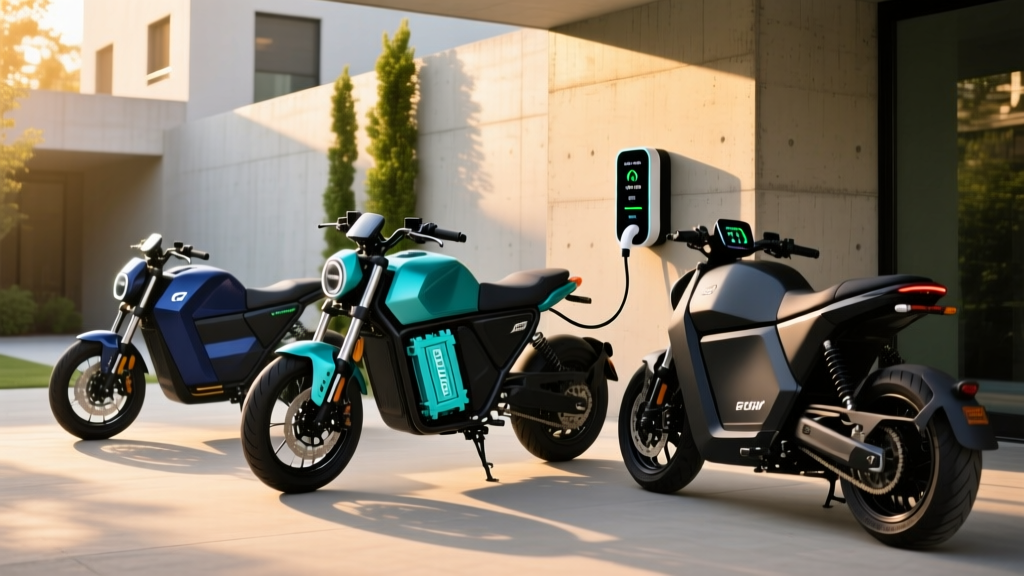
A cruiser motorcycle prioritizes relaxed ergonomics, low seat height, and torque-forward riding over sport performance. Translating that to electric powertrains means large battery packs mounted low in the frame for stability, belt or chain final drive, and throttle maps tuned for strong low-end pull rather than peak horsepower. The category leaders as of the 2026 model year include the LiveWire ONE (the Harley-Davidson spinoff's flagship), the Evoke Urban Cruiser, and newer entrants like the Maeving RM1 (a UK-built model gaining US distribution). Each takes a different approach to battery chemistry, thermal management, and charging architecture.
| Spec | LiveWire ONE | Evoke Urban Cruiser | Maeving RM1 |
|---|---|---|---|
| Base MSRP | $21,999 | $24,995 | $18,490 |
| Battery (usable kWh) | 15.4 kWh (NMC) | 17.3 kWh (NMC) | 13.1 kWh (NMC) |
| EPA-estimated range (mi) | 146 city / 95 hwy | 164 city / 102 hwy | 120 city / 75 hwy |
| Peak motor output | 105 HP / 86 lb-ft | 120 HP / 95 lb-ft | 67 HP / 59 lb-ft |
| 0–60 mph | 3.0 sec | 3.2 sec | 4.8 sec |
| Max DC charge rate | ~25 kW (CCS) | ~20 kW (CCS) | None (Level 2 only) |
| Level 2 charge (0–100%) | ~2.5 hours | ~3.0 hours | ~2.0 hours |
| DC 10–80% time | ~40 min | ~50 min | N/A |
| Weight (curb) | 470 lbs | 520 lbs | 385 lbs |
| Battery warranty | 5 years / unlimited mi | 5 years / 62,000 mi | 3 years / 30,000 mi |
A critical distinction for EV newcomers: kWh (kilowatt-hours) measures the battery's energy capacity — think of it as the "tank size." kW (kilowatts) measures power flow — the rate at which the battery charges or the motor delivers energy. A 15.4 kWh battery charged at 7.2 kW takes roughly 2.1 hours from empty; that same battery charged at 25 kW DC takes far less. Motorcycle charging rates lag behind four-wheeled EVs because smaller packs cannot safely absorb the 150–350 kW rates seen on cars without excessive heat buildup and cell degradation.
Electric Cruiser vs. Gas Cruiser: Cost and Efficiency Compared
The most common question from prospective buyers is whether an electric cruiser saves money compared to a gas-powered Harley-Davidson Sportster S ($16,999 MSRP, 43 MPG combined) or Indian Scout ($14,999, 45 MPG combined). The answer depends on your annual mileage, local electricity rates, and how long you plan to own the bike.
| Cost Category | LiveWire ONE (Electric) | Harley Sportster S (Gas) |
|---|---|---|
| Purchase price (MSRP) | $21,999 | $16,999 |
| Federal/state incentives | –$2,500 (est.)* | $0 |
| Net purchase cost | $19,499 | $16,999 |
| Fuel/energy (5 yrs, 40k mi) | $1,800 ($0.13/kWh avg) | $5,120 ($3.65/gal, 43 MPG) |
| Maintenance (5 yrs) | $400 (tires, brake fluid, cabin filter) | $3,200 (oil, filters, plugs, valves, chain) |
| Insurance (5 yrs, avg) | $7,500 | $6,000 |
| Estimated depreciation | $9,800 (~45%) | $6,800 (~40%) |
| 5-year total | $30,199 | $31,319 |
*Federal EV tax credit rules under IRS §30D apply primarily to four-wheeled vehicles meeting specific MSRP, income, and battery-sourcing requirements. Most electric motorcycles qualify for a separate provision or state-level rebates rather than the full $7,500 car credit. Always confirm current-year eligibility with a tax professional and the IRS directly — rules shift annually and depend on battery critical-mineral sourcing, buyer AGI caps, and manufacturer sales-volume phase-outs.
The electric cruiser wins on fuel and maintenance. At the US average residential electricity rate of roughly $0.16/kWh (EIA data, late 2025), charging a 15.4 kWh pack from 20% to 100% costs approximately $2.00, yielding around 115 real-world city miles — roughly $0.017 per mile. A gas cruiser at 43 MPG and $3.65/gallon costs $0.085 per mile. Over 40,000 miles, that's a $3,300 energy savings. Maintenance savings are even more dramatic: no oil changes, no spark plugs, no valve adjustments, no air filters, and regenerative braking extends pad life substantially. The only recurring items are tires (electric torque can wear rear tires faster), brake fluid flushes, and cabin-style air filtration.
Where the gas cruiser fights back: lower purchase price, slower depreciation (the used gas-cruiser market is deep and liquid), cheaper insurance (specialty EV motorcycle policies remain limited), and unlimited range via gas stations. For riders covering more than 150 miles per trip regularly, the gas cruiser's refueling infrastructure advantage is decisive.
Real-World Range: What the EPA Sticker Doesn't Tell You
Motorcycle EPA range figures, like car estimates, assume specific test cycles that don't capture every rider's experience. For electric cruisers, three factors compress real-world range below the sticker number:
EPA city range: 146 miles (LiveWire ONE)
Real-world expectations:
- Mixed commuting (35–55 mph, stop-and-go): 120–135 miles — regen braking recovers energy in traffic, partially offsetting the aero penalty of upright cruiser ergonomics.
- Sustained highway (70 mph): 80–95 miles — aerodynamic drag scales with the square of speed, and motorcycles have minimal bodywork to reduce it. A cruiser's upright riding position is particularly drag-heavy.
- Cold weather (below 40°F): Subtract 15–25% from all figures. Lithium-ion NMC chemistry loses efficiency in cold, and unlike EVs with heat pumps, most electric motorcycles use resistive battery heating, which draws from the same pack.
- Aggressive riding (hard acceleration, high speed): Subtract 20–30%. Instant electric torque is addictive, and repeated full-throttle pulls drain the pack rapidly.
This is the single most important ownership insight: electric cruiser range is highly speed-dependent. If your commute is 40 miles of 35-mph surface streets, a 146-mile city range gives you a comfortable three-day buffer. If your commute includes 20 miles of 75-mph interstate, plan for 80–90 effective miles and charge nightly. Unlike a gas cruiser, which can refuel in 3 minutes at any station, an electric cruiser on a highway tour requires route-planning around DC chargers — and motorcycle-compatible DC chargers are sparse compared to car infrastructure.
Charging at Home and on the Road: What First-Time Buyers Need to Know
Home charging is where electric cruisers shine. Most models ship with a Level 1 cord (standard 120V household outlet) that adds roughly 8–12 miles of range per hour of charging — adequate if you ride less than 50 miles daily and can plug in overnight. For faster replenishment, a Level 2 home station (240V, typically 7.2 kW) charges a 15 kWh pack in about 2 hours.
| Component | Cost Range | Notes |
|---|---|---|
| Level 2 charger (hardware) | $300–$700 | Motorcycle-specific units or J1772 car chargers with adapter |
| Electrical panel assessment | $0–$200 | Many electricians include this free with a quote |
| 240V outlet install (NEMA 14-50) | $500–$1,500 | Depends on panel proximity; garage installs are cheapest |
| Panel upgrade (if needed) | $1,500–$3,500 | Required if your panel is near capacity (100A or older) |
| Permit & inspection | $50–$300 | Varies by municipality |
| Total (typical) | $850–$2,700 | Most riders with a modern 200A panel: ~$1,000–$1,500 |
A critical caveat: not every rider has access to home charging. Apartment dwellers, street-parkers, and condo residents may need to rely on public Level 2 chargers (found at many workplaces, shopping centers, and via networks like ChargePoint and EVgo). Public Level 2 charging costs $0.10–$0.30/kWh and takes 2–3 hours — feasible if your workplace has chargers, but impractical as a sole charging strategy. DC fast charging for motorcycles is still emerging; the LiveWire ONE supports CCS at roughly 25 kW, but most public DC chargers are designed for cars and may not physically accommodate a motorcycle's charging port location or weight.
For touring, plan routes using apps like PlugShare or A Better Routeplanner, filtering for CCS-equipped stations with enough clearance for a motorcycle to pull in safely. Expect 40–50 minute stops for a 10–80% DC charge — longer than a gas stop, but an opportunity to rest, eat, and stretch.
Common Misconceptions About Electric Cruiser Motorcycles
| Myth | Fact |
|---|---|
| "Electric motorcycles have no power." | The LiveWire ONE hits 60 mph in 3.0 seconds with 86 lb-ft of instant torque — quicker off the line than most gas cruisers in the $15K–$20K range. Electric motors deliver peak torque at 0 RPM, which makes them feel explosively responsive in city riding. |
| "The battery will die in a few years and cost $10K to replace." | NMC lithium-ion packs in quality electric motorcycles are warrantied for 5 years with capacity-retention thresholds (typically 70–80% of original capacity). Real-world degradation data from early LiveWire and Zero Motorcycles owners shows roughly 8–12% capacity loss over 5 years with normal use. A full pack replacement runs $4,000–$7,000, but is rarely needed within the first decade. |
| "You can charge an electric motorcycle at any EV station." | Most public DC fast chargers use CCS1 or NACS connectors designed for cars. While the LiveWire ONE uses CCS, the physical positioning of a motorcycle's charge port and the bike's lighter weight can make connector insertion awkward. Many Level 2 public chargers work fine with a J1772 adapter, but always verify connector type before relying on a station. |
| "Electric cruisers are silent and therefore unsafe." | At low speeds, electric motorcycles are indeed quiet, which can reduce awareness from pedestrians and drivers. Most riders compensate with louder horn usage, daytime running lights, and lane positioning. At highway speeds, wind and tire noise dominate on any motorcycle, gas or electric, so the "silent" advantage disappears above ~40 mph. |
| "Federal tax credits make electric motorcycles basically free." | The §30D clean vehicle credit has strict requirements: MSRP caps, buyer income limits, and battery-sourcing rules tied to critical-mineral content. Motorcycles may qualify under different provisions or state rebates, but the credit is not automatic. Always verify with the IRS and a tax professional before counting on it in your budget. |
Decision Framework: Should You Buy an Electric Cruiser?
Choose an electric cruiser motorcycle if:
- Your daily riding is under 80 miles round-trip at speeds below 65 mph.
- You have reliable home or workplace Level 2 charging access.
- You value low maintenance (no oil, no spark plugs, minimal brake wear) and near-silent city riding.
- You're drawn to instant torque and a tech-forward riding experience.
- You plan to keep the bike 5+ years, allowing fuel and maintenance savings to offset the higher purchase price.
Stick with a gas cruiser if:
- You regularly tour more than 120 miles per trip and need quick refueling.
- You lack home or workplace charging access and would rely entirely on public infrastructure.
- You live in a region with extreme cold (sustained sub-20°F winters) where range loss becomes a daily inconvenience.
- Your budget is firmly under $15,000 and you need a proven, liquid resale market.
- You want the sound, vibration, and mechanical character that define the cruiser tradition.
For riders on the fence, a practical test: map your three most common rides. If all three fall within 60 miles and you can charge at the destination or at home, an electric cruiser will likely exceed your expectations on cost and convenience. If even one ride regularly exceeds 100 miles at highway speed, a gas cruiser or a plug-in hybrid four-wheeled vehicle may serve you better until DC charging infrastructure for motorcycles matures.
Frequently Asked Questions
How long does an electric cruiser motorcycle battery last?
Most manufacturers warranty their NMC battery packs for 5 years with a 70–80% capacity-retention guarantee. Real-world data from riders who charge between 20% and 80% (avoiding full 0% or 100% cycles) suggests 8–12% degradation over 5 years. A well-maintained pack should deliver usable service for 10–15 years before capacity drops below practical commuting thresholds.
Can I charge an electric cruiser on a standard household outlet?
Yes, using the included Level 1 charging cord (120V). Expect roughly 8–12 miles of range added per hour, meaning a full charge from empty takes 12–18 hours. This works for riders who commute less than 50 miles and can plug in overnight, but Level 2 (240V) is strongly recommended for daily riders who need faster turnaround.
Are electric cruiser motorcycles eligible for the $7,500 federal tax credit?
Not automatically. The §30D credit applies to "clean vehicles" with specific MSRP, buyer income, and battery-sourcing requirements. Motorcycles may qualify under separate provisions or at reduced credit amounts. State-level incentives (like California's CVRP or Colorado's EV tax credit) may also apply. Always confirm current-year eligibility with the IRS and a qualified tax professional before purchasing.
How does cold weather affect electric cruiser range?
Expect a 15–25% range reduction in temperatures below 40°F, and up to 35% loss in sustained sub-20°F conditions. NMC battery chemistry becomes less efficient in cold, and resistive battery heating draws additional energy from the pack. Preconditioning the battery while still plugged in (a feature on higher-end models like the LiveWire ONE) mitigates some of this loss by warming the cells before you ride.
What's the insurance cost for an electric cruiser vs. a gas cruiser?
Electric cruiser insurance premiums typically run 15–30% higher than comparable gas cruisers, driven by higher replacement values, limited repair-shop familiarity, and expensive battery-replacement costs. Average annual premiums for a LiveWire ONE run $1,400–$1,800 depending on rider age, location, and coverage, versus $1,100–$1,400 for a Harley Sportster S. Shop quotes from specialty motorcycle insurers (Progressive, Dairyland, Markel) before purchasing.
Can I tour cross-country on an electric cruiser?
Technically yes, but it requires meticulous route planning around DC fast chargers, acceptance of 40–50 minute charge stops every 70–90 highway miles, and contingency plans for broken or occupied chargers. Most electric cruiser owners use their bikes for commuting and weekend rides under 100 miles, and rent or borrow a gas bike (or car) for long tours. Until motorcycle DC charging infrastructure expands significantly, cross-country touring remains the gas cruiser's domain.