The Short Answer: Is an Electric Crossover Right for You?
An electric crossover makes financial sense if you can charge at home, drive under 250 miles daily, and qualify for the federal §30D tax credit (up to $7,500). Expect real-world range 15–25% below EPA estimates on highway trips and in cold weather. Total 5-year ownership costs typically beat comparable gas crossovers by $4,000–$9,000 when home charging is available, but public-charging-only ownership can erase those savings. The sweet-spot models in 2026 — Hyundai Ioniq 5, Tesla Model Y, Ford Mustang Mach-E, Chevrolet Equinox EV — start between $33,000 and $48,000 before incentives.
Why Electric Crossovers Dominate the 2026 EV Market
The electric crossover segment has become the most competitive space in the EV market, and for practical reasons: these vehicles offer 250–330 miles of EPA-rated range, seating for five, 25–35 cubic feet of cargo space, and available all-wheel drive — all without the sedan's low roofline or the truck's range-compromising aerodynamics. Sales data from 2025 showed crossovers accounted for roughly 60% of all new EV registrations in the US, and that share has only grown as more affordable models entered showrooms.
For buyers migrating from a gas-powered compact or midsize SUV — think Toyota RAV4, Honda CR-V, or Ford Escape — an electric crossover delivers the most seamless transition. The driving position is familiar, visibility is comparable, and the instant torque of an electric motor makes merging and passing noticeably easier than the average 190-hp gas crossover.
But the segment is crowded, specs vary wildly between trims, and marketing materials obscure the numbers that actually matter. This guide cuts through that noise with data.
2026 Electric Crossover Comparison: Specs That Matter
The table below covers the highest-volume electric crossovers available in the US for the 2026 model year. All figures are manufacturer-published or EPA-sourced. Note that kWh measures battery energy capacity (how far you can go), while kW measures charging power (how fast you can refill).
| Model | EPA Range | Battery (usable kWh) | Chemistry | Peak DC Charge (kW) | 10–80% Time | 0–60 mph | HP | Base MSRP |
|---|---|---|---|---|---|---|---|---|
| Hyundai Ioniq 5 (Long Range AWD) | 290 mi | 84.0 | NMC | 240 kW | ~18 min | 5.1 sec | 320 | $46,700 |
| Tesla Model Y (Long Range AWD) | 320 mi | 75.0 | NMC | 250 kW | ~20 min | 4.8 sec | 384 | $44,990 |
| Ford Mustang Mach-E (Extended Range) | 312 mi | 91.0 | NMC | 150 kW | ~36 min | 5.1 sec | 312 | $42,995 |
| Chevrolet Equinox EV (RS AWD) | 285 mi | 85.0 | NMC | 150 kW | ~34 min | 7.8 sec | 290 | $36,900 |
| Kia EV6 (Long Range AWD) | 282 mi | 84.0 | NMC | 240 kW | ~18 min | 5.1 sec | 320 | $44,900 |
| Tesla Model Y (Standard RWD) | 295 mi | 57.5 | LFP | 170 kW | ~25 min | 6.5 sec | 295 | $39,990 |
Real-World Range Reality Check
EPA range estimates assume a mix of city and moderate-speed highway driving at roughly 70°F. In practice, expect the following reductions:
- Highway driving at 75+ mph: Subtract 15–20% from the EPA number. A 300-mile EPA crossover delivers roughly 240–255 miles at sustained interstate speeds.
- Cold weather (below 32°F): Subtract 20–30%, depending on cabin heating use. LFP batteries (like the Model Y Standard) tend to lose slightly more range in cold than NMC packs.
- Combined highway + cold: Plan for up to 40% reduction. That 300-mile sticker becomes ~180–200 usable miles. This matters for road trips in winter.
Vehicles with a heat pump (Ioniq 5, EV6, Model Y) recover some of this loss by heating the cabin more efficiently than resistive elements.
Electric Crossover vs. Gas Crossover: 5-Year Cost Breakdown
The purchase price of an electric crossover is still generally higher than a gas equivalent, but the total cost of ownership (TCO) tells a different story — especially when you factor in fuel savings, reduced maintenance, and available tax credits. Below is a 5-year / 75,000-mile comparison between a representative electric crossover (Hyundai Ioniq 5 Long Range AWD) and a gas equivalent (Toyota RAV4 AWD).
| Cost Category | Hyundai Ioniq 5 (EV) | Toyota RAV4 AWD (Gas) | Notes |
|---|---|---|---|
| Purchase Price (MSRP) | $46,700 | $35,500 | Mid-tier trims compared |
| Federal Tax Credit (§30D) | –$3,750* | $0 | *Partial credit; varies by battery sourcing. See IRS §30D rules |
| Effective Purchase Price | $42,950 | $35,500 | Before state incentives |
| Fuel / Energy (5 yrs, 75k mi) | $3,800 | $8,250 | EV: $0.13/kWh avg home rate; Gas: $3.50/gal, 28 MPG combined |
| Maintenance (5 yrs) | $1,200 | $3,500 | EV: no oil changes, fewer brake replacements (regen braking) |
| Insurance (5 yrs) | $9,500 | $7,800 | EV premiums average 15–22% higher per IIHS data |
| Depreciation (est. 5 yrs) | $19,000 | $14,200 | EV resale values remain more volatile; varies by brand |
| Total 5-Year Cost | $76,450 | $69,250 | EV costs more in this scenario without full credit |
| TCO with Full $7,500 Credit | $72,700 | $69,250 | Gap narrows to ~$3,450 |
Key takeaway: The electric crossover wins on operating costs by roughly $6,750 over five years (fuel + maintenance). The gap in total cost depends almost entirely on which tax credit amount you qualify for and how much higher EV insurance premiums are in your zip code. If you charge exclusively on public DC fast chargers at $0.35–$0.50/kWh, your energy cost jumps to $8,000–$11,500 over five years, erasing the fuel savings.
Charging at Home vs. Public Networks: What It Actually Costs
Home charging is the single biggest factor in whether an electric crossover saves you money. Here's the math on a Level 2 home charger installation and the ongoing cost per mile.
| Item | Typical Cost Range | Details |
|---|---|---|
| Level 2 Charger (hardware) | $350 – $700 | 32A–48A units from ChargePoint, Wallbox, Emporia, or Tesla Wall Connector |
| Electrician labor (240V circuit) | $500 – $2,000 | Depends on panel proximity; 50A circuit typical |
| Electrical panel upgrade | $0 – $3,500 | Needed if your panel is at capacity (older homes with 100A service) |
| Permit / inspection | $50 – $300 | Varies by municipality |
| Total installation | $900 – $6,500 | Most homes with 200A service fall in the $1,200–$2,500 range |
Once installed, home charging costs roughly $0.10–$0.18 per kWh depending on your utility. For an electric crossover averaging 3.0 miles/kWh (about 100 MPGe), that's $0.03–$0.06 per mile. A gas crossover at 28 MPG with fuel at $3.50/gallon costs $0.125 per mile — roughly 2–4× more per mile driven.
If you can't charge at home: Public DC fast charging at networks like Electrify America, EVgo, or Tesla Superchargers averages $0.30–$0.50/kWh. That pushes your per-mile cost to $0.10–$0.17, nearly matching gas. Public Level 2 charging (at workplaces or grocery stores) is often cheaper or free, but availability is inconsistent. Before buying an electric crossover without home charging access, map the reliable public chargers within a half-mile of your daily routine.
Tax Credit Eligibility: The §30D Rules That Actually Apply in 2026
The federal Clean Vehicle Credit under IRS §30D offers up to $7,500 for qualifying new EVs, but the eligibility requirements are strict and change periodically. Here is the current framework:
- MSRP cap: SUVs/crossovers must be under $80,000 MSRP (sedans under $55,000)
- Buyer income cap: Modified AGI must not exceed $150,000 (single), $225,000 (head of household), or $300,000 (married filing jointly)
- Battery sourcing: Up to $3,750 requires a percentage of critical minerals sourced from US or FTA partners; the other $3,750 requires battery components manufactured in North America — percentages increase annually
- FEOC exclusion: Vehicles with battery components from a Foreign Entity of Concern (primarily certain Chinese-sourced materials) are disqualified entirely
- Point-of-sale transfer: You can transfer the credit to the dealer at purchase, reducing your out-of-pocket cost immediately — or claim it on your tax return
Because battery sourcing requirements tighten each year, a model that qualified for the full $7,500 in 2024 may only qualify for $3,750 or nothing in 2026. Always verify eligibility on the IRS source list and the manufacturer's certification before signing a purchase agreement. Your tax professional can confirm your personal income eligibility.
Common Misconceptions About Electric Crossovers
| Myth | Fact (With Data) |
|---|---|
| "The battery will need replacing in 5 years" | Federal law mandates battery warranties of at least 8 years/100,000 miles. Most manufacturers warranty to 70% capacity retention at that point. Real-world degradation data shows most NMC packs lose only 8–12% capacity over 150,000 miles. Full battery replacement costs $8,000–$18,000 but is rarely needed within the vehicle's practical life. |
| "Electric crossovers can't tow" | The Ford Mustang Mach-E tows up to 2,700 lbs; the Hyundai Ioniq 5 up to 2,300 lbs; the Tesla Model Y up to 3,500 lbs. Adequate for small trailers, bike racks, and light campers. Expect 30–50% range reduction when towing at highway speeds — plan charging stops accordingly. |
| "You'll be stranded by charging deserts" | As of 2026, the US has over 70,000 public charging ports across CCS, NACS, and CHAdeMO connectors. The Tesla Supercharger network (now open to non-Tesla EVs via NACS adapter) adds 6,000+ DC fast-charging stalls. Rural gaps exist, but apps like PlugShare and A Better Routeplanner let you pre-plan any trip with reliable stops. |
| "EVs are worse for the environment because of electricity generation" | Even on the dirtiest US grids (coal-heavy regions), an EV produces 50–60% fewer lifecycle emissions than a comparable gas car over 150,000 miles, per EPA and DOE fueleconomy.gov data. On cleaner grids (hydro, nuclear, wind-heavy), the reduction exceeds 70%. |
| "All electric crossovers qualify for the $7,500 tax credit" | As of 2026, only a subset of models qualify for the full amount. Many qualify for $3,750 or $0 depending on battery component and critical-mineral sourcing. Always check the IRS qualified vehicle list before purchasing. |
Decision Framework: Which Electric Crossover Should You Choose?
Match Your Situation to the Right Pick
Choose the Tesla Model Y (Long Range AWD) if you want the longest EPA range in the segment (320 mi), the most mature Supercharger network for road trips, and you're comfortable with the minimalist interior and touch-only controls. Best for high-mileage drivers and frequent travelers.
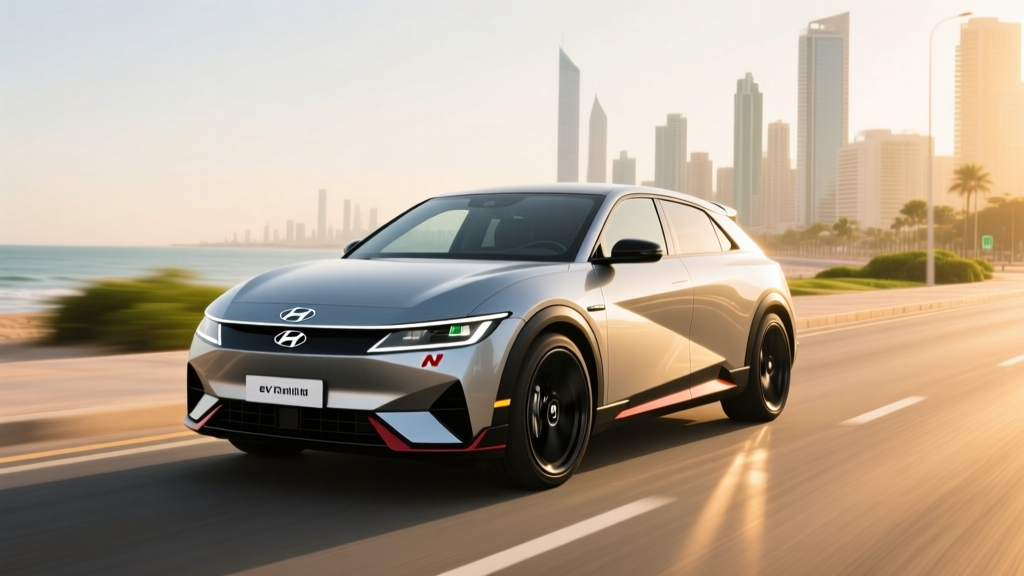
Choose the Hyundai Ioniq 5 if you prioritize the fastest charging speed (240 kW peak, 10–80% in ~18 min), a more conventional interior with physical climate controls, and 800V architecture that future-proofs your DC charging experience. Best for road-trippers who don't want to wait at chargers.
Choose the Chevrolet Equinox EV if budget is the primary concern. At $36,900 base (and potentially lower after incentives), it undercuts most competitors while still offering 285 miles of range. The trade-off is slower DC charging (150 kW peak) and a less refined ride. Best for value-focused buyers with predictable commutes.
Choose the Kia EV6 if you want the Ioniq 5's 800V charging platform in a sportier design with a slightly more premium interior. Range is nearly identical at 282 miles. Best for buyers who want fast charging and distinctive styling.
Choose the Ford Mustang Mach-E if you prefer an American brand with widespread dealer service, a spacious interior, and a proven BlueCruise Level 2 highway driving system. The 91 kWh battery is the largest in this group, but the 150 kW peak charge rate means longer stops on road trips. Best for families wanting dealer support and hands-free highway assist.
Consider a PHEV crossover (Toyota RAV4 Prime, Hyundai Tucson PHEV) if you cannot install a home charger, regularly drive over 300 miles in a day, or live in an area with sparse public charging infrastructure. You get 30–40 miles of electric-only range for daily commuting plus a gas engine for longer trips — eliminating range anxiety entirely at the cost of higher maintenance and fuel expenses.
What First-Time EV Buyers Must Know Before Signing
If this is your first electric vehicle, these ownership realities don't appear in the brochure but will shape your daily experience:
Preconditioning matters for fast charging. When navigating to a DC fast charger, the vehicle's thermal management system preheats or precools the battery to its optimal charging temperature. Without preconditioning, a cold battery may charge at 40–60 kW instead of its 240 kW peak, doubling your stop time. Tesla, Hyundai, and Kia all precondition automatically when you navigate to a charger; confirm this feature is active.
The charge curve tapers above 80%. DC fast charging is not linear. A vehicle advertising "10–80% in 18 minutes" may take an additional 25–35 minutes to go from 80–100%. On road trips, plan to charge to 80% and drive on — it's faster overall than waiting for a full battery. This is why 10–80% time is the industry-standard metric.
Level 2 home charging adds 25–40 miles per hour of charging. With a 48A Level 2 charger on a 240V circuit, most electric crossovers add roughly 30 miles of range per hour plugged in. An overnight charge (8–10 hours) fully replenishes the battery for any daily commute under 250 miles.
Tire costs are higher. Electric crossovers are 500–1,000 lbs heavier than their gas equivalents due to battery mass, and instant torque accelerates tread wear. Budget $200–$400 more per tire set and expect replacement at 25,000–35,000 miles rather than 45,000+. Some EV-specific tires (Michelin Pilot Sport EV, Hankook iON) are designed for lower rolling resistance and noise reduction.
Insurance premiums run 15–22% higher on average for electric crossovers, driven by higher repair costs for battery-adjacent damage and specialized parts. Get quotes from at least three insurers before purchase — the spread between providers can be $800–$1,500 annually.
Frequently Asked Questions
What is the best electric crossover for cold climates?
The Hyundai Ioniq 5 and Kia EV6, both built on the 800V E-GMP platform with standard heat pumps, retain range most effectively in sub-freezing temperatures. Expect a 20–25% range loss in sustained cold (compared to 30–35% in vehicles without heat pumps). AWD trims are recommended for snow-belt states, and preconditioning while still plugged in at home preserves battery charge for your commute.
Can I charge an electric crossover on a standard 120V outlet?
Yes — this is Level 1 charging, which adds roughly 3–5 miles of range per hour using a standard household outlet. For a 300-mile battery, a full charge from empty takes 60–90 hours. Level 1 works if your daily driving is under 30–40 miles and you can plug in every night, but a 240V Level 2 installation is strongly recommended for practical ownership.
How does the NACS vs. CCS connector situation affect my purchase?
As of 2026, most automakers have adopted the North American Charging Standard (NACS) for new vehicles, or include a CCS-to-NACS adapter. Tesla vehicles use NACS natively. If you buy a CCS-equipped EV (some 2025 carryover models), adapters are widely available for $150–$250 to access Tesla Superchargers. Confirm the connector type before purchasing, as it determines which public networks you can use natively.
Is an electric crossover practical without a garage?
Yes, but with caveats. Outdoor-rated Level 2 chargers (NEMA 4 rated) handle rain and snow. The main concern is extreme cold: an EV parked outside in sub-zero temperatures for days will lose 5–10% of charge to battery thermal management, and charging speeds will be reduced until the pack warms. If you can install an outdoor Level 2 charger and your climate is moderate, garage-free ownership is entirely workable.
Should I buy or lease an electric crossover?
Leasing makes sense if you want to hedge against depreciation uncertainty and battery longevity concerns — you return the vehicle before the warranty expires. However, leased EVs may qualify for the $7,500 credit passed through as a lease incentive (via the commercial clean vehicle credit), even if you wouldn't qualify buying due to income or sourcing rules. Buying makes sense if you drive high annual miles (leases typically cap at 10,000–15,000 mi/yr), plan to keep the vehicle 7+ years, or want to build equity. Run the numbers both ways with your dealer.