The Short Answer on the "Electric Corvette 24"
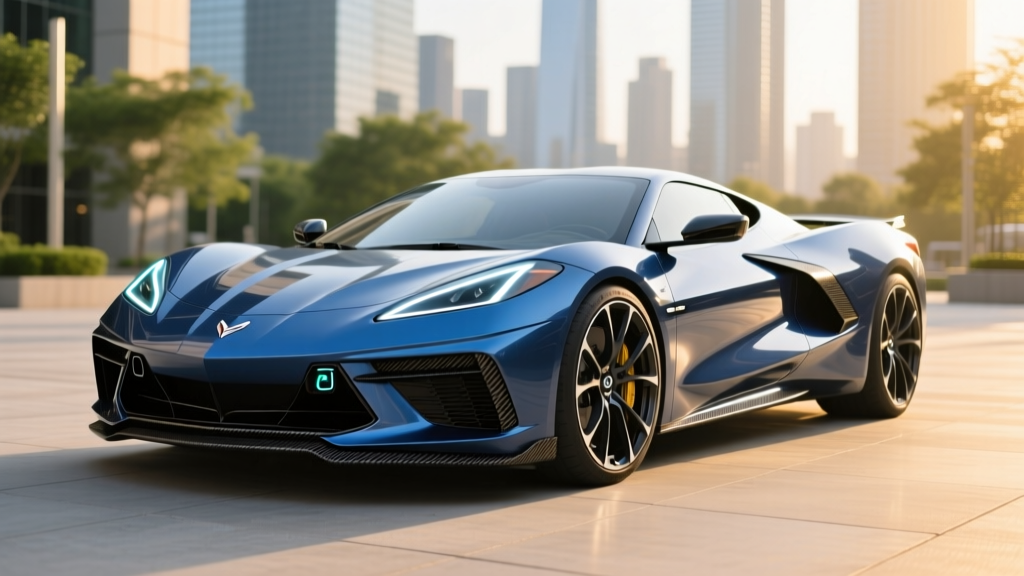
There is no fully electric 2024 Chevrolet Corvette. As of 2026, Chevrolet has not released a battery-electric Corvette (BEV). The current C8 Corvette lineup — including the Stingray, Z06, and E-Ray — remains either purely gasoline-powered (Stingray, Z06) or a mild hybrid performance model (E-Ray) that cannot be plugged in and has no electric-only driving range.
If you've been searching for an "electric corvetta 24," you're likely encountering a mix of wishful concept renders, mislabeled E-Ray coverage, and speculative headlines. Below, we break down exactly what Chevrolet has produced, what's officially on the roadmap, and which real electric sports cars and coupes fill the gap today — complete with range, charging, pricing, and ownership data.
What the 2024 Corvette E-Ray Actually Is (And Isn't)
The 2024 Corvette E-Ray is the closest thing to an "electrified" Corvette that Chevrolet has ever sold — but calling it "electric" is misleading. It's a performance hybrid (HEV), not a plug-in hybrid (PHEV) or a battery-electric vehicle (BEV).
Here's what the E-Ray actually delivers:
- Powertrain: 6.2L LT2 V8 (rear) + front-mounted electric motor
- Combined output: 655 horsepower / 612 lb-ft torque
- 0-60 mph: 2.5 seconds (quickest Corvette ever at launch)
- Battery: 1.9 kWh lithium-ion (non-pluggable)
- Electric-only mode: "Stealth Mode" — limited to ~45 mph for short distances (roughly 3-4 miles)
- EPA fuel economy: ~17 mpg combined (per fueleconomy.gov)
- Base MSRP: ~$104,900 (1LZ coupe); ~$114,900 (1LZ convertible)
The E-Ray's tiny 1.9 kWh battery recharges exclusively through regenerative braking and the V8 engine. You cannot plug it in. It provides no meaningful electric-only commuting range. Its electric motor exists to add all-wheel-drive traction and instant torque for performance — not efficiency or zero-emission driving.
Chevrolet's Official EV Roadmap: Where Does Corvette Fit?
General Motors has committed to an all-electric future, targeting 30+ EV models globally by 2025 and aiming for full electrification by 2035. However, the Corvette brand occupies a complicated position in that strategy.
As of early 2026, GM has not officially announced a battery-electric Corvette with a confirmed production date. What we do know:
- GM executives have hinted in interviews that high-performance nameplates like Corvette will eventually electrify, potentially using the Ultium platform.
- The Cadillac Celestiq and Lyriq demonstrate GM's willingness to put Ultium batteries into premium performance applications.
- Chevrolet's current EV focus remains on volume models: Equinox EV, Blazer EV, Silverado EV, and Bolt EV/EUV successors.
Any "electric Corvette" beyond the E-Ray hybrid remains speculative and unannounced. Treat concept renders and rumor articles accordingly.
Real Electric Sports Car Alternatives: Spec Comparison
If you want genuine electric sports-car performance in 2026, several production vehicles deliver the acceleration, handling, and tech that an electric Corvette would theoretically offer. Here's how the leading contenders compare:
| Spec | 2024 Corvette E-Ray (HEV) | Tesla Model S Plaid | Porsche Taycan Turbo S | BMW i4 M50 | Lotus Eletre R |
|---|---|---|---|---|---|
| Powertrain | V8 + e-motor (HEV) | Tri-motor BEV | Dual-motor BEV | Dual-motor BEV | Dual-motor BEV |
| Horsepower | 655 hp | 1,020 hp | 750 hp (overboost) | 593 hp | 905 hp |
| 0-60 mph | 2.5 sec | 1.99 sec | 2.4 sec | 3.7 sec | 2.8 sec |
| EPA Range | N/A (gas) | 396 mi | 222 mi | 270 mi | ~255 mi (est.) |
| Battery (usable) | 1.9 kWh | ~95 kWh (NMC) | 83.7 kWh (NMC) | 80.7 kWh (NMC) | ~100 kWh (NMC) |
| Max DC Fast Charge | N/A | 250 kW | 270 kW | 205 kW | ~350 kW |
| 10-80% DC Charge | N/A | ~30 min | ~23 min | ~31 min | ~20 min |
| Base MSRP | $104,900 | $89,990 | $190,500 | $69,700 | $145,000 |
| Federal Tax Credit (§30D) | Not eligible (HEV) | Eligibility varies* | Not eligible (MSRP cap) | Eligibility varies* | Not eligible (MSRP cap) |
* §30D federal tax credit eligibility depends on MSRP caps ($55,000 sedans), buyer income limits ($150K single / $300K joint), battery critical-mineral sourcing, and North American assembly. Always verify current rules at IRS.gov before purchasing.
EV vs Gas Sports Car: Real Ownership Costs Over 5 Years
Beyond the spec sheet, the ownership experience diverges sharply between a gas V8 Corvette and a battery-electric performance car. Here's a practical 5-year/75,000-mile cost comparison between the Corvette Stingray (gas) and the Tesla Model S Plaid (BEV), assuming 15,000 miles/year:
| Cost Category | 2024 Corvette Stingray 3LT | Tesla Model S Plaid |
|---|---|---|
| Base MSRP | $78,200 | $89,990 |
| Estimated Federal Tax Credit | $0 | $0-$7,500 (varies*) |
| Fuel / Energy (5 yr) | $14,200 (premium gas, ~18 mpg avg, $4.20/gal) | $4,100 (home L2 at $0.14/kWh avg) |
| Maintenance (5 yr) | $4,500 (oil, brakes, tires, belts) | $1,800 (cabin filter, wipers, tires, brake fluid) |
| Insurance (5 yr est.) | $11,500 | $14,800 |
| 5-Year Total (excl. depreciation) | ~$108,400 | ~$103,190 - $110,690 |
Key takeaways:
- Energy savings are massive: Charging at home saves roughly $10,000 over five years versus premium gasoline.
- Insurance costs more for EVs: Performance EVs like the Model S Plaid carry higher premiums due to repair costs and specialized parts. Get quotes before committing.
- Maintenance is dramatically lower: No oil changes, no transmission fluid, regenerative braking extends pad life by 2-3x.
- Home charging is essential: These savings assume reliable Level 2 home charging. Public DC fast charging at $0.40-$0.55/kWh cuts savings roughly in half.
First-Time EV Buyer: What You Must Know Before Shopping
If the idea of an electric sports car has you considering your first EV purchase, here are the practical realities that no marketing brochure will emphasize:
Charging Access Determines Your Experience
Without home or workplace Level 2 charging (240V, 7-19 kW), EV ownership becomes inconvenient and more expensive. A home Level 2 installation typically costs $1,200-$3,500 (charger + electrician + permit), assuming your electrical panel has capacity. Older homes may need a panel upgrade ($1,500-$4,000 additional).
Real-World Range Is Less Than the EPA Sticker
Expect to lose 15-30% of EPA-rated range during sustained highway driving at 75+ mph. Cold weather (below freezing) compounds this with an additional 10-20% loss due to battery chemistry and cabin heating demands. A car rated at 300 miles EPA may deliver 210-240 miles on a cold highway day.
Charging Speeds Taper Above 80%
Peak DC fast-charge rates (e.g., 250 kW) are sustained only between roughly 10-50% state of charge. Above 80%, charging slows dramatically to protect battery health. A "20-minute charge" claim usually means 10-80%, not 0-100%. Plan road-trip stops accordingly.
Battery Degradation Is Real But Manageable
Modern NMC and LFP batteries typically lose 8-15% capacity over 8 years / 100,000 miles. Federal law mandates battery warranties of at least 8 years/100,000 miles (10 years/150,000 miles in CARB states), covering capacity retention above 70%. Replacement outside warranty runs $8,000-$20,000+ depending on the pack.
Common Misconceptions About Electrified Corvettes
| Myth | Fact |
|---|---|
| "The 2024 Corvette E-Ray is an electric car" | It's a non-plug-in performance hybrid (HEV). You cannot charge it externally, and electric-only range is under 4 miles at low speeds. |
| "Chevy is releasing an all-electric Corvette in 2025" | No official announcement exists. GM's near-term EV production focuses on Silverado, Blazer, and Equinox EVs. |
| "Electric sports cars can't match V8 performance" | The Tesla Model S Plaid hits 0-60 in 1.99 seconds — faster than any production Corvette. Instant electric torque changes the performance hierarchy. |
| "EVs are always cheaper to own" | Higher insurance, potential home electrical upgrades, and faster tire wear (due to instant torque and heavier weight) offset some fuel savings. Run your own numbers. |
| "All EVs qualify for the $7,500 tax credit" | Eligibility requires meeting MSRP caps, buyer income limits, battery sourcing rules, and North American assembly. Many performance EVs exceed the $55,000 sedan cap. Verify at IRS.gov. |
Decision Framework: Should You Wait, Buy Hybrid, or Go Full EV?
Choose the Corvette E-Ray (HEV) if:
- You want Corvette heritage, V8 sound, and AWD performance today
- You don't have reliable home charging access
- You drive in areas with sparse DC fast-charging infrastructure
- You prioritize track capability and don't want to manage battery state of charge
- You accept ~17 mpg fuel economy and higher fuel costs as a trade-off
Choose a full EV sports car (Model S Plaid, Taycan, i4 M50) if:
- You have Level 2 home charging installed or can install it
- You want the lowest per-mile energy cost and minimal maintenance
- You value instant torque, silent operation, and OTA software updates
- Your daily driving is under 250 miles with occasional road trips
- You're willing to accept higher insurance premiums and charging-stop planning on road trips
Wait for an electric Corvette if:
- You specifically want the Corvette badge with zero emissions — and you're willing to wait an undefined timeline
- GM officially announces a BEV Corvette (monitor Chevrolet's newsroom for updates)
- You can afford to keep your current vehicle while waiting 2-5+ years for potential production
Frequently Asked Questions
Will Chevrolet ever make a fully electric Corvette?
GM has signaled eventual electrification across its lineup, including performance models, but as of 2026, no all-electric Corvette has been officially announced with a production date or preliminary specs. The E-Ray hybrid is the only electrified Corvette currently available.
Can the Corvette E-Ray drive on electric power alone?
Yes, but only in "Stealth Mode" at speeds up to ~45 mph for approximately 3-4 miles. The 1.9 kWh battery is too small for meaningful electric commuting and cannot be recharged by plugging in.
What's the fastest electric car I can actually buy today?
The Tesla Model S Plaid (1,020 hp, 0-60 in 1.99 sec, EPA 396 mi, $89,990) is the quickest production sedan. For sports-car form factors, the Porsche Taycan Turbo S (750 hp, 0-60 in 2.4 sec, $190,500) and Lotus Eletre R (905 hp, 0-60 in 2.8 sec, ~$145,000) are leading options.
Do electric sports cars qualify for the federal EV tax credit?
Most don't. The §30D credit caps eligible sedans at $55,000 MSRP and SUVs/trucks at $80,000 MSRP, plus buyer income limits ($150K single / $300K joint) and strict battery-sourcing requirements. The BMW i4 M50 ($69,700) may qualify depending on trim and sourcing; the Model S Plaid and Taycan Turbo S exceed price caps. Always confirm current eligibility at IRS.gov and consult a tax professional.
How much does home EV charger installation cost?
A Level 2 home charger (240V, 32-48 amps) typically costs $500-$800 for the unit plus $700-$2,700 for professional installation, depending on wiring distance and panel capacity. Total: $1,200-$3,500 in most cases. If your home needs a 200-amp panel upgrade, add $1,500-$4,000. Always hire a licensed electrician and pull permits.
Is an EV practical for road trips?
Yes, with planning. Modern EVs with 250+ miles of range and 150+ kW DC fast-charging capability can handle road trips using networks like Tesla Supercharger, Electrify America, and EVgo. Expect 20-30 minute charging stops every 180-250 miles. Use apps like A Better Routeplanner to pre-plan stops and precondition the battery for faster charging.