The Short Answer on the Electric Corvette
As of early 2026, Chevrolet has not yet released final specifications or pricing for a production electric Corvette. What we do know: GM confirmed an electrified Corvette is in development, with industry consensus pointing to a plug-in hybrid (PHEV) variant arriving first—likely borrowing the Ultium-derived hybrid architecture teased alongside the C8 generation refresh. A fully battery-electric Corvette (BEV) remains plausible later this decade but is not currently on sale or available for order. Any range, pricing, or battery figures circulating online are preliminary estimates, not confirmed specs. This guide separates verified information from speculation, compares what an electrified Corvette would need to beat against the current gas C8 lineup, and provides a decision framework for buyers considering whether to wait or buy now.
What Chevrolet Has Actually Confirmed
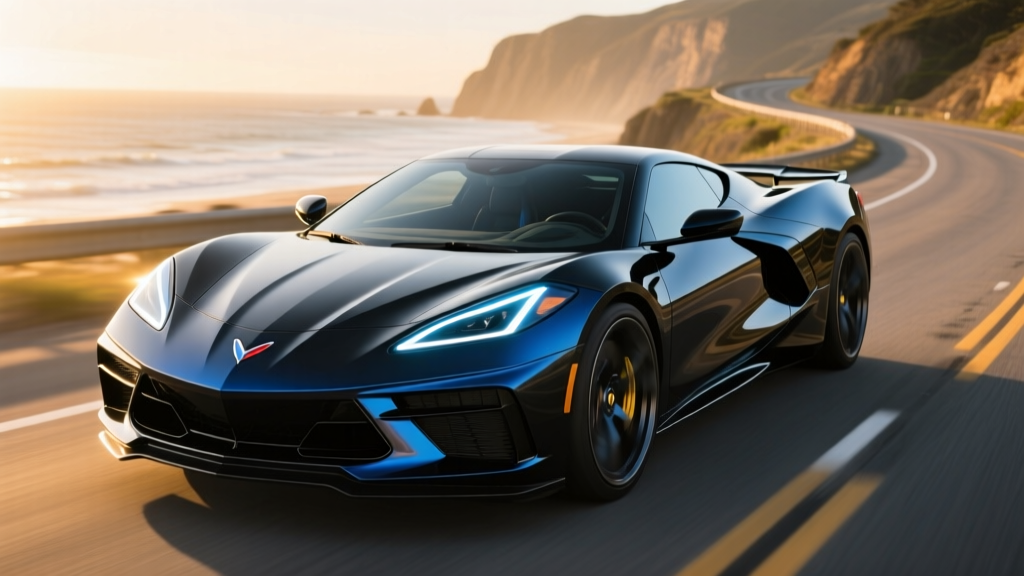
GM executives, including former President Mark Reuss, have stated publicly that the Corvette nameplate will electrify, but the company has carefully avoided committing to a fully battery-electric model in the near term. The current C8 Corvette (Stingray, Z06, and E-Ray) already uses electrification in the form of the E-Ray, which pairs a 6.2L V8 with a front-axle electric motor for all-wheel drive and a combined 655 horsepower.
The E-Ray uses a small 1.9 kWh lithium-ion battery—enough for brief electric-only low-speed operation and torque-fill, but not a plug-in. It cannot be charged from a wall outlet and offers no meaningful electric-only range. This is a performance hybrid, not an EV in the regulatory or practical sense.
What buyers searching for an "electric Corvette" in 2026 most likely want is either:
- A plug-in hybrid Corvette (PHEV) with 20-40 miles of electric-only range and the ability to charge at home—this is the most likely next step.
- A fully battery-electric Corvette (BEV) with 250+ miles of range and DC fast charging—this remains speculative and is unlikely before 2028-2029 at the earliest.
Current C8 Corvette Lineup: The Baseline to Beat
Any electrified Corvette must outperform or meaningfully complement the existing gas and hybrid C8 models. Here is what Chevrolet currently offers for the 2025/2026 model year:
| Spec | C8 Stingray | C8 Z06 | C8 E-Ray (Hybrid) |
|---|---|---|---|
| Powertrain | 6.2L V8 (LT2) | 5.5L Flat-Plane V8 (LT6) | 6.2L V8 + Front E-Motor |
| Horsepower | 490-495 hp | 670 hp | 655 hp combined |
| 0-60 mph | 2.9 seconds | 2.6 seconds | 2.5 seconds |
| Drivetrain | RWD | RWD | AWD (eAWD front axle) |
| Battery | N/A | N/A | 1.9 kWh (non-plug-in) |
| EPA Fuel Economy | 15 city / 27 hwy / 19 combined | 13 city / 21 hwy / 16 combined | 16 city / 24 hwy / 19 combined (est.) |
| Base MSRP (approx.) | $69,995 | $115,895 | $108,595 |
| Federal EV Tax Credit | Not eligible | Not eligible | Not eligible (no plug) |
Sources: Chevrolet Corvette Configurator, fueleconomy.gov
The E-Ray already proves GM is willing to put electric motors in the Corvette chassis for performance reasons. A future PHEV variant would add a larger battery pack (likely 15-25 kWh usable), a charge port, and meaningful electric-only driving capability.
Estimated Specs: What a Corvette PHEV Could Look Like
Based on GM's existing Ultium PHEV architecture (used in vehicles like the Chevrolet Corvette E-Ray's successor planning and the broader GM hybrid strategy), here are educated estimates for a next-generation Corvette PHEV. These are not confirmed specifications.
| Attribute | Estimated Corvette PHEV | Notes |
|---|---|---|
| Battery (usable) | 15-25 kWh | Likely NMC chemistry for energy density |
| Electric-Only Range | 25-40 miles (EPA est.) | Sufficient for daily commuting without gas |
| Combined System Output | 650-750+ hp | V8 + enhanced e-motor(s) |
| 0-60 mph | ~2.3-2.5 seconds (est.) | Electric torque fill improves launch |
| Level 2 Charging | ~7.2 kW onboard charger | Full charge in ~2.5-3.5 hours |
| DC Fast Charging | Unlikely for PHEV | Most PHEVs lack DCFC capability |
| Estimated Base MSRP | $110,000-$125,000 | Premium over E-Ray for larger battery |
| Federal Tax Credit (§30D) | Up to $7,500 (if eligible) | Subject to MSRP cap, income limits, sourcing rules |
Federal Tax Credit: Will a Plug-In Corvette Qualify?
If Chevrolet releases a Corvette PHEV with at least 7 kWh of battery capacity and a charge port, it could theoretically qualify for the IRS §30D Clean Vehicle Credit of up to $7,500. However, several rules create obstacles:
- MSRP Cap: The vehicle must have an MSRP at or below $55,000 for sedans or $80,000 for SUVs/pickups/vans. A Corvette is classified as a sedan/sports car, meaning the $55,000 cap applies—virtually guaranteeing a future PHEV Corvette would be ineligible unless GM prices it extraordinarily aggressively or the classification rules change.
- Buyer Income Cap: Modified adjusted gross income must not exceed $150,000 (single) / $300,000 (joint).
- Battery Sourcing: Critical minerals and battery components must meet escalating domestic-sourcing thresholds that increase annually through 2029.
- Point-of-Sale Transfer: Eligible buyers can transfer the credit to the dealer for an immediate price reduction at purchase.
Bottom line: At a projected $110,000+ MSRP, a PHEV Corvette almost certainly exceeds the $55,000 sedan cap and would not qualify for the federal credit. Do not factor the $7,500 into your purchase math.
Cost of Ownership: Electric Corvette vs. Gas C8 Stingray
Even without the tax credit, a PHEV Corvette could reduce operating costs for owners who charge at home and commute on electric power. Here is a realistic 5-year ownership comparison assuming 12,000 miles/year, 70% electric commuting (PHEV), and national average energy prices.
| Cost Factor | C8 Stingray (Gas) | Estimated Corvette PHEV |
|---|---|---|
| Purchase Price (base) | $69,995 | ~$115,000 (est.) |
| Fuel/Energy (5 years) | $16,500 (19 MPG, $3.50/gal) | ~$7,800 (mix of electricity + gas) |
| Maintenance (5 years) | $4,200 (oil, brakes, fluids) | ~$3,500 (regen braking saves pads, fewer oil changes if EV-commuted) |
| Insurance (5 years) | $12,000 (est. $200/mo) | ~$14,000 (higher vehicle value, EV surcharge) |
| Estimated Depreciation (5 yr) | $28,000 (~40%) | ~$52,000 (~45%, higher initial cost) |
| Total 5-Year Cost | ~$130,695 | ~$192,300 |
The PHEV Corvette saves roughly $9,400 in fuel and maintenance over five years but costs $45,000+ more upfront. The value proposition is performance and technology, not economy. Buyers who want a Corvette for daily electric commuting with weekend V8 track capability will find appeal; buyers seeking cost savings should look elsewhere.
Real-World Charging Considerations for a Future PHEV Corvette
A 15-25 kWh PHEV battery charges fully on a standard 120V outlet (Level 1, ~1.4 kW) in approximately 11-18 hours—adequate for overnight replenishment if your daily electric commute is under 25 miles. A Level 2 home charger (240V, 7.2 kW) would fully recharge in 2.5-3.5 hours. Home charger installation typically runs $500-$2,000 depending on panel proximity and whether your electrical panel needs a 200-amp upgrade ($1,500-$3,500 additional). Most PHEVs do not support DC fast charging, so public charging infrastructure is largely irrelevant for this vehicle type.
Common Misconceptions About an Electric Corvette
| Myth | Fact |
|---|---|
| "The electric Corvette is available to order now." | No production BEV or PHEV Corvette is currently on sale. The E-Ray is a non-plug-in performance hybrid. |
| "An electric Corvette will have 400+ miles of range." | A sports car BEV would likely target 250-300 miles to balance battery weight against performance. Larger batteries add mass that hurts handling. |
| "It will qualify for the $7,500 tax credit." | The §30D MSRP cap for sedans/sports cars is $55,000. A Corvette PHEV will almost certainly exceed this threshold. |
| "Electric means it will be silent and boring." | A PHEV Corvette would retain the V8 for spirited driving. Electric-only mode would be for quiet neighborhood departures and commuting—not track use. |
| "I can charge a PHEV Corvette at any DC fast charger." | Most PHEVs only accept Level 2 AC charging. DC fast charging is typically reserved on full BEVs with larger batteries. |
Decision Framework: Should You Wait or Buy Now?
Choose the Current C8 E-Ray If:
- You want an electrified Corvette today with AWD, 655 hp, and a 2.5-second 0-60 time.
- You don't need plug-in electric-only range and are fine with a performance hybrid.
- You want to avoid paying a projected $40,000+ premium for a future PHEV variant.
- You don't have reliable home charging access (the E-Ray requires no plug).
Wait for a PHEV Corvette If:
- You want 25-40 miles of electric-only commuting to reduce daily fuel use.
- You have Level 2 home charging and drive less than 40 miles round-trip on weekdays.
- You want the newest powertrain technology and are willing to pay a premium for it.
- You plan to keep the car 7+ years, justifying the higher upfront cost with long-term fuel savings and novelty value.
Wait for a Full BEV Corvette Only If:
- You are targeting a 2028-2030 purchase timeline and want zero tailpipe emissions.
- You accept that a BEV Corvette will likely be heavier, potentially altering the mid-engine handling balance GM has engineered.
- You have reliable access to DC fast charging for road trips (a BEV Corvette would need 200+ kW DCFC capability to be practical for touring).
What First-Time EV Buyers Should Know
If the electric Corvette is your introduction to electrified vehicles, understand these fundamentals before committing:
- kW vs. kWh: Kilowatts (kW) measure power—how fast energy flows (charging speed or motor output). Kilowatt-hours (kWh) measure energy—how much the battery holds (like gallons in a gas tank). A 20 kWh battery charged at 7 kW takes roughly 3 hours.
- Home charging is essential: Relying solely on public charging for any plug-in vehicle is expensive, time-consuming, and unreliable in many regions. Confirm you can install a Level 2 charger before purchasing any PHEV or BEV.
- Cold weather reduces range: Expect 15-30% range loss in freezing temperatures due to battery chemistry limitations and cabin heating demands. A PHEV Corvette rated at 35 electric miles may deliver 24-28 miles at 20°F.
- Insurance costs more: Electrified vehicles carry higher insurance premiums due to expensive battery packs, specialized repair requirements, and higher vehicle values. Get quotes before purchasing.
- The tax credit is not guaranteed: IRS §30D rules change annually. Battery sourcing requirements tighten each year, and the MSRP cap for sports cars makes most Corvettes ineligible. Verify current-year rules at irs.gov before counting on any credit.
Frequently Asked Questions
Is there a fully electric Corvette I can buy in 2026?
No. Chevrolet does not currently sell a battery-electric or plug-in hybrid Corvette. The C8 E-Ray is a non-plug-in performance hybrid with a 1.9 kWh battery that cannot be charged externally and provides no meaningful electric-only range.
When will an electric Corvette be available?
GM has not announced a specific date. Industry analysis suggests a PHEV Corvette could arrive with the next C8 refresh (potentially 2027-2028 model year), while a full BEV is unlikely before 2029-2030. All timelines are speculative until GM makes an official announcement.
Will the E-Ray Corvette qualify for the federal EV tax credit?
No. The E-Ray is not a plug-in vehicle—it has no charge port and cannot be charged from an external source. The IRS §30D credit requires a plug-in vehicle with at least 7 kWh of battery capacity. The E-Ray's 1.9 kWh battery and lack of a charge port make it ineligible regardless of MSRP.
How much would a PHEV Corvette cost to charge at home?
Assuming a 20 kWh usable battery and the national average electricity rate of ~$0.17/kWh, a full home charge would cost approximately $3.40. Over a year of daily electric commuting (30 miles/day, 250 workdays), you would use roughly 1,667 kWh, costing about $283 in electricity—compared to roughly $1,842 in gasoline for the same miles in a C8 Stingray at 19 MPG combined.
Would a PHEV Corvette be slower than the gas Z06?
Unlikely. Electric motors provide instant torque at zero RPM, which improves launch performance. The current E-Ray already matches the Z06's 0-60 time (2.5-2.6 seconds) despite having less peak horsepower, because the front e-motor provides AWD grip off the line. A future PHEV with a larger, more powerful e-motor could plausibly exceed 700 combined horsepower.
Can I install a home charger for a PHEV Corvette myself?
No. A Level 2 (240V) home charger requires a dedicated circuit installed by a licensed electrician. This typically involves running 6/3 or 8/3 gauge wire from your electrical panel to a NEMA 14-50 outlet or hardwired charger. Permits are required in most jurisdictions. Budget $500-$2,000 for installation if your panel has capacity, or $2,000-$5,500 if a panel upgrade to 200 amps is needed.