The Quick Answer: Does an Electric Corolla Exist in 2026?
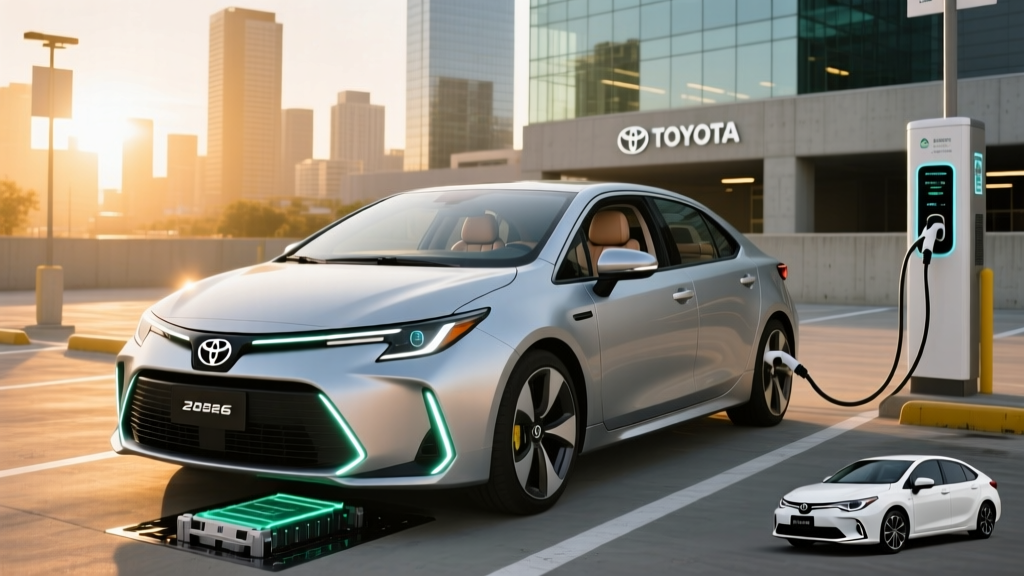
As of the 2026 model year, Toyota has not released a fully electric Corolla (BEV) for the U.S. market. The Corolla lineup remains powered by a 2.0L gasoline engine and the Corolla Hybrid (HEV), which pairs a 1.8L engine with an electric motor but cannot plug in. Buyers searching for an "electric Corolla" are typically looking at one of three paths: the Corolla Hybrid (50+ MPG, no plug), the bZ4X (Toyota's actual all-electric crossover), or competing compact EVs like the Chevrolet Equinox EV, Hyundai Kona Electric, or Nissan Leaf. This guide breaks down each option with real numbers so you can decide which route actually saves you money and fits your driving life.
What "Electric Corolla" Actually Means in 2026
The search term "electric Corolla" reflects genuine buyer demand: millions of Americans trust the Corolla nameplate for reliability, low running costs, and accessible pricing. Naturally, many assume Toyota has electrified its best-selling car. The reality is more nuanced.
Toyota's U.S. Corolla lineup for 2026 includes:
- Corolla LE/SE/XSE (gas): 2.0L 4-cylinder, 169 hp, EPA-estimated 32 city / 41 highway / 35 combined MPG
- Corolla Hybrid LE/SE: 1.8L + electric motor, 138 net hp, EPA-estimated 53 city / 46 highway / 50 combined MPG
Neither variant has a plug or a traction battery large enough for electric-only driving. The Corolla Hybrid is a traditional series-parallel HEV — it recovers energy through regenerative braking and assists the gas engine, but you fuel it exclusively at a gas station.
Toyota's closest all-electric vehicle is the bZ4X, a compact crossover with an EPA-estimated 236–252 miles of range (depending on trim and FWD vs. AWD), a 71.4 kWh usable battery (NMC chemistry), and DC fast charging that peaks around 150 kW. The bZ4X starts near $37,000 before incentives — a different vehicle class and price bracket than a Corolla.
Corolla Hybrid vs. Gas Corolla vs. Compact EVs: By the Numbers
If you want Corolla-like economics with electric drive, you're cross-shopping three categories. Here's how they stack up on the metrics that matter.
| Spec | 2026 Corolla LE (Gas) | 2026 Corolla Hybrid LE | 2026 Chevrolet Equinox EV 2LT | 2026 Hyundai Kona Electric SEL |
|---|---|---|---|---|
| Powertrain | 2.0L I4 gas | 1.8L HEV | BEV (FWD) | BEV (FWD) |
| Horsepower | 169 hp | 138 hp (net) | 213 hp | 201 hp |
| EPA Range / MPG | 35 MPG comb. | 50 MPG comb. | ~319 mi | ~261 mi |
| Battery (usable kWh) | N/A | ~0.9 kWh (NiMH) | ~85 kWh (NMC) | ~65 kWh (NMC) |
| Max DC Fast Charge | N/A | N/A | ~150 kW | ~100 kW |
| 10–80% DC Charge Time | N/A | N/A | ~30 min | ~43 min |
| Base MSRP | ~$22,725 | ~$24,725 | ~$33,000 | ~$32,975 |
| Federal Tax Credit (§30D) | $0 | $0 | Up to $7,500* | Up to $7,500* |
| Credit-Adjusted Price | ~$22,725 | ~$24,725 | ~$25,500 | ~$25,475 |
*Federal §30D credit eligibility depends on buyer income caps ($150K single / $300K joint AGI), MSRP caps ($55K for sedans, $80K for SUVs/trucks), battery sourcing requirements, and point-of-sale transfer rules. Verify current-year eligibility at IRS.gov before purchasing.
The Real Cost to Own: 5-Year Breakdown
Sticker price tells only part of the story. Fuel (or electricity), maintenance, insurance, and depreciation reshape the math over a typical ownership period. Below is a 5-year / 75,000-mile projection assuming 15,000 miles/year, $3.50/gallon regular gas, and $0.14/kWh home electricity (national averages).
| Cost Category | Corolla Gas | Corolla Hybrid | Compact EV (e.g., Kona Electric) |
|---|---|---|---|
| Purchase Price (after credit) | $22,725 | $24,725 | $25,475 |
| Fuel / Energy (5 yr) | $9,375 | $6,563 | $3,938 |
| Maintenance (5 yr) | $3,200 | $2,800 | $1,500 |
| Insurance (5 yr est.) | $7,500 | $7,500 | $9,000 |
| Estimated Depreciation | $10,200 | $10,800 | $12,500 |
| Total 5-Year Cost | $52,900 | $52,388 | $52,413 |
Key takeaways from this model:
- The Corolla Hybrid saves roughly $2,800 in fuel over the gas model across 75,000 miles — enough to offset its ~$2,000 price premium and then some.
- A compact EV's fuel savings are substantial (~$5,400 less than gas over 5 years), but higher insurance premiums (EVs typically cost 15–25% more to insure) and steeper depreciation partially offset those gains.
- Home charging access is the wildcard. If you rely on public DC fast charging at $0.35–$0.50/kWh, the EV's energy cost nearly triples, erasing much of its advantage.
Real-World Ownership: What First-Time EV Buyers Miss
If you're pivoting from "I want an electric Corolla" to considering a compact EV like the Kona Electric or Equinox EV, these practical factors will shape your daily experience more than any spec sheet.
Home Charging Is Non-Negotiable for Most Buyers
Level 1 charging (120V household outlet) adds roughly 3–5 miles of range per hour — adequate only if you drive under 30 miles daily and can plug in overnight. Level 2 home charging (240V, 7–11 kW) adds 25–40 miles per hour and fully replenishes a compact EV overnight. Installation typically costs $800–$2,500 depending on panel capacity and wiring distance. If you live in an apartment or lack off-street parking, public charging dependence will raise your per-mile cost and your frustration level.
Cold Weather Cuts Range 20–30%
EPA range figures are measured at moderate temperatures. In sustained sub-freezing conditions, expect a compact EV rated at 260 miles to deliver 180–210 real-world miles. Battery chemistry (NMC in most current compacts) is sensitive to cold, and cabin heating draws significant energy. If you live in the Upper Midwest or Northeast, size your range buffer accordingly — or consider the Corolla Hybrid, which is unaffected by cold in electric-only terms since it has no meaningful electric-only mode.
DC Fast Charging Isn't a Road-Trip Panacea
Compact EVs in the $30K–$35K bracket typically peak at 100–150 kW on DC fast chargers and taper significantly above 80% state of charge. A "10–80% in 30 minutes" spec means the 80–100% top-off can take another 20–25 minutes. On a 400-mile road trip, you're looking at two charging stops of 30–40 minutes each — plan accordingly and check charger availability along your route via apps like PlugShare or A Better Routeplanner.
Common Misconceptions About an Electric Corolla
| Myth | Fact |
|---|---|
| "Toyota makes an all-electric Corolla." | As of 2026, no fully electric Corolla exists in the U.S. The Corolla Hybrid is a gas-electric HEV with no plug. Toyota's BEV is the bZ4X crossover. |
| "The Corolla Hybrid qualifies for the $7,500 federal EV tax credit." | It does not. The §30D credit applies only to plug-in vehicles (BEVs and PHEVs with ≥7 kWh battery). Traditional HEVs like the Corolla Hybrid are ineligible. See IRS §30D guidelines. |
| "An EV will always save money vs. a Corolla." | Not automatically. Higher insurance, potential home charger installation ($1,000–$2,500), faster depreciation, and public-charging costs can erode fuel savings. The math depends on your mileage, electricity rate, and credit eligibility. |
| "EV batteries need replacing every few years." | Modern EV batteries (NMC/LFP) are warrantied for 8 years / 100,000 miles at ≥70% capacity retention. Real-world degradation data from fueleconomy.gov and fleet studies show most packs retain 85–90% capacity at 100K miles. |
Decision Framework: Which Path Is Right for You?
Choose the Corolla Hybrid if:
- You want maximum MPG without changing your fueling habits
- You lack reliable home charging access (apartment, street parking)
- Your budget is under $27,000 and you want a proven, low-risk vehicle
- You drive in extreme cold regularly and can't afford range loss
- You want Toyota's 10-year/100,000-mile hybrid battery warranty
Choose a Compact EV (Kona Electric, Equinox EV) if:
- You have Level 2 home charging or can install it
- You qualify for the full $7,500 §30D credit (income, sourcing, MSRP requirements met)
- Your daily commute is under 100 miles round-trip
- You want zero tailpipe emissions and lower per-mile energy costs
- You're comfortable planning road trips around charging stops
Wait for a True Electric Corolla if:
- You specifically want a Toyota-branded BEV sedan
- Toyota announces a next-gen compact BEV on its rumored "Arene" or dedicated EV platform
- You can afford to delay your purchase 1–3 years
Frequently Asked Questions
Will Toyota ever make a fully electric Corolla?
Toyota has committed to expanding its BEV lineup globally, and a compact electric sedan is a logical future product. However, as of early 2026, Toyota has not announced an electric Corolla for the U.S. market. The company's current EV strategy centers on the bZ series (bZ4X, upcoming bZ SUVs) and a gradual rollout. If Toyota does launch an electric Corolla, expect an MSRP in the $30,000–$35,000 range, 250+ miles of EPA range, and NACS charging compatibility.
Is the Corolla Hybrid considered an electric vehicle?
No. The Corolla Hybrid is a conventional hybrid electric vehicle (HEV). It uses a small battery (under 1 kWh) and electric motor to assist the gasoline engine and recover braking energy, but it cannot plug in and has no meaningful electric-only driving range. For tax-credit and regulatory purposes, only plug-in hybrids (PHEVs) and battery-electric vehicles (BEVs) are classified as electric vehicles.
How much does it cost to charge a compact EV at home vs. fueling a Corolla?
At the U.S. average residential electricity rate of ~$0.14/kWh, charging a 65 kWh battery (Kona Electric) from empty to full costs roughly $9.10 and yields about 260 miles — approximately $0.035 per mile. Fueling a gas Corolla at $3.50/gallon and 35 MPG costs $0.10 per mile. That's a ~65% per-mile energy savings with home charging. However, public DC fast charging at $0.40/kWh pushes the EV cost to ~$0.10/mile — essentially equal to the gas Corolla.
Does the Corolla Hybrid battery need replacement, and what does it cost?
Toyota warranties the Corolla Hybrid's traction battery for 10 years / 150,000 miles. Replacement is uncommon within that window, but if needed out of warranty, expect $2,000–$4,000 for a new or refurbished pack — far less than a full BEV battery replacement ($8,000–$18,000). The hybrid battery is also smaller and simpler, reducing labor costs.
What compact EV is closest to a Corolla in price and practicality?
The Hyundai Kona Electric and Chevrolet Equinox EV are the closest analogs. Both start in the low $30K range, qualify for the federal tax credit (subject to eligibility), seat five, and offer 260–320 miles of EPA range. The Kona Electric is closer to a Corolla in footprint; the Equinox EV is slightly larger and more crossover-oriented. Neither carries the Toyota badge, but both deliver the low-cost commuter mission the Corolla is known for — with zero tailpipe emissions.