The Short Answer on Electric Cop Cars
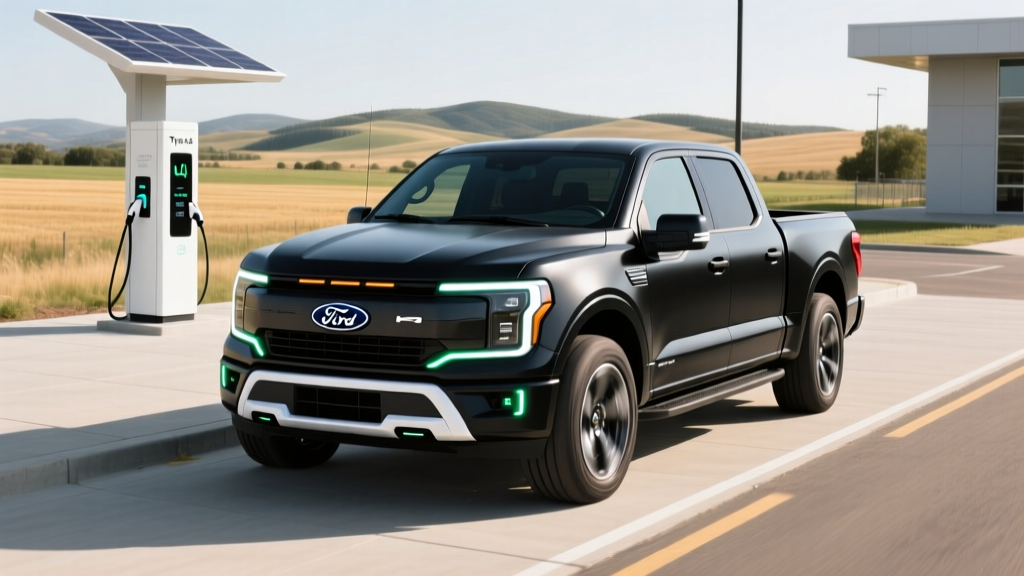
As of 2026, the Ford F-150 Lightning and Dodge Charger Daytona EV (announced for fleet release) lead the electric cop car conversation, but only the Lightning is actively deployed in patrol roles across U.S. departments. The F-150 Lightning offers an EPA-estimated 230–320 miles of range (depending on battery pack), a 131 kW peak DC fast-charge rate (10–80% in ~41 minutes), and 580 hp in extended-range trim. Real-world patrol duty — heavy idling, HVAC loads, light bars, and short high-speed bursts — typically yields 170–240 usable miles before needing a charge. Total cost of ownership for fleet buyers can be 30–40% lower than gas equivalents over five years, driven by fuel and maintenance savings, but upfront costs remain $15,000–$25,000 higher per unit and require depot charging infrastructure investment.
What Is an Electric Cop Car in 2026?
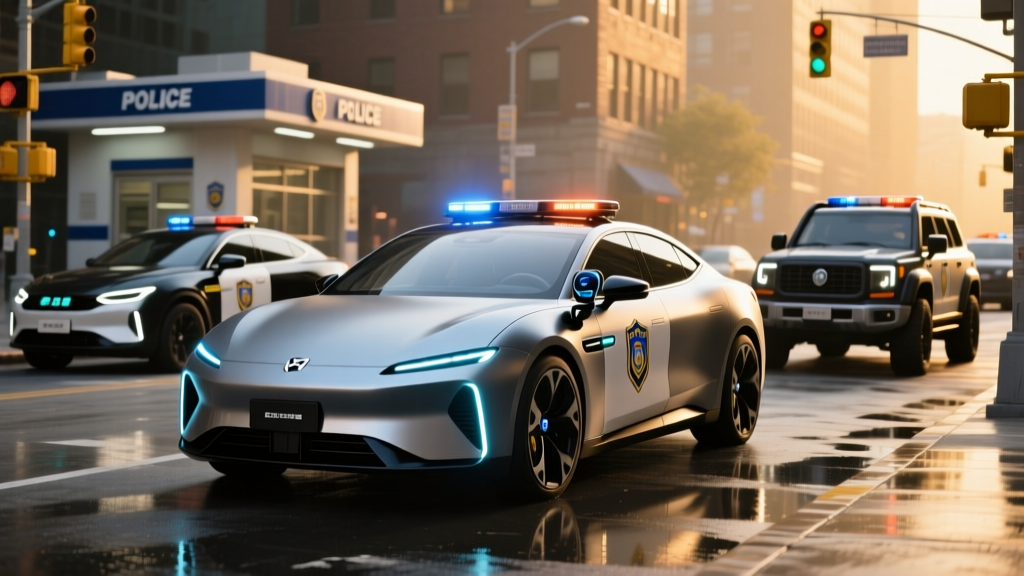
The term "electric cop car" covers any battery-electric vehicle (BEV) purpose-built or upfitted for law enforcement patrol, pursuit, or community-service duty. Unlike consumer EVs, these vehicles must accommodate aftermarket upfit packages: light bars, sirens, prisoner transport cages, weapon racks, mobile data terminals, and the massive electrical draw that all of it requires.
Ford's Police Division has offered the F-150 Lightning as a purpose-built police truck since late 2022, and by 2026 it is the most widely deployed EV in American law enforcement fleets — used by departments from South Pasadena, CA, to Michigan state agencies. Chevrolet's Silverado EV Work Truck has entered limited fleet testing but lacks a dedicated police upfit package as of early 2026. The Dodge Charger Daytona EV, announced by Stellantis for 2025–2026, targets the pursuit-rated sedan segment vacated by the gas Charger, but fleet deliveries and validated pursuit ratings remain forthcoming.
No current electric cop car holds a certified pursuit rating from the Michigan State Police or Los Angeles Sheriff's Department equivalent to the gas Dodge Charger Pursuit or Ford Police Interceptor Utility Hybrid — a critical distinction for agencies that need validated high-speed performance data.
Spec Breakdown: Electric Cop Car Contenders
| Spec | Ford F-150 Lightning (Police) | Dodge Charger Daytona EV (Announced) | Chevy Silverado EV WT (Fleet) |
|---|---|---|---|
| EPA Range | 230 mi (std) / 320 mi (ext) | ~317 mi (est. R/T) | ~380 mi (4WT) |
| Battery / Chemistry | 98 kWh (std) / 131 kWh (ext), NMC | ~100 kWh, NMC (preliminary) | 200+ kWh (Ultium, NMC) |
| Horsepower | 580 hp (ext range) | 496 hp (R/T) / 670 hp (Scat Pack) | 510 hp (4WT) |
| 0–60 mph | ~3.8 sec (ext) | ~4.3 sec (R/T est.) | ~4.5 sec (est.) |
| Peak DC Fast Charge | 131 kW (std) / 150 kW (ext) | ~175 kW (preliminary) | ~350 kW (800V architecture) |
| 10–80% Charge Time | ~41 min (150 kW) | ~27 min (est.) | ~20 min (350 kW capable) |
| Level 2 Charge Rate | 19.2 kW (80A onboard) | ~11 kW (est.) | 19.2 kW |
| Towing / Payload | 7,700 lbs / 2,235 lbs | N/A (sedan) | 10,000 lbs / 1,840 lbs |
| Base Fleet MSRP (est.) | ~$62,000 (before upfit) | TBD (announced) | ~$60,000 (fleet) |
| Battery Warranty | 8 yr / 100,000 mi | TBD | 8 yr / 100,000 mi |
| Pursuit-Rated? | No (patrol/community service) | Pending validation | No |
Real-World Range vs. EPA Sticker
EPA says: 320 miles (F-150 Lightning Extended Range).
Patrol reality: Expect 170–240 miles of usable range on a typical shift. Why the drop? Constant HVAC use (especially in summer heat or winter cold), light bar and electronics draw (1–3 kW continuous), frequent stop-and-go driving, and the need to return with a 20–30% buffer. Cold-weather patrols in northern states can reduce range by an additional 20–30%. A 10-hour shift with moderate activity typically consumes 70–90% of the extended-range battery.
Electric Cop Car vs. Gas Patrol Vehicle: Cost Comparison
The economics of an electric cop car differ sharply from a personal EV purchase. Fleet buyers think in terms of total cost of ownership (TCO) over 5 years or 100,000 miles, and that's where EVs can shine — if the infrastructure is in place.
| Cost Factor (5-Year / 100k mi) | Ford F-150 Lightning (Police EV) | Ford PIU Hybrid (Gas Patrol SUV) | Dodge Charger Pursuit (5.7L V8) |
|---|---|---|---|
| Vehicle Purchase + Upfit | $77,000–$87,000 | $52,000–$62,000 | $48,000–$58,000 |
| Fuel / Electricity | $3,200–$5,500 (depot rate ~$0.12/kWh) | $14,000–$18,000 (16 MPG avg, $3.40/gal) | $16,500–$20,000 (14 MPG avg) |
| Maintenance | $2,500–$4,000 | $8,000–$12,000 | $9,000–$13,000 |
| Brake Replacement | $400–$800 (regen saves pads) | $2,500–$4,000 | $2,800–$4,500 |
| Charging Infrastructure (per vehicle share) | $4,000–$8,000 (Level 2 depot) | $0 | $0 |
| Estimated 5-Year TCO | $87,000–$105,000 | $76,500–$96,000 | $76,300–$95,500 |
| Tailpipe Emissions | Zero (grid-dependent upstream) | ~112,000 lbs CO₂ | ~128,000 lbs CO₂ |
The EV breaks even or pulls ahead on operating costs within 3–4 years. The Department of Energy's EV cost tools confirm electricity costs roughly $0.04–$0.06 per mile for fleet-charged EVs vs. $0.18–$0.24 per mile for gas patrol vehicles. Maintenance savings are substantial: no oil changes, no transmission fluid, no exhaust system repairs, and regenerative braking extends pad life to 80,000+ miles in many fleet reports.
However, the upfront delta — vehicle cost plus depot charging installation — means departments need to plan for 2–3 years before seeing net savings per unit.
Charging Infrastructure: The Real Barrier for Police Fleets
An electric cop car is only as useful as its charging plan. Unlike consumer EV owners who charge at home overnight, police departments must build depot charging — Level 2 (19.2 kW) chargers at the station or precinct, capable of replenishing a depleted battery in 7–10 hours between shifts.
| Depot Charging Component | Cost Range (per stall) | Notes |
|---|---|---|
| Level 2 Charger (19.2 kW, hardwired) | $2,500–$6,000 | Ford Charge Station Pro or commercial equivalent |
| Electrical Panel Upgrade (if needed) | $5,000–$20,000 | Many older precincts need 400A+ service |
| Conduit, Wiring, Trenching | $3,000–$12,000 | Varies by lot layout and distance to panel |
| Permitting & Inspection | $500–$2,500 | Commercial permits; varies by municipality |
| Networked Software / Fleet Management | $500–$1,500/yr | Charge scheduling, usage tracking, load balancing |
| Total per Stall (typical) | $6,500–$22,000 | Average fleet install: $12,000–$15,000/stall |
For a 10-vehicle fleet, depot charging infrastructure can run $65,000–$220,000 before any vehicles are purchased. Federal grants through the Alternative Fuels Data Center and state-level fleet electrification programs can offset 30–50% of infrastructure costs, but application timelines and eligibility vary by jurisdiction.
DC fast charging (50–150 kW) at the depot is an option for mid-shift top-ups but adds $25,000–$70,000+ per unit. Most departments rely on Level 2 overnight charging and plan shifts around battery capacity rather than investing in fast-charging infrastructure.
Performance and Pursuit: Where Electric Cop Cars Stand
The F-150 Lightning's 580 hp and 3.8-second 0–60 time make it genuinely quick — quicker than most gas patrol SUVs. Instant torque delivery is an advantage in rapid-response scenarios, and the truck's 7,700-lb towing capacity supports trailer-mounted equipment or boat patrols.
But pursuit rating is a different standard. The Michigan State Police annual vehicle evaluation tests pursuit vehicles at sustained high speeds (100+ mph), aggressive cornering, brake fade over repeated hard stops, and cooling system endurance under extreme load. As of 2026, no electric cop car has completed this evaluation with a pursuit certification.
What Electric Cop Cars Cannot Do (Yet)
- Sustained high-speed pursuit: Battery drain at 100+ mph is extreme — expect range to drop to under 60 miles in continuous pursuit conditions.
- Multi-shift continuous duty: A 24-hour operation without depot charging access is impractical without mid-shift DC fast charging.
- Extreme cold climates: Below 10°F, range loss of 25–40% is documented in fleet testing. Northern departments in Minnesota, Maine, and Alaska face real operational limits.
- Heavy upfit electrical loads: Light bars, radios, laptops, and cameras can draw 2–4 kW continuously. Without a secondary auxiliary battery system, this cuts range further.
Departments deploying electric cop cars overwhelmingly assign them to community policing, code enforcement, school resource officer duty, and administrative patrols — roles where high-speed pursuit is unlikely and daily mileage stays under 100 miles.
Decision Framework: Should Your Department Go Electric?
Electric Cop Car Suitability Checklist
Choose an EV patrol vehicle if:
- Daily patrol routes average under 100 miles per shift
- The department has (or can build) depot Level 2 charging at the station
- Vehicles return to a central location between shifts (no take-home in areas without charging)
- Primary duties are community policing, traffic enforcement, or administrative patrols
- The department can access state or federal fleet electrification grants
- Operating in moderate climates (rarely below 15°F or above 105°F for extended periods)
Stick with gas or hybrid patrol vehicles if:
- High-speed pursuit capability is a mandatory requirement
- Shifts regularly exceed 150 miles or run 24/7 with hot-seat rotation
- The department lacks depot charging infrastructure and cannot fund installation
- Operating in extreme cold climates where range loss exceeds 30%
- Budget cannot absorb the $15,000–$25,000 upfront premium per vehicle plus infrastructure
Common Misconceptions About Electric Cop Cars
| Myth | Fact |
|---|---|
| "EVs can't handle a full police shift." | Most patrol shifts cover 60–100 miles. The F-150 Lightning extended range delivers 170–240 real-world patrol miles — sufficient for the majority of single-shift patrol duties with proper charge management. |
| "Electric cop cars are slower than gas interceptors." | The Lightning's 3.8-second 0–60 is faster than the Ford PIU Hybrid (~6.3 sec) and competitive with V8 Chargers (~5.5 sec). The gap is sustained top speed and cooling endurance, not acceleration. |
| "Battery replacement will bankrupt the department." | Ford's 8-year/100,000-mile battery warranty covers capacity loss below 70%. Most fleet batteries retain 85–90% capacity at 100,000 miles based on current degradation data. Out-of-warranty replacement runs $12,000–$18,000 — comparable to a gas engine rebuild. |
| "Officers will get stranded on duty." | Fleet management software tracks state of charge in real time and alerts dispatch when vehicles need to rotate for charging. Departments with proper SOPs report zero stranding incidents. |
| "The federal EV tax credit covers police fleet purchases." | The IRS §30D credit applies to personal purchases, not government fleet buys. However, the Commercial Clean Vehicle Credit (§45W) offers up to $7,500 for qualifying fleet vehicles under 14,000 lbs GVWR — consult a municipal tax advisor for eligibility. |
What First-Time Fleet EV Buyers Need to Know
For fleet managers evaluating their first electric cop car, the learning curve extends beyond the vehicle itself. Here's what matters:
Preconditioning is essential. Like all EVs, the F-150 Lightning charges faster when the battery is preconditioned to optimal temperature. Fleet charging schedules should account for 15–20 minutes of preconditioning before peak charge rates are achieved — especially in cold weather, where charging speed can be cut by 50% without it.
kW vs. kWh matters for planning. The battery capacity (131 kWh for the extended-range Lightning) determines how far the vehicle can go. The charge rate (150 kW peak DC) determines how fast it refills. A 19.2 kW Level 2 charger adds roughly 25–30 miles of range per hour of charging — enough for overnight replenishment but not mid-shift turnaround.
Plan for electrical upgrades early. Many police stations were built with 200A electrical service — adequate for lighting and HVAC but insufficient for multiple 19.2 kW chargers. Engage a licensed electrical contractor during the planning phase, not after vehicles arrive. Panel upgrades to 400A or 800A service can take 3–6 months for permitting and installation.
Train officers on energy management. Unlike filling a gas tank in 3 minutes, EV patrol requires awareness of state of charge, route planning, and understanding how HVAC settings, light bar use, and driving style affect range. Departments with successful EV deployments report that a 2-hour training session eliminates most range-related concerns.
Frequently Asked Questions
How long does it take to charge an electric cop car between shifts?
On a 19.2 kW Level 2 depot charger, the F-150 Lightning extended-range battery (131 kWh) charges from 10% to 90% in approximately 7–8 hours — well within a standard between-shift window. DC fast charging at 150 kW can deliver a 10–80% charge in about 41 minutes for emergency mid-shift top-ups, though sustained depot DC charging adds significant infrastructure cost.
Can an electric cop car handle a high-speed chase?
For short bursts, yes — the F-150 Lightning's 580 hp and instant torque deliver strong acceleration. However, sustained high-speed driving (100+ mph for extended distances) drains the battery extremely fast and generates significant heat. No current electric cop car holds an official pursuit rating from state testing agencies. Departments assign EVs to non-pursuit roles and keep gas or hybrid interceptors available for high-speed response.
What happens to range in winter?
Cold weather reduces EV range by 20–40% depending on severity. At 10°F with cabin heating active, expect the F-150 Lightning's real-world patrol range to drop from ~200 miles to roughly 120–150 miles. Heat pump systems (standard on newer model years) mitigate this somewhat. Departments in northern climates should plan for reduced winter range and consider hybrid alternatives for the coldest months.
Do police EVs qualify for the $7,500 federal tax credit?
Not the standard §30D consumer credit. Government fleet purchases may qualify for the Commercial Clean Vehicle Credit (§45W), which provides up to $7,500 for vehicles under 14,000 lbs GVWR or up to $40,000 for heavier vehicles. Eligibility depends on battery sourcing requirements, MSRP caps, and entity type. Municipalities should consult their legal and tax advisors, as rules differ for tax-exempt entities (which may receive the credit as a direct payment under the IRA's elective pay provisions).
What is the total cost difference over a patrol vehicle's life?
Over a typical 5-year / 100,000-mile service life, an electric cop car like the F-150 Lightning can save $10,000–$18,000 in fuel and maintenance compared to a gas V8 interceptor. However, the higher purchase price ($15,000–$25,000 more) and depot charging installation ($6,500–$22,000 per stall) offset much of that savings. Net TCO is roughly comparable to gas, with the EV pulling slightly ahead in high-mileage urban patrol scenarios where fuel savings are maximized and brake wear savings are greatest. The non-financial benefits — zero tailpipe emissions, reduced noise in residential areas, and community relations value — often factor into departmental decisions as well.