The Short Answer on Electric Convertible Cars
If you want a true electric convertible car you can buy new in the U.S. right now, your options are extremely limited. The Mini Cooper SE Convertible (114 miles EPA range, ~$37,900) remains the only mass-market battery-electric convertible on sale. The MG Cyberster (announced for U.S. sale but not yet widely available) and the Fisker Ocean Force-E concept have been discussed, but confirmed, purchasable options are scarce. If you need more range or performance, you'll either wait for upcoming models, consider a gas convertible, or look at electric vehicles with large panoramic glass roofs that simulate the open-air experience.
The electric convertible car segment is one of the most underserved niches in the entire EV market. While battery-electric sedans, SUVs, and trucks have exploded in variety, the combination of a folding roof and a battery-electric powertrain remains rare. Here's a complete, data-driven breakdown of what exists, what's coming, and whether an electric convertible makes financial sense compared to gas alternatives.
Every Electric Convertible Car You Can Actually Buy
| Model | EPA Range | Battery (kWh usable) | Chemistry | Peak DC Charge (kW) | 10–80% Time | 0–60 mph | Horsepower | Base MSRP |
|---|---|---|---|---|---|---|---|---|
| Mini Cooper SE Convertible | 114 mi | 28.9 kWh | NMC | 50 kW | ~36 min | 7.3 sec | 181 hp | $37,900 |
| MG Cyberster (announced, not confirmed on sale) | ~270 mi (WLTP est.) | 77 kWh (est.) | NMC | ~150 kW (est.) | ~30 min (est.) | ~3.2 sec (est.) | 536 hp (est.) | TBA |
The Mini Cooper SE Convertible is the only electric convertible car currently purchasable from a U.S. dealer. It uses the same 28.9 kWh (usable) NMC battery pack as the hardtop Mini Cooper SE, which means range is modest. The EPA rates it at 114 miles — and in real-world highway driving at 70 mph with the top down (increased aerodynamic drag), expect closer to 90–100 miles. In cold weather (below 40°F), that figure can drop another 15–20%, putting real-world winter range around 75–85 miles.
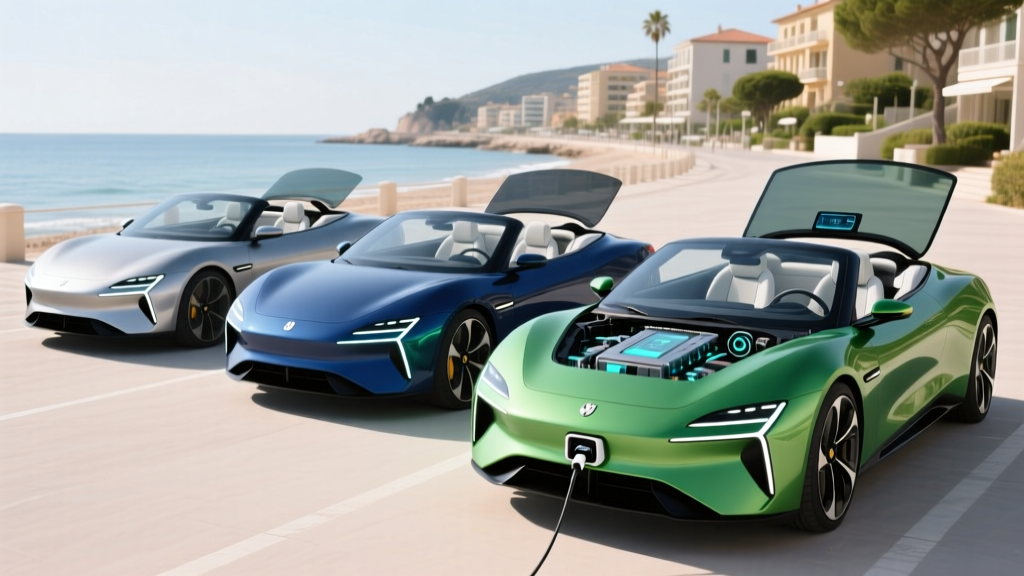
The MG Cyberster has been announced for global markets, but U.S. availability remains unconfirmed as of early 2026. MG (owned by SAIC Motor) has not established a U.S. dealership network, and tariff and homologation questions remain. Treat all Cyberster specs as preliminary until a U.S. launch is confirmed.
Electric Convertible vs. Gas Convertible: Cost and Ownership Compared
The closest gas-powered competitor to the Mini Cooper SE Convertible is the Mini Cooper Convertible (gas), starting around $33,500 with a 1.5L turbocharged 3-cylinder producing 134 hp. Let's compare real ownership costs over five years and 60,000 miles.
| Cost Category | Mini Cooper SE Convertible (EV) | Mini Cooper Convertible (Gas) |
|---|---|---|
| Purchase Price (MSRP) | $37,900 | $33,500 |
| Federal Tax Credit (§30D) | $0 (does not meet battery sourcing requirements) | N/A |
| Fuel/Energy (60,000 mi) | $2,700 (home charging at $0.14/kWh avg) | $7,200 (30 MPG combined at $3.60/gal) |
| Maintenance (5 yr) | $1,200 (cabin filter, brake fluid, tires) | $3,800 (oil changes, filters, spark plugs, brakes) |
| Insurance (5 yr avg) | $8,500 | $7,800 |
| Total 5-Year Cost | $50,300 | $52,300 |
The electric convertible saves roughly $2,000 over five years in this comparison, primarily through lower energy and maintenance costs. However, the savings are modest because the Mini Cooper SE Convertible does not qualify for the §30D federal tax credit — its battery components and critical minerals do not meet current IRS sourcing requirements. Always verify current-year eligibility directly with the IRS or a tax professional before purchasing.
Energy costs assume predominantly home Level 2 charging at the U.S. residential average of ~$0.14/kWh. The Mini SE Convertible consumes roughly 32 kWh/100 miles (per fueleconomy.gov), so a full charge costs about $4.05. Public DC fast charging at $0.35–$0.50/kWh would raise energy costs significantly — closer to $4,500–$6,000 over 60,000 miles if you rely exclusively on public chargers.
Charging Reality: What Owners Need to Know
The Mini Cooper SE Convertible's 50 kW peak DC fast-charging rate is the single biggest practical limitation. In 2026, most new EVs charge at 150–250+ kW. At 50 kW, a 10–80% charge takes approximately 36 minutes — and that's under ideal conditions with a preconditioned battery. In practice:
- Level 1 (120V household outlet): ~1.4 kW — adds about 5 miles of range per hour. A full charge takes ~20 hours. Essentially unusable for daily driving unless your commute is very short.
- Level 2 (240V home charger): ~7.4 kW — adds about 25 miles of range per hour. A full charge takes ~4 hours. This is the practical minimum for daily ownership.
- DC Fast Charging (public): 50 kW peak — adds about 100 miles in 30 minutes. Adequate for occasional road trips, but the small battery means frequent stops on any trip over 100 miles.
Home Level 2 charging installation typically costs $800–$2,500 depending on your electrical panel's capacity and the run length from panel to garage. If your home needs a panel upgrade (from 100A to 200A service), add $1,500–$3,500. For a car with 114 miles of range, reliable home charging is not optional — it's essential.
Why Are There So Few Electric Convertible Cars?
The scarcity of electric convertibles isn't an oversight — it's an engineering and economic problem.
Common Misconceptions About Electric Convertibles
| Myth | Fact |
|---|---|
| "Automakers are just slow to build them." | Convertible structures require heavy reinforcement (to compensate for the missing roof), which adds weight. EVs are already heavy due to battery packs. The combined weight hurts efficiency and range — the metric EV buyers scrutinize most. |
| "A convertible EV would have great range." | Open-top driving increases aerodynamic drag significantly at highway speeds. The Mini SE Convertible loses roughly 10–15% range with the top down at 65+ mph compared to top-up driving. |
| "Tesla or other major brands will release one soon." | No major U.S. or European automaker has confirmed a production electric convertible for the U.S. market beyond the Mini. Tesla's rumored roadster remains unconfirmed for production. The market segment is too small to justify the engineering investment for most OEMs. |
| "I can just get a glass-roof EV — it's basically the same." | Panoramic glass roofs (Tesla Model 3, Hyundai Ioniq 5, Ford Mustang Mach-E) provide an airy, open feeling and UV protection, but they don't offer true open-air driving. They also cannot be opened. However, for many buyers, the brightness and visibility satisfy the convertible desire without sacrificing range. |
Upcoming Electric Convertibles: What's on the Horizon
Several concepts and announced vehicles could expand this segment, but none are confirmed for U.S. sale as of early 2026:
- MG Cyberster: A two-seat electric roadster with scissor doors and an estimated 270+ miles of range (WLTP). U.S. availability is uncertain due to MG's lack of American dealer infrastructure and potential import tariffs on Chinese-manufactured vehicles.
- Polestar 6 (announced): Polestar has teased an electric roadster concept, but the production timeline has repeatedly slipped and the company has prioritized SUVs. Treat this as speculative.
- Next-gen Mini Cooper SE Convertible: BMW/Mini has indicated the next-generation electric Mini platform will support a convertible variant with a larger battery (~50 kWh, targeting 200+ miles EPA). Expected no earlier than 2027.
If you're set on an electric convertible and can wait 12–24 months, the next-generation Mini is the most likely candidate to actually reach U.S. showrooms with meaningful range improvement.
Real-World Ownership: Who Should Buy an Electric Convertible?
The honest assessment: an electric convertible car works for a very specific buyer profile. Here's a decision framework based on driving patterns and charging access.
Should You Buy an Electric Convertible?
Choose the Mini Cooper SE Convertible if:
- Your daily round-trip commute is under 60 miles
- You have reliable Level 2 home charging (garage or dedicated driveway outlet)
- You live in a mild climate (Southern California, Florida, Arizona, Texas) where top-down driving is frequent and cold-weather range loss is minimal
- This is a second or third vehicle in your household, not your only car
- You value the novelty and fun factor over range and practicality
Do NOT buy an electric convertible if:
- You regularly drive more than 80 miles in a single day
- You rely solely on public charging or apartment/condo charging with limited access
- You live in a cold-weather climate where winter range loss will cut your already-short range to 75–85 miles
- This is your primary or only vehicle
- You frequently take road trips longer than 120 miles one-way
Consider a glass-roof EV instead if:
- You want the airy, open-cabin feeling but need 250+ miles of range
- You want DC fast charging at 150+ kW for practical road trips
- You want to qualify for the §30D federal tax credit (many glass-roof EVs do qualify)
- Vehicles to consider: Tesla Model 3 (363 mi EPA, from $38,990), Hyundai Ioniq 5 (303 mi EPA, from $42,900), Ford Mustang Mach-E (320 mi EPA, from $42,995)
Insurance, Depreciation, and Hidden Costs
Electric convertible cars carry some ownership nuances that gas convertible buyers don't face:
Insurance premiums tend to run 10–20% higher for EVs compared to equivalent gas cars, primarily due to higher repair costs (specialized high-voltage training, expensive battery replacement in collision damage). For the Mini Cooper SE Convertible, expect annual premiums in the $1,600–$2,000 range depending on your state, driving record, and coverage level.
Depreciation is a wildcard. EV depreciation has been volatile — some models have lost 40–50% of value in the first two years due to aggressive price cuts by Tesla and rapid technology improvements making older EVs less desirable. A niche vehicle like an electric convertible could either hold value well (due to scarcity) or depreciate heavily (due to the small buyer pool). There isn't enough historical data on the Mini SE Convertible specifically to project with confidence.
Battery warranty: Mini covers the high-voltage battery for 8 years/100,000 miles, retaining at least 70% of original capacity. This is standard for the industry and provides reasonable protection against premature degradation. The 28.9 kWh pack is small enough that a replacement (if ever needed out of warranty) would be significantly cheaper than a large-pack EV — estimated in the $5,000–$8,000 range based on current NMC cell pricing, though labor and dealer markup would add to this.
Frequently Asked Questions
Is the Mini Cooper SE Convertible the only electric convertible car I can buy?
As of early 2026, yes — it is the only battery-electric convertible available from a U.S. dealership. The MG Cyberster exists in other markets but has not launched in the U.S. No other automaker currently sells a new electric convertible stateside.
Does the Mini Cooper SE Convertible qualify for the $7,500 federal tax credit?
No. The Mini Cooper SE Convertible does not meet the IRS §30D battery sourcing and critical mineral requirements. It also must meet buyer income caps ($150,000 single / $300,000 joint) and MSRP caps ($55,000 for sedans/convertibles). Even if sourcing requirements were met, the vehicle's MSRP is within the cap. Always confirm eligibility with a tax professional before purchasing.
Can I take an electric convertible on a road trip?
With 114 miles of EPA range, the Mini Cooper SE Convertible requires careful planning for any trip over 100 miles one-way. You'll need DC fast-charging stops every ~80 miles of actual driving (accounting for real-world range loss). At 50 kW peak charge rate, each stop takes 30+ minutes. It's doable for weekend trips with patience, but it's not a practical cross-country touring car.
Will the range get worse over time as the battery degrades?
All lithium-ion batteries degrade. NMC chemistry (used in the Mini SE) typically loses 10–15% capacity over the first 100,000 miles under normal use. That means your 114-mile range might become 97–103 miles after several years. Mini's battery warranty guarantees at least 70% capacity retention for 8 years/100,000 miles, meaning worst-case warranted range would be ~80 miles.
What about a used Tesla Roadster or older electric convertible?
The original Tesla Roadster (2008–2012) is a collector vehicle at this point, with fewer than 2,500 built and prices well into six-figure territory. It's not a practical daily driver. No other used electric convertibles exist in meaningful volume in the U.S. market.
Should I wait for more electric convertible options?
If you don't need a car immediately, the next-generation Mini Cooper SE Convertible (expected ~2027) should offer roughly double the current range with a ~50 kWh battery. Beyond that, the segment remains uncertain. If an electric convertible is a "nice to have" rather than a must, waiting makes sense. If you want one now, the current Mini is your only option.