Quick Answer: Are Electric Commercial Vans Worth It in 2026?
For last-mile delivery fleets covering 80–150 miles per day with depot charging, electric commercial vans like the Ford E-Transit (EPA 126 mi, $49,995) and BrightDrop Zevo 600 (EPA 160 mi, ~$74,000) deliver $0.06–$0.09 per mile in energy cost versus $0.18–$0.24 for diesel equivalents. Maintenance savings of $1,500–$2,200 per vehicle per year are typical. However, routes exceeding 160 miles, cold-climate operations, and fleets without depot charging access face real limitations that can erase the TCO advantage.
The Electric Commercial Van Landscape for 2026
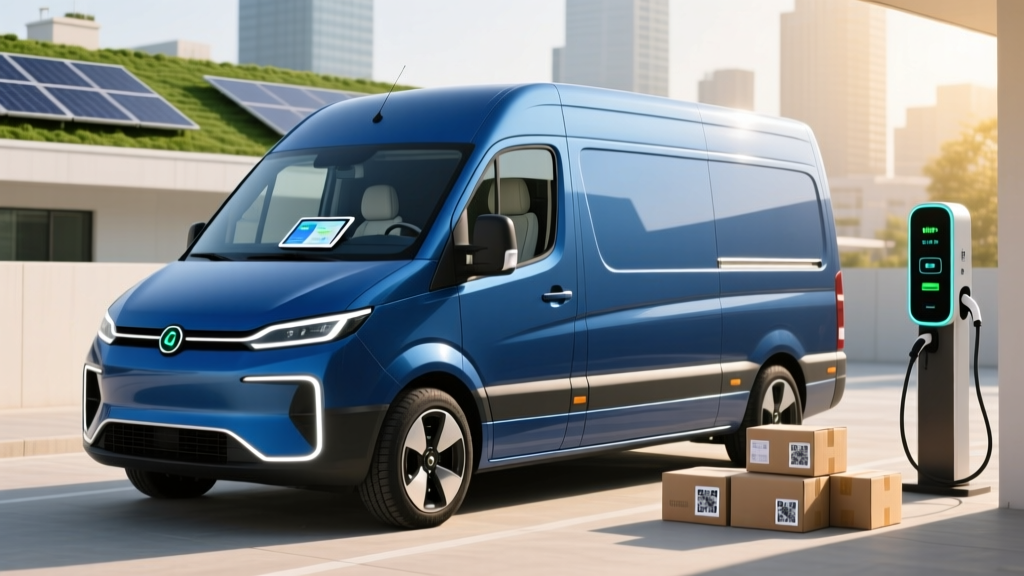
The commercial EV van segment has matured past early-adopter experiments. Ford, GM's BrightDrop division, and Rivian (supplying Amazon's EDV fleet) now offer production vehicles with proven duty cycles. Mercedes-Benz continues the eSprinter with revised battery options. These vehicles target a specific operational profile: predictable daily routes, return-to-base charging, and urban/suburban delivery density.
The key distinction from passenger EVs is that commercial buyers evaluate on total cost of ownership per mile, uptime reliability, and payload capacity — not 0–60 times or infotainment screens. Let's look at the numbers that actually matter to fleet managers.
Spec Comparison: Leading Electric Commercial Vans
| Spec | Ford E-Transit (2026) | BrightDrop Zevo 600 | Rivian EDV 700 | Mercedes eSprinter (2500) |
|---|---|---|---|---|
| Base MSRP | $49,995 | ~$74,000 | Fleet-only (est. $70,000+) | $72,950 |
| Battery (usable kWh) | 68 kWh (NMC) | 120 kWh (NMC) | ~105 kWh (NMC) | 113 kWh (NMC) |
| EPA Range | 126 mi | ~160 mi | ~161 mi | ~165 mi (est.) |
| Max DC Fast Charge | 115 kW | 120 kW | ~150 kW | 115 kW |
| 10–80% DCFC Time | ~45 min | ~55 min | ~40 min | ~50 min |
| Level 2 Rate (kW) | 10.5 kW (AC) | 11.5 kW | ~11 kW | 11 kW |
| Max Payload | 3,880 lbs | 2,830 lbs | ~2,730 lbs | 2,624 lbs |
| Cargo Volume | 487.3 cu ft (LWB high roof) | 615 cu ft | ~660 cu ft | 533 cu ft |
| Motor Output | 266 hp / 317 lb-ft | ~300 hp | ~295 hp | 201 hp / 332 lb-ft |
| Warranty (Battery) | 8 yr / 100,000 mi | 8 yr / 100,000 mi | 8 yr / 175,000 mi | 8 yr / 100,000 mi |
Sources: fueleconomy.gov, Ford Commercial, BrightDrop, Mercedes-Benz USA. Rivian EDV specs based on fleet disclosures; not sold to general public.
Real-World Range Reality
EPA range figures assume moderate temperatures, flat terrain, and partial loads. In fleet operations, expect:
- Fully loaded in summer (A/C): 10–15% range reduction
- Cold climate (below 32°F) with cabin heat: 25–35% range reduction — a 126-mi E-Transit may deliver 82–95 miles
- Highway-heavy routes at 70 mph: 15–20% reduction vs. EPA city-biased cycle
Rule of thumb: plan routes to consume no more than 65–70% of EPA-rated range to preserve buffer for traffic, detours, and climate demands.
Electric Commercial vs. Diesel: 5-Year Cost Breakdown
The purchase price premium for electric commercial vans is substantial — $15,000 to $25,000 over a comparable diesel Transit or Sprinter. But fleet economics depend on per-mile operating cost, not sticker price alone.
| Cost Factor (Per Vehicle, 5 Years / 100k mi) | Ford E-Transit (EV) | Ford Transit 350 (3.5L EcoBoost Gas) |
|---|---|---|
| Purchase Price (Base) | $49,995 | $44,500 |
| Federal §45W Commercial Clean Vehicle Credit | Up to $7,500 | $0 |
| Net Acquisition Cost | ~$42,495 | $44,500 |
| Fuel/Energy (100,000 mi) | $5,400 (depot charging at $0.12/kWh, 2.0 kWh/mi) | $15,600 (gas at $3.50/gal, 14 MPG combined) |
| Maintenance (5 yr) | $2,800 | $7,200 |
| Insurance (5 yr est.) | $14,500 | $12,000 |
| Downtime Cost Est. | $1,200 | $2,400 |
| Total 5-Year Cost | ~$66,395 | ~$81,700 |
| Cost Per Mile | $0.66 | $0.82 |
Assumes 20,000 mi/year, depot Level 2 charging overnight. Commercial clean vehicle credit (§45W) applies to vehicles over 14,000 lbs GVWR at up to $7,500; verify eligibility with a tax professional and IRS guidelines. Insurance premiums for EVs run 15–25% higher due to repair costs.
Where the EV Advantage Disappears
The math flips under these conditions:
- No depot charging: Relying on public DC fast charging at $0.35–$0.48/kWh raises energy cost to $0.14–$0.19/mile — nearly matching gasoline.
- High annual mileage (>30,000 mi): Range limitations force mid-day charging stops, adding driver labor cost and downtime.
- Cold-climate routes: A 30% winter range loss in Minneapolis or Buffalo can mean a second vehicle or missed deliveries.
- Low annual mileage (<8,000 mi): The fuel savings never recover the purchase premium within a reasonable payback period.
Charging Infrastructure: The Make-or-Break Factor
Unlike passenger EVs, commercial vans live or die by depot charging. Public fast-charging networks are not a viable primary strategy for fleet operations — the cost is too high and the dwell time too long.
| Charging Level | Power (kW) | Miles Added/Hour | Typical Use Case |
|---|---|---|---|
| Level 1 (120V) | 1.4 kW | ~3–4 mi/hr | Not viable for commercial |
| Level 2 (240V, 48A) | 10.5–11.5 kW | ~28–32 mi/hr | Overnight depot charging (primary) |
| DC Fast Charge | 115–150 kW peak | ~150–200 mi/hr (to 80%) | Mid-day top-up, emergency use |
Depot Charging Installation Costs
Installing Level 2 chargers at a fleet depot is a significant capital expense. Here's what fleet operators should budget:
| Item | Per-Charger Cost Range | Notes |
|---|---|---|
| Level 2 Charger Hardware (commercial-grade) | $1,500–$4,500 | Networked units with fleet management software cost more |
| Electrical Panel Upgrade (if needed) | $3,000–$15,000 | Multiple chargers often require 400A+ service |
| Trenching & Conduit (per run) | $2,000–$8,000 | Depends on distance from panel to parking |
| Electrician Labor | $2,500–$6,000 | Commercial rates, permit inspections |
| Permits & Utility Coordination | $500–$3,000 | Some utilities require demand-charge studies |
| Total Per Charger (installed) | $9,500–$36,500 | Average ~$18,000 for a 5-charger depot |
Always consult a licensed commercial electrician for site-specific quotes. Federal §30C Alternative Fuel Vehicle Refueling Property Credit may cover up to 30% of charging equipment and installation costs (capped at $100,000 per item for commercial property), subject to prevailing-wage and census-tract requirements.
DC Fast Charging: Not a Daily Strategy
Even at 115–150 kW peak rates, the charge curve on commercial vans tapers sharply above 80% state of charge. A Ford E-Transit reaching 80% in ~45 minutes may need another 30+ minutes to go from 80–100%. For fleets, the practical implication is that mid-day DCFC sessions should target 10–60% SoC for fastest throughput, and vehicles should be spec'd so that full battery minus cold-weather buffer covers the route without a top-up.
Common Misconceptions About Electric Commercial Fleets
| Myth | Fact |
|---|---|
| "EV batteries won't last the life of a commercial vehicle" | NMC packs in these vans are warrantied for 8 years/100,000 miles at ≥70% capacity retention. Fleet data from early E-Transit and Amazon EDV deployments shows ~3–5% degradation per year under normal use — projecting 80%+ SoH at 150,000 miles. |
| "Electric vans can't handle heavy payloads" | The E-Transit offers 3,880 lbs of payload — competitive with a gas Transit 250 (3,680 lbs). However, max payload does reduce range by 10–15%. Spec the route, not the brochure. |
| "Charging takes too long for commercial use" | Overnight Level 2 charging adds ~30 miles per hour — a 10-hour depot session fully replenishes any van in this class. Mid-day charging is only needed for routes exceeding the van's usable range. |
| "The tax credit covers the full purchase" | The §45W commercial credit maxes at $7,500 for vehicles under 14,000 lbs GVWR, or up to $40,000 for heavier vehicles (30% of cost). It does not cover the full vehicle price. Verify eligibility with a tax professional. |
| "Electric vans work everywhere gas vans do" | Routes exceeding ~160 miles, extreme cold operations, and areas without depot or reliable public charging are poor fits. Rural delivery with 200+ mile loops still favors diesel or hybrid. |
Decision Framework: Is an Electric Commercial Van Right for Your Fleet?
Choose Electric Commercial Vans If:
- Your daily routes are under 120 miles (with a 30% cold-weather buffer, this means EPA-rated 170+ miles for northern fleets)
- You have or can install depot Level 2 charging
- Vehicles return to base nightly
- Your operation is urban/suburban with frequent stops (regen braking recovers energy; idling costs nothing)
- You plan to hold vehicles 5+ years to capture the TCO advantage
- Your state or utility offers additional commercial EV incentives
Stick With Gas/Diesel or Consider PHEV If:
- Daily routes regularly exceed 160 miles
- You operate in sustained sub-freezing climates without garage parking
- No depot charging is available and public infrastructure is sparse
- Vehicle turnover is under 3 years (you won't recoup the purchase premium)
- You need max towing (current electric vans are not rated for heavy trailer duty)
First-Time Fleet EV Buyer Checklist
If you're transitioning even one van to electric, work through these steps before signing a purchase order:
- Audit your routes: Pull GPS data for 30 days. Identify max daily miles, worst-case weather days, and payload utilization. If your 95th-percentile day exceeds 70% of EPA range, the van won't work year-round.
- Survey your electrical service: A commercial electrician can tell you if your building's panel supports Level 2 chargers or if a service upgrade is needed. This can add $10,000–$50,000 to your project.
- Model your energy costs: Contact your utility about commercial EV charging rates. Demand charges (based on peak kW draw) can surprise fleets that plug in five vans simultaneously at 4 PM. Managed charging software that staggers sessions can cut demand charges by 40–60%.
- Confirm tax credit eligibility: The §45W Commercial Clean Vehicle Credit has specific requirements around vehicle weight, battery sourcing, and business use. Review current IRS guidance and consult a tax professional.
- Pilot before scaling: Order 1–2 vehicles first. Run them on your most demanding routes in the worst weather month. Measure actual kWh/mile, charging time, and driver feedback before committing the fleet.
What About Electric Commercial Trucks and Box Trucks?
The van segment is just the entry point. Class 4–6 electric commercial trucks like the Ford E-Series cutaway, BrightDrop Zevo 400, and upcoming offerings from Ram and GM target larger cargo volumes and longer routes. However, these vehicles face steeper challenges:
- Higher acquisition cost: $100,000–$200,000+ before incentives
- Longer charging times: Larger batteries (150–200+ kWh) need higher-power depot infrastructure (up to 350 kW DC)
- Charging infrastructure scale: A fleet of 20 Class 5 trucks may require a dedicated utility transformer upgrade costing $100,000–$500,000
For most small-to-mid-size businesses, electric commercial vans remain the practical starting point for fleet electrification in 2026. The ROI math is proven at this scale; the heavy-truck segment is still building its track record.
Frequently Asked Questions
What is the real-world range of a Ford E-Transit on a delivery route?
The EPA rates the 2026 E-Transit at 126 miles. In real-world fleet use with full payload and air conditioning, expect 105–115 miles in moderate weather. In winter conditions below freezing, plan for 82–95 miles. Route planning should never assume the EPA figure as achievable under commercial load.
Do electric commercial vans qualify for the $7,500 tax credit?
Commercial fleet vehicles generally fall under the §45W Commercial Clean Vehicle Credit rather than the consumer §30D credit. For vehicles under 14,000 lbs GVWR, the credit is up to $7,500; for heavier vehicles, it's up to 30% of cost (max $40,000). Eligibility depends on battery sourcing, business use, and other IRS requirements. Always verify with a tax professional and current IRS rules.
How much does it cost to charge an electric commercial van overnight?
At a commercial electricity rate of $0.10–$0.14 per kWh, fully recharging a 68 kWh E-Transit battery costs $6.80–$9.52. A 120 kWh BrightDrop Zevo 600 costs $12.00–$16.80 per full charge. Compare this to $45–$65 for a tank of gas in a conventional Transit.
Can I use public DC fast chargers for my commercial fleet?
Technically yes, but at $0.35–$0.48 per kWh at most public networks, your energy cost per mile nearly triples versus depot charging. Public DCFC also introduces downtime risk (broken chargers, queues) and adds 30–50 minutes per session. It should be a backup strategy, not a primary one.
How long do electric commercial van batteries last?
Current NMC battery packs carry 8-year/100,000-mile warranties guaranteeing at least 70% capacity retention. Real-world fleet data suggests 3–5% annual degradation under normal commercial use. At 150,000 miles, expect approximately 75–85% of original capacity — enough for most urban routes if the vehicle was properly spec'd with range buffer.
What's the maintenance difference between electric and gas commercial vans?
Electric vans eliminate oil changes, transmission fluid, spark plugs, exhaust system repairs, and most brake wear (regenerative braking extends pad life 2–3x). Annual maintenance savings of $1,500–$2,200 per vehicle are typical. However, tire wear can be 10–15% higher due to vehicle weight and instant torque, and suspension components may wear faster under heavy battery loads.