The Quick Answer
As of the 2026 model year, there is no fully electric (BEV) Chrysler Pacifica. The Pacifica Hybrid remains a plug-in hybrid (PHEV) with 32 miles of EPA-rated electric-only range and a 16-kWh battery. If you specifically need a battery-electric minivan, your current options are the Kia EV9 (3-row SUV, up to 304 miles EPA) or the upcoming Volkswagen ID. Buzz (long-wheelbase, expected late 2026). The Pacifica Hybrid still makes sense for families who want electric commuting with gas-engine road-trip flexibility, but it is not a zero-tailpipe-emission vehicle.
What the Chrysler Pacifica Hybrid Actually Is
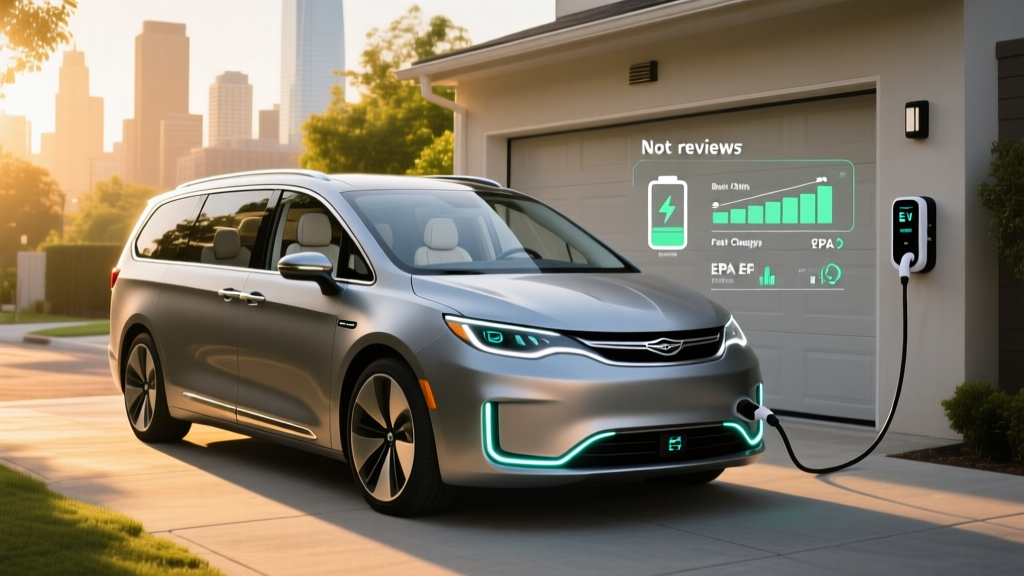
The Chrysler Pacifica Hybrid pairs a 3.6-liter V6 with two electric motor-generators and a 16-kWh lithium-ion battery pack. Total system output is 260 horsepower, routed through a dedicated hybrid transmission to the front wheels. On a full charge, the EPA rates it for 32 miles of electric-only driving at speeds up to about 75 mph before the gas engine engages. After battery depletion, it operates as a conventional hybrid rated at 30 MPG combined.
Stellantis has not announced a battery-electric Pacifica for the 2026 or 2027 model year. The company's STLA Large platform, which underpins future full-size EVs, is expected to support an electric minivan eventually, but no production timeline or pricing has been confirmed. Any articles claiming a 2026 "electric Pacifica" with 300+ miles of range are referencing speculative renders, not real vehicles.
| Common Claim | Reality |
|---|---|
| "The 2026 Pacifica is fully electric" | False. It remains a PHEV with a gas engine. |
| "You never need gas if you charge daily" | Partially true for short commutes, but the engine runs periodically for maintenance cycles and in cold weather. |
| "It qualifies for the full $7,500 federal tax credit" | Varies by buyer income, MSRP cap ($80,000 for vans/SUVs), and battery-sourcing rules. The PHEV qualifies for up to $7,500 under IRS §30D, but critical-mineral and battery-component requirements may reduce this. Check current-year IRS guidance. |
| "32 miles electric is enough for everyone" | Adequate for school runs and short commutes, but families with 40+ mile one-way commutes will burn gas daily. |
2026 Pacifica Hybrid: Range, Charging, and Efficiency Specs
Understanding the Pacifica Hybrid requires separating its electric capability from its hybrid operation. Here are the exact figures for the 2026 model year:
| Specification | Value |
|---|---|
| EPA Electric-Only Range | 32 miles |
| Battery Capacity (Usable) | ~13 kWh usable (16 kWh gross) |
| Battery Chemistry | NMC (nickel manganese cobalt) |
| Level 2 Charge Rate | 6.6 kW onboard charger |
| Level 2 Charge Time (0–100%) | ~2 hours |
| Level 1 Charge Time (120V) | ~13 hours |
| DC Fast Charging | Not supported |
| Hybrid MPG (After Depletion) | 30 MPG combined (per fueleconomy.gov) |
| MPGe (Electric + Gas Combined) | 82 MPGe |
| Total System Horsepower | 260 HP |
| 0–60 mph | ~7.1 seconds |
| Gas Tank Capacity | 14.5 gallons |
| Total Driving Range (EV + Gas) | ~460 miles |
| Battery Warranty | 10 years / 100,000 miles (capacity retention threshold: 60%) |
| Base MSRP (2026 SE Hybrid) | ~$51,095 |
Real-World Range vs. EPA Sticker
The EPA's 32-mile electric rating assumes moderate temperatures and mixed driving. In practice:
- Summer, city driving: 30–34 miles (regenerative braking helps in stop-and-go)
- Highway at 70 mph: 24–28 miles (higher speeds drain the battery faster)
- Winter, 20°F with cabin heat: 18–24 miles (battery chemistry slows and cabin heating draws significant power)
The gas engine may also activate unexpectedly in very cold weather to provide cabin heat, even when the battery has charge remaining. This is normal PHEV thermal management, but it surprises first-time owners.
Cost Breakdown: Pacifica Hybrid vs. Gas Pacifica vs. EV Alternatives
The Pacifica Hybrid carries a price premium over the gas-only Pacifica. Whether that premium pays back depends on your driving patterns, electricity cost, and whether you qualify for federal or state incentives. Here's a 5-year cost comparison assuming 15,000 miles/year, $3.50/gallon gas, and $0.14/kWh home electricity:
| Cost Factor (5 Years) | Pacifica Hybrid PHEV | Pacifica Gas (AWD) | Kia EV9 (3-Row BEV) |
|---|---|---|---|
| Base MSRP | $51,095 | $42,095 | $54,900 |
| Fed. Tax Credit (§30D, est.) | Up to $7,500* | $0 | Up to $7,500* |
| Effective Purchase Price | ~$43,595 | $42,095 | ~$47,400 |
| Fuel/Energy Cost (5 yr) | ~$5,800 | ~$12,200 | ~$4,700 |
| Maintenance (5 yr) | ~$3,200 | ~$4,500 | ~$2,100 |
| Insurance (5 yr, est.) | ~$9,500 | ~$8,800 | ~$10,200 |
| 5-Year Total (before resale) | ~$62,095 | ~$67,595 | ~$64,400 |
*Tax credit eligibility depends on buyer income caps ($150K single / $300K joint for vans/SUVs), MSRP caps ($80K), and battery sourcing requirements per current-year IRS §30D rules. Consult a tax professional before relying on credit amounts.
The Pacifica Hybrid's fuel savings are meaningful but modest compared to a full EV. The reason: with only 32 miles of electric range, most of your 15,000 annual miles are still driven on gas unless your daily round trip is under 30 miles and you charge religiously. A BEV like the EV9 eliminates gasoline entirely but requires reliable charging access.
EV Minivan Alternatives: What You Can Actually Buy
If you need a true battery-electric family hauler in 2026, the minivan segment is sparse. Here's how the realistic options compare:
| Vehicle | Type | EPA Range | Battery | DC Fast Charge (10–80%) | Seats | Base MSRP |
|---|---|---|---|---|---|---|
| Chrysler Pacifica Hybrid | PHEV | 32 mi EV / 460 mi total | 16 kWh | N/A (no DC) | 7 | $51,095 |
| Kia EV9 (LR AWD) | BEV | 270–304 mi | 100 kWh (NMC) | ~20 min at 236 kW | 6–7 | $54,900 |
| VW ID. Buzz (LWB) | BEV | ~230 mi (est.) | 91 kWh (NMC) | ~26 min at 175 kW | 7 | ~$55,000 (announced) |
| Toyota Sienna | HEV (no plug) | N/A (36 MPG combined) | 1.9 kWh | N/A | 7–8 | $38,085 |
The Kia EV9 is the closest functional substitute for an electric Pacifica. It offers three rows, 304 miles of range (RWD Long Range trim), 236 kW DC fast charging, and a usable frunk. However, it's an SUV, not a minivan — you lose sliding doors and the low step-in height that makes minivans ideal for child seats and cargo loading.
The Volkswagen ID. Buzz long-wheelbase version is the spiritual electric minivan successor, with sliding doors and a flat floor, but U.S. deliveries have faced delays. Stellantis has not committed to a Pacifica BEV, though industry analysts expect the STLA Large platform to support one by 2028–2029.
Who Should Buy the Pacifica Hybrid (and Who Shouldn't)
Decision Framework: Is the Pacifica Hybrid Right for You?
Buy the Pacifica Hybrid if:
- Your daily round-trip commute is under 30 miles and you can charge at home nightly (Level 1 overnight is sufficient for the 16-kWh battery)
- You take regular road trips exceeding 200 miles and don't want to plan around DC fast chargers
- You need sliding doors and minivan cargo flexibility that no current BEV offers
- You want to reduce (but not eliminate) gasoline use while retaining full gas-engine range
Consider a full BEV (Kia EV9, future VW ID. Buzz) if:
- Your daily driving regularly exceeds 35 miles — the Pacifica Hybrid will burn gas every day
- You have reliable Level 2 home charging and live in an area with decent DC fast-charger density
- You want zero tailpipe emissions and the lowest per-mile energy cost
- You're willing to accept SUV form factor (EV9) or wait for BEV minivan availability
Stick with the gas Pacifica or Sienna Hybrid if:
- You cannot install home charging (apartment, street parking, HOA restrictions)
- The $9,000+ hybrid premium over a gas Pacifica doesn't pencil out within your ownership timeline
- You drive primarily highway miles at speeds over 70 mph, where PHEV electric range drops significantly
First-Time PHEV Buyer: What You Need to Know
If you're coming from a gas-only vehicle, the Pacifica Hybrid has some ownership quirks that aren't obvious from the brochure:
Charging access is not optional. The Pacifica Hybrid's value proposition collapses without regular charging. On gas alone, it gets 30 MPG — only marginally better than the gas Pacifica's 22 MPG combined, and you paid a premium for the hybrid system. If you can't charge at home or work, buy the gas version instead.
Level 1 charging is viable for this battery. Unlike full EVs with 80+ kWh packs, the Pacifica's 16-kWh battery charges fully in about 13 hours on a standard 120V outlet. Many owners never install a Level 2 charger. If you do install Level 2, the 6.6 kW onboard charger fills the battery in roughly 2 hours.
No DC fast charging. This is a deliberate engineering choice — the battery is too small to justify the cost and weight of DC hardware. On road trips, you simply drive it as a hybrid.
The engine runs in cold weather regardless of charge. Below roughly 35°F, the gas engine will start to provide cabin heat and maintain battery temperature, even if you're in EV mode. This is standard PHEV behavior across all brands, but it reduces winter electric range by 25–40%.
Maintenance is split. You still have oil changes, spark plugs, and a transmission to service, but brake wear is significantly reduced thanks to regenerative braking. Expect brake pad life of 80,000+ miles in normal driving.
Frequently Asked Questions
Will Chrysler ever make a fully electric Pacifica?
Stellantis has not announced a BEV Pacifica with a confirmed production date. The company's STLA Large platform is designed to support full-size electric vehicles, and industry analysts project a potential electric minivan around 2028–2029. However, no specs, pricing, or timeline has been officially confirmed. Any "2026 electric Pacifica" references online are speculative.
Does the Pacifica Hybrid qualify for the $7,500 federal tax credit?
It can, but eligibility is not guaranteed. Under IRS §30D, the Pacifica Hybrid must meet battery-component and critical-mineral sourcing requirements, the buyer must fall under income caps ($300,000 joint / $150,000 single for vans), and the MSRP must stay under $80,000. The credit is available as a point-of-sale transfer at participating dealers. Verify current-year eligibility on the IRS website or with a tax professional before purchasing.
Can I install a Level 2 charger for the Pacifica Hybrid?
Yes, but it's optional. The 16-kWh battery charges fully overnight on Level 1 (120V). A Level 2 (240V) charger reduces charge time to about 2 hours, which matters if you make multiple short trips per day and want to recharge between them. Level 2 installation typically costs $500–$2,000 depending on electrical panel proximity and permit requirements — consult a licensed electrician for your specific situation.
How does the Pacifica Hybrid compare to the Toyota Sienna hybrid?
The Sienna is a conventional HEV (no plug) rated at 36 MPG combined with no electric-only range. It's more fuel-efficient on gas than the depleted Pacifica Hybrid (30 MPG) and starts about $13,000 lower. However, the Sienna cannot drive on electricity alone, doesn't qualify for the federal EV tax credit, and offers no zero-emission commuting capability. If you can charge at home and your commute is under 30 miles, the Pacifica Hybrid uses less gasoline day-to-day. If charging isn't possible, the Sienna is the more practical hybrid choice.
What happens when the Pacifica Hybrid battery degrades?
The 16-kWh NMC battery is warranted for 10 years / 100,000 miles against capacity loss below 60%. Real-world PHEV battery degradation is typically 10–15% over 8–10 years based on owner reports, meaning your 32-mile range might drop to 27–29 miles long-term. Out-of-warranty battery replacement cost is estimated at $6,000–$8,500 including labor, though most owners sell or trade the vehicle before this becomes necessary.