The Short Answer on the Electric Chrysler 300
As of early 2026, there is no production electric Chrysler 300 available for purchase. Stellantis discontinued the gas-powered Chrysler 300 after the 2023 model year, and while the company has confirmed that an all-electric Chrysler sedan is in development on the STLA Large platform, no official model wearing the "300" badge has been announced with a firm release date, pricing, or EPA-certified specifications. What we do have are confirmed platform details, concept previews, and engineering targets that paint a credible picture of what's coming. If you're searching for an electric Chrysler 300 today, the honest reality is that you'll need to wait—or consider alternatives we detail below.
Where Chrysler's Electric Sedan Stands in 2026
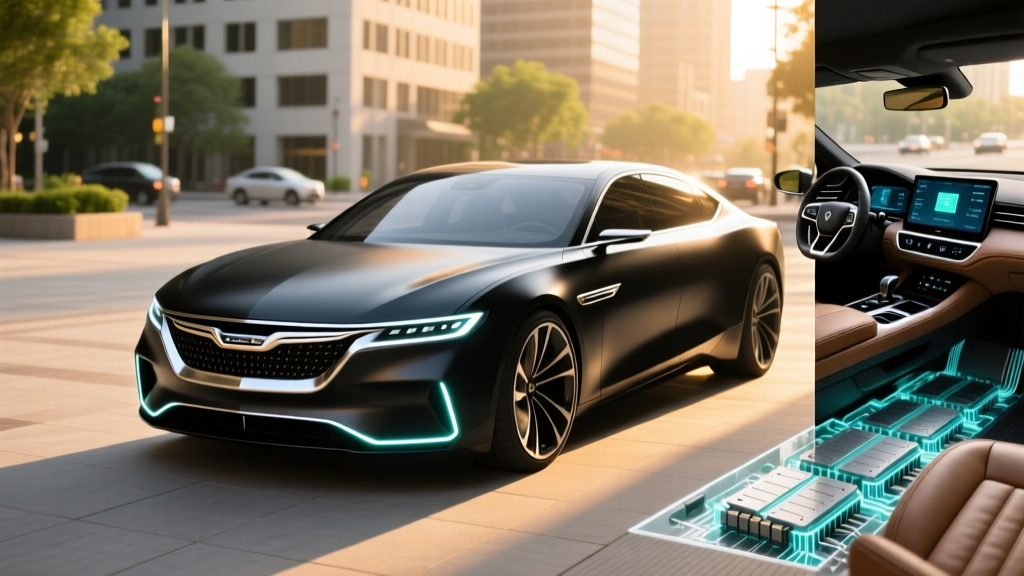
Stellantis has been vocal about electrifying the Chrysler brand, positioning it as the company's mainstream EV flagship in North America. The automaker unveiled the Chrysler Airflow concept and later the Halcyon concept (debuted in early 2024) as design previews of its electric future. The production vehicle will ride on the STLA Large platform, a flexible architecture designed to underpin sedans, crossovers, and SUVs across Stellantis brands including Dodge, Jeep, and Chrysler.
Here's what Stellantis has confirmed about the STLA Large platform's engineering targets:
| Specification | Target / Range |
|---|---|
| Architecture | BEV-native (also supports ICE/EREV) |
| Battery capacity (usable) | 85–118 kWh (estimated by battery pack option) |
| EPA range target | Up to ~400 miles (top pack, preliminary) |
| Drive layouts | RWD, AWD, FWD |
| Voltage architecture | 400V (STLA Large); 800V reserved for STLA Frame/Large future variants |
| DC fast charge peak | ~200–250 kW (preliminary, pack-dependent) |
| 0–60 mph target (performance variant) | Low 4-second range (estimated) |
| Production start | 2026–2027 timeframe (Windsor or Brampton assembly TBD) |
Important caveat: These are platform-level targets published by Stellantis for the STLA Large architecture broadly. A specific Chrysler sedan's specs will depend on trim, battery pack selection, motor configuration, and final EPA testing. Nothing here should be treated as a guaranteed Chrysler 300 EV spec sheet.
What the Gas Chrysler 300 Offered — and What an EV Replacement Must Deliver
To understand what buyers expect from an electric Chrysler 300, we need to look at what the outgoing model delivered. The 2023 Chrysler 300 was a full-size, rear-wheel-drive sedan known for highway comfort, spaciousness, and available V8 power.
| Attribute | 2023 Chrysler 300 Touring (V6) | 2023 Chrysler 300S (V8 HEMI) | Projected EV Sedan (STLA Large) |
|---|---|---|---|
| Powertrain | 3.6L V6, 292 hp | 5.7L HEMI V8, 363 hp | Dual-motor AWD (est. 400+ hp) |
| 0–60 mph | ~6.3 sec | ~5.3 sec | ~4.5 sec (est.) |
| EPA fuel economy | 23 MPG combined | 19 MPG combined | ~95–110 MPGe (est.) |
| Range / Tank | ~430 miles (18.5-gal tank) | ~350 miles | ~300–400 miles (EPA est.) |
| Refuel / Recharge time | ~5 min (gas station) | ~5 min | ~20–30 min (10–80% DC fast) |
| Starting MSRP | $43,135 | $51,595 | TBD (est. $48,000–$60,000) |
| Annual fuel cost (15k mi) | ~$1,950 | ~$2,370 | ~$550–$750 (home charging) |
The gas 300's appeal was rooted in its smooth ride, generous rear legroom (40.1 inches), and old-school sedan presence. An electric successor needs to match or exceed that interior space while delivering the quiet, torque-rich acceleration that EVs naturally provide. The STLA Large platform's wheelbase flexibility should support a comparable cabin, but final interior dimensions remain unconfirmed.
Real Ownership Costs: What an Electric Chrysler Sedan Would Look Like
Let's model the economics of owning a hypothetical electric Chrysler sedan versus the last gas 300, using realistic assumptions for a mid-size/mid-premium EV priced around $52,000.
| Cost Category | 2023 Chrysler 300 V6 (Gas) | Projected EV Chrysler Sedan (~$52k MSRP) |
|---|---|---|
| Purchase price (MSRP) | $43,135 | $52,000 (est.) |
| Federal §30D tax credit | $0 | Up to $7,500 (if eligible — see rules below) |
| Effective purchase price | $43,135 | ~$44,500 (with max credit) |
| Fuel / electricity (5 yrs, 75k mi) | ~$9,750 | ~$3,250 (home charging at $0.14/kWh) |
| Maintenance (5 yrs) | ~$3,500 (oil, brakes, filters) | ~$1,200 (cabin filter, tires, wipers) |
| Insurance (5 yrs avg.) | ~$8,500 | ~$9,500 (EVs typically 10–15% higher) |
| Estimated 5-year total | ~$64,885 | ~$58,450 |
Key takeaway: Even with a higher sticker price, the EV sedan's lower fuel and maintenance costs can make it cheaper to own over five years — but only if you qualify for the federal tax credit and have access to affordable home charging. Public DC fast charging at $0.35–$0.50/kWh significantly narrows the savings gap.
Federal Tax Credit Eligibility (§30D) — Current Rules
Under IRS §30D rules for 2026, a new EV can qualify for up to $7,500 in federal tax credits, split between a critical minerals requirement ($3,750) and a battery component sourcing requirement ($3,750). Eligibility depends on:
- Buyer income caps: AGI ≤ $150,000 (single) / $300,000 (joint)
- MSRP caps: ≤ $55,000 for sedans
- Battery sourcing: Critical minerals and battery components must meet escalating domestic/free-trade-partner thresholds
- Point-of-sale transfer: Eligible buyers can apply the credit as a down-payment reduction at the dealer
Whether a future electric Chrysler sedan qualifies depends entirely on Stellantis' battery supply chain decisions and the sedan's final MSRP. At a projected $48,000–$55,000 price range, it would fall within the sedan MSRP cap — but battery sourcing compliance is the wildcard. Always verify current-year eligibility on the IRS website or with a tax professional before relying on the credit.
Charging Reality: What Future Owners Need to Plan For
If the electric Chrysler sedan follows STLA Large targets with a 400V architecture and ~100 kWh usable battery, here's what charging would look like in practice:
| Charging Level | Power | Miles Added Per Hour | Use Case |
|---|---|---|---|
| Level 1 (120V household) | ~1.4 kW | ~4–5 mi/hr | Overnight trickle; emergency only |
| Level 2 (240V home) | ~11.5 kW | ~35–40 mi/hr | Daily home charging; full charge in ~9 hrs |
| DC Fast Charge (peak) | ~220 kW (est.) | N/A (timed session) | 10–80% in ~25 min (projected) |
The charging curve matters. Peak DC fast-charging rates (e.g., 220 kW) are only sustained at low state-of-charge (typically 10–30%). Above 60% SoC, charge rates taper significantly — you might see 80–100 kW, then dropping further above 80%. This is why manufacturers quote 10–80% times rather than 0–100%. Plan road-trip stops around the 10–80% window for the fastest sessions.
Home charging access is the make-or-break factor. If you have a garage or driveway where a Level 2 charger (240V, 48-amp circuit) can be installed, daily EV ownership is seamless — you wake up with a full battery every morning. Installation typically costs $800–$2,500 depending on panel capacity and wiring distance. If you rely exclusively on public charging, your per-mile cost rises and convenience drops. Apartment dwellers without charging access should carefully evaluate public infrastructure in their area before committing to any EV.
Alternatives to Consider Right Now
Since the electric Chrysler 300 doesn't exist yet, buyers looking for a spacious, comfortable electric sedan in 2026 have several proven options:
Decision Framework: What Should You Buy Today?
Choose the Hyundai Ioniq 6 (2026) if: You want a sleek electric sedan with up to 361 miles EPA range, 800V architecture enabling 10–80% charging in ~18 minutes, and a starting MSRP around $38,000. It's the closest analog to what Chrysler is promising, and it's available now.
Choose the Tesla Model S if: You want a proven luxury electric sedan with 402 miles of EPA range (Long Range AWD), access to the Supercharger network, and don't mind the premium price starting above $75,000. The Model S exceeds the §30D MSRP cap for sedans.
Choose the BMW i5 (eDrive40) if: You want a traditional luxury mid-size sedan experience with electric power, ~295 miles EPA range, and build quality that echoes the 300's upscale aspirations. Starting around $67,000 (MSRP cap applies).
Choose a plug-in hybrid like the Toyota Crown (PHEV variant) if: You want sedan comfort with electric-only commuting (~30–40 miles EV range) but need gas-engine flexibility for long trips without charging stops. A bridge solution while you wait for Chrysler's EV to materialize.
Wait for the electric Chrysler if: You're specifically loyal to the brand, prefer American-made vehicles, want a full-size sedan (larger than the Ioniq 6), and your purchase timeline extends into 2027–2028. Monitor Stellantis announcements for production confirmation and trim details.
Common Misconceptions About the Electric Chrysler 300
| Myth | Fact |
|---|---|
| "The electric Chrysler 300 is available to order now." | False. No electric Chrysler sedan has entered production. The gas 300 ended after 2023. Concepts have been shown, but no production model is on sale. |
| "It will definitely get the $7,500 tax credit." | Unconfirmed. Credit eligibility depends on battery sourcing, MSRP, and buyer income at the time of sale. Stellantis' supply chain decisions will determine this. |
| "It'll charge as fast as a Hyundai Ioniq 5/6 or Porsche Taycan." | Unlikely at launch. STLA Large uses a 400V architecture. Vehicles with 800V systems (Hyundai E-GMP, Porsche) charge significantly faster. Expect ~25 min 10–80%, not ~18 min. |
| "An EV sedan can't match the 300's interior space." | Not necessarily true. Skateboard EV platforms place the battery under the floor, freeing up cabin volume. STLA Large is designed for full-size vehicles. Final dimensions are TBD, but packaging advantages are real. |
| "I can reserve one online today." | No official reservation system exists for an electric Chrysler sedan as of early 2026. Be wary of third-party sites claiming otherwise. |
What First-Time EV Buyers Should Know Before Waiting (or Switching)
If the electric Chrysler 300 concept has you considering your first EV — whether it's the future Chrysler or an available alternative today — these are the ownership realities that spec sheets don't emphasize:
Real-world range is lower than the EPA sticker. Expect 85–90% of EPA range in mixed driving at moderate temperatures. Highway-only driving at 75+ mph can reduce range by 15–25%. In cold weather (below 30°F), range can drop 20–35% due to battery chemistry limitations and cabin heating demands. A 350-mile EPA rating might deliver 250–280 miles on a cold highway day.
Cold weather affects charging speed too. Lithium-ion batteries charge more slowly when cold. Preconditioning (warming the battery before a charging session, typically via the vehicle's navigation system routing to a charger) is essential for achieving advertised DC fast-charge speeds in winter.
Maintenance is lower, but tires wear faster. EVs eliminate oil changes, spark plugs, transmission fluid, and exhaust system repairs. However, EVs are heavier (due to the battery pack) and deliver instant torque, which accelerates tire wear. Budget for tire replacement every 25,000–40,000 miles depending on driving style.
Insurance premiums are typically 10–20% higher for EVs compared to equivalent gas vehicles, due to higher repair costs (specialized body shops, battery replacement risk) and higher vehicle values. Get quotes before purchasing.
Home charging installation isn't always simple. A Level 2 charger requires a dedicated 240V circuit (typically 40–60 amps). If your electrical panel is at capacity, a panel upgrade (200A service) can add $1,500–$3,000 to installation costs. Always get a licensed electrician's assessment before purchasing charging equipment.
Frequently Asked Questions
Is Chrysler making an electric 300?
Stellantis has confirmed an electric Chrysler sedan on the STLA Large platform is in development, but it has not been officially named the "300," and no production date, pricing, or final specifications have been released. The gas-powered Chrysler 300 was discontinued after the 2023 model year.
When will the electric Chrysler sedan be available?
Stellantis has indicated the STLA Large platform will support vehicles launching in the 2026–2027 timeframe, but a specific Chrysler sedan production date has not been confirmed. The first STLA Large vehicles are expected from Dodge and Jeep before Chrysler. A realistic estimate for a Chrysler EV sedan is late 2027 or the 2028 model year at the earliest.
How much will the electric Chrysler sedan cost?
No official pricing has been announced. Based on STLA Large platform positioning and Chrysler's mainstream-market brand positioning, industry analysts estimate a starting MSRP between $48,000 and $60,000 depending on trim and battery configuration. This would need to stay at or below $55,000 for sedan buyers to qualify for the full federal §30D tax credit.
Will the electric Chrysler qualify for the $7,500 federal tax credit?
It's too early to confirm. Eligibility under IRS §30D depends on the vehicle's MSRP (must be ≤ $55,000 for sedans), the buyer's adjusted gross income, and battery component/critical mineral sourcing requirements. Stellantis' battery supply chain decisions will be the determining factor. Check the IRS Clean Vehicle Credit page and consult a tax professional before relying on credit eligibility.
What electric sedan should I buy instead of waiting for Chrysler?
The 2026 Hyundai Ioniq 6 is the strongest mainstream electric sedan alternative, offering up to 361 miles EPA range, 800V fast charging (10–80% in ~18 min), and starting around $38,000. The Tesla Model 3 (Highland refresh) offers 341 miles of range and Supercharger access from ~$40,000. For luxury buyers, the BMW i5 and Mercedes EQE are available now with ~295 and ~305 miles of range, respectively.
How does a 400V platform compare to 800V for charging?
A 400V architecture (as used in STLA Large) typically peaks at 200–250 kW DC fast charging. An 800V platform (Hyundai E-GMP, Porsche, GM's newer Ultium vehicles) can sustain 250–350 kW. In practice, this means 10–80% charging in ~25 minutes (400V) versus ~18 minutes (800V). Both are viable for road trips, but 800V offers a meaningful time advantage on long drives with multiple charging stops.
What's the difference between kW and kWh?
kW (kilowatts) measures power — the rate at which energy flows. Think of it like the width of a hose. kWh (kilowatt-hours) measures energy — the total amount stored or consumed. Think of it like gallons of water in a tank. A 100 kWh battery charged at 200 kW would theoretically fill in 30 minutes (real-world charging curves slow this down above 80% SoC). Confusing these two is the most common EV mistake — always check which unit a spec uses.