The Short Answer on the Electric Chevy Suburban
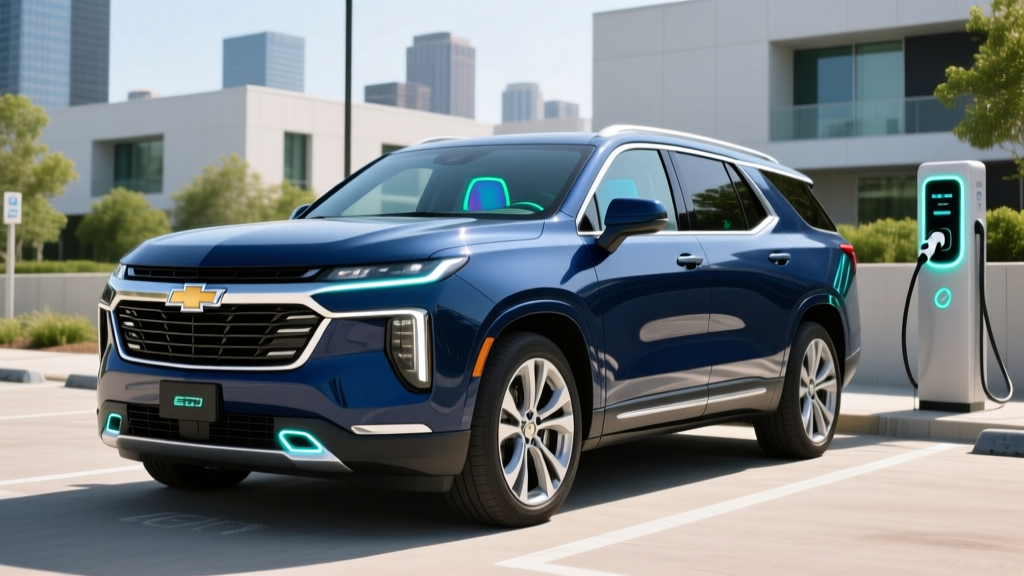
As of early 2026, Chevrolet has not yet released a fully electric Suburban for retail sale. The Silverado EV and Equinox EV are Chevy's current production electric vehicles, while the electric Suburban remains in the announced/preliminary stage as part of GM's broader Ultium-platform rollout. If and when it launches, expect a three-row SUV built on GM's BT1 (Body-on-Truck) Ultium architecture, targeting 350+ miles of EPA range, 350 kW peak DC fast charging, and a starting MSRP likely between $75,000–$85,000 before incentives. Until GM officially opens orders, everything below is based on GM's published Ultium platform capabilities, Silverado EV benchmarks, and industry projections — clearly labeled as estimates.
What We Know About the Electric Chevy Suburban So Far
GM confirmed its intent to electrify its full-size SUV lineup — including the Suburban and its GMC Yukon XL sibling — as part of the company's goal to offer 30 EVs globally by mid-decade. The electric Suburban will ride on the same BT1 Ultium platform that underpins the Silverado EV and the GMC Sierra EV. That platform supports battery packs up to approximately 200+ kWh (usable), dual-motor AWD configurations producing over 650 horsepower, and 800-volt electrical architecture enabling ultra-fast DC charging.
Here is what we can reasonably project based on the Silverado EV and Sierra EV, which share the same bones:
| Spec | Estimated Value | Basis |
|---|---|---|
| Battery Capacity (usable) | ~200 kWh (NMC) | Silverado EV Max Range pack |
| EPA Range (est.) | 350–400 miles | Silverado EV 4WT: EPA 440 mi |
| Real-World Highway Range | ~280–320 miles | Large SUV aero + cold-weather losses |
| Peak DC Fast Charge Rate | 350 kW | 800V Ultium architecture |
| 10–80% DC Charge Time (est.) | ~25–30 minutes | Silverado EV: ~20 min at 350 kW |
| Level 2 AC Charging | 19.2 kW (max) | Silverado EV capability |
| Horsepower (dual-motor AWD) | ~664 hp | Silverado EV RST |
| 0–60 mph (est.) | ~4.5 seconds | Silverado EV RST: 4.5 sec |
| Towing Capacity (est.) | ~8,000–10,000 lbs | Platform capability |
| Base MSRP (est.) | $75,000–$85,000 | Silverado EV pricing trajectory |
| Battery/Powertrain Warranty | 8 years / 100,000 miles | GM standard EV warranty |
Important caveat: These are projections based on the Silverado EV's published specs and GM's Ultium platform announcements. Final EPA range, pricing, and trim structure will not be confirmed until GM officially unveils the production vehicle and submits it for EPA testing.
Electric Suburban vs. Gas Suburban: A Data-Driven Comparison
The current gas-powered 2025 Chevrolet Suburban with the 5.3L V8 gets an EPA-estimated 15 city / 20 highway / 17 combined MPG. The available 3.0L Duramax diesel bumps that to 20/26/22 MPG. Let's see how the projected electric version compares on the metrics that matter to three-row SUV buyers.
| Metric | Electric Suburban (est.) | Gas Suburban 5.3L V8 |
|---|---|---|
| EPA Range / Tank Range | ~370 miles | ~408 miles (24 gal × 17 MPG) |
| Energy/Fuel Cost per Mile | ~$0.05–$0.07 (home L2) | ~$0.21 (at $3.50/gal, 17 MPG) |
| "Fill-Up" Cost (full range) | ~$18–$28 (home charging) | ~$84 (24 gal at $3.50) |
| Refuel/Recharge Time | ~25 min (10–80% DCFC) | ~5 min (gas station) |
| Annual Fuel/Energy (15k mi) | ~$800–$1,100 | ~$3,090 |
| Horsepower | ~664 hp | 355 hp |
| 0–60 mph | ~4.5 sec | ~7.0 sec |
| Maintenance (annual est.) | ~$300–$500 | ~$800–$1,200 |
| Starting MSRP | ~$75,000–$85,000 | ~$61,000 (LS 4WD) |
| Cargo (behind 3rd row) | TBD (likely 40+ cu ft) | 41.5 cu ft |
The electric Suburban projects a clear advantage in per-mile operating cost — saving roughly $2,000–$2,300 per year in energy vs. gasoline at 15,000 miles driven. However, the upfront price premium of $14,000–$24,000 means the break-even point on fuel savings alone is approximately 6–10 years, depending on your local electricity rates and driving volume. Buyers who drive more than 15,000 miles annually or who have access to cheap overnight home charging will break even sooner.
Real-World Ownership: What the Sticker Doesn't Tell You
Projecting from Silverado EV real-world testing and the physics of a full-size, body-on-frame SUV, here is what prospective electric Suburban buyers should realistically expect.
Range in the Real World
The EPA test cycle is conducted at moderate speeds and temperatures. A large, boxy SUV like the Suburban faces significant aerodynamic drag at highway speeds. Based on Silverado EV and Rivian R1S real-world data, expect:
- Highway (70–75 mph, 70°F): ~80–85% of EPA estimate → roughly 295–315 miles from a ~370-mile EPA rating
- Cold weather (20°F, highway): ~60–70% of EPA → roughly 220–260 miles. The Suburban's massive battery helps offset the percentage loss in absolute miles.
- Towing (5,000+ lb trailer): ~45–55% of EPA → roughly 165–200 miles. This is the Achilles' heel of every electric SUV, and the Suburban will be no exception.
Charging at Home: The Make-or-Break Factor
A ~200 kWh battery is enormous. On a standard 120V Level 1 outlet (1.4 kW), adding even 50 miles of range would take approximately 28+ hours — essentially impractical. You need Level 2 home charging to own this vehicle comfortably.
| Item | Estimated Cost | Notes |
|---|---|---|
| Level 2 EVSE (48A, hardwired) | $500–$800 | ChargePoint Home Flex, Emporia, Wallbox |
| Electrical panel upgrade (if needed) | $1,500–$3,500 | Required if panel is 100A or maxed out |
| Electrician labor + wire run | $800–$2,500 | Depends on distance from panel to garage |
| Permit + inspection | $100–$300 | Varies by municipality |
| Total (no panel upgrade) | $1,400–$3,600 | Most homes with 200A service |
| Total (with panel upgrade) | $2,900–$7,100 | Older homes or heavy-load panels |
At 19.2 kW (the Silverado EV's max AC rate), a full charge from 10% to 100% would take roughly 10–11 hours. At a more common 11.5 kW (48A on a 60A circuit), expect about 17–18 hours for a full charge. Most owners will charge overnight and rarely need a full 0–100% cycle — daily driving of 40–60 miles requires only 2–3 hours of Level 2 charging.
Public DC Fast Charging
The projected 350 kW peak charge rate is impressive, but real-world charging curves tell a more nuanced story. Peak rate is sustained only at low states of charge (roughly 10–30%). As the battery fills, the rate tapers to protect the cells. Based on Silverado EV testing at 350 kW chargers:
- 10–80%: ~25–30 minutes
- 80–100%: An additional 25–35 minutes (significant taper)
- Miles added in 15 minutes: ~150–180 miles (at optimal SoC and charger output)
Also note: 350 kW chargers are still relatively uncommon. Most Electrify America and EVgo stations offer 150–350 kW, but actual delivered power depends on station utilization, ambient temperature, and battery preconditioning. Always precondition the battery via the vehicle's navigation-routed charging for optimal speeds.
5-Year Total Cost of Ownership Breakdown
Let's compare the projected electric Suburban to the gas Suburban over 5 years and 75,000 miles, assuming $3.50/gallon gas, $0.14/kWh home electricity, and a mix of 80% home / 20% public charging for the EV.
| Cost Category | Electric Suburban (est.) | Gas Suburban |
|---|---|---|
| Purchase Price (base MSRP) | $80,000 | $61,000 |
| Federal Tax Credit (§30D) | Up to $7,500 (if eligible) | $0 |
| Effective Purchase Price | $72,500 | $61,000 |
| Energy/Fuel (75,000 mi) | $4,700 | $15,440 |
| Maintenance (5 years) | $2,000 | $5,000 |
| Insurance (5 years, est.) | $12,500 | $9,500 |
| Home Charger Install | $2,500 | $0 |
| Estimated Depreciation | $32,000 | $24,000 |
| Total 5-Year Cost | ~$126,200 | ~$114,940 |
Even with the tax credit and dramatically lower energy costs, the electric Suburban's higher purchase price and steeper projected depreciation keep its 5-year TCO roughly $11,000 higher than the gas version. The math shifts in the EV's favor at higher annual mileage (20,000+ miles/year), lower electricity rates, or if GM prices the vehicle more aggressively than projected. It also improves if gas prices rise significantly above $3.50/gallon.
Federal Tax Credit Eligibility: What Applies in 2026
The IRS §30D Clean Vehicle Credit offers up to $7,500 for qualifying new EVs, but eligibility is far from automatic. For a projected vehicle in the electric Suburban's price range, here is what you need to know:
§30D Credit Requirements (2026 Tax Year)
- MSRP Cap: SUVs/vans/pickups must have an MSRP of $80,000 or less. If the electric Suburban's base trim exceeds this cap, it will be ineligible. Higher trims will almost certainly exceed it.
- Buyer Income Cap: Modified AGI must not exceed $300,000 (joint), $225,000 (head of household), or $150,000 (single).
- Battery Sourcing: The battery must meet critical minerals and battery component requirements that tighten annually. GM's Ultium batteries use a mix of domestically sourced and imported materials — specific eligibility depends on the model year's sourcing percentages.
- Final Assembly: Must be assembled in North America (likely GM's Orion Assembly or Spring Hill, TN plant).
- Point-of-Sale Transfer: Eligible buyers can transfer the credit to the dealer at purchase, reducing the out-of-pocket price immediately rather than waiting for a tax refund.
Bottom line: Do not assume the electric Suburban will qualify for the full $7,500. The MSRP cap is the most likely disqualifier — if GM prices the entry trim at $82,000+, the credit vanishes entirely. Always verify current eligibility on fueleconomy.gov before purchasing.
Common Misconceptions About Electric Full-Size SUVs
| Myth | Fact |
|---|---|
| "The battery will need replacing in 5 years and cost $30,000." | GM's Ultium batteries carry an 8-year/100,000-mile warranty (covering capacity below 70%). Real-world degradation data from GM's EV fleet suggests 10–15% capacity loss over 150,000 miles. Replacement is rare within the first decade. |
| "You can tow just as far on electric." | Towing cuts range by 40–55%. A 370-mile EPA rating drops to ~165–200 miles when towing a 5,000+ lb trailer. Plan routes around DC fast chargers accordingly. |
| "Charging is free." | Home charging at $0.14/kWh costs ~$28 for a 200 kWh pack (0–100%). Public DC fast charging at $0.40–$0.50/kWh costs $80–$100 for the same fill — comparable to or exceeding a gas fill-up. |
| "It qualifies for the $7,500 tax credit automatically." | MSRP caps, income limits, and battery sourcing rules all apply. Many luxury and full-size EVs are ineligible. Verify on fueleconomy.gov. |
| "Cold weather makes EVs unusable." | Cold reduces range by 20–40%, but a 200 kWh pack still delivers 220+ real-world miles in 20°F weather. Preconditioning and heat pump systems (standard on Ultium) mitigate losses. It's a real limitation, not a dealbreaker for most buyers. |
Decision Framework: Should You Wait for the Electric Suburban?
Choose the Electric Suburban (when available) If:
- You drive 15,000+ miles per year, making the per-mile energy savings substantial
- You have access to Level 2 home charging (garage or driveway with 240V circuit capacity)
- You want three-row seating with instant torque, quiet operation, and minimal routine maintenance
- You primarily drive in urban/suburban settings where regenerative braking maximizes efficiency
- You can wait — the vehicle is not yet available for order as of early 2026
Stick With the Gas or Diesel Suburban If:
- You regularly tow heavy trailers (boats, campers) over long distances — range loss makes DCFC-dependent towing impractical
- You lack home charging access and rely on street parking or apartments without EV infrastructure
- You live in a region with sparse DC fast-charging networks (rural areas, charging deserts)
- You need a vehicle now and cannot wait for GM's production timeline
- Your budget is under $65,000 and the EV's price premium doesn't pencil out within your ownership horizon
Consider a Plug-In Hybrid Alternative If:
- You want electric daily commuting (30–50 miles EV range) plus unlimited gas range for road trips and towing
- You're not ready to commit to full EV ownership but want reduced fuel consumption
- Note: GM has not announced a PHEV Suburban — the current options in this segment are limited to competitors like the Jeep Grand Wagoneer (no PHEV in the US) or waiting for future announcements
What to Watch For Before the Electric Suburban Launches
Until GM holds the official unveil and publishes final specs, keep these questions on your radar:
- Will the base MSRP clear the $80,000 §30D tax credit cap? This single number determines whether the federal credit applies.
- What is the actual usable battery capacity? GM may offer multiple pack sizes (e.g., a ~150 kWh standard range and ~200 kWh extended range), which will dramatically affect pricing and range.
- Does it use NACS or CCS? GM has committed to adopting the Tesla NACS connector for future EVs. If the Suburban launches with NACS, it gains access to Tesla Superchargers — a major charging-network advantage. If it launches with CCS, an adapter will be needed for Supercharger access.
- What is the third-row and cargo compromise? The Ultium battery pack sits under the floor. Packaging a full-size battery while maintaining the Suburban's signature cargo volume and third-row legroom is an engineering challenge. Watch for cargo cubic feet figures at reveal.
- Will Super Cruise (Level 2 hands-free driving) be standard or optional? GM's hands-free ADAS is one of the best in the segment, but availability and pricing vary by trim.
Frequently Asked Questions
Is the electric Chevy Suburban available to buy right now?
No. As of early 2026, GM has not opened orders for the electric Suburban. The Silverado EV and Equinox EV are Chevy's current production electric vehicles. The electric Suburban is in the announced/preliminary stage.
How much will the electric Suburban cost?
Based on Silverado EV pricing and the full-size SUV segment, we estimate a starting MSRP of $75,000–$85,000 for the base trim, with fully loaded models potentially exceeding $100,000. Final pricing will be confirmed at GM's official unveil.
Will the electric Suburban qualify for the $7,500 federal tax credit?
Possibly, but it's not guaranteed. The §30D credit requires the SUV's MSRP to be $80,000 or less, the buyer's income to be under the cap ($300,000 joint / $150,000 single), and the battery to meet sourcing requirements. If the base trim is priced above $80,000, it will not qualify. Check IRS guidelines and fueleconomy.gov for the final determination.
How long will it take to charge the electric Suburban at home?
With a 19.2 kW Level 2 charger (the Silverado EV's maximum), a full charge of a ~200 kWh battery takes approximately 10–11 hours. On a more typical 11.5 kW home charger, expect 17–18 hours for a full charge. Most daily driving (40–60 miles) requires only 2–3 hours of Level 2 charging overnight.
Can the electric Suburban tow as much as the gas version?
Towing capacity may be similar (8,000–10,000 lbs projected), but towing range will be significantly reduced — expect a 40–55% range drop. A 370-mile EPA rating could shrink to 165–200 miles when towing a heavy trailer, requiring frequent DC fast-charging stops.
What is the battery warranty?
GM covers its Ultium battery packs with an 8-year / 100,000-mile warranty, guaranteeing a minimum capacity retention (typically 70% of original capacity). This is standard across the GM EV lineup and consistent with industry norms.