The Short Answer on the Electric Porsche Cayman
Porsche has not yet released a production electric Cayman as of early 2026, but the model is widely expected to arrive on the next-generation 718 EV platform — likely sharing architecture with the electric Boxster. Based on Porsche's confirmed 800-volt PPE-derived sports car architecture and industry reporting, the electric Cayman is projected to offer roughly 250–310 miles of EPA range, a 100 kWh-class battery pack, peak DC fast charging near 270 kW, and a starting MSRP in the $78,000–$90,000 range before options. If you're considering one, the key decision is whether you want to wait for an announced-but-unavailable model or evaluate what's buyable now, like the gas 718 Cayman or the all-electric Porsche Taycan.
What Is the Electric Cayman and Where Does It Fit?
The Porsche 718 Cayman has been a mid-engine, gas-powered sports car since 2016 (with roots going back to the original Cayman in 2006). Porsche confirmed in 2022 that the next-generation 718 Boxster and Cayman would transition to battery electric powertrains. However, the timeline has shifted multiple times. As of 2026, Porsche has not opened orders for an electric 718 Cayman, and the company has acknowledged delays tied to battery supply chain constraints and software development.
What we do know from Porsche's public statements and the broader Volkswagen Group roadmap:
- The electric 718 models will ride on a sports-car-specific evolution of the PPE (Premium Platform Electric) architecture, adapted for mid-engine weight distribution and a lower roofline.
- The platform will support 800-volt charging, consistent with Porsche's commitment to high-speed DC charging across its EV lineup.
- Porsche CEO Oliver Blume confirmed the electric 718 is still in development but has not committed to a firm on-sale date, with industry analysts projecting a 2027–2028 model-year debut at the earliest.
Important: Any range, pricing, or performance figures discussed below are projections based on Porsche's existing EV lineup (Taycan, Macan EV) and platform capabilities. They are not confirmed specifications. We will update this guide when Porsche publishes official data.
Projected Specs: Electric Cayman vs. Gas 718 Cayman
To ground expectations, here's how the anticipated electric Cayman compares to the current-generation gas 718 Cayman. The electric figures are estimates drawn from the Taycan and Macan EV benchmarks; the gas figures are confirmed EPA and manufacturer data.
| Specification | Gas 718 Cayman (2025 Base) | Electric Cayman (Projected) |
|---|---|---|
| Powertrain | 2.0L turbo flat-4 | Dual-motor AWD or single-motor RWD |
| Horsepower | 300 HP | ~400–550 HP (est.) |
| 0–60 mph | 4.9 seconds | ~3.5–4.5 seconds (est.) |
| Battery / Fuel | 16.9-gal fuel tank | ~90–100 kWh usable (est., NMC) |
| EPA Range | ~370 miles (gas) | ~250–310 miles (est.) |
| Peak DC Charge Rate | N/A | ~270 kW (est., 800V) |
| 10–80% Charge Time | N/A | ~20–25 minutes (est.) |
| Curb Weight | ~3,000 lbs | ~4,200–4,600 lbs (est.) |
| Starting MSRP | $68,300 | $78,000–$90,000 (est.) |
| Federal §30D Tax Credit | Not eligible | Uncertain — likely $0–$3,750 (see below) |
The gas Cayman's weight advantage is significant. Porsche's engineering challenge with the electric 718 is packaging a battery large enough for real-world range while keeping the car under ~4,500 lbs to preserve the handling dynamics the Cayman is known for. The Taycan weighs over 5,000 lbs in GTS trim — a sports coupe can't afford that penalty.
Charging and Range: What to Expect in the Real World
If the electric Cayman follows the Taycan and Macan EV playbook, it will feature Porsche's 800-volt architecture — the same system that allows the Taycan to sustain high charge rates longer than 400-volt competitors. Here's what that translates to practically:
| Charging Level | Power (kW) | Estimated Miles Added per Hour | Typical Use Case |
|---|---|---|---|
| Level 1 (120V household) | ~1.4 kW | ~4–5 mi/hr | Overnight trickle — not practical for daily use |
| Level 2 (240V home, 48A) | ~11.5 kW | ~35–42 mi/hr | Primary daily charging — full charge in ~9 hours |
| DC Fast Charge (350 kW station) | ~270 kW peak | ~150+ mi in 10 min (peak) | Road trips — 10–80% in ~20–25 min (est.) |
Real-world range caveat: The EPA sticker is only part of the story. Based on Taycan real-world testing, expect highway driving at 75 mph to reduce range by 10–15% below EPA, and cold-weather driving (below 30°F) to reduce it by an additional 15–25%. If the electric Cayman posts a 290-mile EPA rating, plan for roughly 220–250 miles of usable highway range in moderate conditions and as low as 180–200 miles in winter. Porsche's heat pump system (standard on the Taycan, expected on the electric 718) helps mitigate cold-weather losses but doesn't eliminate them.
Charging curve reality: Peak kW is not sustained kW. A 270 kW peak rate typically applies between roughly 10–40% state of charge (SoC). Above 80%, charge speed tapers sharply to protect battery health — often dropping below 50 kW. This is why 10–80% times are the meaningful metric, not peak kW alone.
Cost Breakdown: What Ownership Actually Costs
An electric sports car isn't a budget purchase, but the operating economics can offset the higher sticker price depending on your driving patterns and electricity rates.
| Cost Category | Gas 718 Cayman (Year 1) | Electric Cayman (Projected Year 1) |
|---|---|---|
| Vehicle MSRP (base) | $68,300 | ~$84,000 (est. mid-trim) |
| Federal §30D Tax Credit | $0 | $0–$3,750 (est. — see eligibility below) |
| Fuel / Electricity (10,000 mi/yr) | ~$2,100 (premium gas, 24 MPG avg, $4.00/gal) | ~$450–$700 (home charging at $0.14/kWh, 3.5 mi/kWh) |
| Maintenance (oil, filters, brakes) | ~$800–$1,200 | ~$200–$400 (no oil changes; regen saves brake pads) |
| Insurance (national avg, sports car) | ~$2,400/yr | ~$2,800–$3,400/yr (EV premium, higher repair costs) |
| Home Charger Install (one-time) | $0 | $1,200–$3,500 (Level 2, 48A hardwired) |
Over five years, fuel and maintenance savings of roughly $8,000–$12,000 partially close the gap with the gas Cayman's lower purchase price. However, the electric Cayman's higher insurance premiums and potential lack of a full $7,500 tax credit mean the total cost of ownership (TCO) advantage is not guaranteed — it depends heavily on your local electricity rates, annual mileage, and whether you qualify for incentives.
Federal tax credit reality check: Under current IRS §30D rules, new EVs must meet battery component sourcing and critical minerals requirements to qualify for up to $7,500. Porsche's battery supply chain has historically limited Taycan eligibility (the Taycan qualified for $0 in most recent model years due to non-compliant sourcing). The electric Cayman's eligibility will depend on where Porsche sources cells and minerals at time of production. Additionally, §30D has buyer income caps ($150K single / $300K joint) and MSRP caps ($55K for sedans, $80K for SUVs/trucks/vans). A sports coupe priced above $55K would face the sedan MSRP cap — meaning even a fully compliant electric Cayman priced at $78,000+ would likely receive $0 from the federal credit. Always verify current eligibility on fueleconomy.gov before purchasing.
Common Misconceptions About the Electric Cayman
| Myth | Fact |
|---|---|
| "The electric Cayman is available to order now." | As of early 2026, Porsche has not opened orders. The electric 718 is confirmed in development but has no firm on-sale date. Any "reservation" claims from third parties are not official. |
| "It will handle exactly like the gas Cayman." | Battery weight (likely 1,200+ lbs more than the gas car) changes handling dynamics. Porsche will use torque vectoring and a low center of gravity to compensate, but the driving feel will be different — quicker in a straight line, heavier through corners. |
| "EVs have no maintenance costs." | EVs eliminate oil changes and reduce brake wear via regenerative braking, but they still require tire rotations, cabin air filter replacement, coolant system service, and 12V battery monitoring. Budget $200–$400/year. |
| "I'll get the full $7,500 federal tax credit." | Very unlikely for this vehicle. The §30D MSRP cap for cars (non-SUVs) is $55,000, and the electric Cayman is projected to start well above that threshold. Income caps and battery sourcing rules add further restrictions. |
| "Charging takes too long for road trips." | At 800V and ~270 kW peak, a 10–80% charge in ~20–25 minutes is competitive with a gas stop plus a bathroom break. On a 500-mile trip, expect 2 charging stops totaling ~45–55 minutes of added time. |
Home Charging: What First-Time EV Buyers Need to Know
If you're considering any EV — the electric Cayman or an alternative — home charging access is the single biggest factor in ownership satisfaction. Here's what to plan for:
- Electrical panel capacity: A 48-amp Level 2 charger requires a dedicated 60-amp circuit. If your home's electrical panel is already near capacity (common in older homes with 100-amp service), you may need a panel upgrade costing $1,500–$4,000 before the charger can be installed.
- Charger hardware: Porsche recommends its Porsche Mobile Charger Connect (~$700–$900), but third-party options like the ChargePoint Home Flex (~$550–$700) or Tesla Wall Connector (~$450, with NACS connector) work with any EV using the appropriate adapter.
- Installation: A licensed electrician will typically charge $500–$2,500 for a straightforward install (panel to garage run under 50 feet). Complex runs, conduit through finished walls, or panel upgrades push costs higher.
- Connector note: Porsche currently uses CCS1 in North America but has announced a transition to NACS (Tesla-style) for future models. The electric Cayman's connector will depend on its production year — if it debuts in 2027–2028, NACS is likely. This affects which public chargers you can use natively vs. with an adapter.
If you cannot charge at home (apartment living, no garage, street parking only), an electric sports car becomes significantly less practical. Public DC fast charging costs $0.30–$0.60/kWh (roughly 2–3× home rates) and requires planning around charger availability. Factor this into your decision honestly.
Decision Framework: Should You Wait or Buy Now?
Wait for the electric Cayman if:
- You already own a sports car and aren't in a rush to replace it.
- You have reliable home charging (garage with 240V access or the ability to install it).
- You drive under 250 miles per day and want a daily-drivable EV sports car.
- You value instant torque, lower operating costs, and the latest tech over lightweight analog handling.
- You're comfortable with a projected $80,000+ purchase price and likely zero federal tax credit.
Buy the gas 718 Cayman now if:
- You want a sports car today and can't wait 1–3 years for an unconfirmed model.
- Track driving and lightweight handling are your top priorities (the gas Cayman at ~3,000 lbs is a different animal than a ~4,400-lb EV).
- You lack home charging access and don't want to rely on public infrastructure.
- You want to keep total purchase cost under $75,000.
Consider the Porsche Taycan instead if:
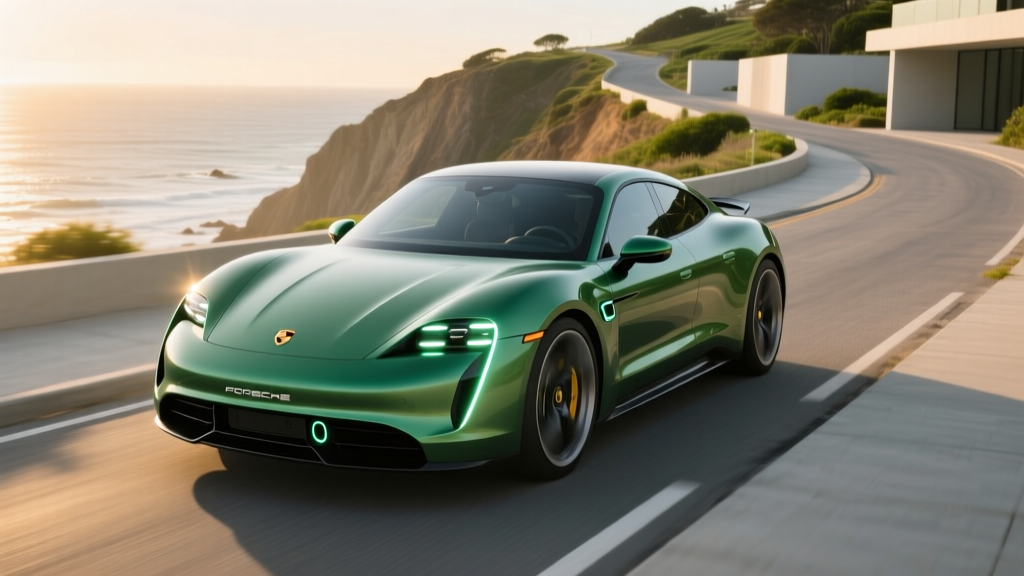
- You want a Porsche EV you can actually buy and drive in 2026.
- You need four doors and more cargo space for daily use.
- The 2025 Taycan starts at $92,250, offers up to 318 miles EPA range (Taycan 4S with Performance Battery Plus), and charges at up to 320 kW peak (10–80% in ~18 minutes on a 350 kW charger). It's a proven, buyable alternative while you wait.
Frequently Asked Questions
Is the electric Porsche Cayman officially confirmed?
Yes — Porsche confirmed in 2022 that the next-generation 718 Boxster and Cayman will be electric. However, the company has not published final specs, pricing, or an on-sale date. Industry projections place the debut in the 2027–2028 timeframe. Check Porsche's official newsroom for updates.
Will the electric Cayman be heavier than the gas version?
Yes, significantly. The gas 718 Cayman weighs approximately 3,000 lbs. Based on the Taycan's battery mass and the Macan EV's curb weight, the electric Cayman is projected at 4,200–4,600 lbs — a 1,200+ lb increase. Porsche will engineer around this with a low center of gravity and torque vectoring, but the driving dynamics will differ from the mid-engine gas car.
Can I put a deposit down to reserve one?
Not through official Porsche channels as of early 2026. Porsche has not opened reservations for the electric 718. Any third-party sites claiming to accept deposits are not authorized. Wait for an official announcement on Porsche.com or through your local dealer.
What other electric sports cars are available now?
If you want an electric performance car today, your options include the Porsche Taycan ($92,250+), Tesla Model 3 Performance ($52,990, 315 mi EPA), BMW i4 M50 ($67,795, 271 mi EPA), and the Hyundai Ioniq 5 N ($66,100, 221 mi EPA but exceptional track capability). None are mid-engine sports coupes in the Cayman's traditional segment, but all deliver strong performance with immediate availability.
Will the electric Cayman qualify for any tax incentives?
Under current IRS §30D rules, the federal EV tax credit has an MSRP cap of $55,000 for cars (sedans, coupes, wagons) and $80,000 for SUVs/trucks/vans. Since the electric Cayman is projected to start well above $55,000, it would likely not qualify for the federal credit regardless of battery sourcing compliance. Some states offer additional rebates or incentives that may apply — check your state's energy office or AFDC incentive database for current programs. Always consult a tax professional before making purchase decisions based on credits.