Quick Answer: Do Electric Cars Work in the Winter?
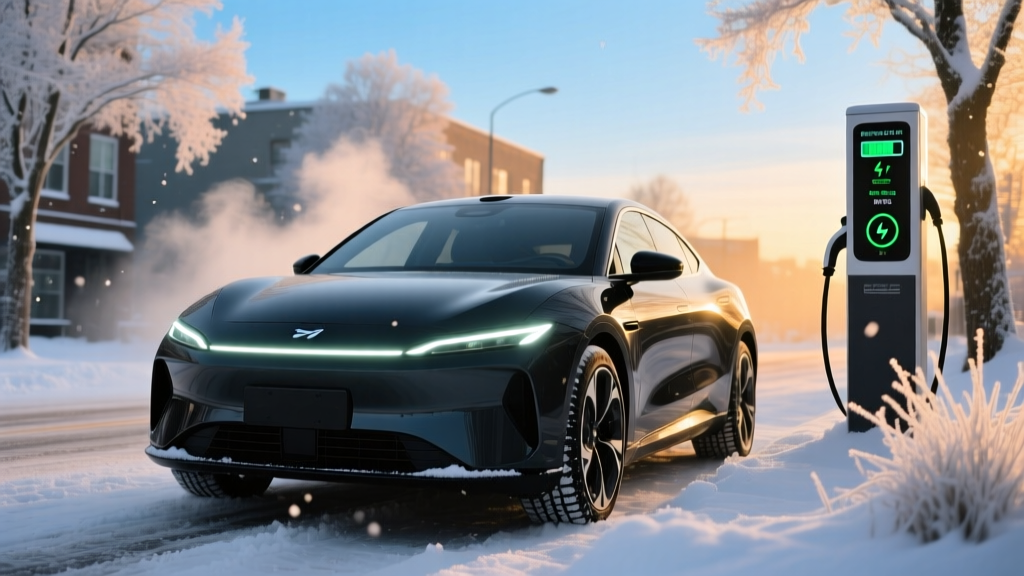
Yes, electric cars work reliably in winter — but with important caveats. Cold temperatures reduce EPA-rated range by 20–30% in typical freezing conditions (20–32°F) and up to 40% in extreme cold (below 0°F), primarily because the battery must power cabin heating and maintain its own operating temperature. A 300-mile EPA-rated EV might deliver 210–240 real-world winter miles. Modern EVs with heat pumps (standard on 2025–2026 Hyundai Ioniq 5, Tesla Model Y, BMW iX) mitigate this loss significantly compared to older resistance-heater models. Cold also slows DC fast charging by 10–15 minutes on a 10–80% session unless the battery is preconditioned. EVs still start instantly in cold weather — no cold-crank issues — and offer advantages like instant cabin heat and regenerative braking on icy roads.
Why Cold Weather Reduces EV Range (The Physics)
Unlike gas engines that waste enormous heat (which is "free" for cabin warming), electric motors are so efficient that there's little excess thermal energy. Heating a cabin to 70°F when it's 10°F outside requires the battery to supply that energy directly. Here's where the energy goes in winter:
- Cabin heating: A resistance heater draws 3–6 kW continuously; a heat pump cuts this to 1–2.5 kW — a massive efficiency gain
- Battery thermal management: Lithium-ion cells operate optimally between 68–104°F (20–40°C). Below freezing, the battery management system (BMS) activates heating elements, consuming 1–3 kW to protect cell health and maintain charge/discharge capability
- Increased rolling resistance: Cold tire rubber stiffens, increasing rolling resistance by 5–10%
- Denser air: Cold air is denser, increasing aerodynamic drag slightly at highway speeds
- Accessory loads: Heated seats (0.1–0.3 kW), heated steering wheel (0.05–0.1 kW), defrosters, and wiper heaters add up
The chemistry also matters. NMC (Nickel Manganese Cobalt) batteries, used in most long-range EVs like the Tesla Model 3 Long Range and Ford Mustang Mach-E, experience higher internal resistance in cold, reducing both available energy and charge acceptance rates. LFP (Lithium Iron Phosphate) cells, found in the Tesla Model 3 RWD and base Model Y, are slightly more cold-tolerant in terms of cycle life but still lose capacity temporarily in freezing conditions.
Real-World Winter Range Loss: EV Data by Model
Not all EVs handle cold equally. Heat pumps, battery size, and thermal management design create wide variation. Here's what testing and owner data show for popular 2025–2026 models:
| Vehicle (2025–2026) | EPA Range | Heat Pump? | Battery (kWh) | Est. Winter Range (20°F) | % Loss |
|---|---|---|---|---|---|
| Tesla Model Y Long Range AWD | 320 mi | Yes | 78 kWh (NMC) | ~245–265 mi | ~17–23% |
| Hyundai Ioniq 5 Long Range AWD | 290 mi | Yes | 77.4 kWh (NMC) | ~220–240 mi | ~17–24% |
| Ford Mustang Mach-E Extended Range AWD | 290 mi | Yes (2025+) | 91 kWh (NMC) | ~225–245 mi | ~16–22% |
| Chevrolet Equinox EV 3RS AWD | 285 mi | Yes | 85 kWh (NMC) | ~215–235 mi | ~18–25% |
| Tesla Model 3 RWD (LFP) | 272 mi | Yes | 60 kWh (LFP) | ~195–215 mi | ~21–28% |
| Nissan Leaf SV Plus (no heat pump) | 212 mi | No | 60 kWh (NMC) | ~140–160 mi | ~25–34% |
Sources: fueleconomy.gov EPA estimates; winter range derived from Recurrent Auto fleet data and owner-reported testing at sustained 15–25°F highway driving.
Real-World Range Reality: If your daily commute is 60 miles round-trip and you charge at home nightly, even a 40% range loss still leaves you with a comfortable buffer on any EV rated above 220 miles EPA. The anxiety hits on road trips where you need to hit specific DC fast chargers — plan for one extra stop on trips over 200 miles in deep cold.
Winter Charging: What Changes at the Plug
Cold batteries charge slower — this is chemistry, not a flaw. Lithium ions move sluggishly through cold electrolyte, and charging too fast in freezing conditions can cause lithium plating (permanent damage). The BMS restricts charge rates until the pack warms up.
DC Fast Charging in Cold Weather
Expect a cold-soaked battery (parked outside overnight at 15°F) to charge at significantly reduced rates initially:
- Without preconditioning: A 250 kW-capable EV may accept only 30–50 kW for the first 10–15 minutes, extending a 10–80% session from ~25 minutes to 40–55 minutes
- With preconditioning (navigation to charger): Tesla, Hyundai/Kia, BMW, and Ford now precondition the battery when you navigate to a DC charger. The pack arrives warm and can accept peak rates immediately — a 10–80% session in 18–25 minutes depending on the vehicle
Pro tip: Always navigate to your DC fast charger using the vehicle's built-in navigation (or activate preconditioning manually, as on the Hyundai Ioniq 5's "battery conditioning" button). This simple step can shave 15–20 minutes off your charging stop.
Level 2 Home Charging in Winter
Level 2 charging (240V, 7–11.5 kW) is largely unaffected by cold for overnight sessions. The BMS will spend the first portion of the session warming the battery, which slightly extends total charge time, but since you're sleeping, this is irrelevant. A 77 kWh battery still fills overnight on a 48-amp (11.5 kW) Level 2 charger in about 7–8 hours even at 0°F.
| Charging Level | Power (kW) | Cold-Weather Impact | Practical Note |
|---|---|---|---|
| Level 1 (120V) | 1.0–1.4 kW | Minimal — overnight warmth | Adds ~3–5 mi/hr; adequate for <40 mi/day commutes |
| Level 2 (240V, 48A) | 11.5 kW | Slightly longer session | Adds ~30–40 mi/hr; fills any EV overnight |
| DC Fast (no precondition) | 30–50 kW (initial) | Severe — 40–55 min 10–80% | Cold-soaked pack limits C-rate |
| DC Fast (preconditioned) | Up to 250+ kW | Moderate — 18–25 min 10–80% | Always precondition before DC charging |
EV vs Gas vs Hybrid: Winter Ownership Compared
Cold weather affects every vehicle. Gas cars lose fuel efficiency too — the EPA estimates conventional gas vehicles lose 10–22% fuel economy in short-trip winter driving (below 20°F) due to cold-engine enrichment, increased friction from thickened fluids, and idling to warm up. Here's how the three powertrains compare head-to-head:
| Factor | EV (Heat Pump) | Hybrid (HEV) | Gas Car (ICE) |
|---|---|---|---|
| Winter efficiency loss | 20–30% range | 10–15% MPG | 12–22% MPG |
| Cold start reliability | Instant (no cranking) | Engine cranks, 12V dependent | Engine cranks, 12V dependent |
| Cabin heat speed | Heat pump: 2–4 min; resistance: 1–2 min | 3–7 min (needs engine heat) | 5–10 min (needs engine heat) |
| Fuel/energy cost (winter, per mile) | ~$0.04–0.06 (home L2) | ~$0.08–0.10 | ~$0.12–0.16 |
| Idling to warm up | Not needed — use preconditioning | Common practice | Common practice |
| Traction advantage | Low center of gravity, instant torque control | Moderate (FWD/AWD dependent) | Standard (FWD/AWD dependent) |
| Block heater needed? | No | No | Recommended below -20°F |
Winter Fuel Cost Reality (January, 30°F Average, 1,000 Miles)
| Vehicle Type | Winter Efficiency | Energy Cost | Monthly Cost (1,000 mi) |
|---|---|---|---|
| EV (home L2 at $0.14/kWh, 3.0 mi/kWh winter) | ~112 MPGe | $0.047/mi | $47 |
| Hybrid HEV (38 MPG winter, $3.10/gal) | 38 MPG | $0.082/mi | $82 |
| Gas sedan (24 MPG winter, $3.10/gal) | 24 MPG | $0.129/mi | $129 |
Even with a 25% range penalty, EVs remain the cheapest option to "fuel" in winter — roughly half the cost of gas and 40% less than a hybrid per mile.
Common Winter EV Myths vs Facts
| Myth | Fact |
|---|---|
| "EVs won't start in extreme cold" | EVs have no engine to crank. The 12V battery starts the computer, and the traction battery powers the motor instantly. Tesla owners in Fairbanks, AK report reliable starts at -30°F. Keep your 12V battery healthy — that's the real cold-weather vulnerability. |
| "You'll get stranded because the battery dies" | With preconditioning and route planning, winter road trips are routine. Apps like A Better Routeplanner (ABRP) factor in temperature. The risk is real only if you ignore planning in remote areas with sparse charging infrastructure. |
| "Cold destroys the battery permanently" | Cold reduces range temporarily. The BMS protects cells from damage by limiting power and warming the pack. Long-term degradation from cold is minimal — data from Recurrent shows EVs in cold climates degrade at similar rates to warm-climate vehicles over 5+ years. |
| "You can't use the heater or you'll run out of range" | A heat pump draws 1–2.5 kW; on a 77 kWh battery, that's sustainable for 30+ hours of continuous heating. Use heated seats and steering wheel (0.1–0.4 kW combined) instead of max cabin heat for even better efficiency. |
| "EVs are dangerous on ice" | EVs are typically heavier than gas equivalents (battery weight), which helps traction. Most AWD EVs offer precise torque vectoring. Winter tires remain the single biggest traction upgrade for any vehicle. |
Winter EV Ownership: Practical Decision Framework
Should You Buy an EV If You Live in a Cold Climate?
Choose an EV if:
- You have home charging (Level 2, 240V) — waking up to a full "tank" every morning eliminates cold range anxiety entirely for daily driving
- Your daily round-trip commute is under 100 miles (covers 95% of American commutes, even with 30% winter range loss)
- You select a model with a heat pump and at least 270+ miles EPA range for adequate winter buffer
- You take road trips 1–4 times per year and can plan DC fast-charging stops along major corridors
- You want instant cabin heat, no cold-start issues, and lower per-mile energy costs year-round
Consider a PHEV or HEV instead if:
- You have no home charging access (apartment, street parking) and rely on public infrastructure in a region with sparse DC chargers
- You regularly drive 300+ miles in winter between charging options (rural routes in the northern Plains, mountain passes)
- Your budget is under $30,000 and you need maximum range flexibility — a Toyota Prius Prime PHEV (44 mi electric-only, 48 MPG combined) bridges both worlds at ~$33,000 MSRP
Choose a gas car if:
- You live in an extreme cold region (sustained -20°F to -40°F) with very limited charging infrastructure AND regularly drive long distances
- You cannot install home charging and public charging options are more than 15 minutes away
First-Time Winter EV Buyer Checklist
If you're buying your first EV for a cold climate, prioritize these features and habits:
- Heat pump: Non-negotiable in climates with sustained sub-40°F winters. Standard on most 2025–2026 EVs, but verify — some base trims still use resistance heating
- Minimum 270 miles EPA range: With 25% winter loss, this gives you ~200 usable miles — enough for most daily needs plus errands
- Level 2 home charger installation: Budget $800–$2,000 for a 48-amp hardwired Level 2 charger (ChargePoint Home Flex, Emporia Level 2, or Tesla Wall Connector) plus electrician labor. If your panel needs an upgrade to 200A, add $1,500–$3,000
- Preconditioning habit: Schedule departure times in your EV's app so the car warms the battery and cabin while still plugged in — using grid power, not battery
- Winter tires: Budget $800–$1,500 for a set. They improve braking distance by 25–40% on ice vs all-season tires and are the single biggest safety upgrade
- DC charging network awareness: Download apps for Tesla Supercharger (now open to NACS-equipped non-Teslas), Electrify America, and EVgo. Check routes for charger density before winter road trips
Federal Tax Credit: Winter EV Purchase Considerations
Under current IRS §30D rules, qualifying new EVs can receive up to $7,500 in federal tax credits, now available as a point-of-sale transfer to the dealer (effectively a down-payment reduction). However, eligibility depends on:
- MSRP caps: $80,000 for SUVs/pickups/vans; $55,000 for sedans
- Buyer income limits: $150,000 single / $300,000 joint modified AGI
- Battery sourcing requirements: Critical minerals and battery component rules tighten annually — verify current-year eligibility on fueleconomy.gov
Popular winter-capable EVs currently qualifying for the full or partial credit include the Tesla Model Y (up to $7,500), Chevrolet Equinox EV (up to $7,500), and Ford Mustang Mach-E (partial credit, varies by battery sourcing). Always confirm eligibility with your dealer and tax professional at time of purchase, as sourcing rules change.
Frequently Asked Questions
Do EVs lose range permanently from cold weather?
No. Winter range loss is temporary — your full EPA-rated range returns when temperatures rise. Long-term battery degradation in cold climates is comparable to warm climates, according to fleet data from Recurrent Auto. The BMS protects cells from cold damage by limiting power output and activating heating.
How much does cabin heating cost in terms of range?
A heat pump uses roughly 1–2.5 kW to maintain cabin temperature in freezing weather. On a 30-mile highway drive at 65 mph in 20°F, that translates to roughly 1–2 kWh of energy — about 4–8 miles of range. Resistance heaters use 3–6 kW, costing 10–18 miles of range on the same trip. This is why heat pumps are essential.
Can I leave my EV plugged in during extreme cold?
Yes — this is the recommended practice. Leaving your EV plugged into a Level 2 charger allows the BMS to maintain battery temperature using grid power rather than battery energy. It also enables preconditioning so you leave with a warm battery and full charge.
Do I need winter tires on my AWD EV?
AWD helps with acceleration but does nothing for braking or cornering on ice. Winter tires improve cold-weather braking by 25–40% compared to all-season tires and are strongly recommended for any vehicle in sustained sub-40°F conditions. Budget $800–$1,500 for a dedicated winter set on wheels.
How do I plan a winter road trip in an EV?
Use A Better Routeplanner (ABRP) or your vehicle's native navigation. Enter your vehicle model, outside temperature, and destination — the app calculates charging stops accounting for cold-weather range loss and charger availability. Plan to arrive at chargers with 10–15% SoC buffer and always precondition before DC charging.
Are EVs more expensive to insure in winter climates?
EV insurance premiums are typically 15–25% higher than equivalent gas cars regardless of climate, due to higher repair costs and total-loss thresholds after battery damage. Winter doesn't add a specific surcharge, but comprehensive coverage for weather-related incidents is advisable. Shop quotes from GEICO, Progressive, and EV-specialty insurers like EVgo's partner programs.