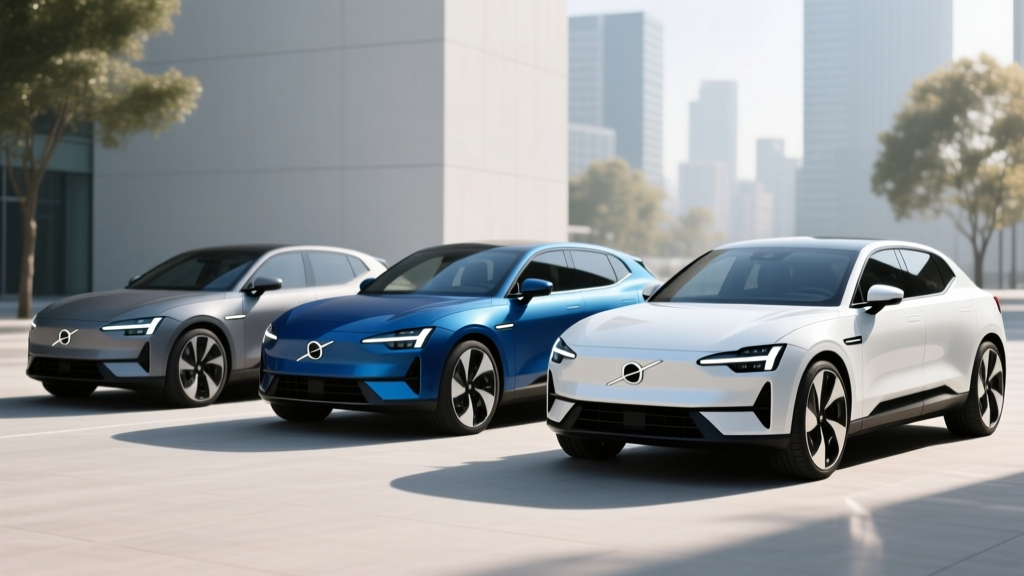
The Volvo EX30 carved out a niche as a premium subcompact electric SUV with Scandinavian design, a usable footprint, and a starting price that undercuts luxury rivals. But at roughly 265 miles of EPA range and a single-motor RWD setup, it isn't the only option in the segment. If you're cross-shopping, you need exact numbers — not marketing copy — on range, charging speed, pricing, and tax-credit eligibility.
Below, we break down five electric cars similar to the Volvo EX30 for the 2026 model year, comparing EPA data, real-world expectations, DC fast-charge curves, and total cost after federal incentives. Every figure is sourced from the EPA, manufacturer spec sheets, or IRS guidance.
Quick Verdict: Which EX30 Alternative Fits You?
Choose the Hyundai Kona Electric if you want the longest EPA range (261 mi) in a practical, front-wheel-drive crossover with strong value.
Choose the Kia Niro EV if cargo space and back-seat comfort matter more than 0-60 times.
Choose the Mini Cooper SE if you prioritize urban agility and design over range.
Choose the Smart #1 if you want a premium, rear-wheel-drive feel close to the EX30's positioning.
Choose the Chevrolet Equinox EV if you're willing to step up in size for over 300 miles of range and a strong tax-credit position.
Side-by-Side Spec Table
| Spec | Volvo EX30 Single Motor | Hyundai Kona Electric SEL | Kia Niro EV Wind | Mini Cooper SE | Chevrolet Equinox EV LT |
|---|---|---|---|---|---|
| EPA Range | 265 mi | 261 mi | 239 mi | 180 mi | 319 mi |
| Battery (usable) | 69 kWh (NMC) | 65.4 kWh (NMC) | 64.8 kWh (NMC) | 54.2 kWh (NMC) | 85 kWh (NMC) |
| Drivetrain | RWD | FWD | FWD | FWD | FWD |
| Horsepower | 272 hp | 201 hp | 201 hp | 218 hp | 220 hp |
| 0-60 mph | 5.1 sec | 7.6 sec | 7.2 sec | 6.7 sec | 7.8 sec |
| Peak DC Charge | 153 kW | 100 kW | 85 kW | 95 kW | 150 kW |
| 10-80% DC Time | ~26 min | ~43 min | ~44 min | ~30 min | ~28 min |
| Level 2 Rate | 11 kW | 10.9 kW | 10.9 kW | 11 kW | 11.5 kW |
| MPGe (combined) | 104 MPGe | 105 MPGe | 113 MPGe | 110 MPGe | 95 MPGe |
| Cargo (behind rear) | 11.2 cu ft | 25.5 cu ft | 23.7 cu ft | 7.6 cu ft | 26.4 cu ft |
| Base MSRP | $36,345 | $33,975 | $39,600 | $30,900 | $34,900 |
| Battery Warranty | 8 yr / 100,000 mi | 10 yr / 100,000 mi | 10 yr / 100,000 mi | 8 yr / 100,000 mi | 8 yr / 100,000 mi |
Real-World Range: What the EPA Sticker Doesn't Tell You
Volvo EX30 (EPA 265 mi): Expect ~220-240 mi in mixed highway driving at 70 mph. Cold-weather (below 32°F) drops can reach 25-30%, yielding ~185-200 mi on winter road trips. The heat pump on higher trims mitigates this somewhat.
Hyundai Kona Electric (EPA 261 mi): Real-world highway: ~215-235 mi. Cold weather: ~180-200 mi. The Kona's front-motor layout and conservative regen tuning give it predictable range.
Kia Niro EV (EPA 239 mi): Real-world highway: ~195-215 mi. Cold weather: ~165-185 mi. The Niro's taller, boxier shape creates more aerodynamic drag at speed.
Mini Cooper SE (EPA 180 mi): Real-world highway: ~145-160 mi. Cold weather: ~120-140 mi. This is strictly an urban commuter — plan accordingly.
Chevrolet Equinox EV (EPA 319 mi): Real-world highway: ~260-285 mi. Cold weather: ~220-245 mi. The Ultium platform's larger pack gives it a real-world cushion the others lack.
None of these vehicles use LFP chemistry in their US-market packs — all rely on NMC (nickel-manganese-cobalt) formulations, which offer higher energy density but require more careful state-of-charge management. For daily use, charge to 80% unless you need full range for a trip; this preserves long-term battery health.
Charging Speed: DC Fast Charge and Home Level 2
| Vehicle | Peak DC kW | 10-80% Time | Sustained Rate (10-60%) | Level 2 (kW) | Level 2 Miles/Hr |
|---|---|---|---|---|---|
| Volvo EX30 | 153 kW | ~26 min | ~110-130 kW | 11 kW | ~38 mi/hr |
| Hyundai Kona Electric | 100 kW | ~43 min | ~75-90 kW | 10.9 kW | ~37 mi/hr |
| Kia Niro EV | 85 kW | ~44 min | ~65-80 kW | 10.9 kW | ~37 mi/hr |
| Mini Cooper SE | 95 kW | ~30 min | ~70-85 kW | 11 kW | ~38 mi/hr |
| Chevrolet Equinox EV | 150 kW | ~28 min | ~115-140 kW | 11.5 kW | ~34 mi/hr |
A note on charge curves: peak kW is the maximum the vehicle can accept at low state-of-charge — typically between 10-30%. Above 60%, all of these vehicles taper significantly. The EX30 and Equinox EV sustain higher rates through the mid-range, making them noticeably faster on road trips. The Kona and Niro, limited to 100 kW and 85 kW respectively, will keep you at the charger longer — a real factor if you road-trip more than a few times per year.
For home charging, all five accept roughly 11 kW on a Level 2 (240V) circuit. That means a full overnight charge from 10% takes about 6-8 hours depending on pack size. If you're installing a home charger, budget $500-$2,000 for a 48-amp hardwired unit plus electrician labor; a panel upgrade (to 200A service) can add $1,500-$3,000 if needed.
Pricing and Federal Tax Credit Eligibility
| Vehicle | Base MSRP | As-Tested (mid trim) | §30D Credit Eligibility | Effective Price (est.) |
|---|---|---|---|---|
| Volvo EX30 Single Motor Plus | $36,345 | $40,895 | Partial — battery sourcing may limit to $3,750 | ~$32,595 - $37,145 |
| Hyundai Kona Electric SEL | $33,975 | $37,475 | Eligible for $7,500 (income/MSRP dependent) | ~$26,475 - $29,975 |
| Kia Niro EV Wind | $39,600 | $43,100 | Eligible for $7,500 (income/MSRP dependent) | ~$32,100 - $35,600 |
| Mini Cooper SE Signature | $30,900 | $34,400 | Eligible for $7,500 (income/MSRP dependent) | ~$23,400 - $26,900 |
| Chevrolet Equinox EV 2LT | $34,900 | $38,900 | Eligible for $7,500 (income/MSRP dependent) | ~$27,400 - $31,400 |
The IRS §30D federal tax credit offers up to $7,500, but eligibility hinges on three factors that change yearly:
- MSRP cap: SUVs/wagons must be under $80,000; sedans under $55,000. All five vehicles here qualify.
- Buyer income cap: Modified AGI must not exceed $150,000 (single), $225,000 (head of household), or $300,000 (joint).
- Battery sourcing: Critical minerals and battery components must meet increasing domestic/free-trade-partner thresholds. Volvo's CATL-supplied cells in the standard-range EX30 have faced sourcing scrutiny, potentially limiting credit to $3,750 (minerals only) or disqualifying entirely depending on the model year's rules. Hyundai, Kia, and GM have secured US or FTA-partner supply chains, giving them a stronger credit position.
The credit can now be transferred to the dealer at point of sale, reducing your purchase price directly. Confirm eligibility with your dealer and a tax professional before signing — rules tightened significantly between 2024 and 2026.
Who Should Buy Which?
Best for Urban Commuters: Mini Cooper SE
If your daily drive is under 60 miles and you value tight turning radius, quick steering, and iconic design, the Cooper SE's 180-mile range is sufficient. The tradeoff is road-trip viability — you'll plan around chargers carefully.
Best for Range on a Budget: Hyundai Kona Electric
At 261 EPA miles and a post-credit price near $27,000, the Kona delivers the most range per dollar. It's not the quickest or most exciting to drive, but it's honest, practical, and backed by a 10-year battery warranty.
Best for Families: Kia Niro EV
The Niro's 23.7 cu ft cargo area and generous rear legroom (38.4 inches) make it the most livable for child seats and strollers. Range is modest, but for a two-car household where the Niro handles school runs and errands, it works.
Best for Road Trips: Chevrolet Equinox EV
With 319 EPA miles and 150 kW DC charging, the Equinox is the only vehicle here you'd confidently take cross-country without excessive stops. It's larger than the EX30, but the range advantage is substantial.
Best Premium Feel: Volvo EX30
If interior material quality, minimalist design, and brand cachet matter, the EX30 still leads. Its 265-mile range and 153 kW charging are competent, though the small cargo area (11.2 cu ft) and touchscreen-heavy controls draw valid criticism.
Pros and Cons at a Glance
Volvo EX30 Pros
- Premium Scandinavian interior at a sub-$40K price
- Quick 5.1-second 0-60 with RWD engagement
- 153 kW DC charging is fast for the segment
- Compact footprint ideal for city parking
Volvo EX30 Cons
- Tiny 11.2 cu ft cargo area limits practicality
- Almost all controls buried in touchscreen
- Tax credit uncertain due to battery sourcing
- Rear seat is tight for adults over 5'10"
Hyundai Kona Electric Pros
- 261-mile range at an affordable price point
- 10-year/100,000-mile battery warranty
- 25.5 cu ft cargo area is highly usable
- Strong §30D tax credit eligibility
Hyundai Kona Electric Cons
- 100 kW DC charging is slow for road trips
- FWD layout less engaging than RWD rivals
- Interior materials feel budget-tier vs. Volvo
- 7.6-second 0-60 is leisurely
Chevrolet Equinox EV Pros
- 319-mile EPA range — class-leading
- 150 kW DC fast charging sustains well
- 26.4 cu ft cargo, roomy rear seat
- Strong federal tax credit position
Chevrolet Equinox EV Cons
- Larger footprint — not a true subcompact
- 7.8-second 0-60 is the slowest here
- Infotainment learning curve for new Chevy users
- Base LT trim sparsely equipped
Standout Tech and Notable Drawbacks
Volvo EX30: Runs Google Built-in for infotainment, with Google Maps navigation that integrates charging stops. Volvo's Pilot Assist (Level 2 SAE) handles highway lane centering and adaptive cruise competently, but requires hands on the wheel. Drawback: the single-screen philosophy eliminates physical climate controls, frustrating many owners.
Hyundai Kona Electric: Dual 12.3-inch displays with wireless Apple CarPlay/Android Auto. Hyundai's Highway Driving Assist (Level 2) is smooth and predictable. Drawback: no front trunk (frunk), and the charge port location on the front fascia is vulnerable in minor parking impacts.
Kia Niro EV: Similar tech suite to the Kona, with the addition of a heat pump on higher trims — a meaningful cold-weather efficiency gain. Drawback: the 85 kW charge ceiling feels dated in 2026.
Mini Cooper SE: The round OLED center display is visually striking and responsive. Mini's Driving Assistant (Level 2) covers basics. Drawback: 7.6 cu ft of cargo is hatchback-small; this is a lifestyle vehicle, not a hauler.
Chevrolet Equinox EV: The 17.7-inch diagonal infotainment screen is massive, with Google Built-in and Super Cruise availability on higher trims — GM's hands-off, eyes-on Level 2 system works on over 750,000 miles of mapped highways. Drawback: Super Cruise requires a subscription after the trial period (~$25/month).
Frequently Asked Questions
What is the real-world range of the Volvo EX30?
The EPA rates the EX30 Single Motor at 265 miles. In real-world highway driving at 70 mph, expect 220-240 miles. In cold weather (below freezing), range drops to approximately 185-200 miles. The available heat pump on Plus and Ultra trims helps, but physics wins in deep cold.
How fast does the EX30 charge compared to its rivals?
At 153 kW peak DC, the EX30 charges from 10-80% in roughly 26 minutes. That's competitive with the Equinox EV (150 kW, ~28 min) and significantly faster than the Kona (100 kW, ~43 min) or Niro (85 kW, ~44 min). At home on Level 2, the EX30 adds about 38 miles of range per hour of charging.
Does the Volvo EX30 qualify for the $7,500 federal tax credit?
Possibly — it depends on battery sourcing rules for the specific model year. The standard-range EX30 uses CATL cells, which have faced scrutiny under §30D's critical-mineral and battery-component requirements. As of 2026, the EX30 may qualify for $3,750 (half credit) or the full $7,500 depending on Volvo's supply-chain adjustments. Always verify with your dealer and consult fueleconomy.gov before purchasing.
Is the Volvo EX30 worth buying over the Hyundai Kona Electric?
If you value interior quality, brand prestige, and a slightly faster charge, yes — the EX30 is the more premium experience. If you prioritize cargo space (25.5 vs. 11.2 cu ft), tax-credit certainty, a longer battery warranty (10 vs. 8 years), and a lower effective price, the Kona is the more pragmatic choice.
Which of these EVs is best for cold-weather driving?
The Chevrolet Equinox EV, thanks to its large 85 kWh battery providing a buffer against cold-weather range loss, plus available heated seats and a heat pump. Among the subcompacts, the Kia Niro EV with its available heat pump is the better cold-weather pick. All EVs lose 20-30% range in freezing temperatures — preconditioning the battery while plugged in mitigates this.
What does the battery warranty actually cover?
All five vehicles include an 8-year/100,000-mile battery warranty (Hyundai and Kia extend to 10 years). Under federal mandate, the warranty guarantees the battery will retain at least 70% of its original capacity. If degradation exceeds 30% within the warranty period, the manufacturer must repair or replace the pack at no cost.