Should You Buy a Used EV in 2026?
Yes — if you verify battery State of Health (SoH) above 85%, confirm your home or workplace charging access, and target models with remaining powertrain warranty. A 2-3 year old used EV like a 2023 Hyundai Ioniq 5 or Tesla Model 3 can save you $8,000–$15,000 off new-car pricing while retaining 90%+ of original range. The used EV federal tax credit (§25E) offers up to $4,000 on vehicles priced under $25,000, making secondhand electric cars genuinely affordable for the first time.
Why Used EVs Are More Viable Than Ever
The secondhand EV market has matured significantly. By 2026, millions of battery electric vehicles (BEVs) from the 2021–2024 model years have entered the used market as early lease returns flood dealer lots. These vehicles benefit from improved battery chemistries — particularly the widespread adoption of lithium iron phosphate (LFP) in standard-range models — that demonstrate slower degradation than earlier nickel manganese cobalt (NMC) packs.
According to fueleconomy.gov, a 2023 Tesla Model 3 Standard Range (LFP battery, 60 kWh usable) originally rated at 272 miles EPA still delivers approximately 250–258 real-world miles after 40,000 miles of typical use — roughly 5–8% degradation. That's a far cry from the 20%+ losses seen in early 2013–2016 Nissan Leafs with passive air-cooled batteries.
The economics also favor buying secondhand. EV depreciation has been steep: a 2023 Chevrolet Bolt EUV that stickered at $33,500 now trades between $17,000–$21,000 depending on mileage. That steep drop is painful for the original buyer but creates exceptional value for the second owner who gets a 247-mile EPA range EV for under $20K.
Real Costs: Used EV vs. Used Gas Car
Let's compare the five-year ownership cost of a representative used electric car against a comparable used gas vehicle. We'll use a 2023 Hyundai Ioniq 5 SEL (used, ~$26,000) versus a 2023 Toyota RAV4 LE AWD (used, ~$27,000).
| Category | 2023 Ioniq 5 SEL (Used EV) | 2023 RAV4 LE AWD (Used Gas) |
|---|---|---|
| Purchase Price | $26,000 | $27,000 |
| Federal Tax Credit (§25E) | −$4,000 | $0 |
| Effective Purchase | $22,000 | $27,000 |
| Fuel/Energy (5 yrs) | $3,750 (home L2 @ $0.14/kWh) | $10,125 (30 MPG @ $3.60/gal) |
| Maintenance (5 yrs) | $1,200 | $3,500 |
| Insurance (5 yrs) | $9,500 | $7,250 |
| Estimated Depreciation | $7,000 | $8,500 |
| Total 5-Year Cost | $36,450 | $56,375 |
The used EV wins by roughly $20,000 over five years, driven primarily by the §25E credit, dramatically lower energy costs, and minimal maintenance (no oil changes, fewer brake replacements due to regenerative braking, no transmission fluid). Insurance remains the one category where the EV costs more — typically 15–25% higher premiums due to elevated repair costs after collisions.
Battery Health: The #1 Factor in a Secondhand EV Purchase
When evaluating electric cars second hand, battery State of Health (SoH) is the single most important metric. SoH represents the battery's current maximum capacity relative to its original factory capacity, expressed as a percentage.
What to look for:
- SoH ≥ 90%: Excellent — minimal degradation, typical of 1-2 year old vehicles with under 25,000 miles
- SoH 85–89%: Good — normal wear, still delivers strong daily range
- SoH 80–84%: Acceptable — noticeable range reduction, negotiate price accordingly
- SoH < 80%: Caution — may indicate abuse (repeated DC fast charging to 100%, extreme heat exposure), walk away unless price reflects a potential battery replacement ($8,000–$20,000 depending on model)
Most manufacturers warranty the battery pack for 8 years/100,000 miles at a minimum 70% capacity retention threshold (some, like Hyundai, warrant at 70% for 10 years/100,000 miles). A 2022 model-year EV in 2026 still has roughly 4 years of federal-mandated battery warranty remaining — significant protection for a used buyer.
How to check SoH:
- Tesla: Service mode (accessible from the software menu) displays current usable capacity in kWh
- Hyundai/Kia: Dealer diagnostic scan reveals SoH; third-party OBD-II readers like OBDeleven can also pull this data
- Nissan Leaf: Dashboard "health bars" — 12 bars = 100%, each lost bar ≈ 8% degradation
- Chevrolet Bolt: Request a "Battery Energy Capacity" readout from a Chevy dealer
- Universal: Apps like Leaf Spy (Nissan) or Tessie (Tesla) provide detailed SoH data
Which Used EVs Offer the Best Value in 2026?
Based on current market pricing, battery durability data, and charging capability, these models represent the strongest secondhand EV values:
| Model (Year) | EPA Range | Battery (kWh) | Peak DC Charge | Used Price Range | Best For |
|---|---|---|---|---|---|
| Tesla Model 3 RWD (2023) | 272 mi | 60 (LFP) | 170 kW | $22,000–$27,000 | Charging network access, efficiency |
| Hyundai Ioniq 5 SEL (2023) | 303 mi | 77.4 (NMC) | 235 kW | $24,000–$29,000 | Ultra-fast charging, interior space |
| Chevrolet Bolt EUV (2023) | 247 mi | 65 (NMC) | 55 kW | $17,000–$21,000 | Budget buyers, daily commuting |
| Ford Mustang Mach-E Select (2022) | 247 mi | 70 (NMC) | 115 kW | $22,000–$27,000 | SUV buyers, BlueCruise tech |
| Volkswagen ID.4 Pro (2023) | 275 mi | 82 (NMC) | 135 kW | $23,000–$28,000 | Family hauling, comfort |
Critical note on the Bolt EUV: Its 55 kW peak DC fast charge rate means a 10–80% session takes roughly 45 minutes — far slower than the Ioniq 5's ~18 minutes at peak. If you road-trip frequently, prioritize charge speed. If you primarily commute and charge at home, the Bolt's low price outweighs its slow DC charging.
Charging Access: The Make-or-Break Question
Before purchasing any used EV, honestly assess your charging situation. Home charging is the backbone of convenient EV ownership — the Department of Energy estimates that over 80% of EV charging happens at home.
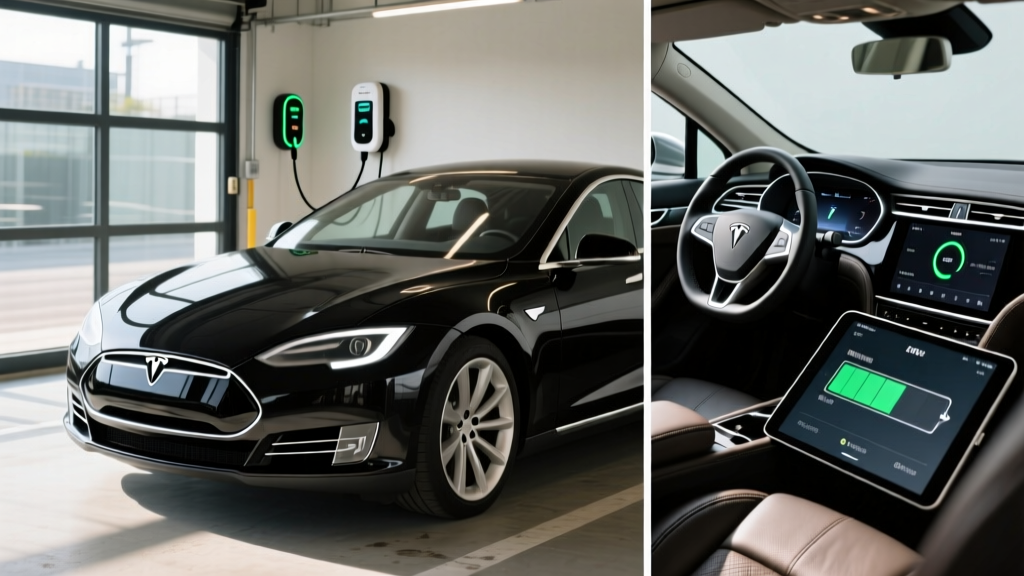
If you have a garage or dedicated parking with a 240V outlet: You're well-positioned. A Level 2 home charger (7.2–11.5 kW) adds 25–44 miles of range per hour of charging, easily replenishing a full day's driving overnight. Budget $500–$1,200 for a quality Level 2 EVSE (ChargePoint Home Flex, Emporia Level 2, or Tesla Wall Connector) and $600–$2,500 for professional installation by a licensed electrician, depending on whether your electrical panel needs an upgrade.
If you live in an apartment or lack dedicated parking: Used EV ownership is still possible but requires planning. Check for workplace charging (many employers offer free or subsidized Level 2 access), map nearby public Level 2 and DC fast chargers using PlugShare or the Alternative Fuels Data Center, and consider whether your daily driving (typically 30–40 miles round trip for most Americans) can be covered by 1–2 weekly public charging sessions.
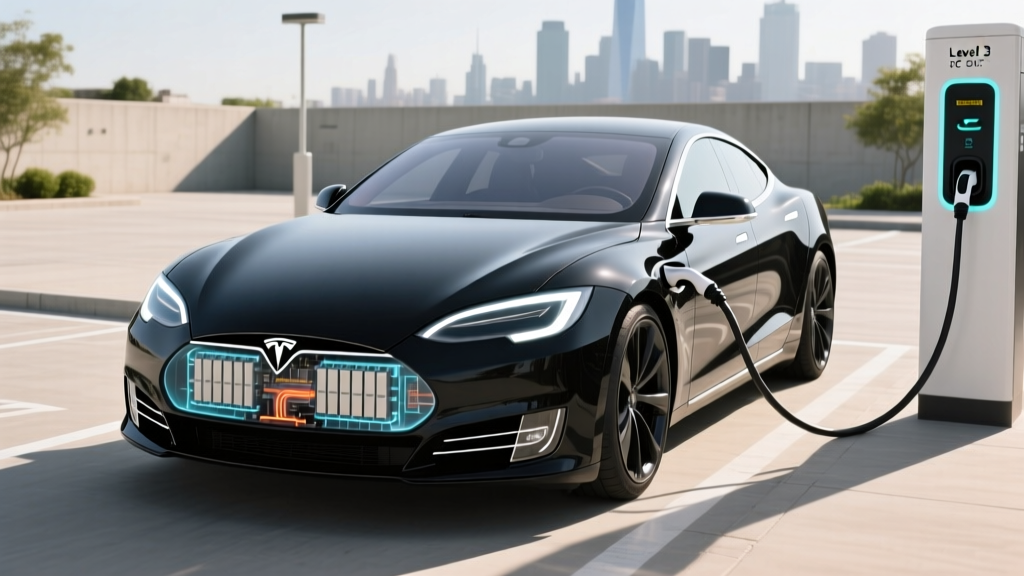
Real-world charging cost: At the US average residential electricity rate of ~$0.16/kWh, fully charging a 77 kWh battery (Ioniq 5 Long Range) costs about $12.32 for roughly 280 real-world miles — approximately $0.044 per mile. Compare that to a 30 MPG gas car at $3.60/gallon: $0.12 per mile. Over 15,000 annual miles, home EV charging saves roughly $1,140 per year in fuel costs alone.
The §25E Used EV Tax Credit: Up to $4,000
The IRS §25E credit makes electric cars second hand significantly more affordable. Here are the requirements for 2026:
- Credit amount: 30% of the sale price, up to a maximum of $4,000
- Vehicle price cap: Sale price must not exceed $25,000
- Vehicle age: Must be at least 2 model years old (a 2024 model or older in calendar year 2026)
- Buyer income limits: Modified AGI ≤ $75,000 (single), $112,500 (head of household), $150,000 (joint)
- Dealer requirement: Must be purchased from a licensed dealer (private-party sales do not qualify)
- Claim frequency: Once per buyer every 3 years
- Point-of-sale transfer: Available — you can apply the credit as a down-payment reduction at purchase
This means a $24,000 used 2023 Bolt EUV could effectively cost $20,000 after the credit. Combined with the vehicle's already-low used pricing, the Bolt becomes one of the cheapest ways into a 240+ mile EV in 2026.
Common Misconceptions About Used EVs
| Myth | Fact |
|---|---|
| "Used EV batteries are ticking time bombs" | Modern liquid-cooled packs from 2020+ degrade 5–10% in the first 3 years, then plateau. Most 2022–2023 models still carry 4–6 years of battery warranty. Out-of-warranty replacement costs $8,000–$18,000 depending on pack size — but full replacements remain rare. |
| "A used EV won't have enough range" | A 2023 Model 3 with 8% degradation still delivers ~250 real-world miles — more than enough for 95% of American daily driving patterns (average commute: 16 miles one way per the Census Bureau). |
| "Charging infrastructure is too unreliable" | Tesla's Supercharger network (now open to NACS-equipped non-Teslas) maintains 99%+ uptime. Electrify America and ChargePoint have improved reliability significantly since 2023. For daily driving, home charging eliminates public-charger dependency entirely. |
| "Used EVs cost more to insure" | Partially true — EV insurance runs 15–25% higher on average due to collision repair costs. But the lower purchase price and fuel savings typically offset the premium difference within the first 2 years of ownership. |
| "I need a Tesla to road-trip" | By 2026, Ford, GM, Rivian, Hyundai, and others have NACS ports and Supercharger access. The used 2024 F-150 Lightning or 2024 Ioniq 5 (with NACS adapter) can use Tesla's network, eliminating the road-trip advantage Tesla once held exclusively. |
Cold Weather, Highway Driving, and Real-World Range
EPA range estimates are generated under controlled laboratory conditions. Real-world range varies based on temperature, speed, terrain, and climate control use. Used EV buyers must understand this gap.
Highway driving at 70+ mph: Expect 85–90% of EPA range in moderate temperatures. A 303-mile EPA Ioniq 5 delivers roughly 255–270 miles on a flat highway at 70 mph.
Cold weather (below 32°F): Battery chemistry slows in cold temperatures, and cabin heating draws significant energy. Expect 65–80% of EPA range depending on severity. A 272-mile Model 3 in a Minnesota January may deliver 180–210 miles. Models equipped with a heat pump (standard on most 2022+ Teslas, Hyundais, and Kias) reduce this penalty by 10–15% compared to resistive heating systems.
Practical advice: If your daily round trip is 60 miles and you live in a cold climate, target a used EV with at least 250 miles of EPA range to maintain a comfortable buffer year-round. If your commute is under 30 miles round trip, even a shorter-range used EV like the Bolt (247 mi EPA) provides ample margin.
Decision Framework: Is a Used EV Right for You?
Choose a used EV if:
- You have access to Level 2 home or workplace charging
- Your daily driving is under 80 miles round trip (covers ~95% of US drivers)
- Your household income falls within §25E limits (≤$75K single / $150K joint)
- You want to minimize fuel and maintenance costs
- You're buying a 2021+ model with remaining battery warranty
Consider a used hybrid (HEV/PHEV) instead if:
- You have no reliable access to home or workplace charging
- You regularly drive 200+ miles in a single day through areas with sparse charging infrastructure
- You live in an extremely cold climate (consistent sub-0°F winters) and cannot garage your vehicle
- Your budget is under $12,000 — the used hybrid market offers more options at this price point
Wait or buy new if:
- You need the full $7,500 §30D new-vehicle credit and your income disqualifies you from §25E
- You want the latest ADAS features (2025–2026 models offer meaningfully improved driver-assist capabilities)
- You need a specific model not yet available on the used market in your area
Frequently Asked Questions
How do I check a used EV's battery health before buying?
Request a battery State of Health (SoH) report from the selling dealer or use an OBD-II diagnostic tool specific to the brand. For Teslas, enable Service Mode to view usable kWh. For Nissan Leafs, check the dashboard capacity bars (12 = full health). Third-party services like Recurrent Auto also provide battery health reports. Never buy a used EV without confirming SoH — it's the equivalent of checking compression on a used gas engine.
Are used Teslas a good buy in 2026?
A 2022–2023 Model 3 or Model Y represents strong value, particularly because Tesla's LFP battery packs (in RWD Standard Range trims) demonstrate excellent longevity with minimal degradation. A 2023 Model 3 RWD with 30,000 miles typically trades at $22,000–$27,000 and may qualify for the $4,000 §25E credit if priced at or below $25,000. The Supercharger network access remains a significant advantage for road-trippers. Watch for: suspension wear on early Model Ys, and verify that Full Self-Driving (Supervised) transfers with the vehicle if that feature matters to you.
What happens if the battery fails after I buy a used EV?
Federal law mandates that EV battery warranties transfer to subsequent owners. A 2022 model-year EV carries an 8-year/100,000-mile battery warranty from the original in-service date. If you buy a 2022 EV in 2026 with 45,000 miles, you still have roughly 4 years and 55,000 miles of warranty coverage. If the battery drops below 70% capacity during that period, the manufacturer must repair or replace it at no cost. Out-of-warranty replacements cost $8,000–$20,000 depending on pack size and chemistry, but catastrophic failures remain statistically rare in liquid-cooled packs from 2020 onward.
Should I buy from a dealer or a private party?
For the §25E tax credit, you must purchase from a licensed dealer — private-party sales are excluded. Dealers also typically provide a vehicle history report, allow pre-purchase inspections, and may offer certified pre-owned (CPO) warranties. Private-party purchases can be cheaper (no dealer fees) but require more diligence: hire an independent EV-savvy mechanic for a pre-purchase inspection, pull a Carfax yourself, and verify the battery SoH independently.
Do used EVs need more maintenance than gas cars?
Less, not more. EVs eliminate oil changes, spark plugs, timing belts, exhaust systems, and transmission fluid services. Brake pads last significantly longer due to regenerative braking handling most deceleration. The primary maintenance items on a used EV are tire rotations (EVs are heavier and can wear tires faster), cabin air filter replacement, brake fluid checks, and coolant system service for the battery thermal management loop. Expect to spend $200–$400 annually on maintenance for a used EV versus $600–$1,000 for a comparable gas car.
Can I install a home charger for a used EV?
Yes, and most used EV buyers should. A Level 2 charger (240V, 32–48 amps) adds 25–44 miles of range per hour — more than enough to fully replenish overnight. Equipment costs $300–$700 (ChargePoint Home Flex, Emporia, or Tesla Wall Connector are top picks). Professional installation by a licensed electrician runs $600–$2,500 depending on the distance from your electrical panel to the charger location and whether a panel upgrade (from 100A to 200A service) is needed. The federal §30C alternative fuel infrastructure credit may cover up to 30% of installation costs (max $1,000 for residential) if you live in an eligible census tract.