Quick Answer: Which Electric Vehicle Makes Sense for Golf Community Living?
If you live in or near a golf community and need a vehicle primarily for neighborhood travel (under 35 mph roads, 5-15 mile daily trips), a street-legal Low-Speed Vehicle (LSV) like the Club Car Onward or GEM e4 costs $10,000–$18,000, requires no gas, and charges from a standard 120V outlet overnight. For buyers who also need highway capability, cargo space, and modern safety tech, a compact full-size EV like the Chevrolet Equinox EV (EPA 319 mi, ~$33,000 base) or Hyundai Kona Electric (EPA 261 mi, ~$32,975) serves double duty — golf cart on weekdays, real car on weekends. The right choice depends entirely on whether you ever need to exceed 25 mph or leave your community.
Three Vehicle Categories: Golf Carts, LSVs, and Full-Size EVs
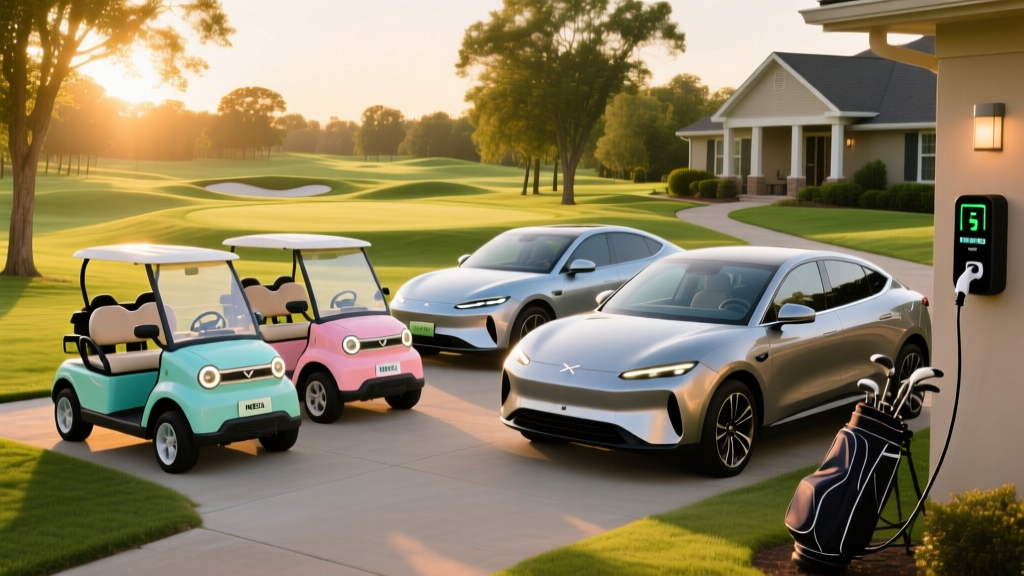
The phrase "electric cars golf" covers three distinct vehicle classes that buyers frequently conflate. Understanding the difference determines what you can legally drive, where you can drive it, and what you'll actually pay.
Golf carts (non-street-legal) are designed for course use and private property. Top speed: 12-15 mph. No VIN, no registration, no insurance required. Prices range from $6,000 to $12,000 new. They cannot legally cross most public roads.
Low-Speed Vehicles (LSVs), also called Neighborhood Electric Vehicles (NEVs), are federally regulated under FMVSS 500. They must have a VIN, seat belts, headlamps, turn signals, and windshields. Top speed is electronically limited to 20-25 mph. They're legal on roads with speed limits up to 35 mph (varies by state). Popular models include the Club Car Onward ($12,000–$16,000), GEM e4/e6 ($14,000–$18,000), and Tomberlin E-Merge ($16,000+). Battery capacity typically ranges from 8 to 15 kWh using either lead-acid or lithium-ion packs.
Full-size EVs are standard passenger vehicles with EPA-rated range, DC fast charging, and highway capability. These are what most EV buyers research. For golf community residents who want one vehicle that handles both neighborhood runs and highway trips, compact and midsize EVs are the practical choice.
| Attribute | Golf Cart (Private) | LSV / NEV (Street-Legal) | Compact Full-Size EV |
|---|---|---|---|
| Top Speed | 12-15 mph | 20-25 mph | 90-130 mph |
| Typical Range | 15-30 miles | 30-60 miles | 230-320 miles (EPA) |
| Battery Capacity | 4-10 kWh | 8-15 kWh | 58-85 kWh |
| Charging | 120V (overnight) | 120V (overnight) | Level 2 + DC fast |
| Street Legal? | No (private property only) | Yes (≤35 mph roads) | Yes (all roads) |
| Price Range (New) | $6,000-$12,000 | $12,000-$18,000 | $29,000-$55,000 |
| Insurance Required? | No | Varies by state | Yes |
Full-Size EVs That Make Sense for Golf Community Residents
If you need a single vehicle that covers community driving and highway trips, these 2026 models balance price, efficiency, and practicality for the golf community lifestyle.
| Model | EPA Range | Battery (kWh) | Peak DC Charge (kW) | 10-80% Time | 0-60 mph | Base MSRP |
|---|---|---|---|---|---|---|
| Chevrolet Equinox EV 2LT | 319 mi | 85 kWh (NMC) | 150 kW | ~30 min | 7.8 sec | $33,000 |
| Hyundai Kona Electric SEL | 261 mi | 64.8 kWh (NMC) | 100 kW | ~43 min | 7.6 sec | $32,975 |
| Tesla Model Y (RWD) | 321 mi | 60 kWh (LFP) | 170 kW | ~25 min | 6.6 sec | $44,990 |
| Nissan Ariya Engage | 289 mi | 63 kWh (NMC) | 130 kW | ~35 min | 7.5 sec | $39,590 |
Real-world range caveat: EPA figures assume mixed driving at moderate temperatures. In hot Southern climates (Arizona, Florida, Texas — where many golf communities are concentrated), expect 5-10% range reduction when running A/C continuously. In cold weather (below 40°F), plan for 20-30% loss. Highway driving at 70+ mph reduces range by roughly 15-20% compared to the EPA combined figure. For the Equinox EV's 319-mile EPA rating, expect approximately 260-280 miles on a highway road trip in mild weather, and as low as 220 miles in freezing temperatures.
Cost Breakdown: Electric vs. Gas for the Golf Community Lifestyle
Golf community residents typically drive 8,000-12,000 miles per year — below the national average of ~14,000 miles. Many trips are short (2-5 miles to the clubhouse, grocery store, or neighboring streets). This driving pattern actually favors EVs because short trips are where gas cars are least efficient (cold-engine penalty, idling) and EVs are most efficient.
| Cost Category | Chevy Equinox EV 2LT | Toyota RAV4 Gas (AWD LE) | 5-Year Difference |
|---|---|---|---|
| Purchase Price (MSRP) | $33,000 | $30,500 | EV +$2,500 |
| Federal Tax Credit (§30D) | Up to $7,500* | $0 | EV -$7,500 |
| Fuel/Energy (5 years) | $2,800 (home charging)** | $8,750*** | EV -$5,950 |
| Maintenance (5 years) | $1,200 | $3,500 | EV -$2,300 |
| Insurance (5 years) | $9,500 | $7,500 | EV +$2,000 |
| Net 5-Year Cost | $39,000 | $50,250 | EV saves ~$11,250 |
*§30D tax credit eligibility depends on buyer income (≤$150K single / ≤$300K joint), vehicle MSRP caps ($55K cars / $80K SUVs), and battery critical-mineral and component sourcing requirements. Credit may be applied at point of sale. Always verify current eligibility at IRS.gov and consult a tax professional.
**Based on $0.13/kWh national average electricity rate and 3.2 mi/kWh efficiency. Actual cost varies by utility rate and time-of-use plan.
***Based on $3.50/gallon regular unleaded and 30 MPG combined per fueleconomy.gov.
Charging at Home: What Golf Community Residents Need to Know
Most golf community homes are single-family residences with garages or carports — the ideal scenario for home EV charging. However, some communities have HOA restrictions, shared parking structures, or older electrical panels that complicate installation.
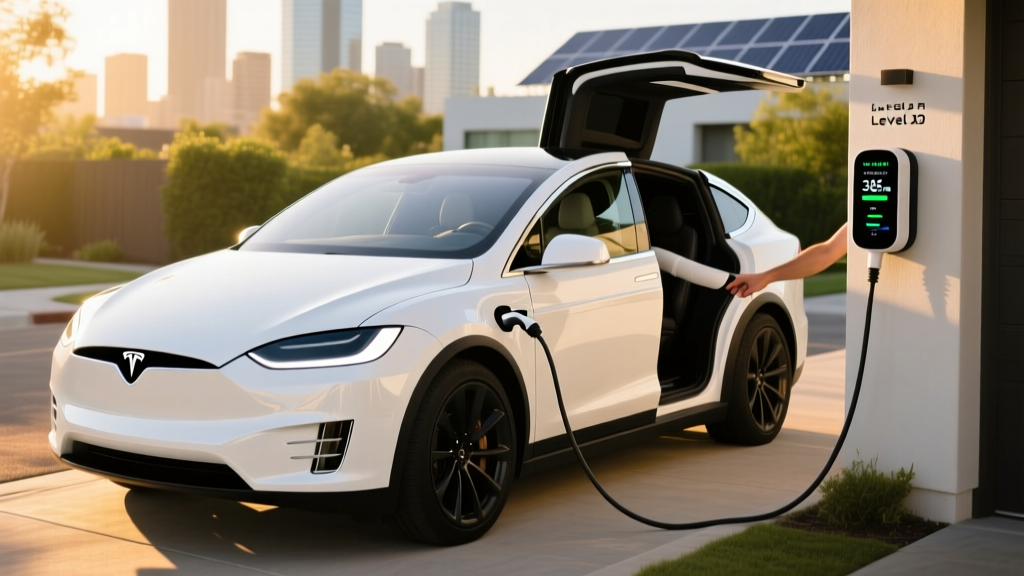
Level 1 charging (120V standard outlet): Adds roughly 3-5 miles of range per hour. For a golf community driver covering 15-20 miles daily, overnight Level 1 charging (12+ hours) fully replenishes daily use. No electrician needed — just plug into a dedicated 15A or 20A outlet. This is adequate if you never take long highway trips.
Level 2 charging (240V): Adds 25-44 miles of range per hour depending on the vehicle's onboard charger (typically 7-11.5 kW). A full overnight charge restores even a depleted battery. Installation requires a licensed electrician, a 40A-60A circuit, and a hardwired wall connector or NEMA 14-50 outlet.
| Component | Low Estimate | High Estimate |
|---|---|---|
| Level 2 EVSE (hardware) | $350 (Emporia, Lectron) | $700 (ChargePoint, Tesla Wall Connector) |
| Electrician labor (240V circuit) | $500 | $2,000 |
| Electrical panel upgrade (if needed) | $0 (panel has capacity) | $2,500 (200A upgrade) |
| Permit & inspection | $50 | $300 |
| Total | $900 | $5,500 |
HOA considerations: Many golf communities have HOAs that restrict exterior modifications. Wall-mounted chargers visible from the street may require architectural review approval. Garage-mounted installations are typically unrestricted. Some newer golf community developments are pre-wired for EV charging — check with your builder or HOA before assuming you'll need a full electrical upgrade.
Panel capacity warning: Homes built before 2000 may have 100A electrical panels. Adding a 40A EV circuit to an already-loaded panel can trip the main breaker. A licensed electrician should perform a load calculation before installation. If an upgrade to 200A is required, budget $1,500-$2,500 for that work alone.
Common Misconceptions About EVs in Golf Communities
| Myth | Fact |
|---|---|
| "I only drive short distances, so an EV is overkill." | Short trips are where EVs shine — no cold-engine fuel waste, instant heat/AC, and regenerative braking on stop-and-go streets. Plus, you'll have range for highway trips when needed. |
| "The battery will need expensive replacement in a few years." | Federal law requires EV battery warranties of at least 8 years/100,000 miles. Modern NMC and LFP packs are designed for 15-20 years of use with gradual degradation (typically 1-2% per year). Replacement is rarely needed within the vehicle's normal lifespan. |
| "I can't charge at home because my HOA won't allow it." | Most HOAs cannot prohibit interior/garage charging. Several states (CA, CO, FL, TX) have "right to charge" laws that override HOA restrictions on EV charging equipment. Check your state statutes. |
| "Electric golf carts and EVs are the same thing." | Golf carts max out at 15 mph and aren't street-legal. LSVs top out at 25 mph and are legal on low-speed roads. Full-size EVs are real passenger vehicles with 230-320+ mile range and full safety equipment. They serve entirely different purposes. |
| "EVs are more expensive to insure." | Partially true — EV insurance premiums average 15-25% higher than equivalent gas cars due to higher repair costs and battery replacement risk. However, the fuel and maintenance savings typically offset this difference within 2-3 years. |
LSV vs. Full-Size EV: The Decision Framework
Choose a Street-Legal LSV (Club Car Onward, GEM e4) If:
- You live in a master-planned golf community with interconnected low-speed roads (≤35 mph)
- Your daily trips are under 10 miles and never require highways
- You already own a gas or full-size EV for longer trips
- You want the lowest possible purchase price ($12,000-$18,000) and zero fuel costs
- You prefer open-air, cart-style driving for social neighborhood travel
Choose a Full-Size EV (Equinox EV, Kona Electric, Model Y) If:
- You need one vehicle for both neighborhood and highway driving
- You travel more than 25 miles daily or take regular road trips
- You need modern safety features (automatic emergency braking, blind-spot monitoring, airbags)
- You carry passengers regularly beyond 2-4 people or need enclosed cargo space
- You want to take advantage of the §30D federal tax credit (up to $7,500 — LSVs generally do not qualify)
- You drive in rain, extreme heat, or cold regularly (full HVAC and weather protection)
First-Time EV Buyer Checklist for Golf Community Residents
If you're transitioning from a gas car to your first full-size EV, here's what to prepare before delivery day:
- Electrical assessment: Have an electrician evaluate your panel capacity and recommend a Level 2 circuit location. Get this done 2-4 weeks before vehicle delivery.
- Utility rate plan: Contact your electric provider about time-of-use (TOU) plans. Charging overnight at off-peak rates can cut your energy cost by 40-60% compared to peak-hour rates.
- HOA notification: Even if approval isn't required, notifying your HOA about garage-mounted charging equipment prevents disputes later.
- Charging network apps: Download PlugShare, ChargePoint, EVgo, and Electrify America apps. While golf community residents charge at home 90%+ of the time, you'll need public DC fast charging for road trips.
- Tax credit documentation: If applying the §30D credit at point of sale (available for 2024-2026 tax years), your dealer will process the IRS Energy Credits Online registration. Keep your tax documents — you'll reconcile the credit on your federal return. Confirm eligibility at IRS.gov.
- Insurance quotes: Get EV-specific quotes before purchasing. Some insurers offer EV discounts; others charge premiums 15-25% above gas equivalents. Shopping around saves $200-$500/year.
Frequently Asked Questions
Do electric golf carts qualify for the federal EV tax credit?
No. The §30D Clean Vehicle Credit applies to highway-capable vehicles with at least four wheels and a gross vehicle weight under 14,000 lbs. Golf carts and most LSVs do not meet these requirements. Full-size EVs like the Equinox EV, Kona Electric, and Model Y do qualify, subject to MSRP caps, buyer income limits, and battery sourcing rules.
Can I drive an LSV to the grocery store outside my golf community?
It depends on the speed limit of the roads between you and the store. LSVs are federally legal on roads with posted speed limits of 35 mph or below, but states can set additional restrictions. If the route requires crossing a 40-45 mph road, it's illegal and unsafe. Check your state's DMV guidelines for LSV operation.
How long does a full-size EV battery last in hot climates like Arizona or Florida?
Modern EV batteries with active thermal management (liquid cooling) handle hot climates well. Tesla, GM, and Hyundai report less than 10% capacity degradation over 150,000+ miles even in hot states. Battery warranties cover at least 70% capacity retention for 8 years/100,000 miles. The bigger concern is fast charging in extreme heat — preconditioning (which most EVs do automatically when navigating to a charger) protects the battery by cooling it before high-power charging begins.
Is a plug-in hybrid (PHEV) a better choice than a full EV for golf community living?
A PHEV like the Toyota RAV4 Prime (42 miles electric-only, 38 MPG gas) makes sense if you lack reliable home charging access or take frequent long road trips where DC fast chargers are sparse. However, for golf community residents with garage charging and short daily trips, a full EV eliminates all gas purchases and reduces maintenance further (no oil changes, fewer brake replacements due to regenerative braking). The PHEV's advantage is flexibility; the EV's advantage is lower running costs.
What's the actual cost per mile to charge an EV at home vs. buying gas?
At the national average electricity rate of $0.13/kWh and an efficiency of 3.2 miles per kWh, home EV charging costs approximately $0.04 per mile. A gas car averaging 30 MPG at $3.50/gallon costs $0.12 per mile. For a golf community driver covering 10,000 miles/year, that's $400/year in electricity vs. $1,200/year in gas — an $800 annual savings on fuel alone. Per fueleconomy.gov, the savings calculator lets you input your exact local rates for a precise comparison.
Whether you opt for a neighborhood LSV or a full-size EV, the economics and practicality of electric driving align well with the golf community lifestyle — short trips, predictable routes, and reliable home charging access. The key is matching the vehicle class to your actual speed and range needs rather than defaulting to either extreme.