The Short Answer on Electric Cars and the Future
Electric cars are no longer a speculative bet — they're a mature, data-proven option for most drivers in 2026. The median new EV delivers 280–330 miles of EPA range, charges from 10–80% in 18–25 minutes at a DC fast charger, and costs roughly $0.04–$0.06 per mile to fuel at home versus $0.12–$0.16 for a comparable gas car. However, EVs still carry higher upfront MSRPs (typically $38,000–$55,000 before incentives), require reliable home or workplace charging access, and lose 20–30% of range in sustained sub-freezing temperatures. The "future" isn't a promise — it's a set of trade-offs you can calculate today.
Where EVs Actually Stand in 2026: The Numbers That Matter
The EV market has consolidated around a few hard benchmarks. If you're evaluating whether electric cars and the future align with your garage, start with these current-generation realities:
- Usable battery capacity: Most mainstream EVs pack 72–100 kWh of usable energy (LFP or NMC chemistry), translating to roughly 3–4 miles per kWh.
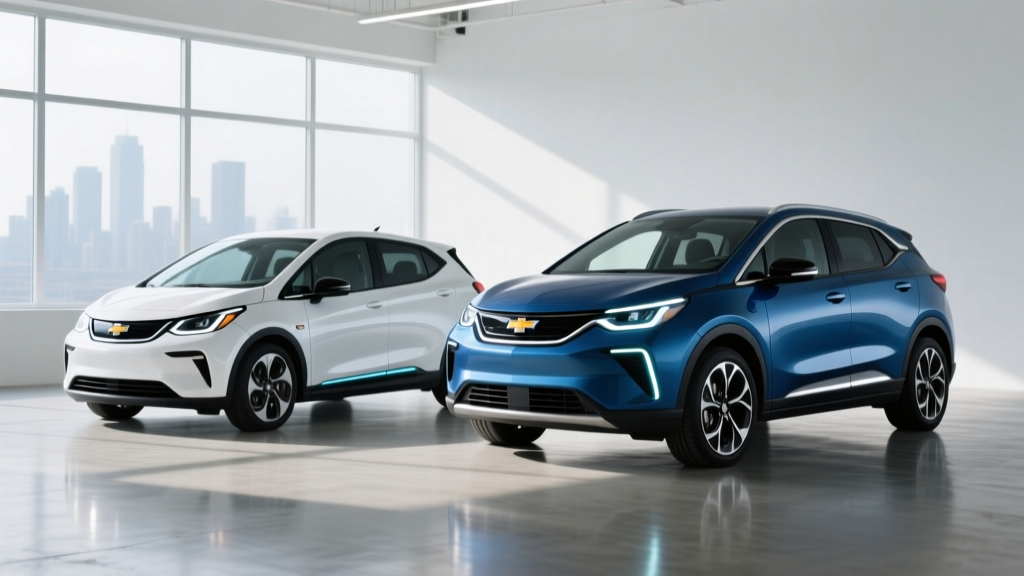
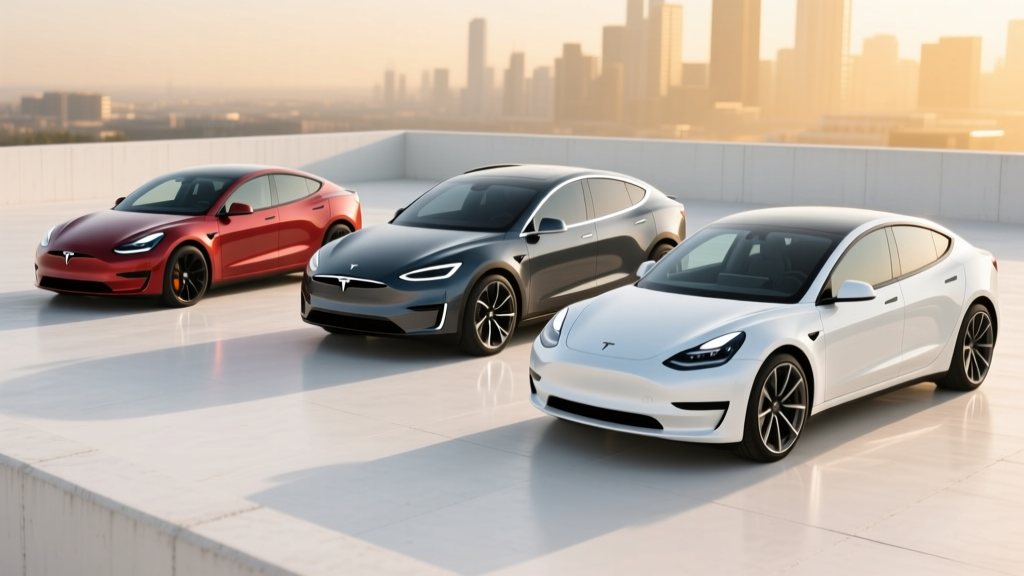
- EPA range: The sweet spot is 270–330 miles. Vehicles like the Tesla Model Y Long Range (320 mi EPA), Hyundai Ioniq 5 (310 mi EPA), and Chevrolet Equinox EV (315 mi EPA) cluster here.
- DC fast charging: Peak rates of 150–250 kW are standard. A 10–80% session typically takes 18–25 minutes, but sustained power tapers sharply above 80% — plan your stops around 80% to avoid wasting time at the tail end of the charge curve.
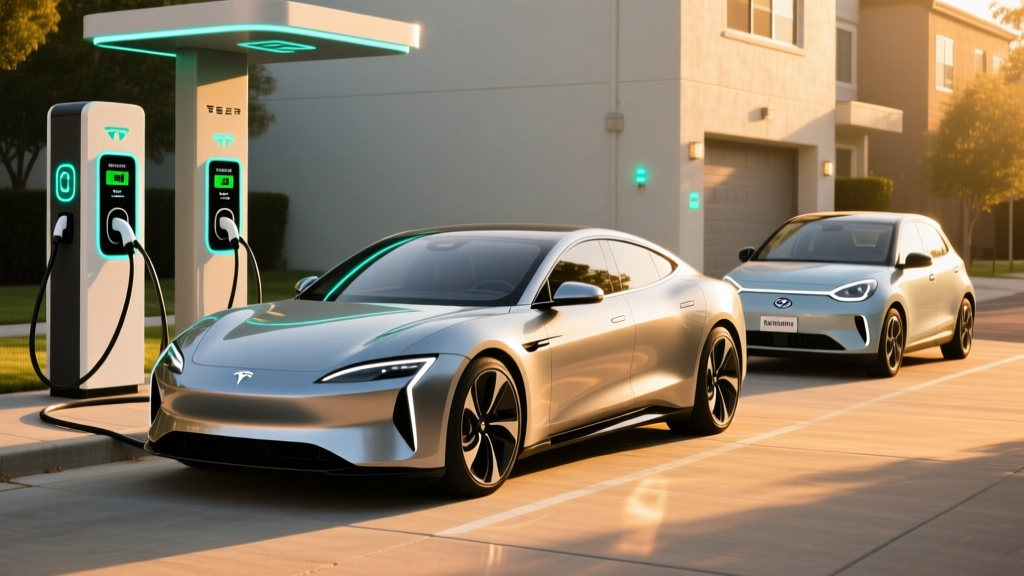
- Level 2 home charging: A 48-amp (11.5 kW) wallbox adds roughly 35–44 miles per hour of charging, fully replenishing a 75 kWh battery overnight in about 7–8 hours.
- Efficiency: Expect 100–130 MPGe combined (25–33 kWh/100 mi) for crossovers; sedans like the Lucid Air or Tesla Model 3 push 130–140 MPGe.
EV vs. Gas vs. Hybrid: A Head-to-Head Cost and Capability Table
The most common question buyers ask is whether an EV, a traditional hybrid (HEV), or a gas car makes the most sense. Here's how a representative vehicle in each category compares using 2026 figures. We're using the Tesla Model Y Long Range AWD (EV), Toyota RAV4 Hybrid (HEV), and Toyota RAV4 LE AWD (gas) as baselines, all popular compact crossovers:
| Metric | Tesla Model Y LR AWD (EV) | Toyota RAV4 Hybrid AWD | Toyota RAV4 LE AWD (Gas) |
|---|---|---|---|
| Base MSRP | $44,990 | $33,975 | $30,495 |
| EPA Range / Tank Range | 320 mi | ~580 mi (14.5 gal) | ~449 mi (14.5 gal) |
| Combined Efficiency | 122 MPGe (28 kWh/100 mi) | 39 MPG combined | 28 MPG combined |
| Fuel/Energy Cost per Mile* | $0.042 (home L2) | $0.087 | $0.121 |
| Annual Fuel Cost (12,000 mi) | ~$504 | ~$1,044 | ~$1,452 |
| 0–60 mph | 4.8 sec | 7.4 sec | 8.2 sec |
| Estimated 5-Yr Maintenance | ~$1,800 | ~$3,200 | ~$3,800 |
| Federal Tax Credit (§30D) | Up to $7,500 (if eligible) | None | None |
*Based on $0.15/kWh national average residential electricity and $3.40/gallon regular unleaded. Public DC fast charging raises EV per-mile cost to roughly $0.08–$0.12.
The EV wins decisively on per-mile operating cost and acceleration, but the hybrid closes the range gap with zero charging infrastructure needed and a lower entry price. Gas remains the cheapest to buy upfront but the most expensive to operate long-term.
The Real Cost of EV Ownership: Purchase, Charging, Insurance, and Maintenance
Buying an EV is a five-year financial equation, not a sticker-price comparison. Here's a realistic cost breakdown for a $45,000 EV versus a $31,000 gas crossover over 60 months and 60,000 miles:
| Cost Category | EV ($45,000 MSRP) | Gas Crossover ($31,000 MSRP) |
|---|---|---|
| Purchase Price (after $7,500 credit) | $37,500 | $31,000 |
| Home Level 2 Charger Install | $1,200–$2,200 | $0 |
| Energy/Fuel (60,000 mi) | $2,520 (home) | $7,260 |
| Maintenance (60,000 mi) | $1,800 | $3,800 |
| Insurance (avg. 5 years) | $9,600 ($160/mo) | $7,800 ($130/mo) |
| Estimated Depreciation (5-yr) | ~45% ($16,875) | ~40% ($12,400) |
| Total 5-Year Cost of Ownership | ~$69,495–$70,495 | ~$62,260 |
Key takeaways from this math:
- The EV closes the gap primarily through fuel and maintenance savings — roughly $6,740 less in combined energy and maintenance over five years.
- Insurance is 15–25% higher on EVs due to costlier collision repairs and battery replacement risk. Get quotes before buying.
- Depreciation remains a wildcard. EV resale values have been volatile; Tesla price cuts and new model launches can compress used values faster than gas equivalents.
- The §30D federal tax credit is not guaranteed. Under current IRS rules, eligibility depends on MSRP caps ($55,000 for sedans, $80,000 for SUVs/trucks), buyer income limits ($150K single / $300K joint AGI), and battery critical-mineral and component sourcing requirements that shift annually. Always verify at fueleconomy.gov before signing.
Real-World Ownership: What Brochures Won't Tell You
Spec sheets tell one story. Daily life tells another. These are the ownership variables that determine whether electric cars and the future actually work for your situation:
Home Charging Access Is Make-or-Break
If you can install a Level 2 charger at home (240V, 48-amp circuit), an EV becomes effortless — you wake up every morning with a "full tank." If you're in an apartment, condo, or street-parking situation with no reliable overnight charging, EV ownership becomes a weekly logistics exercise. Public DC fast charging is viable but costs 2–3× more per mile than home charging and adds 20–30 minutes per session.
Before buying, budget for a licensed electrician to assess your panel. A 200-amp service panel is usually sufficient. Older homes with 100-amp panels may need a $2,000–$4,000 upgrade before adding a 50-amp EV circuit.
Cold Weather Cuts Range — Plan for It
Lithium-ion batteries lose efficiency in cold temperatures, and cabin heating draws heavily from the pack. In sustained 20°F weather, expect a 20–30% reduction from EPA range. A 310-mile EV may deliver only 220–250 real-world winter miles. Vehicles equipped with a heat pump (standard on most 2026 Tesla, Hyundai, and Kia models) recover some of this loss — roughly 10% better cold-weather efficiency than resistive heating.
Charging Curves Are Not Linear
A vehicle advertised as "250 kW DC fast charging" does not sustain that rate for the entire session. Most EVs peak between 10–30% state of charge, then taper progressively. A typical session looks like this:
- 10–30%: Near peak kW (e.g., 230–250 kW)
- 30–60%: Moderate taper (150–180 kW)
- 60–80%: Significant taper (80–120 kW)
- 80–100%: Trickle (under 40 kW) — avoid charging past 80% on road trips
Highway Driving Reduces Range More Than City Driving
Unlike gas cars, EVs are more efficient in stop-and-go traffic (thanks to regenerative braking) and less efficient at sustained 70–80 mph highway speeds due to aerodynamic drag. If your commute is 90% highway, subtract 10–15% from the EPA sticker. City-heavy drivers often match or exceed EPA estimates.
Common EV Myths vs. 2026 Facts
Misinformation still circulates heavily around electric cars and the future. Here's a data-driven correction to the most persistent claims:
| Myth | 2026 Fact |
|---|---|
| "EV batteries need replacing every 5 years." | Modern LFP and NMC packs are warrantied for 8 years / 100,000 miles at ≥70% capacity retention (IRS minimum). Real-world degradation data shows most lose only 8–12% capacity over 150,000 miles. |
| "EVs are worse for the environment because of power plants." | Even on the US average grid mix, an EV produces 50–70% fewer lifetime greenhouse gas emissions than a comparable gas car, per EPA analysis. The grid is decarbonizing yearly, making EVs cleaner over time. |
| "There aren't enough chargers." | The US now has over 70,000 public charging ports. However, reliability and availability vary by network — Tesla Superchargers consistently lead in uptime, while Electrify America and EVgo have improved but still see 5–10% downtime at some stations. |
| "EVs are all $60,000+." | Several 2026 models start under $35,000 MSRP, including the Chevrolet Equinox EV (~$33,000) and Nissan Leaf (from ~$29,000, though with limited range). After a potential $7,500 credit, effective prices drop further. |
| "Self-driving cars are here." | Consumer driver-assist systems (Tesla Autopilot/FSD Supervised, GM Super Cruise, Ford BlueCruise) are SAE Level 2 — the driver must remain fully engaged and supervising at all times. Only Waymo and Zoox operate Level 4 driverless service, and only in geofenced metro areas. |
Decision Framework: Should You Buy an EV, Hybrid, or Stick with Gas?
Use this if-then logic to find your best fit. There is no universally correct answer — only the right answer for your driving pattern, housing situation, and budget.
Choose a Battery EV (BEV) If:
- You have reliable home or workplace Level 2 charging access
- Your daily driving is under 80 miles round-trip (covering 95%+ of your needs on a single charge)
- You take road trips 3–5 times per year or fewer (DC fast charging handles these)
- You want the lowest per-mile fuel and maintenance cost
- You qualify for the §30D tax credit (check income, MSRP, and sourcing rules)
Choose a Plug-In Hybrid (PHEV) If:
- You want 25–45 miles of electric-only range for daily commuting but need gas flexibility for frequent long trips
- You can charge at home but don't want to rely on public charging networks
- You live in an area with extreme cold or limited charging infrastructure
Choose a Traditional Hybrid (HEV) If:
- You have zero charging access (apartment, street parking, no workplace charger)
- You want better fuel economy (35–50 MPG) without any plug-in behavior change
- Your budget is under $35,000 and you can't wait for incentive qualification
Choose a Gas Vehicle If:
- You regularly tow heavy loads (over 5,000 lbs) — EVs can tow but range drops 40–50% under load
- You drive over 300 miles daily in rural areas with sparse charging
- Upfront purchase price is your primary constraint and you drive under 8,000 miles per year (fuel savings won't offset the EV premium quickly)
Frequently Asked Questions
How long do EV batteries actually last?
Most 2026 EV batteries are designed for 150,000–200,000 miles before degradation drops capacity below 70–80%. Federal warranty requirements mandate at least 8 years / 100,000 miles of coverage at ≥70% capacity. LFP (lithium iron phosphate) chemistry, now used in base-trim Tesla Model 3/Y and some Ford and Hyundai models, offers longer cycle life (3,000+ cycles) but lower energy density than NMC. Real-world data from high-mileage fleets shows most packs retaining 85–90% capacity at 100,000 miles.
What does home charger installation actually cost?
A Level 2 wallbox (48-amp, hardwired) typically costs $500–$800 for the unit and $700–$1,500 for professional installation if your electrical panel has capacity. Total: $1,200–$2,300 in most cases. If you need a panel upgrade from 100A to 200A, add $2,000–$4,000. Some utilities offer rebates of $250–$500 that offset equipment costs.
Will I qualify for the $7,500 federal EV tax credit?
It depends on three factors under current §30D rules: (1) Your modified adjusted gross income must be under $150,000 (single) or $300,000 (joint). (2) The vehicle MSRP must be under $55,000 for sedans or $80,000 for SUVs, vans, and trucks. (3) The vehicle must meet battery critical-mineral and component sourcing thresholds that tighten each year. As of 2026, several popular models qualify for the full $7,500, some qualify for $3,750 (partial sourcing), and others qualify for $0. The credit can be transferred to the dealer at point of sale as a purchase-price reduction. Always verify at fueleconomy.gov and consult a tax professional.
Are electric cars and the future really inevitable?
The data says EVs are here to stay — but "inevitable" doesn't mean "right for everyone right now." Battery costs have dropped roughly 90% since 2010, charging infrastructure is expanding at 20–25% annually, and every major automaker has committed to electrified lineups. However, the transition is uneven: rural charging deserts persist, apartment-dwellers still face access barriers, and upfront costs remain higher than gas equivalents for many segments. The future of electric cars is real — your job is to determine whether your personal math supports it today.
What about solid-state batteries? Should I wait?
Solid-state batteries promise higher energy density, faster charging, and improved safety. As of 2026, they remain in limited production (Toyota has begun small-volume deployment in select models in Japan) and are not yet available at scale or at mainstream pricing in the US. Waiting for solid-state means waiting at least 3–5 years for broad availability. Current NMC and LFP batteries are proven, well-warrantied, and sufficient for most drivers' needs today.