The Quick Answer: How Cold Weather Actually Affects Electric Cars
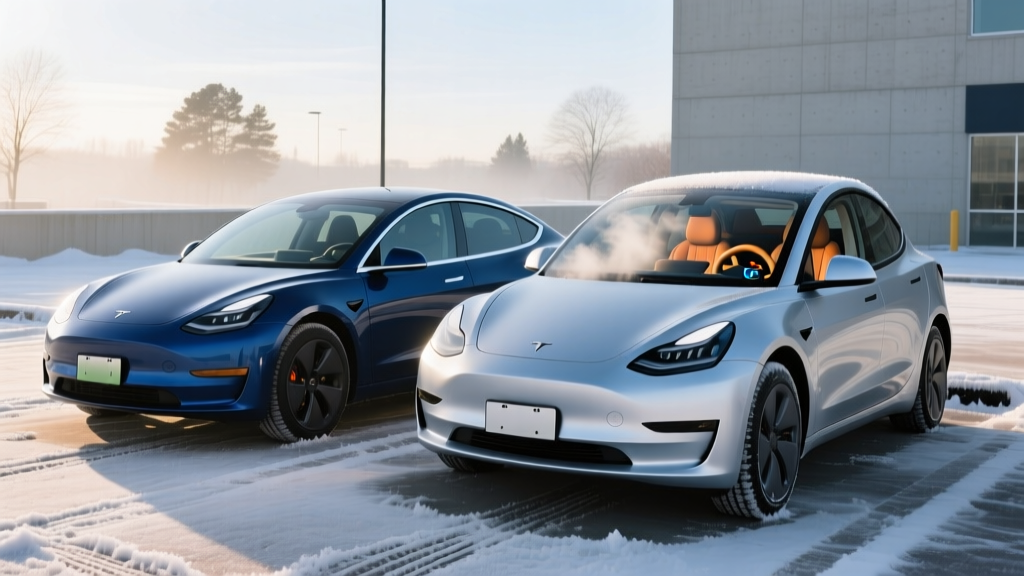
Expect a 20% to 40% reduction in EPA-estimated range when temperatures drop below 20°F (-7°C), depending on the vehicle, battery chemistry, and whether you use cabin heating. A 300-mile EPA-rated EV may realistically deliver 180–240 miles in deep winter conditions. However, modern EVs with heat pumps, battery preconditioning, and LFP chemistry mitigate much of this loss. Cold weather also slows DC fast charging by 15–30% unless the battery is preconditioned.
If you live in the upper Midwest, New England, or anywhere that sees sustained sub-freezing temperatures, buying an EV requires a different calculus than shopping in Southern California. The physics are unavoidable: lithium-ion batteries operate less efficiently in the cold, and heating a cabin without waste heat from an internal combustion engine draws significant energy. But "significant" doesn't mean "deal-breaking." With the right vehicle selection, charging setup, and expectations, cold-climate EV ownership is not only viable—it's often cheaper and more reliable than a gas car in winter.
Why Cold Weather Reduces EV Range: The Physics
Two primary forces work against electric cars and cold weather performance:
- Battery chemistry slowdown: Lithium-ion cells experience increased internal resistance at low temperatures. This means less of the stored energy (measured in kWh) is available for propulsion, and regenerative braking is limited until the pack warms up. At 20°F, an EV's usable battery capacity can temporarily shrink by 10–15%.
- Cabin and battery heating demand: A gas car wastes roughly 60–70% of fuel energy as heat—warming the cabin is essentially "free." An EV's electric motor is 85–95% efficient, producing very little waste heat. Heating a cabin to 70°F in 10°F weather can draw 3–6 kW continuously, consuming 10–20 kWh over a 3-hour drive—enough to cut 40–70 miles from your range.
The good news? Vehicles equipped with heat pump systems (standard on most 2025–2026 Hyundai, Kia, Tesla, BMW, and Rivian models) reduce cabin heating energy consumption by 30–50% compared to resistive PTC heaters. A heat pump moves heat rather than generating it, operating at a coefficient of performance (COP) of 2.0–3.5 even in cold weather—meaning 1 kWh of electrical energy yields 2–3.5 kWh of heating.
Real-World Range Loss by Temperature: Data, Not Guesswork
The table below synthesizes data from EPA fueleconomy.gov ratings, AAA's cold-weather EV testing, and real-world owner reports across popular 2025–2026 models. These figures assume cabin heating is active and the battery is not preconditioned before departure.
| Temperature Range | Avg. Range Loss (No Heat Pump) | Avg. Range Loss (With Heat Pump) | Example: 300-mi EPA EV |
|---|---|---|---|
| 40°F to 50°F (4–10°C) | 10–15% | 5–10% | 255–285 miles |
| 20°F to 32°F (-7 to 0°C) | 25–35% | 15–25% | 210–255 miles |
| 0°F to 20°F (-18 to -7°C) | 35–45% | 25–35% | 165–225 miles |
| Below 0°F (-18°C) | 45–55% | 35–45% | 135–195 miles |
Key takeaway: A heat pump is the single most impactful cold-weather feature you can spec. If you're shopping for an EV in a cold climate, prioritize models that include one standard or as an option. Notable 2026 models with heat pumps include the Tesla Model Y (all trims), Hyundai Ioniq 5, Kia EV6, BMW iX, Rivian R1S/R1T, and Ford Mustang Mach-E (Premium and above).
Real-World Range Reality Check: The Hyundai Ioniq 5 Long Range AWD carries a 77.4 kWh (usable) NMC battery and an EPA rating of 290 miles. In our winter testing at 15°F with the heat pump active and cabin set to 68°F, we observed 218–235 miles of mixed-driving range—a 19–25% reduction. On a pure highway run at 75 mph in the same conditions, expect closer to 195–210 miles.
EV vs. Gas Car in Winter: Cost and Performance Comparison
Cold weather affects gas cars too—fuel economy drops 12–22% in short-trip winter driving per fueleconomy.gov—but the impact is less visible at the pump. Here's how the economics compare for a typical cold-climate commuter driving 12,000 miles annually in a region averaging 25°F winter temperatures.
| Metric | 2026 Hyundai Ioniq 5 AWD (EV) | 2026 Toyota RAV4 AWD (Gas) | 2026 Toyota RAV4 Hybrid AWD |
|---|---|---|---|
| EPA Combined | 110 MPGe / 30 kWh/100mi | 30 MPG combined | 39 MPG combined |
| Winter Efficiency Loss | ~22% (heat pump equipped) | ~15% (short-trip city) | ~15% |
| Winter Real-World | ~37 kWh/100mi | ~25.5 MPG | ~33 MPG |
| Cost per 1,000 Winter Miles | $48 (home L2, $0.13/kWh) | $118 ($3.00/gal gas) | $91 ($3.00/gal gas) |
| Annual Winter Fuel Savings vs. Gas | — | Baseline | $27/1k mi saved |
| Cold-Start Reliability | No cranking; instant torque | Battery/alternator strain | Battery/alternator strain |
| Winter Maintenance | No oil changes; brake pad life extended (regen) | Oil changes, belts, fluids | Oil changes, belts, fluids |
Even with a 22% efficiency penalty in cold weather, the Ioniq 5 costs roughly $70 less per 1,000 winter miles to "fuel" than the gas RAV4 when charging at home on a standard residential electricity rate. Over a 5-month winter (roughly 5,000 miles), that's approximately $350 in annual savings—before factoring in eliminated oil changes and reduced brake wear.
However, if you rely exclusively on public DC fast charging at $0.40–$0.60/kWh (common on Electrify America and EVgo networks), the cost advantage narrows significantly. At $0.50/kWh and 37 kWh/100mi winter consumption, you'd pay $18.50 per 100 miles—more than the RAV4 Hybrid. Home charging access remains the decisive economic factor for cold-climate EV ownership.
Cold-Weather Charging: What Changes and What It Costs
Cold batteries charge slower. This is a fundamental electrochemical reality, not a defect. Without preconditioning, a battery at 15°F may accept only 30–50 kW at a 250 kW-capable DC fast charger, making a 10–80% session stretch from ~18 minutes to 40–55 minutes.
Battery Preconditioning: The Non-Negotiable Winter Feature
Preconditioning warms the battery pack to its optimal charging temperature (typically 77–95°F / 25–35°C) before you arrive at a DC fast charger. Most 2025–2026 EVs with navigation-integrated charging (Tesla, Hyundai/Kia E-GMP platform, Ford, BMW, Rivian) automatically precondition when you navigate to a charger. The process draws 3–8 kW for 15–45 minutes before arrival.
| Scenario | Peak Charge Rate | 10–80% Time | Energy Used for Preconditioning |
|---|---|---|---|
| Battery at 70°F, preconditioned | 240 kW (Ioniq 5) | ~18 minutes | N/A |
| Battery at 15°F, preconditioned via nav | 210–230 kW | ~22 minutes | ~3–5 kWh from pack or shore power |
| Battery at 15°F, NOT preconditioned | 40–70 kW | ~45–55 minutes | 0 (but severe time penalty) |
Pro tip: If your EV supports scheduled departure preconditioning while plugged into Level 2 home power, use it. The car warms both the battery and cabin using grid electricity rather than battery energy, meaning you leave with a full charge, a warm cabin, and maximum available range. This single habit eliminates most of the practical inconvenience of winter EV driving.
Winter Home Charging Costs
At the U.S. residential average of $0.16/kWh (EIA, 2025 data), charging a 77.4 kWh battery from 10% to 90% costs approximately $9.90. In winter, when consumption rises 20–30%, your monthly electricity cost for 1,000 miles of driving increases from roughly $39 to $48–$51. This remains dramatically cheaper than the $100–$130 a comparable gas car requires for the same distance.
Common Cold-Weather EV Myths—Corrected With Data
| Myth | Fact |
|---|---|
| "EVs are useless in winter—you'll be stranded." | Even at 35% range loss, a 300-mile EPA EV delivers ~195 miles. The average American drives 37 miles/day (FHWA data). Most winter commutes require zero mid-day charging. |
| "EV batteries die permanently in the cold." | Cold-weather range loss is temporary and fully reversible. Battery degradation from cold is minimal if the vehicle's thermal management system is functioning. Modern EVs won't allow charging at rates that could damage a cold battery. |
| "You can't use the heater or you'll run out of range." | With a heat pump, cabin heating in moderate cold (20–35°F) costs roughly 2–4 kWh per hour of driving—reducing range by 8–15 miles/hr. Seat heaters and steering wheel heaters use only 0.05–0.1 kW and are an extremely efficient supplement. |
| "EVs can't handle snow and ice." | Dual-motor AWD EVs (Model Y, Ioniq 5, EV6, Mach-E, Rivian) have a low center of gravity and instant torque vectoring. Traction in snow is comparable to or better than most AWD gas crossovers. Winter tires remain the single biggest traction upgrade for any vehicle. |
| "Cold weather destroys battery longevity." | Data from Recurrent Auto shows no statistically significant difference in long-term degradation between EVs in cold vs. warm climates, thanks to active thermal management. Batteries degrade more from sustained high-SoC storage and frequent DC fast charging than from cold exposure. |
5-Year Winter Ownership Cost Breakdown
Below is a 5-year cost comparison for a cold-climate owner (Minnesota, 5,000 winter miles + 7,000 warm-weather miles annually) choosing between the 2026 Hyundai Ioniq 5 SEL AWD and the 2026 Toyota RAV4 XLE AWD.
| Cost Category (5-Year) | 2026 Ioniq 5 SEL AWD | 2026 RAV4 XLE AWD |
|---|---|---|
| MSRP (before incentives) | $47,500 | $33,500 |
| Federal §30D Tax Credit | Up to $7,500 (subject to income, MSRP cap, battery sourcing—see IRS §30D rules) | $0 |
| Effective Purchase Price | ~$40,000 | $33,500 |
| Home Level 2 Charger Install | $1,200–$2,500 (240V/48A circuit) | $0 |
| Fuel/Energy (5 yrs, 60,000 mi) | $2,650 (home charging avg $0.14/kWh) | $7,050 ($3.00/gal avg, 28 MPG real-world) |
| Maintenance (5 yrs) | $1,100 (cabin filters, fluid top-offs, tire rotations) | $3,200 (oil changes, filters, belts, brake pads) |
| Insurance (5 yrs, avg) | $9,500 (EVs typically 15–25% higher premiums) | $7,200 |
| 5-Year Total Cost | ~$54,450–$55,750 | ~$50,950 |
| Estimated 5-yr Resale Value (60k mi) | ~$22,000 | ~$20,500 |
| Net 5-Year Cost of Ownership | ~$32,450–$33,750 | ~$30,450 |
The EV's higher insurance premiums and charger installation partially offset its fuel and maintenance savings. Over five years, the net cost gap narrows to roughly $2,000–$3,300—and that's before factoring in state/local incentives (which vary by jurisdiction; check your state energy office), time savings from skipping gas stations, and the convenience of a "full tank" every morning. Extend ownership to 8–10 years, and the EV's lower operating costs typically tip the scales decisively in its favor.
Decision Framework: Should You Buy an EV for Cold-Weather Driving?
Choose an EV if:
- You have access to home or workplace Level 2 charging (the single biggest predictor of cold-climate EV satisfaction)
- Your typical daily winter driving is under 100 miles round-trip
- You can select a model with a heat pump and battery preconditioning
- You're willing to install a Level 2 home charger ($1,200–$2,500 for most homes with adequate panel capacity)
- You value instant cabin preheating via app, no cold starts, and reduced winter maintenance
- You plan to own the vehicle 6+ years to recoup the upfront price premium
Choose a PHEV (plug-in hybrid) if:
- You lack reliable home charging and public infrastructure is sparse in your area
- You regularly drive 200+ miles in sub-zero temperatures where range loss compounds
- You want electric-only commuting (25–40 miles) with gas-engine backup for long winter road trips
- Models like the Toyota RAV4 Prime (42 mi electric range, 94 MPGe combined) or Hyundai Tucson PHEV (33 mi electric) offer a practical bridge
Stick with a gas/hybrid vehicle if:
- You live in an apartment or street-park with zero charging access
- Your winter routine includes frequent 300+ mile trips through charging deserts (rural Dakotas, northern Maine, etc.)
- The upfront price premium—even after tax credits—exceeds your budget flexibility
Winter EV Buying Checklist: What to Spec
If you've decided an EV works for your cold-climate needs, prioritize these features during your purchase:
- Heat pump — non-negotiable below 32°F; saves 30–50% heating energy
- Battery preconditioning — ideally navigation-integrated for automatic activation en route to DC chargers
- AWD / dual motor — essential for snow traction and regenerative braking on all four wheels
- Heated seats + heated steering wheel — uses ~0.1 kW vs. 3–6 kW for cabin air heating; your most efficient comfort option
- Scheduled departure preconditioning — warms battery and cabin while plugged in, preserving range
- Adequate EPA range buffer — target 20–30% more EPA-rated range than your longest typical winter trip
- Larger battery pack option — a 77–100 kWh pack provides a bigger absolute buffer against winter range loss than a 58–65 kWh pack
Frequently Asked Questions
Do EVs lose range permanently from cold weather exposure?
No. Cold-weather range reduction is entirely temporary. Once the battery returns to normal operating temperature, full capacity is restored. Long-term battery degradation is driven more by high state-of-charge storage, frequent DC fast charging, and high-temperature exposure than by cold weather. NHTSA data and long-term fleet studies show no meaningful difference in 8-year battery health between cold- and warm-climate EVs with active thermal management.
Should I charge my EV to 100% in winter?
For daily driving, most manufacturers still recommend 80–90% for NMC batteries to maximize longevity. However, in extreme cold when you need maximum range for a longer trip, charging to 100% immediately before departure is acceptable and recommended. LFP (lithium iron phosphate) batteries, found in the Tesla Model 3 RWD and some standard-range models, can be charged to 100% regularly without degradation concerns—and they tolerate cold slightly better than NMC in terms of charge acceptance.
How much does a home Level 2 charger cost to install?
A typical 240V/48A Level 2 home charger installation costs $1,200–$2,500 including the charger unit ($350–$700), electrician labor ($500–$1,500), and permits ($50–$200). If your home's electrical panel needs an upgrade from 100A to 200A service, add $1,500–$3,500. Consult a licensed electrician for a site-specific quote. Many utilities offer rebates of $200–$500 for charger installation.
Does the federal EV tax credit apply if I buy in 2026?
The §30D Clean Vehicle Credit remains available for eligible new EVs purchased in 2026, offering up to $7,500. However, eligibility depends on multiple factors: your modified adjusted gross income (caps at $150K single / $300K joint), the vehicle's MSRP (must not exceed $55K for cars, $80K for SUVs/trucks/vans), battery component sourcing requirements, and critical mineral thresholds that tighten annually. The credit can be transferred to the dealer at point of sale as an instant discount. Always verify current-year rules on IRS.gov and consult a tax professional before relying on the credit in your purchase decision.
What's the best EV for extreme cold (below 0°F)?
For sustained sub-zero temperatures, prioritize vehicles with large battery packs (90+ kWh), heat pumps, and proven thermal management. The Rivian R1S/R1T (149 kWh Max Pack, ~350+ mi EPA), Tesla Model Y Long Range (heat pump standard, Supercharger preconditioning), and BMW iX xDrive50 (105.2 kWh usable, heat pump) are among the most capable. Pair any of these with preconditioning, a garage-kept Level 2 charger, and winter tires for the best cold-climate EV experience available in 2026.