Quick Answer: Electric Car Recharge Time
Level 1 (120V household outlet): 3–5 miles of range per hour — a full charge from empty takes 40–60+ hours for a typical 250–300 mile EV.
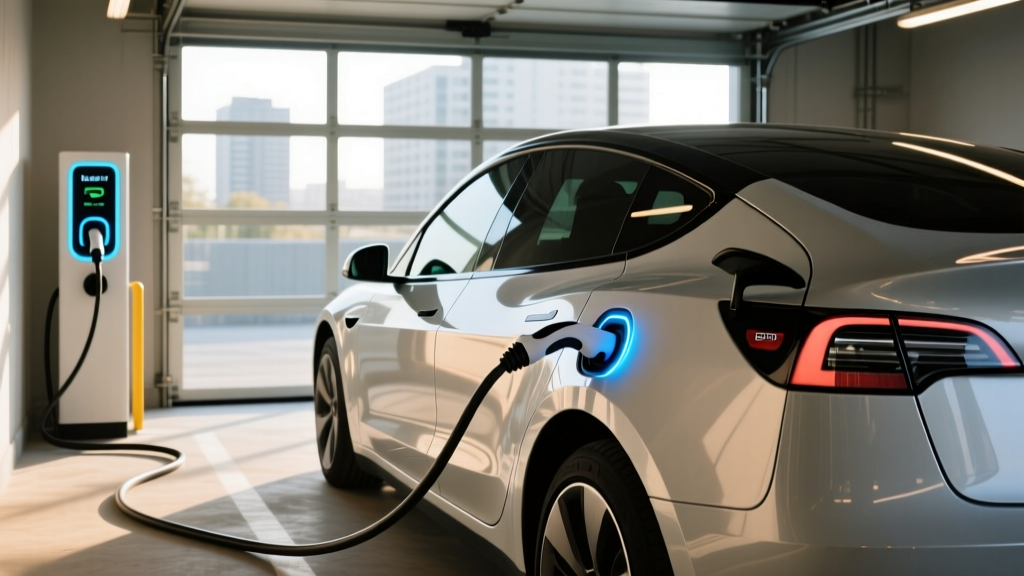
Level 2 (240V home/public charger): 20–40 miles of range per hour — a full overnight charge in 6–10 hours for most EVs.
DC Fast Charging (public 50–350 kW): 10–80% State of Charge in 15–45 minutes depending on peak kW, battery size, and thermal conditions.
For most owners with a Level 2 home charger, electric car recharge time is a non-issue: plug in at night, wake up full. Road trips require planning around DC fast-charger stops that add 15–30 minutes per session.
Understanding the Three Charging Levels
Electric car recharge time depends entirely on the power source feeding the battery. The critical distinction every new EV buyer must internalize is between kW (kilowatts, the rate of energy flow) and kWh (kilowatt-hours, the total energy stored in the battery). Think of kW as the width of a hose and kWh as the size of the bucket. A wider hose fills the bucket faster.
| Level | Voltage | Typical kW Output | Miles of Range Added per Hour | Best Use Case |
|---|---|---|---|---|
| Level 1 | 120V AC | 1.0–1.9 kW | 3–5 mi/hr | Overnight top-up, PHEVs, low-mileage drivers |
| Level 2 | 240V AC | 3.3–19.2 kW | 14–60 mi/hr | Home daily charging, workplace, public destinations |
| DC Fast Charge | 200–900V DC | 50–350 kW | 150–1,000+ mi/hr (peak) | Road trips, highway corridor travel |
Real-World Recharge Times by Popular 2026 EVs
Manufacturer claims of "10–80% in 18 minutes" represent peak charging under ideal thermal conditions. In practice, sustained average power matters more than peak kW. A charger that peaks at 250 kW but tapers aggressively above 50% SoC may deliver a slower 10–80% session than one with a flatter charge curve at a lower peak.
| Vehicle (2026) | Battery (kWh usable) | Peak DC kW | 10–80% DCFC Time | Level 2 Full Charge | EPA Range |
|---|---|---|---|---|---|
| Tesla Model Y Long Range | 75 kWh (NMC) | 250 kW | ~22 min | ~8 hrs @ 11.5 kW | 320 mi |
| Hyundai Ioniq 5 (Long Range RWD) | 77.4 kWh (NMC) | 240 kW | ~18 min | ~7.5 hrs @ 10.9 kW | 303 mi |
| Ford F-150 Lightning (Extended) | 131 kWh (NMC) | 150 kW | ~41 min | ~13 hrs @ 11.5 kW | 320 mi |
| Chevrolet Equinox EV 3RS | 85 kWh (NMC) | 190 kW | ~28 min | ~9 hrs @ 11.5 kW | 319 mi |
| BMW iX xDrive50 | 105.2 kWh (NMC) | 200 kW | ~34 min | ~10 hrs @ 11.5 kW | 324 mi |
EV Recharge Time vs. Gas Car Refueling: An Honest Comparison
The most common objection to EVs is that refueling a gas car takes five minutes. That is true at the pump — but it ignores the total time cost of ownership fueling.
| Factor | Electric Vehicle | Gasoline Vehicle |
|---|---|---|
| "Refueling" time per session | 5 sec (plug in at home) / 18–35 min (DCFC road trip) | 5–8 min at gas station |
| Weekly fueling trips (15k mi/yr) | 0 (home charging) or 0.5–1 DCFC stops/week | 1–2 gas station visits/week |
| Total annual time spent fueling | ~2–8 hours (mostly road-trip DCFC) | ~12–20 hours (driving to/from + pumping) |
| Annual fuel cost (15,000 mi) | $450–$750 (home electricity) / $900–$1,200 (public DCFC-heavy) | $1,500–$2,100 (gasoline at $3.20–$3.80/gal, 25 MPG avg) |
For the ~85% of EV owners who charge primarily at home, electric car recharge time is essentially zero active minutes per week — you plug in when you arrive home and unplug when you leave. The "recharge time penalty" applies almost exclusively to road trips exceeding your one-charge range.
What Determines Your Actual Recharge Time?
Published 10–80% times assume ideal conditions. In real ownership, several variables stretch or compress your session:
Battery Temperature and Preconditioning
Cold batteries charge slowly to protect cell health. A lithium-ion pack at 32°F may accept only 30–50 kW initially, even at a 250 kW charger. Most modern EVs precondition the battery — warming it to optimal temperature — when you navigate to a charger. Always use the vehicle's built-in navigation to DC fast chargers to enable this. Arriving at a charger without preconditioning in winter can double your 10–80% time.
State of Charge at Arrival
Arriving at a charger at 5% SoC lets you exploit the longest high-power portion of the charge curve. Arriving at 30% means you miss the fastest-charging window. Plan arrivals at low SoC for the quickest sessions.
Charger Power Output and Sharing
A 350 kW charger delivers peak power only if the vehicle supports it and no other vehicle is splitting the cabinet's output. Many CCS stations split a 150 kW cabinet across two stalls — plugging in second cuts your power roughly in half. NACS Supercharger stalls are typically dedicated per stall.
Battery Chemistry: LFP vs. NMC
LFP (lithium iron phosphate) batteries, found in base Tesla Model 3/Y RWD and some Ford and Rivian trims, tolerate regular 100% charging better than NMC but tend to have slightly slower peak charge rates. NMC packs charge faster at peak but degrade more if held at 100% frequently. Check your owner's manual for the recommended daily charge limit — typically 80% for NMC, 100% for LFP.
Home Charging Setup: Cost and Installation
Home Level 2 charging transforms EV ownership from a fueling chore into background convenience. Here is what a typical 2026 installation costs:
| Component | Typical Cost Range | Notes |
|---|---|---|
| Level 2 EVSE (charger hardware) | $300–$700 | ChargePoint Home Flex, Wallbox Pulsar Plus, Tesla Wall Connector |
| Electrical panel assessment | $0–$200 | Many electricians include in quote; panel upgrade adds $1,500–$3,000 if needed |
| 240V circuit wiring + conduit (50–60A) | $500–$2,000 | Depends on run length from panel to garage/driveway |
| Licensed electrician labor | $400–$1,200 | Varies by region and job complexity |
| Permit and inspection | $50–$250 | Required in most jurisdictions for new 240V circuits |
| Total (typical install) | $1,200–$4,000 | Simple short-run installs near panel: ~$1,200–$1,800. Long runs or panel upgrades: $3,000+ |
Federal Tax Credit for Home Charger Installation
The IRS §30C Alternative Fuel Vehicle Refueling Property Credit covers up to 30% of home EVSE hardware and installation costs, capped at $1,000 per year. Eligibility depends on your census tract meeting certain requirements. Consult a tax professional for your specific situation.
Total Cost of Ownership: EV vs. Gas Over 5 Years
Recharge time is only one ownership variable. The financial picture determines whether an EV makes sense for your situation.
| Cost Category (5 years, 75,000 mi) | 2026 Tesla Model Y LR ($44,990) | 2026 Toyota RAV4 Gas ($32,000) |
|---|---|---|
| Purchase price (after incentives) | $37,490 (est. $7,500 §30D credit) | $32,000 (no federal credit) |
| Fuel / electricity | $2,800 (home charging avg) | $7,500 (gasoline @ $3.50/gal, 28 MPG) |
| Maintenance | $1,200 (no oil changes, less brake wear) | $3,500 (oil, filters, brakes, belts) |
| Insurance (avg) | $9,500 (EV premium ~15–20% higher) | $7,500 |
| Depreciation (est.) | $18,000 | $14,000 |
| 5-Year Total | ~$69,000 | ~$64,500 |
The EV saves significantly on fuel and maintenance but carries higher insurance and depreciation. The break-even point depends heavily on your local electricity rates, annual mileage, and whether you qualify for the §30D federal tax credit (income caps, MSRP caps, and battery sourcing requirements apply — verify current-year rules on IRS.gov).
Common Electric Car Recharge Time Misconceptions
| Myth | Fact |
|---|---|
| "It takes all day to charge an EV." | On Level 2 (home), a full charge takes 6–10 hours overnight. You are asleep — it takes zero active time. |
| "You need a DC fast charger at home." | Residential DC chargers cost $10,000–$30,000 and offer no practical benefit. Level 2 at 11.5 kW fully replenishes any EV overnight. |
| "EVs can't road-trip because charging is too slow." | Modern EVs with 250+ kW peak charging add 150–200 miles in 15–20 minutes. Plan stops around meals or rest breaks. Per fueleconomy.gov, most 2026 long-range EVs exceed 300 miles EPA. |
| "All EVs charge at the same speed." | Charge speed varies dramatically: a 400V architecture EV peaks at ~150 kW, while 800V platforms (Hyundai Ioniq 5, Kia EV6, Porsche Taycan) sustain higher rates longer. |
| "Cold weather doesn't affect charging." | Batteries below ~50°F accept charge more slowly. Without preconditioning, a 20-minute session can stretch to 40+ minutes in freezing conditions. |
Decision Framework: What Charging Setup Fits Your Life?
Choose Your Path
IF you have a garage or driveway with 240V access (or can install it): A Level 2 home charger makes EV ownership effortless. Your electric car recharge time is effectively zero active minutes daily. This covers ~85% of US homeowners and is the ideal scenario.
IF you live in an apartment or lack home charging: Look for workplace charging, nearby public Level 2 stations, or reliable DC fast chargers within 10 minutes of your home. Without home charging, an EV adds 30–60 minutes of weekly active charging time. A PHEV (plug-in hybrid) like the Toyota RAV4 Prime (42 mi electric range) may be a better fit until charging access improves.
IF you road-trip frequently (500+ mi round trips monthly): Prioritize EVs with 800V architecture and 250+ kW peak charging (Ioniq 5, EV6, Taycan, Lucid Air). Plan routes along corridors with proven DC fast-charger density (Tesla Superchargers, Electrify America). Budget 20–30 extra minutes per 200 miles of highway driving.
IF you drive fewer than 40 miles daily and can plug into a standard outlet: Level 1 charging at 3–5 mi/hr can sustain a PHEV or an EV with short daily commutes, especially if you can plug in for 12+ hours at home. A dedicated 120V circuit is recommended for sustained use.
Frequently Asked Questions
Can I charge an EV from a regular household outlet?
Yes. Level 1 charging on a standard 120V outlet delivers roughly 1.0–1.9 kW, adding 3–5 miles of range per hour. For a 300-mile EV, a full charge from empty takes 50–60+ hours. This works for PHEVs with smaller batteries (full charge in 5–8 hours) or EV drivers with very short commutes under 30 miles daily.
How long does it take to charge at a Tesla Supercharger?
Tesla V3 and V4 Superchargers deliver up to 250–350 kW peak. A Tesla Model Y Long Range typically charges 10–80% in about 22 minutes. A Model 3 with LFP battery charges 10–80% in roughly 25–30 minutes due to slightly lower peak acceptance rates.
Does fast charging damage the EV battery?
Modern battery management systems throttle charge speed and manage heat to minimize degradation. Data from Recurrent Auto and other fleet studies show that vehicles using DC fast charging regularly experience only 1–3% additional degradation over 100,000 miles compared to Level 2-only charging. All major manufacturers warranty battery capacity at 70% retention for 8 years / 100,000 miles per EPA-mandated minimums.
What is preconditioning and why does it matter?
Preconditioning warms or cools the battery to its optimal charging temperature (typically 77–95°F) before you arrive at a DC fast charger. In cold weather, this can cut your 10–80% time in half. Activate it by navigating to the charger using your EV's built-in navigation system — most EVs begin preconditioning automatically 10–30 minutes before arrival.
Is a 400V or 800V EV architecture better for charging speed?
800V architectures (Hyundai/Kia E-GMP, Porsche Taycan, Lucid Air, upcoming GM Ultium models) sustain higher charge power for longer, resulting in faster 10–80% times and less tapering. A 400V vehicle at a 350 kW charger will typically peak at 120–150 kW and taper sooner. If fast road-trip charging matters, 800V is a meaningful advantage.