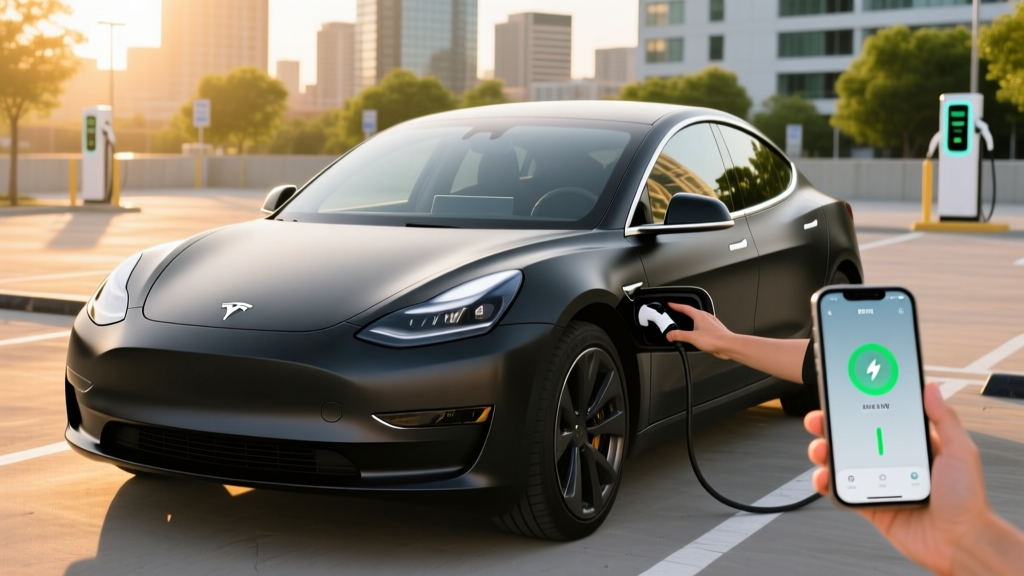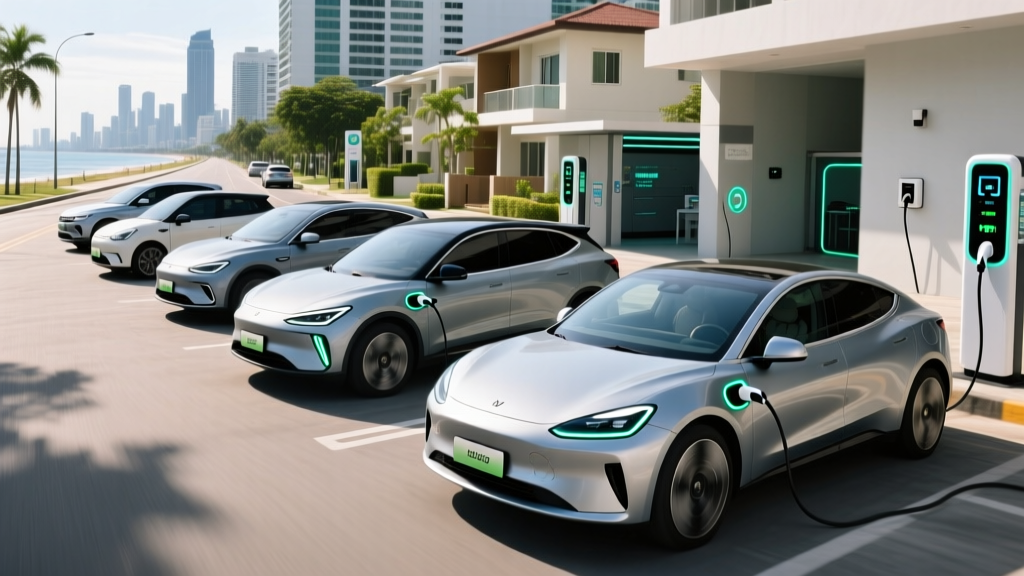
The Quick Answer: Is an EV Worth It in the Philippines?
Yes — but only if your daily driving fits within ~80% of the vehicle's real-world range, you can install a Level 2 home charger (or live near reliable public DC fast chargers), and you plan to own the car for at least 4–5 years to recoup the higher upfront price. As of 2026, the Philippine EV market offers models ranging from the BYD Dolphin at roughly ₱1.3 million to the Hyundai Ioniq 5 at ~₱3.1 million. Under the EVIDA law (Republic Act 11954), qualifying EVs enjoy a 0% excise tax, and some LGUs offer reduced registration fees. However, public charging infrastructure outside Metro Manila, Cebu, and Davao remains sparse — making home charging access the single most important factor in your decision.
The 2026 Philippine EV Lineup: What You Can Actually Buy
The Philippine EV market has expanded significantly since BYD, Hyundai, and GAC entered aggressively. Here are the most relevant battery-electric models available or taking orders in 2026, with verified specifications:
| Model | Battery (kWh) | Chemistry | WLTP Range | Real-World Range* | Peak DC Charge | 10–80% Time | 0–100 km/h | Approx. Price (PHP) |
|---|---|---|---|---|---|---|---|---|
| BYD Dolphin | 60.5 | LFP (Blade) | 427 km | 340–370 km | 88 kW | ~29 min | 7.0 sec | ₱1,298,000 |
| BYD Atto 3 | 60.5 | LFP (Blade) | 420 km | 330–360 km | 88 kW | ~29 min | 7.3 sec | ₱1,598,000 |
| GAC Aion Y Plus | 63.2 | LFP | 490 km | 380–420 km | 80 kW | ~35 min | ~8.0 sec | ₱1,490,000 |
| Hyundai Ioniq 5 (Std Range) | 58.0 | NMC | 384 km | 300–330 km | 185 kW | ~18 min | 5.2 sec | ₱3,098,000 |
| Hyundai Kona Electric | 65.4 | NMC | 490 km | 390–430 km | 100 kW | ~41 min | 7.8 sec | ₱2,198,000 |
| Peugeot e-2008 | 50.0 | NMC | 345 km | 270–300 km | 100 kW | ~30 min | 8.1 sec | ₱2,390,000 |
| Volvo EX30 | 69.0 | NMC | 476 km | 375–410 km | 153 kW | ~25 min | 5.3 sec | ₱2,990,000 |
| BMW iX1 | 66.5 | NMC | 440 km | 350–385 km | 130 kW | ~29 min | 5.6 sec | ₱3,890,000 |
*Real-world range reflects Philippine conditions: heavy Metro Manila traffic with frequent AC use, ambient temperatures of 30–36°C, and mixed city/highway driving. Unlike cold-climate markets, the Philippines does not suffer severe cold-weather range loss. However, sustained high-speed expressway driving (SCTEX/TPLEX at 100 km/h) and constant air-conditioning reduce range by 15–25% versus the WLTP sticker. Note: WLTP tends to overstate range by 10–20% compared to the more conservative EPA testing cycle used in the US.
Range Reality Check: Metro Manila to Baguio
The ~250 km drive from Metro Manila to Baguio via TPLEX and Kennon Road involves sustained highway speeds and a significant elevation climb. A BYD Atto 3 (real-world ~345 km) can complete this trip on a single charge with ~90 km remaining — but not the return trip without charging. Plan a 20-minute DC fast-charge stop in Rosario, La Union, or use a destination charger upon arrival. This is the practical limit of current affordable EVs for inter-city Philippine travel.
Charging in the Philippines: Home, Public, and the Infrastructure Gap
Charging access is the make-or-break factor for Philippine EV ownership. Here's a practical breakdown of your options:
| Charging Level | Power (kW) | Voltage | Miles (km) Added/Hour | Typical Use Case | Estimated Cost |
|---|---|---|---|---|---|
| Level 1 (Standard Outlet) | 1.4–1.9 kW | 220V (PH standard) | 6–10 km/hr | Overnight top-up, emergencies | Free with existing outlet |
| Level 2 (Home Wallbox) | 7–11 kW | 220V single-phase | 35–55 km/hr | Daily home charging (ideal) | ₱45,000–₱95,000 installed |
| DC Fast Charging | 50–180 kW | 400–800V DC | 200–700 km/hr | Road trips, quick top-ups | ₱12–₱22/kWh (public) |
Home Charging Installation: What to Expect
Most Philippine homes have a 220V single-phase supply, which supports Level 2 charging at 7 kW (32A). If your home's main breaker panel has spare capacity (at least a 40A dedicated circuit), installation is straightforward. Expect the following costs:
| Component | Low Estimate | High Estimate | Notes |
|---|---|---|---|
| Level 2 Charger Unit (7 kW) | ₱25,000 | ₱55,000 | Brands: Wallbox, ABB, local EVSE suppliers |
| Electrician Labor | ₱8,000 | ₱20,000 | Varies by wiring distance from panel |
| Wiring & Conduit Materials | ₱5,000 | ₱15,000 | 6 AWG or 4 AWG THHN copper, PVC conduit |
| Permit / Electrical Inspection | ₱2,000 | ₱5,000 | Required by most city/municipal building offices |
| Total | ₱40,000 | ₱95,000 | Panel upgrade adds ₱30,000–₱80,000 if needed |
Important: Condominium and townhouse residents must secure approval from building administration or homeowners' association before installation. Many newer Metro Manila condos (post-2024) include EV-ready parking with dedicated 220V circuits, but older buildings may require a panel upgrade or deny installation entirely. Confirm access before purchasing an EV.
Public Charging Networks in 2026
The major public charging operators in the Philippines include:
- AC Motors (Ayala) — Destination chargers at Ayala Malls (Level 2, typically free or bundled with parking)
- ChargeLab / Unioil — DC fast chargers at select Unioil stations along EDSA, C5, and expressways
- Shell Recharge — Expanding DC fast-charger footprint at Shell stations in NCR, Pampanga, and Laguna
- BMW / Hyundai dealer chargers — Brand-specific DC chargers, some open to other EVs via CCS2
- EV roaming apps — PlugShare and local apps list available chargers; CCS2 is the dominant DC connector standard in the Philippines
Outside Metro Manila, Cebu, and Davao, public DC fast chargers are spaced 80–150 km apart on major corridors — manageable with planning, but a genuine limitation for spontaneous long-distance travel. The Pan-Philippine Highway charging network is still in early development.
EV vs Gas Car in the Philippines: Real Cost Comparison
The core financial question for Filipino buyers is whether the higher purchase price of an EV is offset by fuel and maintenance savings. Let's compare a BYD Atto 3 (₱1,598,000) against the similarly sized Toyota Corolla Cross 1.8V (₱1,515,000) over 5 years and 75,000 km:
| Cost Category | BYD Atto 3 (EV) | Toyota Corolla Cross 1.8V (Gas) | Notes |
|---|---|---|---|
| Purchase Price | ₱1,598,000 | ₱1,515,000 | EV benefits from 0% excise tax under EVIDA |
| Home Charger Install | ₱65,000 | ₱0 | One-time Level 2 installation |
| Fuel/Energy (75,000 km) | ₱82,500 | ₱337,500 | EV: ₱11/kWh avg, 15 kWh/100km; Gas: ₱72/L, 8.5 L/100km |
| Maintenance (5 years) | ₱25,000 | ₱85,000 | EV: no oil changes, fewer brake replacements (regen braking) |
| Insurance (5 years) | ₱175,000 | ₱140,000 | EV insurance premiums run 15–25% higher |
| Registration (5 years) | ₱8,000 | ₱25,000 | Some LGUs waive/reduce EV registration under EVIDA |
| 5-Year Total Cost | ₱1,953,500 | ₱2,102,500 | |
| Cost per km | ₱4.77/km | ₱7.83/km | Excludes purchase price amortization |
Energy Cost Deep Dive: Electricity vs Gasoline
At the 2026 Meralco residential rate of approximately ₱11–₱12/kWh, charging an EV at home costs roughly ₱1.65–₱1.80 per kilometer (assuming 15 kWh/100 km efficiency). By contrast, a typical compact crossover getting 8.5 L/100 km at ₱72/liter costs ₱6.12 per kilometer on gasoline. That's a ₱4.32/km savings — or ₱324,000 over 75,000 km.
However, public DC fast charging at ₱18–₱22/kWh narrows the gap to ₱2.70–₱3.30/km. If you cannot charge at home and rely entirely on public chargers, your per-km savings drop by 35–40%.
Common EV Misconceptions in the Philippines — Addressed
| Myth | Fact |
|---|---|
| "EVs can't handle Philippine heat — batteries will degrade fast." | Modern LFP and NMC batteries use active liquid thermal management. BYD's Blade battery (LFP) and Hyundai's E-GMP platform maintain battery temperature within safe ranges even at 36°C ambient. Degradation in tropical climates is typically 2–3% per year — meaning ~85–90% capacity after 5 years. Both BYD and Hyundai offer 8-year/160,000 km battery warranties with a 70% capacity retention guarantee. |
| "I'll be stranded if the battery runs out." | With a real-world range of 300–400 km on most models, and daily Philippine commutes averaging 30–50 km (per JICA transport data), most owners charge at home nightly and never approach the limit. For longer trips, apps like PlugShare map available chargers along expressways. |
| "EV batteries need replacing every few years — and it costs a fortune." | EV traction batteries are designed for 1,500–3,000+ charge cycles. An LFP battery (BYD, GAC) can exceed 3,000 cycles before reaching 80% capacity — equivalent to over 1 million km. Replacement is rarely needed within the vehicle's practical lifespan. If required, a 60 kWh pack replacement currently costs ₱450,000–₱700,000 but prices decline ~8–10% annually. |
| "The power grid can't handle EVs." | A single 7 kW home charger draws roughly the same power as 2–3 window air-conditioning units running simultaneously. Meralco and other DUs have confirmed that residential grids can accommodate EV charging at current adoption levels. Neighborhood-level transformer upgrades may be needed as adoption scales, but this is a utility planning issue — not a buyer concern today. |
| "EVs flood easily — they're not safe in Philippine typhoons." | EV battery packs are sealed to IP67 standards, meaning they can be submerged in 1 meter of water for 30 minutes without ingress. This is generally better water protection than a gasoline engine's air intake. However, no passenger vehicle — EV or gas — should be driven through floodwaters above the wheel hub. Flood damage voids warranties on both. |
Battery Chemistry: LFP vs NMC — Which Should You Choose?
Philippine buyers should understand the two dominant battery chemistries available:
| Factor | LFP (Lithium Iron Phosphate) | NMC (Nickel Manganese Cobalt) |
|---|---|---|
| Found in | BYD Dolphin, Atto 3; GAC Aion Y Plus | Hyundai Ioniq 5, Kona Electric; Volvo EX30; BMW iX1 |
| Energy Density | Lower (~160 Wh/kg) — heavier for same range | Higher (~250 Wh/kg) — lighter, more range per kg |
| Cycle Life | 3,000–5,000 cycles to 80% capacity | 1,000–2,000 cycles to 80% capacity |
| Heat Tolerance | Excellent — ideal for tropical climates | Good with active cooling; slightly higher thermal risk |
| Charging to 100% | Recommended periodically for BMS calibration | Better to stay 20–80% for longevity |
| Cost | Lower — makes EVs more affordable | Higher — found in premium models |
| Best For | Budget-conscious buyers, daily city drivers, hot climates | Range-focused buyers, highway commuters, premium segment |
For most Philippine buyers, LFP is the pragmatic choice: it tolerates tropical heat better, lasts longer, and keeps purchase prices down. The lower energy density matters less when your daily commute is 40 km, not 400.
Government Incentives: EVIDA Law and What It Means for Your Wallet
The Electric Vehicle Industry Development Act (EVIDA), signed in 2023 and implemented through 2024–2026, provides several incentives for EV buyers:
- 0% excise tax on pure battery-electric vehicles (BEVs) — saving ₱50,000–₱200,000+ versus equivalent gas cars depending on price bracket
- Reduced registration fees — the LTO and some LGUs offer discounted or waived initial registration for EVs (varies by locality)
- Priority lane / number coding exemption — certain cities (under review by MMDA and LGUs) may exempt EVs from the Unified Vehicular Volume Reduction Program (number coding), though this is not yet universally implemented
- Import duty reduction — temporarily reduced tariffs on imported EVs and components, helping keep retail prices competitive
Note: The Philippines does not offer a direct purchase subsidy or tax credit comparable to the US federal §30D credit. The savings come primarily through the excise tax exemption and lower operating costs.
Decision Framework: Should You Buy an EV in the Philippines?
Buy an EV If:
- You can install a Level 2 charger at home or have reliable access to a workplace/public Level 2 charger daily
- Your daily round-trip commute is under 100 km (covers ~90% of Metro Manila and urban commuters)
- You plan to keep the vehicle 4+ years to recoup the price premium through fuel savings
- You value instant torque, quiet operation, and zero tailpipe emissions in congested city traffic
- You want to insulate yourself from gasoline price volatility
Stick with Gas or Hybrid If:
- You live in a condo or building that cannot accommodate a home charger and lack nearby public charging
- You frequently drive 300+ km inter-city routes (e.g., Manila–Bicol, Manila–Ilocos) where DC fast-charger coverage is thin
- You need a vehicle for provincial areas where EV service centers and charging are nonexistent
- Your budget is under ₱1.2 million — the most affordable EVs start at ~₱1.3M, while gas alternatives exist below ₱1M
- You need heavy towing capacity (current affordable EVs in the PH are not rated for significant towing)
Consider a Hybrid (HEV/PHEV) If:
- You want fuel savings without range limitations — the Toyota Corolla Cross Hybrid (₱1.695M, ~22 km/L combined) offers 40% fuel savings with no charging needed
- You regularly take long provincial trips but also want electric-mode efficiency in city traffic
- A PHEV like the Mitsubishi Outlander PHEV gives ~40–50 km of electric-only range for daily commuting, with a gas engine for longer trips
First-Time EV Buyer Checklist
Before signing the deal, work through this practical checklist:
- Verify home charging feasibility: Check your breaker panel capacity, confirm condo/HOA approval, and get a quote from a licensed electrician for a dedicated 32A/220V circuit.
- Calculate your real daily km: Track your commute for one week using Google Maps Timeline. Multiply by 1.3 for errands and detours. Ensure this fits within 70% of the EV's real-world range (not the WLTP sticker).
- Map your longest regular trip: If you drive to a provincial home monthly, verify DC fast-charger availability along that route using PlugShare.
- Confirm service center proximity: BYD, Hyundai, and GAC have expanding service networks in NCR, Cebu, and Davao — but provincial coverage varies. Check dealer locations before purchasing.
- Get insurance quotes in advance: EV insurance in the Philippines runs 15–25% higher than equivalent gas cars. Request quotes from at least three providers (e.g., Malayan, BPI-MS, Pioneer) before committing.
- Read the battery warranty carefully: Confirm the capacity retention threshold (usually 70%), the term (typically 8 years/160,000 km), and what voids it (flood damage, unauthorized modifications, etc.).
- Test the CCS2 connector: If you plan to use public DC chargers, verify the vehicle uses CCS2 (the Philippine/European standard) — not CHAdeMO or a proprietary connector.
Frequently Asked Questions
How long does it take to charge an EV at home in the Philippines?
On a standard 220V household outlet (Level 1, ~1.9 kW), a 60 kWh battery takes roughly 30–35 hours from empty to full. On a dedicated Level 2 home wallbox (7 kW), the same battery charges in about 8.5–9 hours — ideal for overnight charging. Most owners never charge from 0%; a typical 20–80% daily top-up on Level 2 takes 5–6 hours.
Is it safe to charge an EV in the rain or during a typhoon?
Yes. EV chargers and vehicle charge ports are rated IP55 or higher, designed to operate safely in rain. The charging system will not energize until a sealed connection is confirmed. However, avoid charging during active lightning storms (as with any plugged-in device), and never submerge charging equipment in floodwater.
What happens to an EV battery in Philippine heat?
Modern EVs use liquid-cooled battery thermal management systems that actively regulate cell temperature. In Philippine conditions (30–36°C ambient), expect battery degradation of approximately 2–3% per year. LFP batteries (BYD, GAC) show slightly better heat tolerance than NMC. Parking in shade and avoiding repeated 100% charges (for NMC) helps maximize longevity.
Can I use solar panels to charge my EV?
Yes, but with caveats. A typical 5 kW residential solar array in the Philippines generates ~18–22 kWh per day — enough to add ~120–150 km of range daily. However, you'll need a solar inverter compatible with your EV charger, and most homes still need grid connection for cloudy days and nighttime charging. Solar + EV charging is viable but adds ₱300,000–₱500,000 in solar installation costs.
What's the resale value of EVs in the Philippines?
The Philippine EV resale market is still too young for reliable depreciation data. In markets with longer EV adoption (US, Europe, China), EVs typically depreciate 40–55% over 3 years — slightly worse than comparable gas cars, though this is improving as battery confidence grows. Early Philippine EV adopters should plan to hold the vehicle 5+ years to maximize value from fuel savings rather than relying on resale.
Do I need a special driver's license for an EV?
No. A standard Philippine LTO driver's license (Non-Professional or Professional) covers all passenger EVs. No additional endorsement or certification is required.