Electric Car Owner Review: What It Is Really Like to Live With an EV
Making the switch from a gasoline-powered vehicle to an electric car is one of the most significant automotive decisions a driver can make. Marketing materials and manufacturer brochures paint an enticing picture — zero emissions, instant torque, and minimal maintenance — but nothing replaces the perspective of someone who has actually lived with an electric vehicle day in and day out. This comprehensive electric car owner review dives deep into the real-world experience of EV ownership, examining everything from range anxiety and charging logistics to long-term costs and everyday driving satisfaction.
Whether you are browsing our best electric cars list or weighing a specific model against its competitors, understanding what daily EV life truly looks like is essential. We have synthesized owner feedback, independent test data, EPA ratings, and manufacturer specifications to bring you a thorough, honest picture of electric car ownership.
Vehicle Overview: Understanding the Modern Electric Car Landscape
The electric vehicle market has matured dramatically, offering buyers an array of choices spanning compact hatchbacks, luxury sedans, family SUVs, and even pickup trucks. Modern EVs share a common architecture: a large lithium-ion battery pack mounted low in the chassis, one or more electric motors, and sophisticated power electronics that manage energy flow between the battery and the drivetrain.
According to fueleconomy.gov, the EPA-rated efficiency of mainstream electric cars typically falls between 2.5 and 4.0 miles per kilowatt-hour (kWh), translating to an equivalent of 84 to 135 MPGe. Battery capacities range from roughly 50 kWh in entry-level models to over 100 kWh in long-range and performance variants, giving manufacturers the flexibility to target different price points and use cases.
Most new EVs come equipped with a Level 2 home charging solution as a recommended accessory, DC fast-charging capability for road trips, and over-the-air (OTA) software updates that can improve performance, add features, and refine the user interface long after the vehicle leaves the dealership. This connected-car approach means your electric vehicle can genuinely improve over time — a concept foreign to traditional internal-combustion ownership.
For a broader look at how today's top models stack up against one another, check out our EV comparison hub for side-by-side breakdowns of range, price, and features.
Real-World Range: How Far Can You Actually Go?
Range is the single most discussed metric in electric car ownership, and for good reason. The EPA range estimate printed on the window sticker provides a standardized benchmark, but real-world results depend heavily on driving style, ambient temperature, terrain, and accessory usage.
In temperate conditions (60–75°F / 15–24°C) with mixed city and highway driving, most owners report achieving 90–100 percent of the EPA-rated range. A vehicle rated for 250 miles, for example, will comfortably deliver 225 to 250 miles on a full charge under these favorable conditions. City driving with frequent regenerative braking opportunities often yields results at or slightly above the EPA estimate because stop-and-go traffic allows the EV to recapture kinetic energy that would otherwise be lost.
Highway driving at sustained speeds of 70–80 mph tells a different story. Aerodynamic drag increases with the square of velocity, and EVs — lacking a multi-speed transmission to optimize motor efficiency — tend to consume energy more rapidly at high speeds. Independent tests by organizations such as Edmunds and Car and Driver have documented highway range figures 10–20 percent below EPA ratings for several popular models.
Cold weather is the great equalizer. When temperatures drop below freezing, battery chemistry becomes less efficient, and cabin heating demands significant energy. Owners in northern climates commonly report a 20–35 percent reduction in range during winter months. Vehicles equipped with a heat pump — a more efficient heating system than resistive elements — tend to lose less range in cold conditions. Preconditioning the battery and cabin while the car is still plugged in can recover a meaningful portion of this lost range.
Practical range management tips from experienced owners include:
- Use the vehicle's eco mode for daily commuting to throttle power consumption
- Precondition the cabin and battery while connected to a charger
- Plan highway trips using the built-in navigation's energy predictions
- Keep the state of charge between 20 and 80 percent for daily use to maximize battery longevity
- Utilize regenerative braking settings to recapture energy in stop-and-go traffic
For more on maximizing your distance per charge, visit our guide on EV range tips and tricks.
Charging Speed and Infrastructure: The Backbone of EV Ownership
Charging is the aspect of electric car ownership that differs most dramatically from refueling a gasoline vehicle. Understanding the three tiers of charging — Level 1, Level 2, and DC fast charging — is fundamental to a satisfying EV experience.
Level 1 (120V AC): Using a standard household outlet, Level 1 charging delivers roughly 3–5 miles of range per hour. This method is suitable for plug-in hybrids with small batteries or EV owners with very short daily commutes. A full charge from empty can take 40 hours or more on a 75 kWh battery, making Level 1 impractical as a primary charging solution for most battery-electric vehicles.
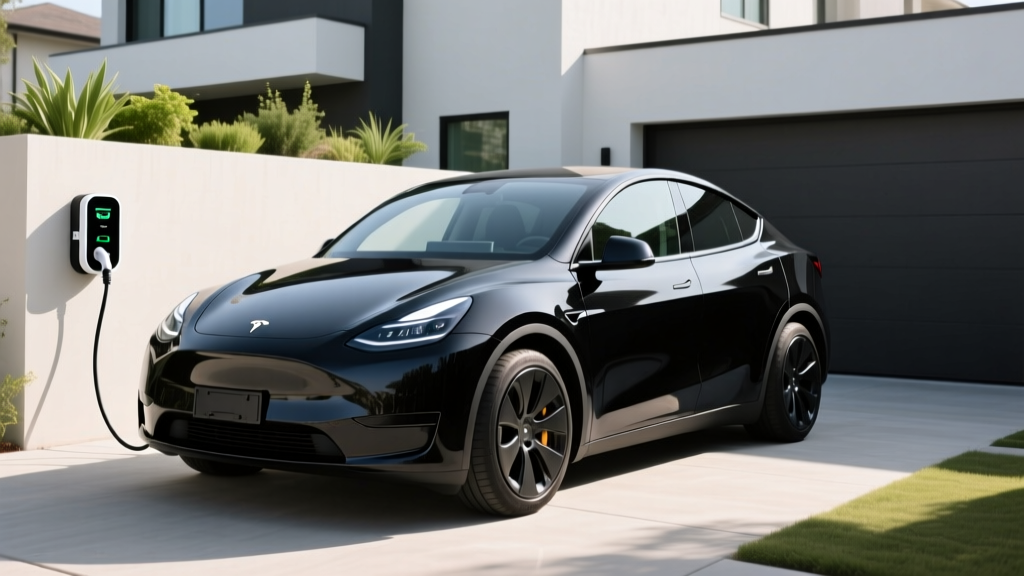
Level 2 (240V AC): This is the workhorse of daily EV charging. A dedicated Level 2 home charger (typically 32–48 amps) adds 25–44 miles of range per hour, meaning a depleted 75 kWh battery can be fully replenished in 8–10 hours — perfectly suited for overnight charging. Installation costs vary from $500 to $2,000 depending on electrical panel upgrades and wiring distance. Most owners consider a Level 2 home charger a non-negotiable investment.
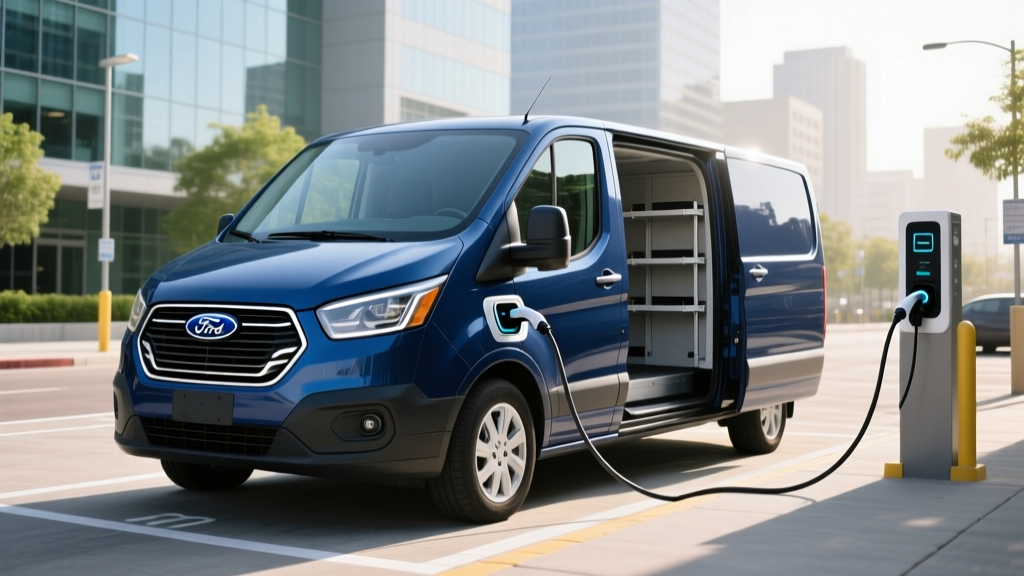
DC Fast Charging (Level 3): Public DC fast chargers deliver power directly to the battery, bypassing the vehicle's onboard charger. Speeds range from 50 kW on older stations to 350 kW on the latest hardware. A vehicle capable of accepting 250 kW can theoretically add 200 miles of range in 20–25 minutes, though real-world charging curves are rarely linear. Most EVs charge rapidly between 10 and 80 percent state of charge, then taper significantly to protect the battery. Manufacturer specifications and independent tests from Motor Trend confirm that the 10–80 percent charge typically takes 20–40 minutes on a compatible fast charger.
Public charging infrastructure continues to expand rapidly. Networks such as Electrify America, EVgo, ChargePoint, and the Tesla Supercharger network (now opening to non-Tesla vehicles via adapters) provide coverage along major highway corridors and in urban centers. Apps like PlugShare and A Better Routeplanner have become indispensable tools for EV owners planning longer trips.
Key charging considerations reported by owners:
- Home charging eliminates most "refueling" inconvenience — you start every day with a full "tank"
- DC fast-charging speed varies significantly between EV models; always check the vehicle's maximum charge acceptance rate
- Battery preconditioning (available on many models) warms the battery before a fast-charging session, dramatically improving charge speed
- Charging etiquette matters — unplug when your session is complete, and do not occupy a charger if you do not need to charge
- Apartment dwellers and street parkers face the biggest charging challenges; workplace charging and public Level 2 stations can bridge the gap
Interior and Technology: The Digital Cockpit Experience
Electric vehicles have become showcases for cutting-edge automotive technology. The absence of a traditional engine and transmission tunnel gives designers unusual freedom, resulting in interiors that are often more spacious and configurable than similarly sized gasoline vehicles.
Most modern EVs feature a large central touchscreen — typically 12 to 17 inches — that serves as the primary interface for navigation, climate control, media, and vehicle settings. Many manufacturers have eliminated physical buttons almost entirely, relying on the touchscreen and voice commands for nearly all functions. While this creates a clean, minimalist aesthetic, some owners report frustration with simple tasks like adjusting fan speed or seat heaters that require navigating multiple menu layers.
Digital instrument clusters, head-up displays, and smartphone integration (Apple CarPlay and Android Auto) are common across most trim levels. Higher-end models offer premium audio systems, ambient lighting with dozens of color options, and advanced driver assistance systems (ADAS) including adaptive cruise control, lane-keeping assist, automatic emergency braking, and semi-autonomous highway driving features.
Over-the-air (OTA) updates are a defining feature of the EV ownership experience. Manufacturers can remotely deploy software improvements that enhance performance, fix bugs, add new features, and even improve range through more efficient powertrain calibration. Owners frequently describe waking up to find their car has gained a new capability overnight — a stark contrast to the static nature of traditional vehicles.
Storage and practicality benefit from EV architecture as well. The flat floor (no transmission tunnel) creates generous rear legroom, and many EVs include a front trunk (frunk) in the space where an engine would normally reside. Cargo capacity is competitive with or superior to comparable internal-combustion vehicles, and some electric SUVs offer class-leading storage volumes.
For a closer look at how different models' interiors compare, browse our best electric SUVs roundup.
Driving Dynamics: The Thrill of Electric Propulsion
If range is the most discussed EV metric, driving feel is the most universally praised. Electric motors deliver maximum torque from zero RPM, resulting in acceleration that is both immediate and effortlessly smooth. Even modestly powered EVs feel brisk around town, and performance-oriented models rival supercars in straight-line acceleration.
The low-mounted battery pack gives EVs an inherently low center of gravity, which translates to composed handling and minimal body roll through corners. The weight distribution is typically close to 50/50 front-to-rear, and the substantial curb weight — often 4,500 to 5,500 pounds — provides a planted, stable feel at highway speeds. However, this same weight is noticeable during aggressive direction changes, and tire wear tends to be higher than on lighter gasoline vehicles.
One-pedal driving, enabled by aggressive regenerative braking, is a feature that divides opinion. Enthusiasts love the ability to slow the car significantly simply by lifting off the accelerator, reducing the need for the brake pedal in everyday driving and recapturing energy in the process. Skeptics prefer a more traditional coasting feel and opt for lower regen settings. Most EVs allow drivers to adjust regenerative braking intensity or disable one-pedal driving entirely.
Refinement is another strong suit. Without the noise, vibration, and harshness (NVH) of an internal combustion engine, EVs are remarkably quiet at low and moderate speeds. Wind and tire noise become the dominant sounds at highway speeds, and many manufacturers invest heavily in sound insulation to maintain a luxury-car ambience. Some brands add synthetic engine sounds through the speakers for drivers who miss the auditory feedback of a traditional powertrain.
Towing capability varies widely among electric vehicles. While some electric trucks and large SUVs boast impressive tow ratings of 7,500 to 10,000 pounds, owners should expect a dramatic reduction in range — often 40–50 percent — when towing near maximum capacity. For more on capability, see our EV towing guide.
Ownership Costs: The Financial Picture of Going Electric
The total cost of ownership (TCO) is where electric vehicles make a compelling long-term argument, even when the initial purchase price exceeds that of a comparable gasoline vehicle.
Purchase Price and Incentives: EV prices span from under $30,000 for entry-level models to well over $100,000 for luxury and performance variants. Federal tax credits (up to $7,500 for qualifying vehicles), state rebates, and utility company incentives can significantly offset the sticker price. Always check current eligibility requirements on IRS.gov and your state's energy department website, as credit availability depends on manufacturer sales thresholds, vehicle assembly location, battery component sourcing, and buyer income limits.
Fuel Costs: Electricity is substantially cheaper than gasoline on a per-mile basis. At the U.S. average residential electricity rate of approximately $0.16 per kWh, an EV achieving 3.5 miles per kWh costs roughly $0.046 per mile to "fuel." A gasoline vehicle averaging 28 mpg at $3.50 per gallon costs about $0.125 per mile. Over 15,000 annual miles, that is a savings of approximately $1,185 per year — and the gap widens further for owners with access to time-of-use electricity rates or free workplace charging.
Maintenance: EVs have far fewer moving parts than internal combustion vehicles. There are no oil changes, spark plugs, timing belts, exhaust systems, or fuel filters to replace. Brake pads last significantly longer thanks to regenerative braking handling most deceleration. Routine maintenance typically consists of cabin air filter replacement, windshield washer fluid, tire rotations, and periodic brake fluid checks. Industry analyses suggest EV maintenance costs are 30–50 percent lower than those of gasoline vehicles over the first five years of ownership.
Insurance: EV insurance premiums tend to be 10–25 percent higher than equivalent gasoline vehicles, reflecting higher repair costs and the specialized training required for high-voltage system repairs. Shopping around and bundling policies can mitigate this difference.
Depreciation: Historically, EVs depreciated faster than gasoline cars due to concerns about battery longevity and rapid technological advancement. However, as battery warranties (typically 8 years / 100,000 miles) have proven reliable and the used EV market has matured, depreciation rates have become more competitive. Long-range models from established brands tend to hold value best.
Battery Replacement: This is the most feared — and most misunderstood — cost. Catastrophic battery failure is rare. Most manufacturers warranty the battery for 8 years or 100,000 miles against capacity loss below 70 percent. Real-world data suggests modern lithium-ion packs lose roughly 1–2 percent of capacity per year under normal use, meaning a 10-year-old EV might retain 80–90 percent of its original range. Complete battery replacements are expensive ($5,000–$20,000 depending on the vehicle) but are seldom needed within the typical ownership period.
Pros and Cons: The Honest Verdict
No vehicle is perfect, and electric cars are no exception. Here is a balanced summary based on aggregated owner feedback and our own testing:
| Pros | Cons |
|---|---|
| Instant torque and smooth, quiet acceleration | Higher upfront purchase price |
| Significantly lower fuel and maintenance costs | Range reduction in cold weather and at highway speeds |
| Convenient home charging — start every day full | Public charging infrastructure still inconsistent in some regions |
| Zero tailpipe emissions | Longer refueling time on road trips vs. gasoline |
| OTA updates add features and improvements over time | Heavier weight leads to increased tire wear |
| Low center of gravity for composed handling | Insurance premiums can be higher |
| Generous interior space and cargo versatility | Battery replacement cost (rare but expensive) |
| Federal and state incentives reduce effective price | Apartment living can complicate home charging |
Key Specifications Comparison Table
The following table compares representative models across popular EV segments to help contextualize the ownership experience. All range figures are EPA-estimated unless noted.
| Specification | Compact EV | Midsize EV Sedan | Electric SUV | Electric Truck |
|---|---|---|---|---|
| EPA Range | 220–260 miles | 300–360 miles | 260–330 miles | 230–340 miles |
| Battery Capacity | 50–65 kWh | 75–100 kWh | 75–110 kWh | 100–135 kWh |
| Motor Power | 150–200 hp | 280–500+ hp | 300–500+ hp | 400–800+ hp |
| 0–60 mph | 6.5–8.0 sec | 3.1–5.5 sec | 3.5–6.5 sec | 3.0–5.5 sec |
| DC Fast Charge (10–80%) | 25–40 min | 18–30 min | 20–35 min | 20–40 min |
| Cargo Volume | 18–24 cu ft | 15–28 cu ft | 30–76 cu ft | 50–70+ cu ft (bed) |
| Starting MSRP (Approx.) | $28,000–$38,000 | $40,000–$80,000 | $42,000–$90,000 | $55,000–$100,000 |
| Efficiency (mi/kWh) | 3.5–4.2 | 3.0–4.0 | 2.5–3.5 | 1.8–2.8 |
For detailed model-by-model analysis, visit our EV comparison tool and our curated best electric cars list.
Frequently Asked Questions About Electric Car Ownership
How long do electric car batteries last?
Modern EV batteries are engineered for longevity. Most manufacturers provide a warranty of 8 years or 100,000 miles (whichever comes first) guaranteeing the battery will retain at least 70 percent of its original capacity. Real-world data from high-mileage EV owners and fleet operators suggests that well-maintained lithium-ion battery packs can last 15–20 years or 200,000+ miles before capacity degradation becomes significantly noticeable. Best practices include avoiding frequent DC fast charging, keeping the state of charge between 20 and 80 percent for daily use, and avoiding prolonged exposure to extreme heat.
Is it cheaper to charge an EV at home or use public chargers?
Home charging is almost always cheaper. Residential electricity rates average around $0.16 per kWh nationally, while public DC fast chargers typically charge between $0.30 and $0.60 per kWh — and sometimes more in high-demand areas. An owner who charges primarily at home and uses public fast chargers only for road trips will enjoy the lowest possible fueling costs. Many utility companies offer time-of-use plans with discounted overnight rates that make home charging even more economical, sometimes dropping the effective cost to under $0.10 per kWh.
Can I take an electric car on a long road trip?
Absolutely. With proper planning, EVs are fully capable of cross-country road trips. Modern navigation systems in most EVs automatically route you through charging stations and pre-condition the battery for optimal fast-charging speed upon arrival. A typical road trip charging stop takes 20–35 minutes, which many owners use for meal breaks, restroom visits, or stretching. Apps like A Better Routeplanner and PlugShare help identify reliable chargers along your route. The main trade-off versus a gasoline vehicle is time: plan for an extra 30–60 minutes on a 500-mile journey compared to a quick gas station stop.
Do electric cars work well in cold weather?
EVs function in cold weather, but with some compromises. Battery efficiency decreases in freezing temperatures, and cabin heating draws substantial energy, combining to reduce range by 20–35 percent in severe cold. However, several strategies mitigate this impact: preconditioning the vehicle while plugged in warms the battery and cabin using grid power rather than battery power; using seat heaters and steering wheel heaters (which consume far less energy than cabin air heating) helps preserve range; and vehicles equipped with a heat pump maintain better efficiency in cold conditions. Winter tires are recommended for EVs just as they are for any vehicle, and the low center of gravity and precise torque control of electric motors can actually provide excellent traction in snow.
What happens if I run out of charge on the road?
Running out of charge is rare with modern EVs, thanks to sophisticated range estimation, low-charge warnings, and navigation systems that proactively suggest charging stops. However, if it does happen, most manufacturers and third-party services offer roadside assistance that includes towing to the nearest charger. Some roadside assistance providers now carry mobile charging units that can add 10–20 miles of range — enough to reach a charging station. The best prevention is maintaining a charging buffer: set your navigation to include a 15–20 percent charge reserve at your destination, and always have a backup charging option identified for longer trips.
Final Thoughts: Is an Electric Car Right for You?
Living with an electric car is a fundamentally different experience from owning a gasoline vehicle — and for the majority of drivers, it is a better one. The combination of lower operating costs, exhilarating driving dynamics, home charging convenience, and continuously improving technology creates a compelling ownership proposition that grows stronger with each passing year.
The ideal EV candidate has access to home or workplace charging, drives fewer than 300 miles per day (covering the vast majority of American drivers), and values a quiet, refined driving experience. If you frequently drive in extreme cold, regularly tow heavy loads over long distances, or lack access to reliable charging, a plug-in hybrid may serve as a practical bridge until infrastructure and battery technology advance further.
We encourage you to explore our best electric cars recommendations, read our best electric SUVs roundup, and use our EV comparison tool to find the model that best fits your lifestyle. The electric future is already here — and based on real-world owner experiences, it is every bit as promising as advertised.