The Real Cost of Insuring and Owning an EV in 2026
Electric vehicles promise lower fuel and maintenance costs, but one line item consistently surprises new owners: car insurance for electric cars typically runs 15% to 30% higher than comparable gas vehicles. Before you sign a purchase agreement, you need a clear-eyed look at the full financial picture — premiums, charging, tax credits, depreciation, and maintenance — not just the savings column.
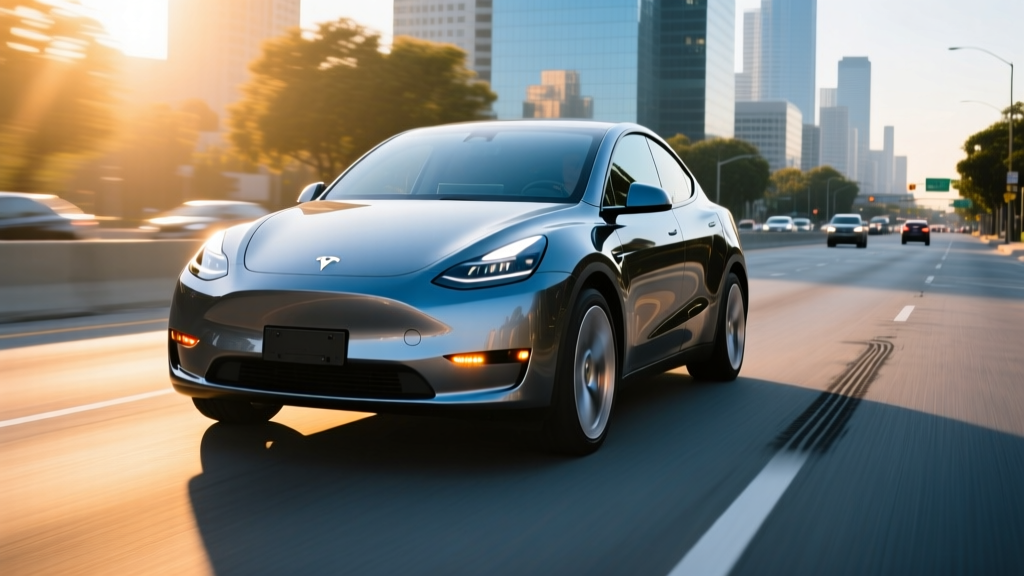
This guide breaks down the true 5-year total cost of ownership (TCO) for a mainstream EV, explains why insurance costs more, and shows exactly where your money goes. We'll use a 2026 Tesla Model Y Long Range AWD (MSRP ~$44,990, EPA 320 miles, 75 kWh usable NMC battery) as our baseline, with comparisons to a similarly priced gas crossover like the Toyota RAV4 XLE AWD (MSRP ~$33,500, EPA 29 MPG combined).
5-Year Total Cost of Ownership: 2026 Tesla Model Y LR AWD vs. Toyota RAV4 XLE AWD
| Cost Category | Tesla Model Y LR AWD | Toyota RAV4 XLE AWD |
|---|---|---|
| Purchase Price (MSRP) | $44,990 | $33,500 |
| Federal Tax Credit (§30D) | −$7,500 (if eligible) | $0 |
| Net Purchase After Credit | $37,490 | $33,500 |
| Insurance (5 years avg.) | $12,750 ($2,550/yr) | $8,500 ($1,700/yr) |
| Fuel/Energy (5 yrs, 60k mi) | $3,600 ($0.12/kWh avg) | $7,241 ($3.50/gal, 29 MPG) |
| Maintenance (5 years) | $1,200 | $3,500 |
| Depreciation (est. 5-yr) | $18,745 (50%) | $11,725 (35%) |
| 5-Year Total Cost | $63,785 | $64,466 |
Assumptions: 12,000 miles/year, national avg electricity $0.12/kWh, home charging primary, Model Y efficiency 28 kWh/100mi. RAV4 fuel at $3.50/gal. Insurance based on national averages for 35-year-old driver with clean record. Depreciation percentages reflect 2025-2026 resale trends per Kelley Blue Book and Recurrent data. Your actual costs will vary by state, driving profile, and utility rate.
The takeaway: EV ownership costs can roughly match a gas car over five years when the federal tax credit applies, but the savings distribution is very different. You spend more upfront (even after the credit) and on insurance, but recoup through fuel and maintenance. If you don't qualify for the §30D credit, the math tilts significantly toward gas.
Why Car Insurance for Electric Cars Costs More
Data from the Insurance Information Institute and major carriers consistently shows EV premiums running higher than internal-combustion equivalents. Here's why:
- Higher repair costs after collisions: EV battery packs, power electronics, and specialized structural components are expensive to replace. A minor rear-end collision on an EV might total the battery — a $15,000 to $25,000 component — where a gas car would need only a bumper and exhaust repair.
- Specialized labor: High-voltage system repairs require certified EV technicians, and fewer body shops have that certification. Scarcity drives up labor rates.
- Higher vehicle values: Insurers base comprehensive and collision coverage on replacement cost. A $45,000 EV costs more to insure than a $33,500 gas crossover.
- Totaled-vehicle risk: Insurers are more likely to declare an EV a total loss after battery damage because of the replacement cost relative to vehicle value, increasing claim payouts.
- Emerging claims data: As EV market share grows, insurers are still calibrating actuarial models. Early data showed higher severity claims, which gets priced into premiums until a larger sample size stabilizes rates.
Insurance Cost Ranges by Popular EV Models (2026 Estimates)
| Model | Avg. Annual Premium | Gas Equivalent | Premium Gap |
|---|---|---|---|
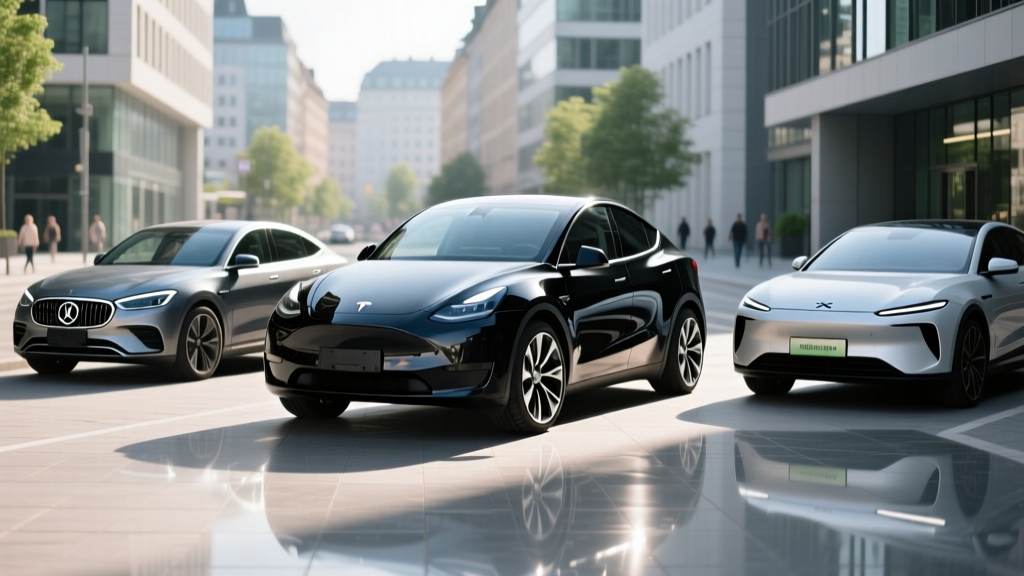
| Tesla Model Y LR AWD | $2,400–$2,900 | $1,700 (RAV4) | +41%–71% |
| Hyundai Ioniq 5 SEL AWD | $2,000–$2,400 | $1,650 (Tucson) | +21%–45% |
| Chevrolet Equinox EV 2LT | $1,800–$2,200 | $1,600 (Equinox gas) | +13%–38% |
| Ford F-150 Lightning XLT | $2,600–$3,200 | $2,000 (F-150 gas) | +30%–60% |
Ranges reflect quotes from Geico, Progressive, and State Farm for a 35-year-old driver, clean record, 100/300/100 liability, $500 deductible, garaged in a mid-cost metro area. Your rate depends heavily on ZIP code, driving history, credit (where permitted), and annual mileage. Tesla's direct insurance product, available in select states, can sometimes undercut third-party quotes by 10–20%.
How to Lower Your EV Insurance Premium
- Shop at least 4 carriers: EV pricing varies wildly between insurers. Some weight the higher repair cost heavily; others focus on EV safety ratings and lower mileage profiles.
- Ask about EV-specific discounts: A handful of carriers offer green-vehicle or low-mileage discounts that partially offset the EV surcharge.
- Consider Tesla Insurance or OEM programs: If you're buying a Tesla, their real-time-driving-data insurance product (available in ~12 states as of 2026) can save significant money for safe drivers.
- Bundle home + auto: Standard advice, but it works — typically 10–15% off.
- Raise your deductible: Moving from $500 to $1,000 can shave $200–$400/year, but make sure you can cover the gap in a claim.
Federal EV Tax Credit: Do You Qualify for §30D?
The IRS §30D Clean Vehicle Credit offers up to $7,500 for qualifying new EVs — but eligibility depends on a matrix of buyer income, vehicle MSRP, battery sourcing, and assembly location. As of 2026, the rules remain strict and have eliminated several popular models from full credit eligibility.
§30D Eligibility Checklist (2026 Rules)
- Buyer income caps (modified AGI): $150,000 single / $225,000 head of household / $300,000 married filing jointly
- Vehicle MSRP caps: $80,000 for SUVs, vans, and pickups / $55,000 for sedans and other body styles
- Battery critical minerals: A percentage of critical minerals must be sourced from the U.S. or a free-trade-agreement country (threshold increases annually; 80% for 2026)
- Battery components: A percentage of battery components must be manufactured or assembled in North America (100% for 2026 — no foreign entity of concern [FEOC] components permitted)
- Final assembly: Vehicle must undergo final assembly in North America
- Point-of-sale transfer: As of 2024, you can transfer the credit to the dealer at purchase, reducing your out-of-pocket cost immediately rather than waiting to claim it on your tax return. The dealer must register the sale through the IRS Energy Credits Online portal.
- One credit per VIN, two per taxpayer: You can claim the new-vehicle credit once per vehicle and up to twice per taxpayer across a 3-year period (combined with the used-EV credit).
Rules are subject to change. Always verify current eligibility at fueleconomy.gov and consult a tax professional before relying on the credit for purchase decisions.
In practice, the 2026 FEOC (foreign entity of concern) battery-component restriction has narrowed the list of qualifying vehicles. Models like the Tesla Model Y, certain trims of the Chevrolet Equinox EV, and the Ford F-150 Lightning have maintained eligibility, while several vehicles with Korean or Chinese battery supply chains have lost partial or full credit qualification. Always check the specific VIN's credit status before purchase.
Charging vs. Gasoline: The Per-Mile Cost Reality
This is where EVs consistently win — but the magnitude of savings depends heavily on how and where you charge.
Cost Per Mile: EV vs. Gas (2026 National Averages)
| Scenario | Cost per Mile | Annual Cost (12,000 mi) |
|---|---|---|
| EV — Home charging ($0.12/kWh, 28 kWh/100mi) | $0.034 | $408 |
| EV — Home charging ($0.18/kWh, CA/NY avg) | $0.050 | $600 |
| EV — Public DC fast charging ($0.40/kWh avg) | $0.112 | $1,344 |
| Gas — 29 MPG combined ($3.50/gal) | $0.121 | $1,452 |
| Gas — 29 MPG combined ($4.00/gal) | $0.138 | $1,656 |
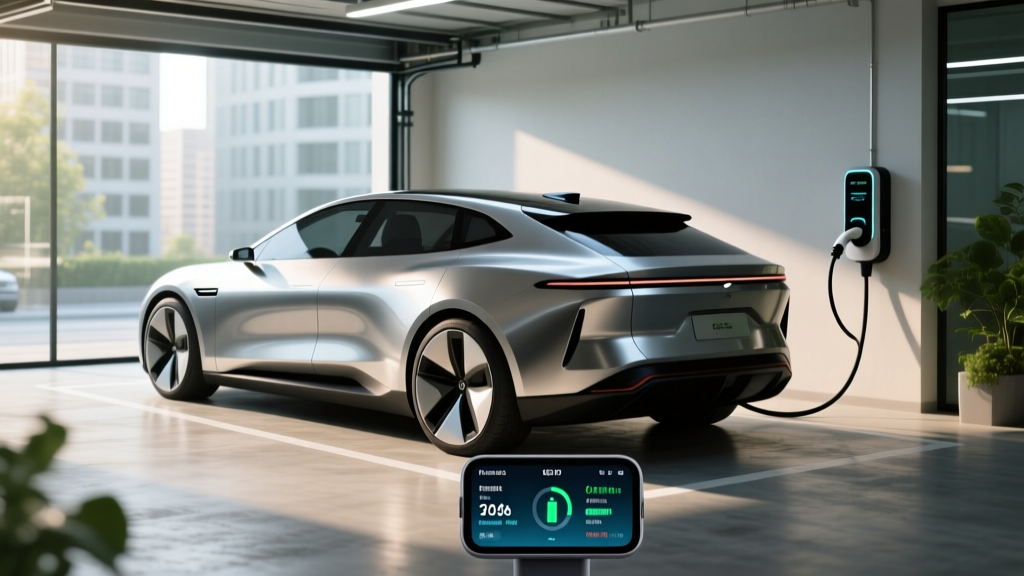
At the national average residential rate of ~$0.12/kWh (per EIA data), home charging costs roughly $0.03 to $0.05 per mile — a fraction of gasoline. But if you rely primarily on public DC fast charging at $0.35–$0.50/kWh, your cost per mile approaches or even exceeds gasoline. This is why home charging access is the single biggest financial variable in EV ownership.
For our Model Y example driving 12,000 miles per year at 28 kWh/100mi (EPA-rated ~3.4 mi/kWh):
- Home charging at $0.12/kWh = $403/year
- Home charging at $0.18/kWh = $605/year
- 100% public DCFC at $0.40/kWh = $1,344/year
Compare that to the RAV4 at 29 MPG combined and $3.50/gallon = $1,448/year. The savings are massive with home charging, negligible with exclusive public charging.
Maintenance Savings: Where EVs Shine
EVs eliminate the most common recurring maintenance items on gas vehicles. There are no oil changes, no spark plugs, no transmission fluid, no timing belts, no exhaust system repairs, and no emissions testing. Regenerative braking significantly extends brake pad and rotor life — many EV owners report original brake pads at 80,000+ miles.
Typical 5-Year / 60,000-Mile Maintenance Costs
| Maintenance Item | EV Cost | Gas Vehicle Cost |
|---|---|---|
| Oil changes (6–8 over 5 yrs) | $0 | $350–$600 |
| Brake pads/rotors | $0–$200 (regen extends life) | $600–$1,200 |
| Transmission fluid/service | $0 | $150–$400 |
| Air filters (engine + cabin) | $100–$150 (cabin only) | $200–$400 |
| Coolant service | $0–$100 (long-life) | $150–$300 |
| Tire rotation/replacement | $800–$1,200 (EVs wear tires faster due to weight + instant torque) | $600–$1,000 |
| Wiper fluid, wipers, misc. | $100–$150 | $100–$150 |
| Total (5-year est.) | $1,000–$1,800 | $2,150–$4,050 |
The one area where EVs can cost more is tires. The combination of heavier vehicle weight (a Model Y weighs ~4,400 lbs vs. a RAV4 at ~3,600 lbs) and instant electric torque accelerates tread wear. Budget for tire replacement 10,000–15,000 miles sooner than you would on a comparable gas vehicle.
Net maintenance savings over five years typically land between $1,500 and $2,500, depending on the gas vehicle you're comparing against and local labor rates.
EV Depreciation and Resale Value in 2026
Depreciation is the largest hidden cost of any vehicle, and EVs have experienced turbulent resale trends since 2022. After aggressive price cuts by Tesla and other manufacturers in 2023–2024 cratered used EV values, the market has partially stabilized by 2026 — but EVs still depreciate faster than top gas vehicles on average.
Key factors driving EV depreciation:
- Battery health uncertainty: Buyers of used EVs discount for potential battery replacement cost ($8,000–$20,000 depending on model), even though most batteries outlast the vehicle.
- Rapid technology obsolescence: Newer EVs charge faster, have more range, and better software — making 3-year-old models feel dated more quickly than gas cars.
- Manufacturer price cuts: When Tesla or others slash new-vehicle prices, used values fall in lockstep.
- Tax credit competition: A buyer who qualifies for $7,500 on a new EV has less incentive to buy used, suppressing demand.
- Fleet/rental sell-offs: Large fleet liquidations (Hertz, others) have periodically flooded the used EV market.
According to data from Kelley Blue Book and iSeeCars, average 5-year depreciation for mainstream EVs in 2025–2026 ranges from 45% to 55%, compared to 30% to 40% for top-selling gas crossovers. The gap has narrowed as the market matures, but it remains a real cost factor.
The notable exception: plug-in hybrids like the Toyota RAV4 Prime have held value exceptionally well (often depreciating only 25%–35% over five years), benefiting from both EV-curious demand and no range anxiety.
State, Local, and Utility Incentives
Important: State and local incentives vary dramatically by jurisdiction and change frequently. The examples below are illustrative — always verify current programs through your state energy office, local air quality district, and utility provider.
Beyond the federal §30D credit, many buyers can stack additional incentives:
- State purchase rebates: California's Clean Vehicle Rebate Project (CVRP) has offered up to $2,000–$7,000 for income-qualified buyers. Colorado offers a state tax credit of up to $5,000 for EVs under $80,000 MSRP. New York's Drive Clean Rebate provides up to $2,000. Many states offer nothing.
- Utility rebates for home charging: Hundreds of utilities offer $250–$1,500 rebates for Level 2 charger purchase and installation. Some provide time-of-use (TOU) rate plans that drop overnight charging costs to $0.06–$0.08/kWh.
- HOV lane access: States including California, Colorado, Virginia, and Maryland have offered single-occupant HOV lane access for EVs — a significant time savings for commuters, though some programs have sunset or restricted availability.
- Registration fee offsets: Some states charge higher annual EV registration fees ($50–$225) to offset lost gas tax revenue. A few offset these with first-year rebates.
- Used EV credit (§25E): Up to $4,000 or 30% of the sale price (whichever is less) for qualifying used EVs under $25,000, with stricter income caps ($75,000 single / $150,000 joint).
When stacked, a buyer in Colorado purchasing a qualifying EV could see: $7,500 federal + $5,000 state + $500 utility charger rebate = $13,000 in total incentives. In a state with no EV programs, that same buyer might only access the federal credit — a $5,500+ swing in net purchase price based purely on ZIP code.
Putting It All Together: Is an EV Worth the Total Cost?
Decision Framework: EV Ownership Makes Financial Sense If...
- You can charge at home — this is non-negotiable for the fuel-cost advantage. Without home charging, public DCFC costs erase most savings.
- You qualify for the §30D credit — the $7,500 credit is what makes the upfront cost competitive. Without it, the payback period extends to 7–10+ years for most buyers.
- You drive 10,000+ miles per year — higher mileage amplifies fuel savings. Below 8,000 miles/year, the insurance and depreciation premium may outweigh energy savings.
- You plan to keep the vehicle 5+ years — the upfront cost premium takes time to recoup. Short ownership cycles magnify depreciation losses.
- You live in a state with additional incentives — stacked state/utility rebates can tip the scales meaningfully.
A Gas Car or Hybrid May Be Smarter If...
- You can't install a home charger (apartment, street parking, HOA restrictions)
- You don't qualify for the federal credit due to income or the vehicle's battery sourcing
- You drive fewer than 8,000 miles per year
- You plan to trade in within 3 years (depreciation will hurt)
- You frequently tow heavy loads or drive in extreme cold (both reduce EV range 20–40%)
The honest math: a 2026 Model Y with the full $7,500 federal credit, home charging, and moderate annual mileage roughly matches a RAV4's 5-year total cost. The EV offers a smoother, quieter, quicker driving experience and zero tailpipe emissions, but you're paying for those benefits through higher insurance and steeper depreciation. Without the tax credit, the EV costs $5,000–$8,000 more over five years — a premium you're paying for the driving experience and environmental benefit, not financial savings.
Frequently Asked Questions
How much does it really cost to own an EV over 5 years?
For a mainstream EV like the 2026 Tesla Model Y Long Range, expect roughly $60,000–$68,000 in total 5-year cost (purchase after credit, insurance, energy, maintenance, depreciation) assuming 12,000 miles/year, home charging, and full §30D credit eligibility. This is roughly comparable to a similarly equipped gas crossover at $60,000–$66,000, with the savings distribution shifted: higher insurance and depreciation, lower fuel and maintenance.
Do I qualify for the federal EV tax credit?
You may qualify for up to $7,500 under IRS §30D if your modified adjusted gross income is below $150K (single) / $300K (joint), the vehicle MSRP is under $80K (SUVs/trucks) or $55K (sedans), the battery meets 2026 critical-mineral and FEOC-free component thresholds, and final assembly occurred in North America. Check your specific vehicle's eligibility at fueleconomy.gov and consult a tax professional. You can transfer the credit to the dealer at point of sale for an immediate price reduction.
How much do I save on fuel and maintenance?
Fuel savings with home charging average $800–$1,100 per year versus gasoline, depending on your electricity rate and local gas prices. Maintenance savings average $300–$500 per year by eliminating oil changes, extending brake life via regenerative braking, and removing exhaust/transmission service. Combined, expect $1,100–$1,600 in annual operating savings — but only if you charge primarily at home.
Are EVs more expensive to insure?
Yes. Car insurance for electric cars typically costs 15% to 30% more than comparable gas vehicles, and in some cases (Tesla Model Y, F-150 Lightning) the premium gap reaches 40%–70%. This is driven by higher repair costs after collisions (especially battery damage), specialized labor requirements, higher vehicle values, and evolving actuarial data. Shop at least 4 carriers and ask about EV-specific discounts.
How well do EVs hold their value?
Average 5-year EV depreciation sits at 45%–55% as of 2026, compared to 30%–40% for top gas crossovers. Battery health uncertainty, rapid technology advancement, manufacturer price cuts, and fleet sell-offs have pressured resale values. Plug-in hybrids (PHEVs) have generally held value better than pure EVs. If resale value is a top priority, a PHEV or a high-demand gas vehicle will typically cost less in depreciation.
Does the EV battery need replacing during ownership?
Modern EV batteries (NMC and LFP chemistries) are designed to last 150,000–200,000+ miles with 70%–80% capacity retention. Most manufacturers warrant the battery for 8 years / 100,000 miles (10 years / 150,000 miles in California Air Resources Board states). Real-world data from Recurrent and fleet operators shows average degradation of 5%–10% over the first 100,000 miles. Full battery replacement costs $8,000–$20,000 depending on the model but is rarely needed within a typical ownership cycle.