Buying an electric vehicle is a financial decision that extends far beyond the sticker price. While lower fuel and maintenance costs make headlines, the electric car insurance cost is one variable that consistently surprises new EV owners — often running 15-30% higher than equivalent gas vehicles. Understanding the complete five-year cost picture, from federal tax credits to real-world charging expenses, is essential before signing a purchase agreement.
This guide breaks down every major ownership cost category with concrete 2026 numbers, using a representative mid-size EV (the Tesla Model Y Long Range AWD and Hyundai Ioniq 5 SEL) as benchmarks against comparable gas crossovers.
Why Electric Car Insurance Costs More Than Gas Vehicles
Data from major insurers consistently shows that EVs carry higher premiums than internal-combustion equivalents. The reasons are structural, not arbitrary:
- Higher repair costs: EV battery packs, power electronics, and specialized body structures (aluminum, mixed-material) require certified technicians and OEM parts. A minor rear collision on an EV can trigger battery-safety inspection protocols that add thousands to a claim.
- Higher vehicle values: Comprehensive and collision premiums are calculated on replacement cost. A $45,000 EV will cost more to insure than a $32,000 gas crossover, regardless of powertrain.
- Specialized labor: Fewer body shops have high-voltage safety certification. Insurers factor in the scarcity of qualified repair facilities.
- Total-loss thresholds: If a battery pack is damaged, many insurers total the vehicle rather than risk a partial repair on a high-voltage system, increasing claim payouts.
- Mid-size gas crossover (e.g., Toyota RAV4): ~$1,500–$1,800/year
- Mid-size EV crossover (e.g., Tesla Model Y): ~$2,000–$2,600/year
- Luxury EV sedan (e.g., BMW i5): ~$2,800–$3,500/year
How to reduce your electric car insurance cost: Shop at least three quotes. Some insurers (GEICO, Progressive, State Farm) now offer specific EV discounts or bundle incentives. Tesla Insurance (available in select states) uses real-time driving data and can be competitive for safe drivers. Increasing your deductible from $500 to $1,000 typically drops premiums 10-15%.
The Federal EV Tax Credit: §30D Rules for 2026
The federal Qualified Clean Vehicle Credit under IRS §30D remains the single largest purchase incentive for EV buyers — but eligibility is far from universal. The credit is up to $7,500, split into two $3,750 halves based on battery-component and critical-mineral sourcing requirements.
- ✅ Vehicle MSRP cap: Vans, SUVs, and pickups must be ≤$80,000 MSRP. Sedans and other body styles must be ≤$55,000 MSRP.
- ✅ Buyer income cap (modified AGI): $300,000 joint / $225,000 head of household / $150,000 single filer.
- ✅ Battery component sourcing: A percentage of battery components must be manufactured or assembled in North America (threshold increases annually).
- ✅ Critical minerals sourcing: A percentage of critical minerals must be sourced from the U.S. or a free-trade-agreement country (threshold increases annually).
- ✅ Final assembly: Vehicle must undergo final assembly in North America.
- ✅ Point-of-sale transfer: As of 2024, buyers can transfer the credit to the dealer at purchase, reducing the sale price directly rather than waiting for a tax refund.
- ⚠️ Foreign Entity of Concern (FEOC) restriction: Vehicles with battery components from a FEOC (including certain Chinese suppliers) are disqualified, even if other criteria are met.
Rules are subject to legislative and regulatory changes. Always verify current eligibility at fueleconomy.gov and consult a tax professional before relying on credit availability.
Real-world example: The 2026 Hyundai Ioniq 5 SEL (MSRP ~$47,500) qualifies for the full $7,500 credit for most buyers, bringing the effective purchase price to ~$40,000 before state incentives. The Tesla Model Y Long Range (MSRP ~$48,990) has fluctuated in eligibility depending on battery-sourcing updates — always check the specific VIN's credit status on the IRS portal before purchasing.
Charging vs. Gas: The Per-Mile Cost Reality
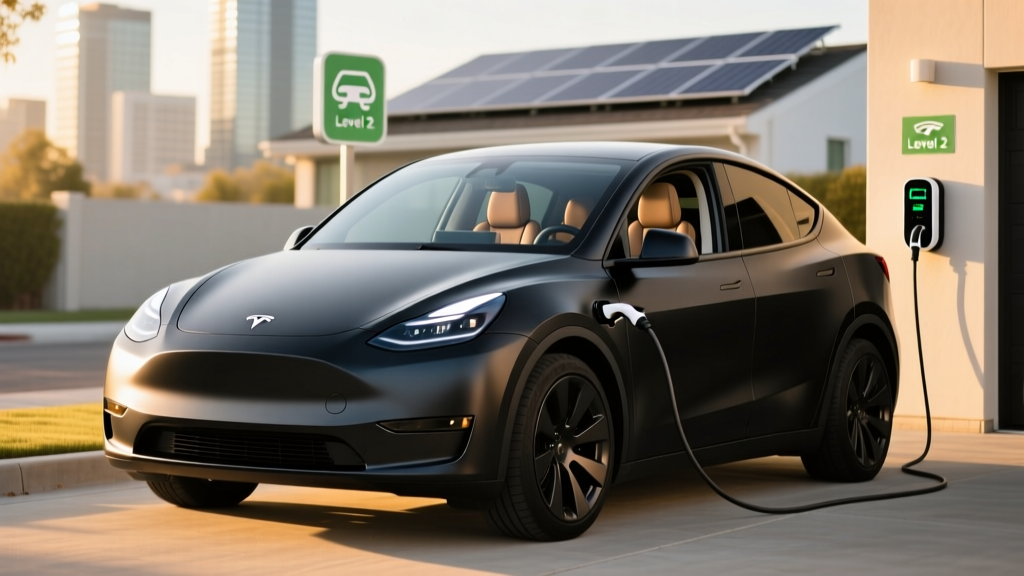
The fuel-cost advantage of an EV is real, but the savings depend heavily on how and where you charge. Here's the math using 2026 national averages:
| Scenario | Cost/kWh or Gal | Efficiency | Cost/Mile | Annual (12k mi) |
|---|---|---|---|---|
| Home Level 2 charging (national avg electricity) | $0.16/kWh | 3.5 mi/kWh | $0.046 | $549 |
| Public DC fast charging (avg network pricing) | $0.40/kWh | 3.5 mi/kWh | $0.114 | $1,371 |
| Gas crossover (28 MPG combined, $3.30/gal) | $3.30/gal | 28 MPG | $0.118 | $1,414 |
Key takeaway: Home-charged EVs save roughly $850-$900/year over gas. But if you rely exclusively on public DC fast charging at $0.40/kWh, the fuel-cost advantage nearly disappears. This is why home Level 2 charging access is the single most important factor in EV ownership economics.
Some utilities offer time-of-use (TOU) rates where off-peak overnight charging drops to $0.08-$0.10/kWh, pushing per-mile costs below $0.03. Check with your local utility for EV-specific rate plans.
Maintenance Savings: Where EVs Actually Win
EVs have far fewer moving parts than internal-combustion vehicles — no engine oil, no transmission fluid, no spark plugs, no exhaust system, no timing belt. Regenerative braking dramatically reduces brake pad wear.
| Maintenance Item | Gas Vehicle (5-yr cost) | EV (5-yr cost) | Savings |
|---|---|---|---|
| Oil changes (synthetic, 2x/year) | $750 | $0 | $750 |
| Transmission fluid service | $250 | $0 | $250 |
| Brake pads (1 replacement) | $400 | $0–$100* | $300–$400 |
| Engine air filter, cabin filter, belts | $350 | $120 (cabin only) | $230 |
| Coolant flush, spark plugs | $300 | $0 | $300 |
| 5-Year Total Maintenance | ~$2,050 | ~$120–$400 | ~$1,650–$1,930 |
*EV brake pads often last 100,000+ miles due to regenerative braking handling most deceleration. Tire rotation and replacement are comparable between EV and gas — EVs can wear tires slightly faster due to higher vehicle weight and instant torque.
EVs still require tire rotations (~$50 every 7,500 miles), cabin air filter replacements, windshield washer fluid, and occasional brake fluid checks. Budget roughly $100-$200/year for EV maintenance versus $350-$500/year for a gas vehicle.
5-Year Total Cost of Ownership: EV vs. Gas Side-by-Side
Here's a realistic 5-year / 60,000-mile ownership comparison using a 2026 Hyundai Ioniq 5 SEL (EV, home-charged) versus a 2026 Toyota RAV4 XLE AWD (gas). Both are popular mid-size crossovers in the $35,000–$50,000 range.
| Cost Category | Hyundai Ioniq 5 SEL (EV) | Toyota RAV4 XLE AWD (Gas) |
|---|---|---|
| MSRP / Purchase Price | $47,500 | $35,500 |
| Federal Tax Credit (§30D) | −$7,500 | $0 |
| Effective Purchase Price | $40,000 | $35,500 |
| Fuel / Charging (5 years, 60k mi, home L2) | $2,745 | $7,071 |
| Maintenance (5 years) | $500 | $2,050 |
| Insurance (5 years, national avg) | $11,500 | $8,250 |
| Depreciation (5-year, est.) | $20,000 (50%) | $14,200 (40%) |
| 5-Year Total Cost of Ownership | ~$74,745 | ~$67,071 |
What this shows: Even with the $7,500 federal credit and substantial fuel/maintenance savings, the Ioniq 5's higher insurance premiums and steeper depreciation leave it roughly $7,700 more expensive over five years in this scenario. However, this gap narrows significantly — or reverses — depending on your state incentives, local electricity rates, driving habits, and the specific models compared.
- California: Up to $7,000 additional via CVRP (income-dependent) + utility rebates of $500-$1,500 for home charger installation.
- Colorado: State tax credit up to $5,000 for new EVs (2026 rules, income-dependent).
- New York: Drive Clean Rebate up to $2,000 point-of-sale.
- Utility rebates: Many utilities (PG&E, ConEd, Xcel Energy) offer $300-$1,500 rebates for Level 2 home charger purchase/installation and special off-peak EV electricity rates.
State and local incentive amounts, eligibility, and availability vary by jurisdiction and change frequently. Check your state energy office and local utility for current programs. These are not included in the TCO table above but can reduce EV ownership cost by $2,000-$12,000+ depending on location.
EV Depreciation and Resale Value Trends
Depreciation is the largest single ownership cost for any vehicle, and EVs have historically depreciated faster than gas counterparts. Several factors drive this:
- Rapid price cuts on new models: When Tesla, Ford, or Hyundai cuts new-vehicle pricing, used-EV values drop in lockstep. The 2023-2024 Tesla price wars wiped billions off used-EV residual values industry-wide.
- Battery health uncertainty: Used-EV buyers discount for potential battery degradation, even though most modern packs retain 85-92% capacity at 100,000 miles.
- Technology obsolescence: Newer EVs offer faster charging, longer range, and updated software — making 3-year-old models feel dated faster than gas equivalents.
- Tax credit competition: A used-EV buyer who qualifies for the $4,000 used-EV credit (§25E) effectively lowers their purchase price, compressing resale values.
According to iSeeCars 2025 data, average 5-year depreciation for EVs is approximately 45-55%, compared to 35-42% for gas vehicles. However, certain models hold value better — the Porsche Taycan, Rivian R1T, and Tesla Model 3 have shown stronger-than-average retention, while luxury EV sedans from Mercedes and BMW have seen steeper drops.
Battery warranty protection: Federal law mandates that EV batteries carry a minimum warranty of 8 years / 100,000 miles (10 years / 150,000 miles in CARB states like California). Most manufacturers guarantee the battery will retain at least 70% of original capacity during the warranty period. This provides meaningful protection for first and second owners.
Decision Framework: When Does an EV Save You Money?
✅ An EV likely saves you money over 5 years if:
- You qualify for the full $7,500 federal credit and live in a state with additional rebates (CA, CO, NY, MA, etc.)
- You can install a Level 2 home charger and access off-peak electricity rates below $0.12/kWh
- You drive 12,000+ miles per year (higher mileage amplifies fuel savings)
- You choose a mainstream EV with moderate insurance premiums (Ioniq 5, Model 3, Equinox EV) rather than a luxury model
- You plan to keep the vehicle 7+ years, riding out the depreciation curve
⚠️ A gas vehicle or hybrid may cost less over 5 years if:
- You cannot charge at home and must rely on public DC fast charging ($0.35-$0.55/kWh)
- Your state offers no additional EV incentives
- You drive fewer than 8,000 miles per year (fuel savings don't offset higher insurance/purchase cost)
- You're comparing against a highly efficient hybrid (Toyota RAV4 Hybrid at 40 MPG combined)
- You prefer to trade vehicles every 3 years (depreciation hits hardest in years 1-3)
Frequently Asked Questions
How much does electric car insurance cost compared to a gas car?
On average, electric car insurance costs 15-30% more than an equivalent gas vehicle. For a mid-size crossover, expect $2,000-$2,600/year for an EV versus $1,500-$1,800/year for gas. The gap is driven by higher repair costs, specialized labor, and higher vehicle values. Shopping multiple quotes and raising your deductible can narrow the difference.
Do I qualify for the $7,500 federal EV tax credit?
Eligibility depends on three factors: your modified adjusted gross income (under $150K single / $300K joint), the vehicle's MSRP (under $55K for sedans, $80K for SUVs/trucks), and the vehicle's battery sourcing (components and critical minerals must meet North American / FTA-country thresholds). The credit can now be transferred at point of sale to reduce your purchase price immediately. Verify your specific vehicle's eligibility at fueleconomy.gov and consult a tax professional.
How much do I save on fuel by driving an EV?
With home Level 2 charging at the national average of $0.16/kWh and an efficiency of 3.5 miles per kWh, an EV costs roughly $0.046/mile to fuel — about $865/year for 12,000 miles. A comparable gas crossover at 28 MPG and $3.30/gallon costs $0.118/mile or ~$1,414/year. That's a savings of ~$550-$900/year with home charging. Savings shrink dramatically if you rely on public DC fast charging at $0.35-$0.55/kWh.
Do EVs really need less maintenance?
Yes. EVs eliminate oil changes, transmission service, spark plugs, engine air filters, timing belts, and exhaust system repairs. Regenerative braking extends brake pad life to 100,000+ miles in most cases. Expect to spend $100-$200/year on EV maintenance (tire rotations, cabin air filter, wiper fluid) versus $350-$500/year for a gas vehicle. Over five years, that's roughly $1,500-$1,900 in savings.
How well do EVs hold their resale value?
EVs depreciate faster than gas vehicles on average — approximately 45-55% over five years versus 35-42% for gas. Rapid new-model price cuts, battery health concerns, and technology turnover drive this gap. However, the 8-year/100,000-mile federal battery warranty provides protection, and models with strong demand (Tesla Model 3, Rivian R1T) can outperform the average. If you plan to keep your EV 7+ years, depreciation becomes less of a concern.
Is a plug-in hybrid (PHEV) a better financial choice than a full EV?
For many buyers, yes. A PHEV like the Toyota RAV4 Prime offers 42 miles of electric-only range for daily commuting (charged at home) plus a gas engine for road trips. Insurance costs are typically lower than a full EV, there's no range anxiety, and fuel savings are substantial for short-commute drivers. PHEVs also qualify for the §30D tax credit if they meet the same sourcing and MSRP/income requirements. If you can't install a home charger or regularly drive 300+ miles in a day, a PHEV may be the more practical and cost-effective choice.
Sources: IRS §30D Clean Vehicle Credit, EPA Fuel Economy, AAA Your Driving Costs 2025, iSeeCars depreciation study 2025, manufacturer MSRP data. All prices and rates are 2026 estimates and subject to change. Consult a tax professional for credit eligibility and an insurance agent for personalized quotes.