The Short Answer: No, EV Insurance Usually Costs More
If you're shopping for an electric vehicle and wondering whether lower running costs extend to your insurance bill, the data is clear: electric car insurance is typically 15% to 30% more expensive than coverage for a comparable gas-powered vehicle. In 2025 and 2026, the national average for full-coverage EV insurance hovers around $2,400 to $3,100 annually, versus roughly $1,800 to $2,300 for equivalent internal-combustion models.
That premium exists for specific, understandable reasons — and it doesn't necessarily erase the total-cost-of-ownership advantage EVs can offer. To make a smart purchase decision, you need to see the full financial picture: purchase price, federal and state incentives, fuel savings, maintenance, depreciation, and yes, that higher insurance bill.
Why Electric Car Insurance Costs More
Insurers price policies based on risk and repair cost. EVs present a distinct profile on both fronts:
- Higher repair bills after collisions. EV battery packs are structural components in many modern platforms (Tesla's 4680 structural pack, Hyundai's E-GMP, GM's Ultium). A rear-end collision that might cost $3,000 to fix on a gas sedan can total an EV if the battery enclosure is compromised, because manufacturers often mandate full pack replacement rather than cell-level repair.
- Specialized labor. High-voltage systems require certified technicians. Fewer body shops have the equipment and training to safely work on 400V or 800V architectures, which drives up labor rates.
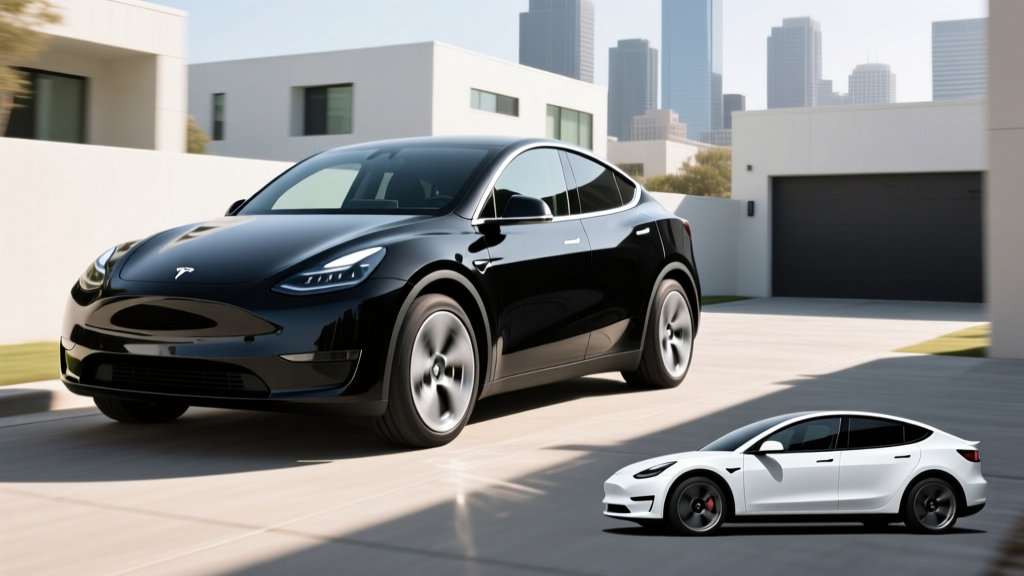
- Higher initial vehicle values. Collision and comprehensive premiums scale with replacement cost. A Tesla Model Y Long Range starts at roughly $46,000; a comparable gas-powered compact SUV often lists $5,000 to $10,000 lower.
- Parts availability. EV-specific components — inverter assemblies, heat pumps, onboard chargers — have longer lead times and fewer aftermarket alternatives than conventional parts.
Not every EV is equally expensive to insure. A Nissan Leaf or Chevrolet Bolt EV, with lower MSRPs and widely available parts, often costs only marginally more to insure than a gas hatchback. Premium-performance models like the Tesla Model S Plaid or Porsche Taycan Turbo carry insurance costs that can exceed $4,000 to $5,000 annually.
5-Year Total Cost of Ownership: EV vs. Gas
To understand whether an EV saves you money despite higher insurance, you need a full ledger. Below is a representative 5-year total cost of ownership (TCO) comparison using a 2026 Tesla Model Y Long Range AWD (base MSRP ~$46,380) against a 2026 Toyota RAV4 XLE AWD (base MSRP ~$33,500), assuming 15,000 miles per year, 75,000 miles total.
| Category | Tesla Model Y LR AWD (EV) | Toyota RAV4 XLE AWD (Gas) |
|---|---|---|
| Purchase Price (MSRP) | $46,380 | $33,500 |
| Federal Tax Credit (§30D) | −$7,500 (if eligible) | $0 |
| Effective Purchase Price | $38,880 | $33,500 |
| Fuel / Energy (75k mi) | $3,750 (home charging @ $0.15/kWh) | $8,100 (gas @ $3.40/gal, 30 MPG) |
| Insurance (5 years) | $13,500 ($2,700/yr avg) | $10,000 ($2,000/yr avg) |
| Maintenance | $1,800 | $4,200 |
| Depreciation (est.) | $18,500 | $11,200 |
| Total 5-Year Cost | $76,430 | $67,000 |
| Cost Per Mile | $1.02 | $0.89 |
Key takeaway: The Model Y's fuel and maintenance savings (~$6,750 combined over 5 years) are substantial, but they don't fully offset the combined impact of higher purchase price (even after the tax credit), higher insurance ($3,500 more), and steeper depreciation ($7,300 more). The gap narrows significantly if you qualify for the full credit, charge primarily at home on cheap electricity, and drive a model with better resale retention.
For buyers comparing a more affordable EV — say, a 2026 Chevrolet Equinox EV 2LT (MSRP ~$35,000, eligible for the full $7,500 credit) — against a similarly priced gas crossover, the TCO math can flip in the EV's favor, especially in states with additional rebates.
Federal Tax Credit: IRS §30D Rules for 2026
The federal Clean Vehicle Credit under IRS §30D can reduce your effective purchase price by up to $7,500 — but eligibility is far from universal. The rules tightened considerably under the Inflation Reduction Act and continue to evolve.
§30D Eligibility Checklist (2026 Tax Year)
- Vehicle type: New plug-in EV or fuel-cell vehicle (used EVs have a separate §25E credit, up to $4,000).
- MSRP caps: Vans, SUVs, and pickups must have an MSRP ≤ $80,000. Sedans and other body styles must be ≤ $55,000.
- Buyer income caps (modified AGI): $300,000 for joint filers; $225,000 for heads of household; $150,000 for single filers.
- Battery component sourcing: A percentage of battery components must be manufactured or assembled in North America (threshold increases annually).
- Critical minerals: A percentage of critical minerals must be sourced from the U.S. or a free-trade-agreement partner (threshold increases annually).
- Final assembly: Vehicle must undergo final assembly in North America.
- Point-of-sale transfer: As of 2024, you can transfer the credit to the dealer at purchase, reducing your out-of-pocket cost immediately rather than waiting to claim it on your tax return.
Because the battery-sourcing and critical-mineral thresholds tighten each year, a model that qualified for the full $7,500 in 2024 may qualify for only $3,750 (or nothing) in 2026. Always verify current eligibility on fueleconomy.gov before relying on the credit in your budget.
State, Local, and Utility Incentives
Beyond federal credits, many states and utilities offer additional rebates — but these vary enormously by jurisdiction. Examples include:
- California: Clean Vehicle Rebate Project (CVRP) and utility-specific rebates (PG&E, SCE, SDG&E) that can stack to $2,000–$7,500+ depending on income.
- Colorado: State tax credit of up to $5,000 for new EVs (subject to legislative renewal).
- Utility rebates: Many municipal utilities offer $500–$1,500 rebates for home Level 2 charger installation, or reduced off-peak electricity rates for EV charging.
Check your state energy office and local utility for current programs. These incentives change frequently and may have income or vehicle-price qualifications of their own.
Charging vs. Gas: The Real Cost Per Mile
Fuel savings are where EVs consistently shine — but the exact number depends heavily on how and where you charge.
| Scenario | Cost Per Mile | Assumptions |
|---|---|---|
| Home charging (national avg electricity) | $0.045 | $0.16/kWh, 3.5 mi/kWh efficiency |
| Home charging (off-peak utility rate) | $0.026 | $0.09/kWh, 3.5 mi/kWh |
| Public DC fast charging (avg) | $0.11–$0.16 | $0.35–$0.50/kWh, 3.5 mi/kWh |
| Tesla Supercharger (avg 2026) | $0.09–$0.12 | $0.28–$0.36/kWh, 3.5 mi/kWh |
| Gas vehicle (30 MPG combined) | $0.113 | $3.40/gallon |
| Gas vehicle (22 MPG combined, truck/SUV) | $0.155 | $3.40/gallon |
The math: A driver covering 15,000 miles per year who charges primarily at home on a national-average rate of ~$0.16/kWh spends roughly $675 annually on electricity. The same driver in a 30 MPG gas vehicle at $3.40/gallon spends about $1,700 — a $1,025 annual savings. Over five years, that's over $5,000.
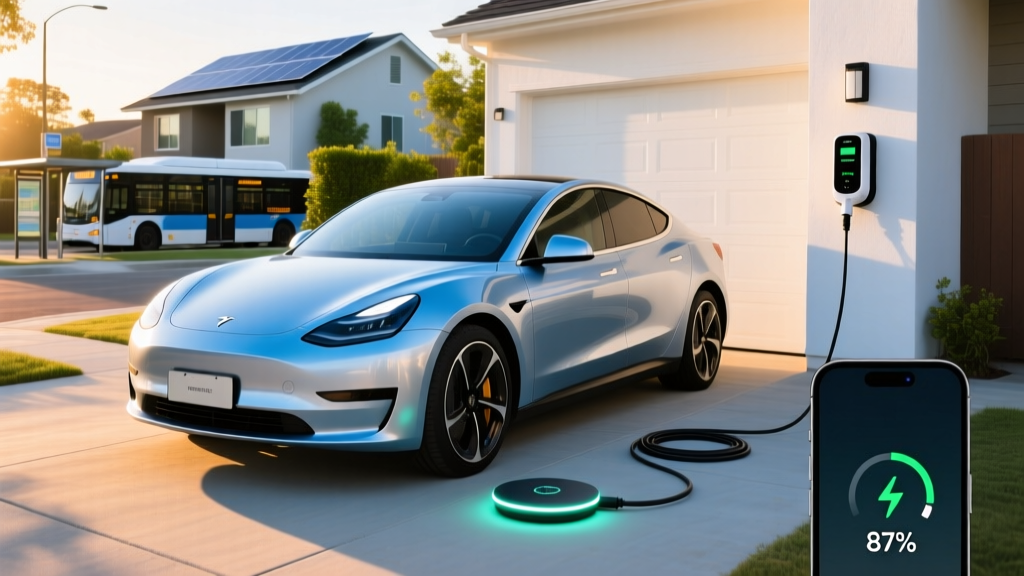
However, if you rely exclusively on public DC fast charging at $0.40–$0.50/kWh, your per-mile cost can equal or exceed gasoline. Home charging access is the single biggest variable in EV operating economics. Before buying, confirm you can install a Level 2 home charger or have reliable access to affordable workplace or public charging.
Maintenance Savings: Where EVs Quietly Win
EVs have dramatically fewer moving parts than internal-combustion vehicles — no engine, no transmission (most use single-speed reducers), no exhaust system, no oil, no spark plugs, no timing belts. This translates to real, measurable savings.
| Service Item | EV | Gas Vehicle |
|---|---|---|
| Oil changes | $0 | $600–$900 (every 5k–7.5k mi) |
| Brake pads/rotors | $0–$300 (regen extends life 2–3×) | $600–$1,200 |
| Transmission fluid | $0 (most EVs: sealed, no service interval) | $150–$300 |
| Engine air filter | $0 | $100–$200 |
| Coolant flush | $100–$200 | $150–$300 |
| Tire rotation/replacement | $800–$1,400 (EVs wear tires faster due to weight/torque) | $600–$1,000 |
| Cabin air filter | $100–$200 | $100–$200 |
| Total (est.) | $1,000–$2,100 | $2,300–$4,100 |
One often-overlooked cost: tires. EVs are heavier (a Model Y weighs ~4,400 lbs vs. ~3,600 lbs for a RAV4) and deliver instant torque, which accelerates tread wear. Budget for tire replacement every 25,000–35,000 miles rather than the 40,000–50,000 miles typical for gas cars. EV-specific tire compounds (like Michelin's e.Primacy or Hankook's iON) can help mitigate this.
The battery itself is covered under federal mandate for a minimum of 8 years/100,000 miles (10 years/150,000 miles in California and states adopting CARB standards). Most manufacturers match or exceed this. Out-of-warranty battery replacement remains expensive — $10,000 to $20,000 depending on the pack — but data from Recurrent Auto shows that the vast majority of EV batteries retain 90%+ capacity at 100,000 miles, and catastrophic failure rates are well below 1%.
EV Depreciation: The Wildcard in Your Cost Equation
Depreciation is the largest single cost of vehicle ownership, and it's where EVs have been most volatile. In 2023–2024, aggressive price cuts by Tesla and an influx of new models caused used EV values to drop sharply — some models lost 50%+ of their value in the first two years.
As of 2026, the market is stabilizing, but EV depreciation still generally trails that of reliable gas vehicles from brands like Toyota and Honda. Key factors:
- Battery health concerns among used buyers suppress resale values, even though real-world degradation data shows most packs hold up well.
- Rapid technology improvement means a 2-year-old EV with 250 miles of range and 100 kW charging looks less appealing next to a new model with 350 miles and 250 kW charging.
- Tax credit effects: When new EVs are heavily incentivized, used EV prices get pushed down because buyers can get a subsidized new vehicle for a similar price.
- Brand matters: Tesla, Hyundai/Kia, and BMW EVs have held value better than some early efforts from legacy brands. The Tesla Model Y and Model 3 remain the most liquid used EVs.
Expect a mainstream EV to retain roughly 40%–55% of its purchase price after 5 years/75,000 miles, compared to 50%–65% for a top-selling gas crossover. This gap is narrowing as the used-EV market matures and as more buyers gain confidence in battery longevity data.
How to Lower Your EV Insurance Cost
If the insurance premium is your sticking point, several strategies can bring it down:
- Shop aggressively. Insurers weight EV risk differently. Tesla has its own insurance product in many states that uses real-time driving data and often undercuts traditional carriers by 10%–20%. Companies like GEICO, Progressive, and State Farm have also narrowed their EV premium gap.
- Choose a lower-MSRP EV. Insurance scales with vehicle value. A $33,000 Chevy Equinox EV costs meaningfully less to insure than a $60,000 BMW iX.
- Bundle and raise deductibles. Standard advice, but it applies: bundling home/auto and raising your deductible from $500 to $1,000 can cut premiums 15%–25%.
- Usage-based programs. Many insurers offer telematics-based discounts. If you drive below average miles, programs like Progressive's Snapshot or Allstate's Drivewise can reduce your rate.
- Garage your EV. Parking in a garage reduces comprehensive-claim risk (theft, weather damage) and can lower your premium.
Frequently Asked Questions
Is electric car insurance cheaper than gas car insurance?
No. On average, EV insurance costs 15%–30% more than coverage for a comparable gas vehicle, primarily due to higher repair costs, specialized labor requirements, and higher vehicle MSRP. However, the gap varies significantly by model — affordable EVs like the Nissan Leaf may cost only slightly more to insure, while high-performance EVs can cost 50%+ more.
How much does it really cost to own an EV over 5 years?
For a mainstream EV like the Tesla Model Y Long Range (MSRP ~$46,380, eligible for $7,500 federal credit), a realistic 5-year/75,000-mile total cost is approximately $70,000–$80,000 including purchase price, energy, insurance, maintenance, and depreciation. This compares to roughly $62,000–$70,000 for a comparable gas crossover. The EV's advantage grows when home electricity is cheap, state incentives stack, and annual mileage is high.
Do I qualify for the $7,500 federal EV tax credit?
Eligibility depends on your modified adjusted gross income (≤$300k joint, ≤$150k single), the vehicle's MSRP (≤$80k for SUVs/trucks, ≤$55k for sedans), North American final assembly, and battery-sourcing/critical-mineral requirements that tighten annually. Check the current eligible vehicle list on fueleconomy.gov and review IRS guidance before purchasing. You can transfer the credit to the dealer at point of sale as of 2024.
How much do I save on fuel and maintenance with an EV?
A typical EV driver charging at home saves $800–$1,200 per year on fuel versus a 30 MPG gas car, and $400–$700 per year on maintenance (no oil changes, reduced brake wear from regenerative braking). Over 5 years, combined fuel and maintenance savings typically total $5,000–$8,000. These savings are largest for high-mileage drivers with access to cheap home electricity.
How well do EVs hold their value compared to gas cars?
EVs currently depreciate faster than top-selling gas vehicles, retaining roughly 40%–55% of purchase value after 5 years versus 50%–65% for models like the Toyota RAV4. However, this gap is narrowing as the used-EV market matures, battery longevity data accumulates, and price volatility from manufacturer price cuts subsides. Brand and model selection significantly affect resale — Tesla and Hyundai/Kia EVs tend to hold value better than average.