How an Electric Car Works — The Short Answer
An electric car (EV) replaces a gas engine and fuel tank with an electric motor and a high-voltage battery pack, typically storing 50–120 kilowatt-hours (kWh) of energy. Instead of burning fuel to turn pistons, the battery sends electricity to the motor, which converts it directly into rotational force to move the wheels. This process is roughly 85–90% efficient, compared to about 20–30% for a gasoline engine, which wastes most of its energy as heat. You recharge the battery by plugging into a home outlet, a Level 2 wallbox, or a public DC fast charger — no oil changes, spark plugs, or exhaust systems involved.
The Core Components Behind Every EV
Strip away the body panels and every battery-electric vehicle shares the same fundamental architecture. Understanding these pieces demystifies ownership and helps you evaluate specs with confidence.
- Traction battery pack (kWh): The energy reservoir. Most 2026 EVs use lithium-ion cells with either NMC (nickel manganese cobalt) or LFP (lithium iron phosphate) chemistry. NMC offers higher energy density for longer range; LFP sacrifices some range for lower cost, longer cycle life, and the ability to charge to 100% daily without accelerated degradation.
- Electric motor(s): Converts electrical energy into motion. Single-motor EVs typically produce 150–300 horsepower; dual-motor AWD configurations can exceed 500 hp. Torque is delivered instantly from zero RPM, which is why even modest EVs feel quick off the line.
- Inverter: Converts the battery's DC (direct current) to AC (alternating current) for the motor, and manages regenerative braking — capturing kinetic energy during deceleration and sending it back to the battery.
- Onboard charger: Converts AC power from your home or public Level 2 station into DC to charge the battery. Most 2026 EVs have 10–11.5 kW onboard chargers; some support up to 19.2 kW.
- Thermal management system: Liquid cooling and heating loops keep the battery in its optimal temperature range (roughly 68–86°F / 20–30°C). This is critical for preserving battery health and enabling fast DC charging speeds.
EV vs. Gas vs. Hybrid: The Numbers That Matter
The real decision framework comes down to efficiency, cost per mile, and how you drive. Here's a data-driven comparison using a midsize crossover as the baseline — a vehicle class like the Hyundai Ioniq 5 (EV), Toyota RAV4 Hybrid (HEV), and Toyota RAV4 (gas).
| Metric | Battery EV (e.g., Ioniq 5 SEL) | Hybrid HEV (e.g., RAV4 Hybrid) | Gas-Only (e.g., RAV4 LE AWD) |
|---|---|---|---|
| EPA Efficiency | 114 MPGe combined (29 kWh/100mi) | 39 MPG combined | 28 MPG combined |
| Energy/Fuel Cost per Mile | ~$0.04–$0.06 (home charging, $0.14/kWh) | ~$0.09 ($3.50/gal gas) | ~$0.13 ($3.50/gal gas) |
| Annual "Fuel" Cost (12,000 mi) | ~$480–$720 | ~$1,077 | ~$1,500 |
| Maintenance (annual avg) | ~$300–$400 | ~$500–$600 | ~$600–$800 |
| Estimated EPA Range / Tank | 303 miles (EPA) | 580 miles (14.5 gal tank) | 406 miles (14.5 gal tank) |
| CO₂ Tailpipe Emissions | Zero | ~257 g/mi | ~357 g/mi |
Sources: fueleconomy.gov, manufacturer specifications. Electricity rate based on U.S. residential average; gas price approximate. Your costs will vary by region and utility rate.
Real-World Range: What the EPA Sticker Doesn't Tell You
EPA range estimates are a useful baseline, but they're tested under controlled conditions that don't capture every real-world variable. Here's what actually affects how far you'll drive between charges:
EPA vs. Reality
EPA sticker: 303 miles (Hyundai Ioniq 5 SEL, RWD, 77.4 kWh battery)
Real-world highway (70 mph, moderate temps): Expect ~250–270 miles. Aerodynamic drag at highway speed consumes significantly more energy than the EPA's mixed-cycle test.
Cold weather (below 32°F / 0°C): Expect 20–35% range reduction. Battery chemistry slows in the cold, and cabin heating draws additional power. A heat pump — standard on many 2026 models — recovers some of this loss.
Mountain driving: Ascending passes can temporarily slash range by 40%+, but regenerative braking on descents recovers a meaningful portion.
The practical takeaway: if your daily commute is under 60 miles round-trip, virtually any modern EV covers it easily, even in winter. Range becomes a planning factor primarily on road trips exceeding 200 miles one-way.
Charging Explained: Levels, Speeds, and Costs
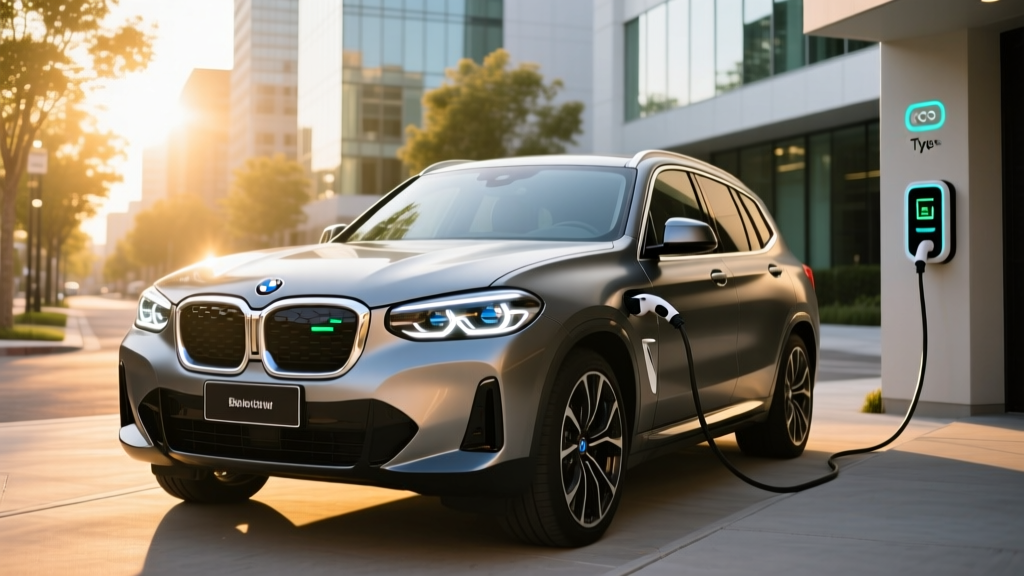
Understanding kW vs. kWh is the single most important concept for EV ownership. Kilowatt-hours (kWh) measure how much energy the battery holds — think of it as the "tank size." Kilowatts (kW) measure how fast energy flows into the battery — the "pump speed." A 77 kWh battery charged at 7 kW takes about 11 hours from empty to full. Charge that same battery at 150 kW (on a DC fast charger), and you can go from 10–80% in roughly 18 minutes.
| Level | Power (kW) | Voltage | Miles Added per Hour | Best For |
|---|---|---|---|---|
| Level 1 (standard outlet) | 1.2–1.9 kW | 120V AC | 3–5 miles | Overnight top-offs, PHEVs, low-mileage drivers |
| Level 2 (home wallbox / public) | 7–19.2 kW | 240V AC | 20–60 miles | Daily home charging, workplace, destinations |
| DC Fast Charging | 50–350 kW | 400–800V DC | 150–800+ miles (peak) | Road trips, quick top-ups away from home |
The Charging Curve Reality
DC fast charging does not sustain peak speed from start to finish. A vehicle rated for 240 kW peak may only hold that rate between 10–40% state of charge (SoC), then taper progressively. The 10–80% time is the meaningful metric — most 2026 EVs on 800V architectures (Hyundai, Kia, Porsche, Lucid) achieve 10–80% in 18–22 minutes. Vehicles on older 400V platforms typically take 25–40 minutes. Always precondition your battery before a fast-charge stop — most EVs do this automatically when you navigate to a charger — to reach peak speeds.
Connector Standards in 2026
The North American Charging Standard (NACS), pioneered by Tesla, has become the dominant connector for new EVs starting with 2025–2026 model years. Most legacy CCS1 vehicles can access Tesla Superchargers via adapter. CHAdeMO remains on older Nissan Leaf models but is effectively discontinued for new vehicles.
The True Cost of EV Ownership: A 5-Year Breakdown
Upfront EV prices remain higher than comparable gas cars, but the gap has narrowed significantly. Here's a realistic 5-year / 60,000-mile total cost of ownership comparison, using a midsize crossover EV priced around $42,000 before incentives versus a $32,000 gas equivalent.
| Cost Category | Battery EV ($42,000 MSRP) | Gas Vehicle ($32,000 MSRP) |
|---|---|---|
| Purchase Price (after incentives) | $34,500 (est. $7,500 §30D credit*) | $32,000 |
| Fuel / Electricity (5 years) | $2,400–$3,600 | $7,500 |
| Maintenance (5 years) | $1,500–$2,000 | $3,000–$4,000 |
| Insurance (5 years, avg) | $9,000–$11,000 | $7,000–$8,500 |
| Depreciation (est.) | $14,000–$18,000 | $12,000–$15,000 |
| Estimated 5-Year Total | $61,400–$69,100 | $61,500–$66,500 |
*The §30D federal tax credit offers up to $7,500 for qualifying new EVs, subject to MSRP caps ($80,000 for SUVs/trucks, $55,000 for sedans), buyer income limits ($150K single / $300K joint), and critical-mineral/battery-sourcing requirements that vary by model and model year. Eligibility can also be taken as a point-of-sale discount. Always verify your specific vehicle and tax situation with the IRS and a tax professional.
The numbers show that EVs and gas cars often land in a similar total-cost ballpark over five years, but the composition differs: EVs shift spending from fuel and maintenance toward the purchase price and insurance. EV insurance premiums run 15–25% higher on average, driven by higher repair costs and specialized parts. Depreciation has historically been steeper for EVs, though 2025–2026 data shows stabilization as the used-EV market matures.
Common EV Myths vs. Facts
| Myth | Fact |
|---|---|
| "EV batteries need replacing every few years." | Federal law mandates a minimum 8-year / 100,000-mile battery warranty. Real-world degradation data shows most EVs retain 85–92% of original capacity after 100,000 miles. Full replacement is rare and typically costs $8,000–$18,000 if needed out of warranty. |
| "The grid can't handle mass EV adoption." | Most EV charging happens overnight during off-peak hours, when grid capacity is underutilized. Utilities are deploying managed-charging programs and time-of-use rates to distribute load. The transition is gradual — EVs are ~8% of U.S. new car sales as of late 2025. |
| "EVs are worse for the environment because of battery mining." | Studies from Argonne National Laboratory and the ICCT consistently find that EVs produce fewer lifecycle emissions than gas cars within 1–2 years of driving, even on coal-heavy grids. Battery recycling infrastructure (Redwood Materials, Li-Cycle) is scaling rapidly. |
| "You can't take an EV on a road trip." | With 200+ mile ranges and DC fast-charging networks (Tesla Supercharger, Electrify America, EVgo) covering major U.S. highways, road trips require 18–30 minute stops every 2–3 hours — roughly in line with normal rest breaks. |
| "EVs are slow." | Instant electric torque makes most EVs quicker than gas equivalents. A base Tesla Model 3 RWD does 0–60 in ~5.8 seconds; the dual-motor AWD version hits ~4.2 seconds. Even mainstream models like the Chevrolet Equinox EV deliver confident acceleration. |
First-Time Buyer Checklist: What You Actually Need to Know
1. Home Charging Access Is the Key Variable
If you can install a Level 2 (240V) home charger, EV ownership is dramatically more convenient — you wake up to a "full tank" every morning. A basic 48-amp Level 2 wallbox costs $500–$800 for the equipment, with professional installation running $800–$2,500 depending on your electrical panel. If your panel is maxed out at 100 amps, a panel upgrade to 200 amps can add $1,500–$3,000. Without home charging, you'll rely on public infrastructure, which adds time and cost. Evaluate your access honestly before committing.
2. Match the EV to Your Actual Driving Pattern
Don't buy for the 5% of trips that are 400-mile road trips. Buy for the 95% of daily driving. A 250-mile EPA range covers nearly all daily commutes and errands. For road trips, plan around DC fast-charger locations and accept a slightly longer travel time.
3. Battery Chemistry Matters for Daily Habits
If you plan to charge to 100% every night (common for high-mileage drivers), an LFP battery is the better choice — it tolerates full-charge cycles without the accelerated degradation seen in NMC packs. If maximum range is your priority and you're comfortable charging to 80% daily, NMC delivers more miles per kWh.
4. Federal and State Incentives Change Frequently
The §30D credit rules have tightened significantly since 2023. Battery-sourcing and critical-mineral requirements mean not every EV qualifies for the full $7,500 — some receive $3,750, and some receive nothing depending on supply-chain compliance. Many states offer additional rebates (California's CVRP, Colorado's state credit, etc.), but amounts and availability vary. Check IRS.gov and your state energy office before purchasing.
5. Plan for Insurance and Depreciation
Get insurance quotes before signing a purchase agreement. EV premiums can be $200–$500/year higher than equivalent gas vehicles. Depreciation curves have improved but still vary widely by brand — Tesla and Hyundai/Kia have shown stronger residual values in recent years than some luxury EV marques.
Decision Framework: Is an EV Right for You?
Choose a Battery EV If:
- You have access to home or workplace Level 2 charging
- Your daily driving is under 100 miles round-trip (covers ~90% of U.S. drivers)
- You want to minimize per-mile fuel and maintenance costs
- You qualify for federal/state incentives that narrow the upfront price gap
- You're willing to plan charging stops on road trips 2–4 times per year
Choose a Plug-In Hybrid (PHEV) If:
- You lack reliable home charging but want some electric driving
- Your commute is 20–40 miles and you want gas-free daily driving with road-trip flexibility
- You want a lower purchase price and zero range anxiety on long trips
Choose a Gas or Standard Hybrid If:
- You have no access to home or workplace charging and public infrastructure in your area is sparse
- You regularly tow heavy loads or drive 300+ miles in remote areas without charging coverage
- Your budget cannot absorb the upfront premium even after incentives
Frequently Asked Questions
How long does it take to charge an electric car at home?
On a Level 2 home charger (typically 10–11.5 kW), expect to add roughly 30–45 miles of range per hour of charging. A full charge from 10% to 100% on a 77 kWh battery takes about 7–8 hours — easily accomplished overnight. On a standard 120V Level 1 outlet, a full charge can take 40–60+ hours, which is only practical for PHEVs with small batteries or as an emergency trickle.
Do electric cars lose range in cold weather?
Yes. At temperatures below freezing, expect a 20–35% range reduction due to battery chemistry slowdown and cabin heating demand. Vehicles equipped with a heat pump (standard on most 2026 Hyundai, Kia, Tesla, and Volkswagen models) recover some of this loss — typically limiting the hit to 15–25%. Preconditioning the battery while plugged in before departure minimizes the impact.
How long do EV batteries last before they need replacement?
Modern lithium-ion EV batteries are designed to outlast the vehicle. Federal warranty requirements mandate coverage for at least 8 years / 100,000 miles (10 years / 150,000 miles in CARB states like California). Real-world fleet data from sources like NHTSA and independent studies show average degradation of 8–15% over 100,000 miles. Full battery replacement before 150,000 miles is uncommon.
Are electric cars actually cheaper to own than gas cars?
Over a 5-year ownership period, total costs are often comparable — EVs save significantly on fuel and maintenance but carry higher purchase prices, insurance premiums, and potentially steeper depreciation. The breakeven point depends heavily on your local electricity rates, annual mileage, and whether you qualify for the §30D tax credit. High-mileage drivers in states with cheap electricity and full incentive eligibility see the fastest payback, often within 2–3 years.
What happens if I run out of charge on the road?
Running an EV to zero is rare with modern navigation systems that route through chargers and provide low-charge warnings. If it does happen, the vehicle must be towed to a charging station — you cannot bring a "jerry can" of electrons. Roadside assistance programs (AAA, manufacturer-provided) increasingly offer mobile charging or flatbed towing to the nearest DC fast charger.
Can I charge a non-Tesla EV at a Tesla Supercharger?
Yes, as of 2025–2026, most major automakers (Ford, GM, Rivian, Hyundai, Kia, Volvo, Polestar, and others) have adopted the NACS connector or provide CCS-to-NACS adapters that grant access to the Tesla Supercharger network — the largest and most reliable DC fast-charging network in the U.S. with over 25,000 stalls. Check your automaker's specific adapter and app requirements.