Quick Answer: What Is the Electric Car Graveyard?
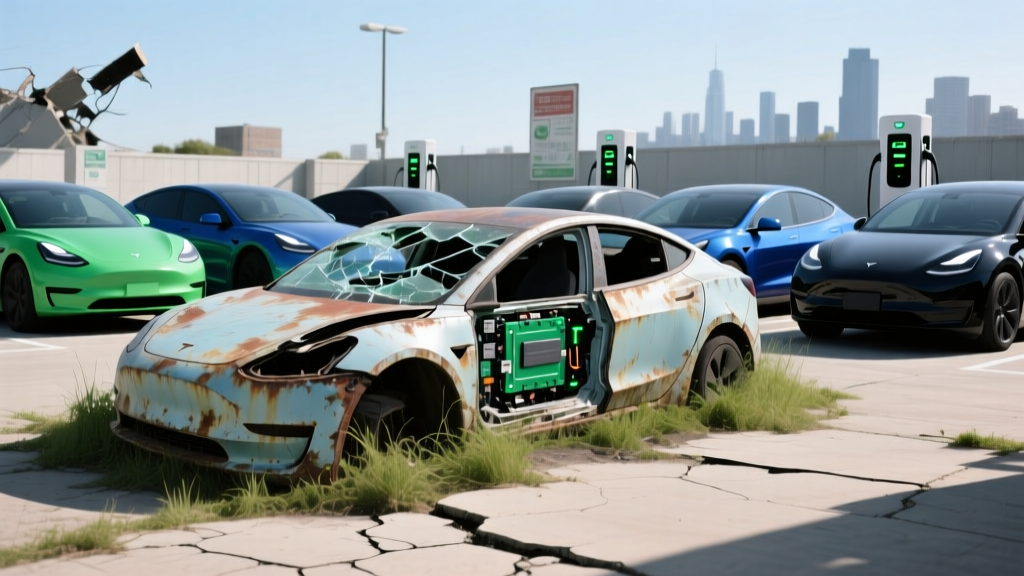
The "electric car graveyard" refers to EVs that are abandoned, prematurely scrapped, or suffer catastrophic value loss — not because electric drivetrains fail mechanically, but because of uneconomical battery replacements, extreme depreciation on discontinued models, and mismatched buyer expectations. The EVs most at risk are early-generation models (2011–2018) with degraded batteries costing $8,000–$20,000+ to replace on a car now worth less than the repair. Modern EVs (2022+) with 8-year/100,000-mile battery warranties and LFP chemistry are far less likely to end up prematurely retired. The key to avoiding the graveyard: buy a current-generation EV with an active warranty, verify battery State of Health (SoH) on used purchases, and ensure your daily driving and charging access actually fit EV ownership.
What Actually Sends EVs to the Graveyard
The phrase "electric car graveyard" evokes images of thousands of abandoned EVs rotting in lots — and while viral photos of unused EVs in China have fueled this narrative, the reality for US buyers is more nuanced and more instructive. The EVs that truly end up scrapped or economically totaled fall into specific, avoidable categories.
Category 1: Out-of-warranty battery failure on early models. The Nissan Leaf (2011–2017) with its passively-cooled 24–30 kWh battery pack is the poster child. These packs degraded 20–40% within 5–8 years in hot climates, dropping real-world range from an already modest 73–107 EPA miles down to 45–65 miles. A replacement battery from Nissan costs approximately $6,500–$9,000 (parts and labor), but third-party replacements or refurbished packs can push higher. When the car's resale value sits at $4,000–$7,000, the math doesn't work — and the car goes to auction, salvage, or sits undriven.
Category 2: Discontinued models with orphaned parts support. When manufacturers kill an EV program, parts availability and dealer expertise evaporate. Examples include the Chevrolet Spark EV (discontinued 2016), BMW i3 (ended 2022 for the US), and various compliance cars. These vehicles can become difficult to service, depressing resale values and making any major repair a total-loss trigger.
Category 3: Fleet and rideshare vehicles driven to extreme mileage. High-mileage EVs from fleet service (especially early Tesla Model 3s and Chevy Bolts used in rideshare) can accumulate 150,000–300,000 miles rapidly. While electric motors and single-speed transmissions are durable, battery degradation at these mileages may push replacement costs beyond vehicle value, particularly if the vehicle was DC fast-charged daily without thermal management best practices.
The Real Numbers: EV Depreciation and Battery Replacement Costs
Understanding the economics that drive EVs to the graveyard requires looking at actual depreciation curves and repair costs versus gas-car equivalents.
| Factor | 2024 Tesla Model 3 RWD | 2024 Toyota Camry LE (Gas) |
|---|---|---|
| Base MSRP | $38,990 | $26,420 |
| Federal Tax Credit (§30D) | Up to $7,500 (eligibility varies) | $0 |
| Effective Purchase Price | ~$31,490 (if eligible) | $26,420 |
| 5-Year Depreciation (est.) | ~45–50% | ~35–40% |
| Estimated Value at Year 8 | ~$12,000–$15,500 | ~$10,500–$12,000 |
| Fuel/Energy Cost (8 yr, 12k mi/yr) | ~$4,800–$6,400 (home charging) | ~$11,500–$14,400 |
| Maintenance (8 yr) | ~$2,500–$3,500 | ~$5,500–$7,500 |
| Battery Replacement Risk | Low (warranty covers 8yr/120k mi) | N/A |
| 8-Year Total Cost of Ownership | ~$45,000–$52,000 | ~$49,000–$56,000 |
The data reveals a critical insight: the "graveyard risk" isn't primarily about total cost — it's about the asymmetric cost of a single catastrophic repair. A gas car's transmission replacement at $4,000–$6,000 is painful but familiar. An EV battery replacement at $10,000–$20,000 on an out-of-warranty vehicle is an economic death sentence because it exceeds the car's value entirely.
Current battery replacement cost ranges (2025–2026 data):
- Nissan Leaf (24 kWh, early gen): $6,500–$9,000
- Chevy Bolt EV (65 kWh): $14,000–$16,000 (pre-recall replacement; post-recall units under warranty)
- Tesla Model 3/Y (75–82 kWh): $12,000–$16,000 out of warranty
- Ford Mustang Mach-E (88 kWh usable): $15,000–$20,000+ out of warranty
- Hyundai Ioniq 5 (77.4 kWh): $12,000–$18,000 estimated
These figures are why the battery warranty is the single most important ownership protection. Under federal mandate, all EVs carry a minimum 8-year/100,000-mile battery warranty (10 years/150,000 miles in CARB states). This warranty covers capacity loss below a threshold — typically 60–70% of original capacity depending on the manufacturer.
Which EVs Are Most at Risk (and Which Are Safest)
Not all EVs carry equal graveyard risk. Here's how to evaluate the spectrum.
| Claim | Reality |
|---|---|
| "EV batteries all need replacing after 100k miles" | Modern NMC and LFP packs routinely retain 85–92% capacity at 100,000 miles. Tesla's 2024 impact report showed median Model S/X battery degradation at ~12% after 200,000 miles. Early passive-cooling packs (2011–2017 Leaf) were the exception, not the rule. |
| "EVs are disposable — when the battery dies, the car is trash" | True only for out-of-warranty early-gen EVs with low residual value. Current-generation EVs with active thermal management and warranty coverage are no more "disposable" than gas cars facing engine rebuilds. |
| "Used EVs are a graveyard trap" | Risk is real but manageable. A used EV with verified SoH above 85%, remaining warranty, and a known service network is a sound buy. One without those — especially a 2013–2017 Leaf in a hot state — is a genuine risk. |
| "EVs depreciate faster than gas cars, so they're bad investments" | EV depreciation has been higher on average (partly due to Tesla price cuts rippling through the used market and rapid tech improvement), but TCO often still favors EVs due to energy and maintenance savings. Depreciation is one variable, not the whole equation. |
| "China's EV graveyards prove the technology is flawed" | China's unused-EV lots are primarily a subsidy fraud and overproduction story — fleet companies registering vehicles to claim incentives without deploying them. It's a policy failure, not a drivetrain failure. |
Highest-risk EVs (approach with caution used):
- 2011–2017 Nissan Leaf (passive cooling, high degradation risk)
- 2014–2019 BMW i3 (range-extender complexity, limited parts for discontinued model)
- Fiat 500e (2013–2019, compliance car, limited service network)
- Chevrolet Spark EV (discontinued, low production volume)
- Early Mercedes B-Class Electric Drive (limited support)
Lowest-risk EVs (built to stay out of the graveyard):
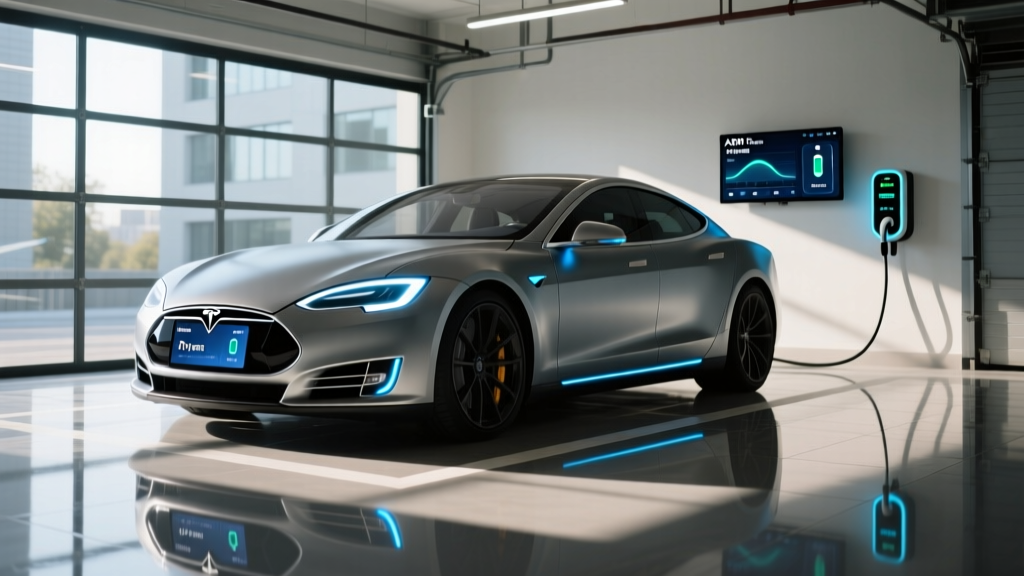
- 2023+ Tesla Model 3/Y (LFP option, strong Supercharger network, high parts availability)
- 2022+ Hyundai Ioniq 5 / Kia EV6 (800V architecture, 8yr/100k warranty, 10yr/100k in CARB states)
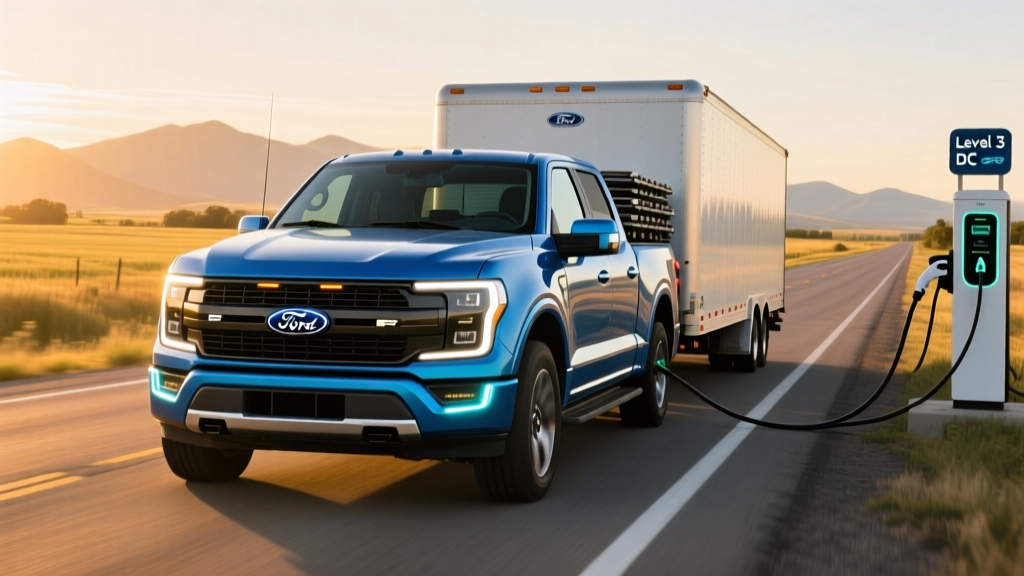
- 2023+ Ford F-150 Lightning (high-volume production, extensive dealer network)
- 2024+ Chevrolet Equinox EV / Blazer EV ( Ultium platform, mass-market parts support)
- Any EV with LFP (lithium iron phosphate) battery chemistry — LFP degrades more slowly and tolerates 100% SoC daily charging, extending practical lifespan
The First-Time Buyer's Graveyard-Avoidance Checklist
If you're considering an EV and want to ensure it stays on the road — not in a salvage yard — work through this decision framework systematically.
Choose Your Path: Will This EV Survive?
IF you have home charging access (Level 2, 240V):
→ You're in the lowest-risk ownership category. Home charging eliminates public-charging reliability issues, reduces per-mile energy cost to $0.03–$0.05/mile (vs. $0.10–$0.15/mile gas), and allows slow charging that preserves battery health. Proceed to evaluate specific models.
IF you rely solely on public charging:
→ Factor in higher per-mile cost ($0.12–$0.25/mile at DC fast chargers), reliability risk (studies show 15–20% of non-Tesla public chargers experience downtime), and accelerated battery degradation from frequent DC fast charging. A PHEV may be a better fit unless your commute is short and you have reliable workplace charging.
IF you live in a cold climate (sub-20°F winters):
→ Expect 20–35% real-world range loss in cold weather. A 300-mile EPA-rated EV may deliver only 195–240 miles in January. Choose an EV with a heat pump (standard on most 2023+ models, including Ioniq 5, Model Y, and ID.4) and buy more range than you think you need. Cold doesn't put EVs in the graveyard — it just demands proper planning.
IF you're buying used:
→ Demand a battery State of Health (SoH) report. On a Nissan Leaf, check the battery capacity bars on the dashboard. On a Tesla, request a service-mode battery health readout. Avoid any used EV with SoH below 80% unless the price reflects a near-term battery replacement cost. Confirm remaining warranty — the 8yr/100k mandate is your safety net.
IF the EV's federal tax credit eligibility matters to your budget:
→ Under current IRS §30D rules, the up-to-$7,500 credit requires meeting MSRP caps ($55,000 for sedans, $80,000 for SUVs/trucks), buyer income limits ($150k single / $300k joint AGI), and battery critical-mineral and component sourcing thresholds that tighten annually. The credit can now be transferred to the dealer at point of sale as an immediate discount. Verify eligibility on the specific VIN before committing — rules are complex and model-specific.
EV vs. Gas vs. Hybrid: Which Keeps You Out of the Graveyard?
The honest comparison isn't just about which powertrain is "best" — it's about which one matches your driving pattern, charging access, and ownership timeline well enough to avoid premature disposal.
| Factor | Battery EV (BEV) | Plug-in Hybrid (PHEV) | Gas (ICE) |
|---|---|---|---|
| Catastrophic Repair Risk | Battery ($10k–$20k out of warranty) | Battery ($4k–$8k) + engine/transmission | Engine/transmission ($3k–$7k) |
| Typical Drivetrain Lifespan | Motor: 300k+ mi; Battery: 150k–300k mi (modern) | Complex — two systems to maintain | 150k–250k mi with maintenance |
| Parts Availability (10+ years out) | Growing but uncertain for low-volume models | Good (shared with gas platforms) | Excellent |
| Depreciation (5-year avg) | 45–55% | 40–50% | 35–45% |
| Maintenance Cost (8 yr) | $2,500–$4,000 | $4,500–$7,000 | $5,500–$8,000 |
| Energy/Fuel Cost (8 yr, 12k mi/yr) | $4,800–$7,200 | $6,000–$9,000 | $11,500–$15,000 |
| Best For | Home charging, <60 mi daily, long ownership | No home charging, mixed driving, range flexibility | Low mileage, no charging access, budget purchase |
The pattern is clear: BEVs win on operating cost but carry the highest single-repair financial risk. Gas cars have lower catastrophic repair costs but higher ongoing expenses. PHEVs split the difference but introduce complexity (two powertrains = two things to break). The graveyard mostly claims BEVs that were bought without understanding this trade-off — specifically, buyers who purchased early-generation used EVs without warranty protection and then faced a battery bill that exceeded the car's value.
Real-World Ownership: What Dealers Don't Tell You
Beyond the spec sheet, several ownership realities determine whether your EV thrives or becomes a burden:
Charging-curve reality: That "250 kW peak charge rate" on the sticker? It's a peak, not a sustained rate. Most EVs charge at peak speed only between roughly 10–40% SoC, then taper significantly. A 2024 Hyundai Ioniq 5 (77.4 kWh battery, 240 kW peak) realistically averages about 150–170 kW across a 10–80% session, taking approximately 18 minutes. Above 80%, charging slows dramatically to protect the battery — expect 80–100% to take another 25–35 minutes. Plan road-trip stops around 10–80% charges, not 0–100%.
Insurance costs: EVs typically cost 15–25% more to insure than equivalent gas cars due to higher repair costs (specialized body shops, battery safety protocols, and expensive parts). A 2025 Tesla Model Y might carry an annual premium of $2,200–$3,000 depending on your profile, versus $1,700–$2,300 for a comparable gas SUV. Always get insurance quotes before purchasing — this cost erodes the fuel savings for some buyers.
Home charging installation: A Level 2 home charger (240V, 32–48 amps) requires a dedicated circuit. Installation costs range from $500–$1,500 if your electrical panel has spare capacity and the run is short, to $2,500–$5,000+ if you need a panel upgrade (200-amp service). This upfront cost isn't trivial, but it's a one-time expense that pays back within 1–3 years versus public charging. Factor it into your purchase budget.
Tire wear: EVs are heavy (a Model Y weighs ~4,400 lbs) and deliver instant torque. Expect tire replacement every 25,000–35,000 miles versus 40,000–60,000 miles on a comparable gas car. Budget $800–$1,400 per set and choose EV-optimized tires with higher load ratings.
Frequently Asked Questions
Are there really thousands of abandoned EVs in junkyards?
Not in the US. The viral "EV graveyard" photos are overwhelmingly from China, where subsidy-driven overproduction created unused fleet vehicles. In the US, the real graveyard is economic — individual owners facing battery replacement costs that exceed their car's value. This is concentrated in early-generation (pre-2018) models with degraded batteries and no remaining warranty.
How long do modern EV batteries actually last?
Current-generation EVs with active liquid thermal management (virtually all 2020+ models) show degradation curves suggesting 80%+ capacity retention at 150,000–200,000 miles. LFP chemistry batteries (found in standard-range Tesla Model 3/Y, some Ford and BYD models) may retain even more capacity over equivalent cycles. The IIHS and long-term fleet data support these figures. The 2011–2017 Nissan Leaf's passive-cooling battery was the outlier that created the "batteries don't last" reputation.
Should I buy a used EV or is it too risky?
A used EV is a sound purchase if: (1) the battery SoH is verified above 85%, (2) remaining factory battery warranty exists (the 8yr/100k mi federal minimum means a 2021 model is covered through at least 2029), (3) the model is still in production or has strong parts support, and (4) you have charging access that fits your routine. A 2022 Tesla Model 3 with 35,000 miles, verified SoH of 93%, and warranty until 2030 is a fundamentally different risk proposition than a 2015 Leaf with 90,000 miles and degraded capacity bars.
What's the single best thing I can do to keep my EV battery healthy?
For NMC/NCA chemistry: keep daily charging between 20–80% SoC, minimize DC fast charging to road trips, and precondition the battery before fast charging (most EVs do this automatically when you navigate to a charger). For LFP chemistry: you can safely charge to 100% regularly — in fact, manufacturers recommend periodic 100% charges for LFP to recalibrate the battery management system. Both chemistries benefit from avoiding prolonged storage at very high or very low SoC, and from garaging in extreme heat when possible.
Does the federal tax credit protect me from graveyard risk?
Indirectly, yes. The §30D credit's battery-sourcing requirements push manufacturers toward established, high-quality cell suppliers (Panasonic, CATL, LG, SK On) with proven longevity data. The credit also steers buyers toward current-production models with full warranty coverage rather than discontinued vehicles. However, the credit itself is a purchase incentive, not a longevity guarantee — always verify the specific vehicle's battery warranty terms independently. Check current rules at IRS.gov, as sourcing thresholds and eligible model lists update regularly.