Transitioning a business fleet from internal combustion to electric vehicles requires a fundamentally different operational playbook. Electric car fleet management in 2026 hinges on four pillars: depot charging infrastructure, vehicle selection matched to duty cycles, lifecycle cost analysis (purchase, energy, maintenance, insurance), and navigating federal and state incentive programs. Fleets that model their routes against real-world EV range, install Level 2 depot charging at 11.5–19.2 kW per stall, and leverage the IRS §30D clean vehicle credit or the commercial §45W credit routinely achieve a lower total cost of ownership than gas equivalents within 3–4 years, even after accounting for higher upfront vehicle costs and charger installation.
The Quick Answer
Is electric car fleet management worth it in 2026? Yes, for fleets with predictable daily routes under 200 miles and depot-based overnight charging. Expect $0.04–$0.06 per mile for electricity vs $0.12–$0.18 for gas, 40–50% lower scheduled maintenance, and a 3–5 year payback depending on duty cycle and incentives. Avoid electrifying long-haul or extreme-cold routes without a hybrid fallback.
What Fleet Managers Actually Need to Decide
The decision is rarely "should we go electric?" in the abstract. It is: which vehicles, which routes, and how do we charge them? A realistic electric car fleet management strategy starts with route telemetry. Pull GPS data from your existing vehicles and segment routes into three buckets:
- Short urban loops (under 80 miles/day): Ideal for compact EVs like the Chevrolet Equinox EV (EPA 319 mi, 85 kWh NMC battery) or the Ford E-Transit low-roof cargo van (EPA 126 mi, 68 kWh usable).
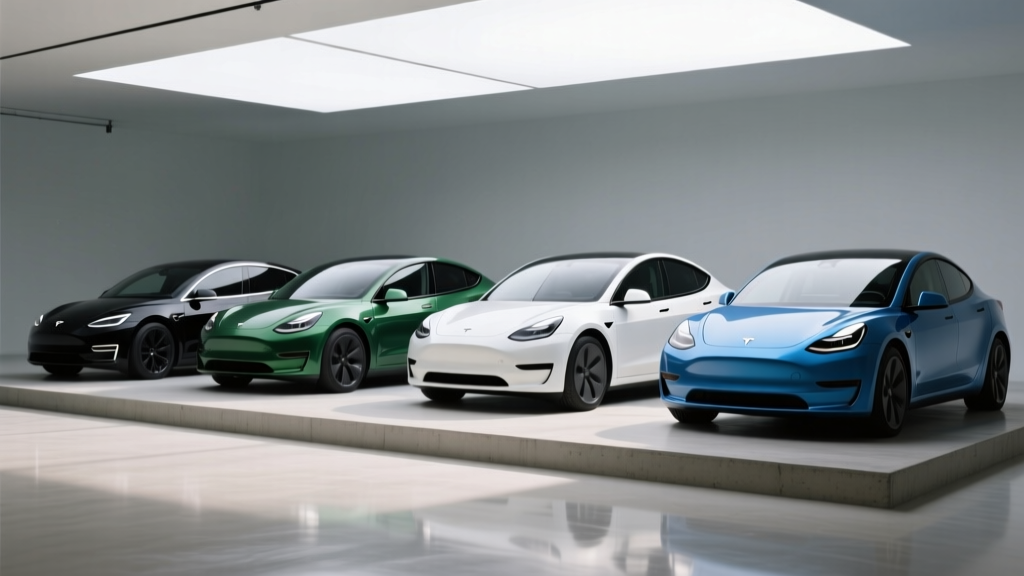
- Mid-range suburban routes (80–180 miles/day): Match to midsize sedans and crossovers — Tesla Model Y Long Range (EPA 320 mi, 75 kWh), Hyundai Ioniq 5 (EPA 303 mi, 77.4 kWh), or the Ford F-150 Lightning extended-range (EPA 320 mi, 131 kWh usable).
- Long-haul or extreme-terrain routes (200+ miles/day): PHEV or HEV remains the pragmatic choice until public DC fast-charging density improves in your operating region.
A common mistake is buying the longest-range EV available for every slot. A 320-mile battery adds 600–900 lbs of weight, reducing payload and increasing tire wear. Match battery size to the 90th-percentile daily route, not the outlier.
EV vs Gas Fleet: The Real Cost Comparison
Fleet buyers care about total cost of ownership (TCO), not sticker price. Below is a 5-year / 75,000-mile TCO model for a midsize fleet sedan, comparing a typical 2026 EV (modeled on the Hyundai Ioniq 6 SE Long Range) against a comparable 2026 gas sedan (modeled on the Toyota Camry LE), using national average fuel and electricity prices.
| Cost Category | 2026 EV Sedan (Ioniq 6 class) | 2026 Gas Sedan (Camry class) |
|---|---|---|
| Purchase (fleet MSRP) | $39,500 | $29,200 |
| Federal tax credit (§30D / §45W) | −$7,500 (if eligible) | $0 |
| Net acquisition | $32,000 | $29,200 |
| Energy (75k mi) | $2,625 (27 MPGe-kWh × $0.13/kWh avg) | $8,100 (32 MPG × $3.46/gal) |
| Scheduled maintenance | $1,125 ($0.015/mi) | $3,375 ($0.045/mi) |
| Tires (1 rotation + 1 replacement) | $1,800 (heavier vehicle) | $1,200 |
| Insurance (5-yr avg) | $9,750 | $7,500 |
| Depot charging install (amortized/vehicle) | $2,400 | $0 |
| 5-Year TCO | $49,700 | $49,375 |
| Cost per mile | $0.66 | $0.66 |
The EV reaches cost parity around year 3 in this model, and pulls ahead in years 4–5. The variables that most influence this crossover are your local electricity rate (commercial fleets in the Pacific Northwest may pay $0.06/kWh vs $0.22/kWh in parts of California) and whether you qualify for the full federal clean vehicle credit. Commercial fleets purchasing through a business entity may qualify under IRC §45W instead of §30D — consult a tax professional to determine which applies.
Depot Charging Infrastructure: What It Costs and How to Plan
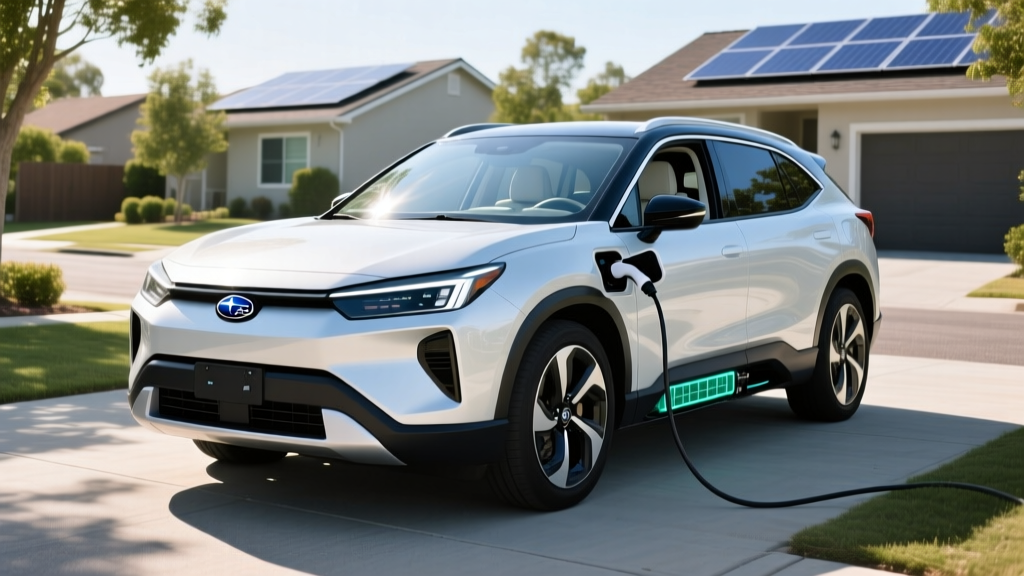
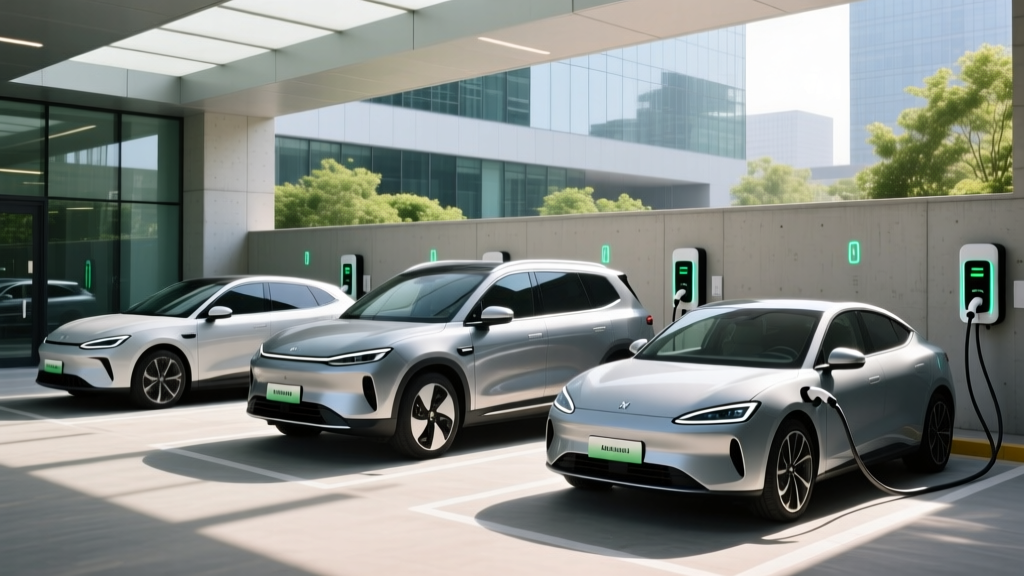
Charging is the single largest operational variable in electric car fleet management. Most fleets deploy Level 2 depot charging overnight, with DC fast chargers reserved for top-up or high-utilization vehicles.
| Charging Level | Power (kW) | Miles Added / Hour | Typical Use Case |
|---|---|---|---|
| Level 1 (120V) | 1.4–1.9 kW | 3–5 mi/hr | Not viable for fleets |
| Level 2 (240V, 48A) | 11.5 kW | 35–45 mi/hr | Standard overnight depot |
| Level 2 (240V, 80A) | 19.2 kW | 55–70 mi/hr | High-turnover fleet slots |
| DC Fast (peak) | 150–250 kW | 500–900 mi/hr | Mid-day top-up, highway corridors |
Install cost reality: A single Level 2 commercial pedestal (dual-port, 11.5 kW per port) runs $4,500–$8,000 for hardware, plus $3,000–$12,000 in electrical work depending on panel proximity, trenching, and conduit runs. A 10-vehicle depot with 5 dual-port pedestals and a panel upgrade typically lands between $60,000 and $130,000 before utility rebates.
Utility make-ready programs (offered by PG&E, Con Edison, Xcel Energy, and others) can cover 50–100% of the infrastructure cost from the transformer to the meter. Apply early — these programs have annual caps and multi-month lead times.
Battery Longevity and Warranty: The Fleet Manager's Risk Model
Fleet vehicles accumulate miles faster than personal cars, making battery degradation a financial variable. In 2026, most mainstream EVs carry an 8-year / 100,000-mile battery warranty guaranteeing ≥70% capacity retention (per fueleconomy.gov battery lifecycle data). Some manufacturers, including Hyundai and Kia, extend this to 10 years / 100,000 miles for the original owner — which includes fleet purchasers.
Real-world degradation data from high-mileage fleets shows:
- NMC batteries (most long-range EVs): ~8–12% capacity loss at 100,000 miles, with most loss occurring in the first 30,000 miles before the curve flattens.
- LFP batteries (Tesla Model 3/Y RWD, some Ford models): ~5–8% loss at 100,000 miles, with a flatter degradation curve. LFP also tolerates daily 100% charging without accelerated wear — a significant advantage for fleet operations that need full range every morning.
For fleet planning, budget a 10% range reduction by year 4 on NMC vehicles and 7% on LFP. If your route requires 180 miles and you select a 310-mile EPA vehicle, you have sufficient buffer even with degradation and a 20% cold-weather hit (relevant for fleets in the Upper Midwest and Northeast).
Tax Credits and Incentives for Commercial Fleets
The incentive landscape for fleet electrification in 2026 has two primary federal channels:
- IRC §30D (New Clean Vehicle Credit): Up to $7,500 per vehicle, subject to MSRP caps ($55,000 sedans, $80,000 SUVs/trucks/vans), buyer income limits, and critical-mineral/battery-component sourcing requirements. This credit can transfer to the dealer at point of sale for individual purchases, but fleet purchases through a business entity typically claim it differently.
- IRC §45W (Commercial Clean Vehicle Credit): Up to $7,500 for vehicles under 14,000 lbs GVWR, or up to $40,000 for heavier commercial EVs. No MSRP cap. No income cap. Requires the vehicle to be placed in service by a business or tax-exempt organization. Subject to battery-sourcing rules that tighten annually.
Many states layer additional incentives on top — California's HVIP, New York's Truck Voucher Incentive Program, and Colorado's fleet-specific credits can reduce net acquisition cost by an additional $5,000–$15,000 per vehicle. Check your state energy office for current program availability.
Common Misconceptions About Fleet Electrification
| Myth | Fact (with data) |
|---|---|
| "EVs can't handle cold weather." | Cold reduces range 20–35% at 20°F, but depot preconditioning and heat pumps (standard on Ioniq 5, Model Y, F-150 Lightning) recover 10–15% of that loss. Fleet telematics data shows most urban routes still complete with margin. |
| "Battery replacement will bankrupt us." | Full pack replacement: $8,000–$18,000 depending on model. But at 100k miles, most packs retain 88–92% capacity. Out-of-warranty replacements are rare before 150k miles in fleet data. |
| "We can't charge fast enough for our shifts." | A 19.2 kW Level 2 stall adds ~60 miles per hour of charging. An 8-hour overnight shift adds 480 miles — more than any light-duty route requires. DC fast charging at 150+ kW handles mid-day top-ups in 15–25 minutes (10–80%). |
| "EV insurance is prohibitively expensive." | Fleet EV insurance runs 15–30% higher than gas equivalents in 2026, but the gap is narrowing as claims data matures. Multi-vehicle fleet policies with EV-specific carriers (e.g., Electra, Plug In America partners) often close the gap to under 10%. |
| "We need DC fast chargers at every depot." | DCFC hardware costs $40,000–$100,000+ per unit plus significant utility demand charges. Most fleets only need DCFC for 10–20% of stalls, reserved for high-utilization or mid-day-turnaround vehicles. |
Decision Framework: Should Your Fleet Go Electric?
Use this framework to match your fleet profile to the right electrification strategy:
Choose full EV if:
- Daily routes are under 180 miles (90th percentile)
- Vehicles return to a depot overnight (minimum 8 hours parked)
- Your utility offers commercial EV rates or make-ready programs
- You operate in a state with additional fleet incentives
- Your fleet replaces vehicles at 5–7 years / 100,000 miles (capturing peak TCO advantage)
Choose PHEV if:
- Routes vary widely — some under 40 miles, some over 250
- Depot charging is feasible but not guaranteed every night
- You operate in a region with sparse public DC fast charging
- The Toyota RAV4 Prime (42 mi electric, 38 MPG gas) or Chrysler Pacifica PHEV (32 mi electric) fits your vehicle class
Stay with gas or HEV if:
- Daily routes regularly exceed 250 miles with no mid-day charging window
- Vehicles operate in extreme cold (below 0°F) for extended periods
- Your depot cannot support electrical panel upgrades (common in older industrial parks)
- Vehicle turnover is under 3 years (you won't capture the TCO crossover)
Frequently Asked Questions
What is the average cost to install depot charging for a 10-vehicle fleet?
Expect $60,000–$130,000 for 5 dual-port Level 2 pedestals (11.5 kW each), including hardware, electrical work, permits, and a potential panel upgrade. Utility make-ready programs can reduce this by 50% or more. Apply 6–12 months before vehicle delivery.
Do commercial fleets qualify for the $7,500 federal tax credit?
It depends on your purchase structure. Vehicles purchased by a business entity typically claim the IRC §45W Commercial Clean Vehicle Credit (up to $7,500 for light-duty, $40,000 for heavy-duty), which has no MSRP or income cap but does have battery-sourcing requirements that tighten annually. Consult a tax professional for your specific entity structure.
How does cold weather affect EV fleet range?
At 20°F, expect 20–35% range reduction depending on cabin heating demand and whether the vehicle has a heat pump. A 300-mile EPA EV may deliver 195–240 real-world miles in sustained cold. Depot preconditioning (warming the cabin and battery while plugged in) recovers significant range and reduces morning energy draw.
What's the difference between kW and kWh, and why does it matter for fleet planning?
kW (kilowatts) measures power — how fast energy flows, like water pressure in a hose. kWh (kilowatt-hours) measures energy — the total amount stored or consumed, like gallons in a tank. A 77 kWh battery holds 77 kWh of energy. A 19.2 kW Level 2 charger delivers energy at 19.2 kW, meaning it would take roughly 4 hours to fill a 77 kWh battery from empty. Fleet planning requires both: kWh determines range, kW determines how quickly vehicles can turn around.
Should we choose LFP or NMC battery chemistry for our fleet?
LFP (lithium iron phosphate) is ideal for fleets that charge daily to 100% and operate routes under 220 miles. LFP offers slower degradation, lower cost, and no cobalt, but has ~15% lower energy density (shorter range for the same pack size) and worse cold-weather performance. NMC (nickel manganese cobalt) is better for routes needing maximum range and cold-climate operation, but should be charged to 80–90% daily to preserve longevity, reserving 100% for long-route days.