Quick Answer: Electric Cars Don't Have Engines
Technically, an "electric car engine" doesn't exist. Internal combustion engines burn fuel; electric vehicles (EVs) use electric motors powered by a battery pack. The confusion is understandable — people use "engine" as shorthand for whatever propels the car — but the distinction matters because electric motors deliver fundamentally different performance, maintenance, and cost characteristics than gas engines. An EV motor converts electrical energy (measured in kilowatt-hours, or kWh) into motion with roughly 85–95% efficiency, compared to about 20–35% thermal efficiency for a gasoline engine. That single difference drives nearly every ownership advantage EVs claim.
How Electric Motors Actually Work (And Why They're Not Engines)
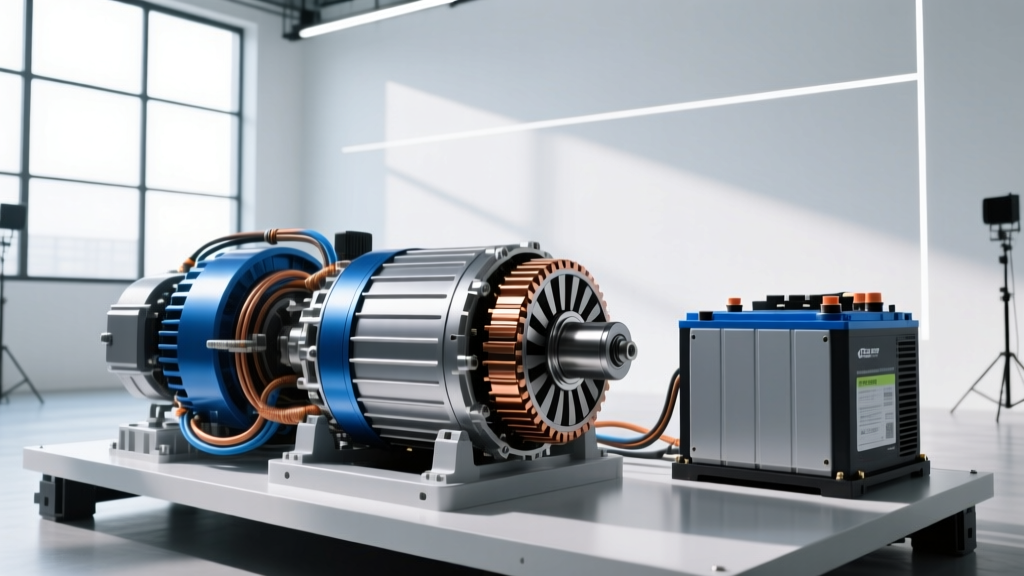
A gasoline engine relies on controlled explosions: fuel mixes with air, a spark ignites it, and the resulting pressure pushes pistons connected to a crankshaft. Hundreds of moving parts — pistons, valves, camshafts, timing chains, oil pumps — must operate in precise synchronization. An electric motor operates on electromagnetism: current flowing through copper windings creates a magnetic field that pushes against permanent magnets (or other windings) on a rotor, spinning it directly.
The result is a drivetrain with roughly 20 moving parts in the motor itself, versus 2,000+ in a typical internal combustion powertrain. No spark plugs. No oil changes. No timing belts. No exhaust system. No multi-speed transmission — most EVs use a single-speed reduction gear because electric motors produce maximum torque from 0 RPM.
Here's what that looks like in real 2026 models:
| Specification | 2026 Tesla Model Y (Long Range AWD) | 2026 Toyota RAV4 (Gas LE AWD) |
|---|---|---|
| Propulsion | Dual permanent-magnet / induction motors | 2.5L 4-cylinder engine |
| Horsepower | 384 hp combined | 203 hp |
| Torque | 376 lb-ft (instant, 0 RPM) | 184 lb-ft @ 5,000 RPM |
| Transmission | Single-speed reduction gear | 8-speed automatic |
| 0–60 mph | 4.8 seconds | 8.1 seconds |
| EPA Efficiency | 111 MPGe combined (30 kWh/100 mi) | 30 MPG combined |
| EPA Range / Tank | 320 miles (75 kWh usable, NMC) | 435 miles (14.5 gal tank) |
| Drivetrain Moving Parts | ~20 | ~2,000+ |
| Base MSRP | $44,990 | $32,675 |
The Real Cost of Ownership: EV Motor vs. Gas Engine
The higher sticker price of an EV is real, but the total cost of ownership (TCO) story flips when you account for fuel and maintenance over time. Let's run five-year numbers using the Model Y and RAV4 above, assuming 15,000 miles/year, a national average electricity rate of $0.17/kWh, and $3.40/gallon regular unleaded.
| Cost Category (5 Years / 75,000 mi) | 2026 Tesla Model Y | 2026 Toyota RAV4 Gas |
|---|---|---|
| Purchase Price (base MSRP) | $44,990 | $32,675 |
| Federal Tax Credit (§30D, if eligible) | −$3,750 (partial credit; battery sourcing rules apply) | $0 |
| Net Purchase | $41,240 | $32,675 |
| Fuel / Electricity | $3,825 (75,000 mi ÷ 100 × 30 kWh × $0.17) | $8,500 (75,000 mi ÷ 30 MPG × $3.40) |
| Maintenance (oil, filters, brakes, belts) | ~$1,200 (cabin filter, wipers, tire rotation, brake fluid check) | ~$4,500 (oil changes ×15, air filters, brake pads, transmission fluid) |
| Insurance (avg) | ~$11,250 ($2,250/yr) | ~$8,750 ($1,750/yr) |
| Estimated Depreciation | ~$18,000 | ~$14,000 |
| Total 5-Year Cost | ~$75,515 | ~$68,425 |
Key takeaway: The Model Y saves roughly $7,475 in fuel and maintenance over five years, but higher purchase price, insurance, and depreciation leave it approximately $7,000 more expensive overall at these assumptions. The gap narrows significantly if you qualify for the full $7,500 §30D credit, drive more miles annually, or have access to cheaper electricity (e.g., solar or off-peak rates under $0.10/kWh). Always verify current credit eligibility on IRS.gov — income caps ($150K single / $300K joint), MSRP limits ($55K cars / $80K SUVs), and battery-sourcing requirements all apply.
Types of Electric Motors in Today's EVs
Not all EV motors are identical. Manufacturers choose between two primary architectures, and the choice affects performance, cost, and even ethical sourcing:
Permanent Magnet Synchronous Motor (PMSM)
Uses rare-earth magnets (typically neodymium) embedded in the rotor. Delivers the highest efficiency and power density. Found in most Tesla, Hyundai, Kia, and BMW EVs. The downside: rare-earth mining carries environmental and supply-chain concerns.
AC Induction Motor
No permanent magnets — the rotor's magnetic field is induced by the stator. Slightly less efficient at low loads but robust, cheaper to produce, and free of rare-earth materials. Tesla uses an induction motor on the front axle of dual-motor models (the rear is PMSM) to optimize efficiency by de-energizing the front motor during cruising.
Some 2026 models, like certain BMW and Renault vehicles, use externally excited synchronous motors (EESM), which use copper windings instead of rare-earth magnets on the rotor — a middle ground between PMSM efficiency and induction-motor sourcing ethics.
Common Misconceptions About Electric Car "Engines"
| Myth | Fact |
|---|---|
| "EV motors wear out like gas engines." | Electric motors have minimal wear components. The bearings and windings can last 500,000+ miles. It's the battery that degrades — typically 10–15% capacity loss over 8 years/100,000 miles for NMC chemistry, less for LFP. |
| "EVs need oil changes and tune-ups." | No combustion means no engine oil, no spark plugs, no timing belts, no exhaust. Scheduled maintenance is typically cabin air filter, wiper fluid, tire rotation, and brake fluid inspection every 1–2 years. |
| "Electric motors are slow." | Electric motors deliver peak torque at 0 RPM — no revving needed. A $45K Model Y hits 60 mph in 4.8 seconds, matching sports sedans that cost twice as much. |
| "Regenerative braking means you never use brake pads." | Regen handles most deceleration, dramatically extending pad life (often 100,000+ miles), but friction brakes still exist and need periodic inspection — especially in humid climates where rotors can corrode from disuse. |
| "EV motors can't handle cold weather." | The motor itself is unaffected by cold. Range loss (15–30% in sub-freezing temps) comes from battery chemistry slowing down and cabin heating demand — not the motor. A heat pump (standard on most 2026 EVs) mitigates this significantly. |
| "Replacing an EV motor costs $20,000." | Motor replacement is rare and typically covered under the 8-year/100,000-mile powertrain warranty mandated for EVs. When out of warranty, replacement runs $4,000–$8,000 depending on the model — far less than a battery pack. |
What First-Time EV Buyers Should Know About Motors and Ownership
If you're shopping for your first EV, the motor itself should rarely be a source of anxiety. It's the simplest, most reliable component in the vehicle. Your buying decision should center on these practical factors:
Battery, Not Motor, Is the Expensive Part
The battery pack represents 30–40% of an EV's cost. A 2026 replacement ranges from roughly $8,000 (small LFP pack) to $20,000+ (large NMC pack). Federal warranty requirements mandate at least 8 years / 100,000 miles of coverage against defects and excessive degradation (typically below 70% capacity). Check manufacturer specs on fueleconomy.gov for EPA range and efficiency data by model.
Home Charging Access Determines Your Experience
Over 80% of EV charging happens at home. A Level 2 home charger (240V, 7–11 kW) adds roughly 25–40 miles of range per hour and costs $500–$2,000 installed, depending on whether your electrical panel needs an upgrade. Without home charging, you'll rely on public DC fast chargers (which cost 2–3× more per kWh) and Level 2 destination chargers — feasible, but less convenient and more expensive long-term.
Real-World Range vs. EPA Stickers
EPA range estimates are useful baselines, but real-world results vary:
- Highway driving at 75+ mph: Expect 85–90% of EPA range
- Cold weather (below 32°F): Expect 70–85% of EPA range without preconditioning; less without a heat pump
- City driving with regen: Often exceeds EPA estimates by 5–10%
Insurance Is Typically Higher
EV insurance premiums run 15–25% higher than equivalent gas cars due to higher repair costs and total-loss thresholds after battery damage. Shop quotes before purchasing — some insurers (like Tesla Insurance and a growing number of mainstream carriers) now offer competitive EV-specific rates.
Decision Framework: Is an EV Right for You?
Choose a Battery EV (BEV) If:
- You have reliable home or workplace charging access
- Your daily commute is under 200 miles round-trip
- You want the lowest per-mile fuel cost (roughly $0.04–$0.06/mi on home electricity vs. $0.11–$0.15/mi on gas)
- You want minimal scheduled maintenance
- You qualify for federal or state incentives that narrow the price gap
Choose a Plug-In Hybrid (PHEV) If:
- You lack reliable home charging but want some electric driving
- You regularly take road trips exceeding 300+ miles and don't want to plan around DC fast-charger availability
- You want electric-only commuting (20–50 miles) with gas-engine range insurance
Stick With Gas or a Standard Hybrid (HEV) If:
- You live in an apartment with zero charging access and no workplace charging
- Your budget is under $28,000 and you need a new vehicle (BEV options remain limited in this range)
- You drive in extreme cold (−20°F and below) regularly, where range loss compounds significantly
- You tow heavy loads frequently — EV towing range drops 40–50% at max capacity
Frequently Asked Questions
Do electric cars have transmissions?
Most EVs use a single-speed reduction gear rather than a multi-speed transmission. Electric motors produce usable power across a very wide RPM range (0 to 15,000+ RPM), eliminating the need for gear changes. The Porsche Taycan and Audi e-tron GT use a 2-speed transmission on the rear axle for optimized highway efficiency and launch acceleration, but this is the exception.
Can an electric motor produce as much power as a V8?
Yes, and often more. The 2026 GMC Hummer EV produces 1,000 hp from three electric motors. The Lucid Air Sapphire generates 1,234 hp from three motors. Electric motors scale power more easily than combustion engines because you can simply add more motors or increase current — though battery discharge rate (C-rate) and thermal management become the limiting factors.
How long do EV electric motors last?
EV motors routinely last the life of the vehicle — 200,000 to 500,000+ miles — with no scheduled replacement. The primary wear items are bearings, which may need service past 150,000 miles. Compare this to gas engines, where timing chain, head gasket, or piston ring issues often emerge between 100,000–150,000 miles.
Do EVs lose range over time because the motor degrades?
No. Range loss over time is almost entirely a battery phenomenon — the lithium-ion cells gradually lose capacity through charge cycles and calendar aging. The motor itself maintains its efficiency essentially indefinitely. A 2026 EV with 100,000 miles might have 88% of its original battery capacity but the motor will perform identically to day one.
Are EV motors affected by water or flooding?
EV motors are sealed units and are generally more water-resistant than gas engines (which can hydrolock if water enters the intake). However, flooding can damage power electronics, wiring harnesses, and the battery pack itself. NHTSA advises against driving any vehicle — EV or gas — through standing water deeper than the manufacturer's rated wading depth. See NHTSA.gov for safety guidance.