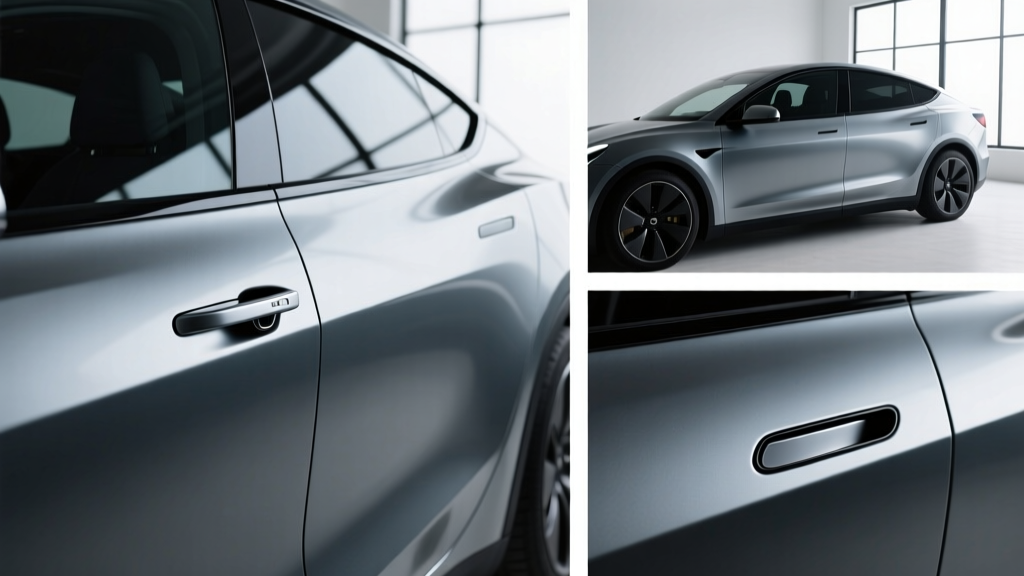
If you're shopping for a new EV and wondering why so many electric car doors look different from traditional vehicles, here's the direct answer: most 2026 electric vehicles use flush-mounted, pop-out, or fully hidden door handles — and some use electronic latches (e-latches) instead of mechanical linkages. The reason is primarily aerodynamic efficiency: smoother door surfaces reduce drag, which directly improves highway range by roughly 1–3%. The trade-off is higher replacement cost if a handle motor or e-latch actuator fails, plus potential difficulty operating doors in ice or after a collision.
Quick Answer
Electric car doors in 2026 fall into three main types: flush pop-out handles (Tesla Model Y, Hyundai Ioniq 5), fully hidden handles (Tesla Model S/X, Lucid Air), and e-latch push-button doors (some Tesla and Mercedes EQ models). All are designed to reduce aerodynamic drag for better range. Mechanical backup releases exist on every production vehicle per NHTSA requirements, but their location varies — learn yours before you need it.
Why EVs Use Different Door and Handle Designs
Range is expensive to engineer. Battery packs cost roughly $120–$140 per kWh in 2026, so any efficiency gain that doesn't require more cells is valuable. A vehicle's coefficient of drag (Cd) significantly impacts highway efficiency, where aerodynamic forces dominate. Flush and retractable door handles contribute to a cleaner body side, reducing turbulent airflow around the handle recess.
On vehicles like the Tesla Model Y (Cd ~0.23) or the Hyundai Ioniq 6 (Cd 0.21 — one of the lowest of any production sedan), every detail matters. According to fueleconomy.gov, the Ioniq 6 achieves up to 140 MPGe combined — partly due to its aero-optimized body including its flush pop-out handles.
But there's a secondary motivation: the EV market rewards visual differentiation. Hidden handles and frameless doors signal "futuristic" in a way that conventional pull-handles don't, and automakers know first impressions at the dealership lot matter.
The Three Main Electric Car Door Handle Types in 2026
Here's how the current EV landscape breaks down by handle and latch design:
| Handle Type | How It Works | Example 2026 Models | Pros | Cons |
|---|---|---|---|---|
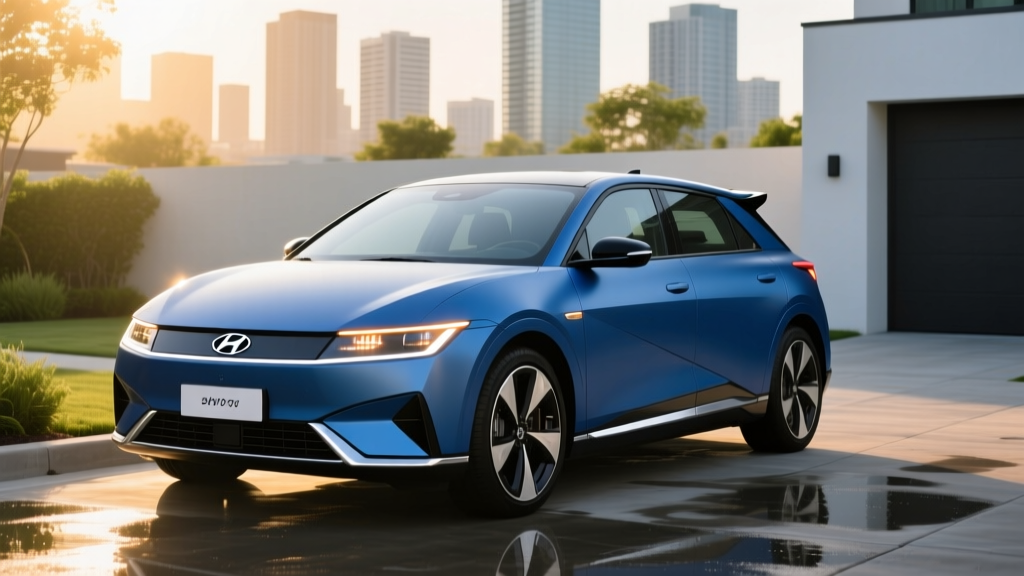
| Flush Pop-Out | Handle sits flush; press one end or use key fob to pop out, then pull normally | Tesla Model 3/Y, Hyundai Ioniq 5/6, Kia EV6/EV9, Ford Mustang Mach-E | Intuitive once learned; mechanical feel | Motor can fail; ice can jam mechanism |
| Fully Hidden / Auto-Presenting | Handle extends automatically when fob is detected; retracts when driving | Tesla Model S/X, Lucid Air, Rivian R1S/R1T, Genesis GV60 | Premium feel; excellent aero | Highest replacement cost; ice risk |
| E-Latch (Push-Button) | No traditional handle at all; press a button on the door edge or interior to unlatch | Some Tesla prototypes, Mercedes EQS (interior), select concept vehicles | Cleanest exterior surface | Requires electrical power; must have manual backup |
The vast majority of mainstream 2026 EVs use the flush pop-out design. It's the best compromise between aerodynamics, cost, and user familiarity.
E-Latches vs. Mechanical Latches: What EV Buyers Must Know
Some EVs have moved beyond just redesigning the exterior handle — they've replaced the mechanical latch linkage entirely with an electronic latch (e-latch). Instead of pulling a handle that physically releases a catch via a steel cable, you press a button that sends a signal to a motorized latch actuator.
This is most common on interior door releases. The Tesla Model 3 and Model Y, for example, use a push-button interior release. There is a manual release lever for emergencies (typically located near the window switch or at the base of the door panel — check your owner's manual for exact location), but it's not always obvious to passengers.
Common Misconceptions vs. Facts
| Myth | Fact |
|---|---|
| "If the 12V battery dies, you can't open the door." | All production EVs sold in the US are required to have a mechanical or manual backup release. Location varies by model — learn it before you need it. |
| "Electric car doors are less safe in a crash." | NHTSA requires that all doors remain operable after crash events. E-latches include redundant power or mechanical overrides. The NHTSA crash-test protocol specifically evaluates door operability post-impact. |
| "Hidden handles always freeze shut in winter." | Modern pop-out handles include heating elements or stronger motors. However, ice buildup after freezing rain can still temporarily jam any flush handle. Owners in cold climates report using silicone spray on seals and handle crevices to reduce sticking. |
| "Replacing an EV door handle costs thousands." | A flush pop-out handle assembly typically costs $200–$600 including labor at a dealer. Fully hidden auto-presenting handles run $500–$1,200 per door. Expensive compared to a $30 conventional handle, but not catastrophic. |
Real-World Ownership: Winter, Reliability, and Repair Costs
The most common complaint about electric car doors with flush or hidden handles involves cold-weather operation. When freezing rain or wet snow accumulates around a flush handle and temperatures drop below 32°F, the mechanism can seize. This affects all flush-handle vehicles — EVs and ICE alike — but EVs have adopted them more aggressively.
Practical winter workarounds from owners in Minnesota, Michigan, and New England:
- Silicone lubricant on seals and handle crevices — reduces ice adhesion significantly. Reapply every 4–6 weeks in winter.
- Preconditioning via app — warming the cabin remotely also warms the door area slightly, helping thaw frozen handles. Most EVs with connected apps (Tesla, Hyundai/Kia, Ford) support this.
- De-icer spray in the car — a $5 can of lock de-icer solves the problem in 30 seconds.
- Garage parking — obviously the best prevention, but not always available.
Reliability and Repair Cost Breakdown
Based on owner reports and dealer service data across major EV brands, here's what electric car door handle repairs look like in 2026:
| Component | Typical Failure Mode | Estimated Parts Cost | Estimated Labor | Total Range |
|---|---|---|---|---|
| Flush pop-out handle (e.g., Model Y, Ioniq 5) | Motor burnout, microswitch failure | $150–$350 | $80–$150 | $230–$500 |
| Auto-presenting handle (e.g., Model S, Rivian) | Gear mechanism wear, sensor fault | $350–$800 | $120–$250 | $470–$1,050 |
| E-latch actuator (interior) | Actuator motor failure | $100–$300 | $60–$120 | $160–$420 |
| Conventional pull handle (baseline: gas car) | Linkage rod disconnect, handle snap | $15–$60 | $30–$80 | $45–$140 |
The cost difference is real: an EV flush handle repair runs 3–7x more than a conventional gas-car handle replacement. However, handle failures are relatively uncommon under warranty. Most 2026 EVs carry a 3-year/36,000-mile bumper-to-bumper warranty that covers handle assemblies. The IRS §30D clean vehicle credit does not affect warranty terms — those are set by the manufacturer.
Electric Car Doors vs. Gas Car Doors: What's Actually Different?
Beyond the handle design, there are several structural differences between EV and gas-car doors worth understanding:
| Feature | Typical EV | Typical Gas Car |
|---|---|---|
| Handle design | Flush pop-out or hidden | Conventional pull handle |
| Interior release | Often push-button (e-latch) | Mechanical pull lever |
| Door weight | Heavier (added sound deadening, side-impact structure for heavier vehicle) | Lighter |
| Frameless glass | Common (reduces aero drag at window seal) | Rare outside sports cars |
| Soft-close option | Available on premium EVs (Lucid, Mercedes EQS, BMW iX) | Luxury models only |
| Child safety lock | Electronic (controlled via infotainment or app) | Mechanical switch on door edge |
One often-overlooked factor: EV doors tend to be heavier due to additional sound insulation. Without engine noise, road and wind noise become more noticeable, so automakers add more damping material to door panels. This makes the door feel more substantial but can also mean more strain on hinges and check straps over time.
Safety Considerations: Crash, Power Loss, and Emergency Access
This is the area where electric car doors generate the most concern, and it deserves a clear, data-driven answer.
After a collision: NHTSA's Federal Motor Vehicle Safety Standard (FMVSS) 206 requires that doors remain operable after crash testing — this applies equally to EVs and gas vehicles. E-latch systems must include a mechanical override. The IIHS evaluates door operability as part of its crash-test rating protocol, and top-rated EVs like the Hyundai Ioniq 5 and Tesla Model Y have earned IIHS Top Safety Pick+ designations.
After 12V battery failure: Every EV has a 12V auxiliary battery that powers electronics including e-latches and door handle motors. If the 12V battery dies, the manual release is your backup. On the Tesla Model Y, for example, the front manual release is a pull-tab located above the window switch panel. On the Hyundai Ioniq 5, the interior handle remains mechanically functional even without 12V power because it uses a hybrid e-latch with a physical cable backup.
For first responders: Emergency rescue guides (published by every major automaker) specify door handle locations and manual release points. Fire departments and tow operators are increasingly trained on EV-specific access procedures, but it's worth keeping a printed emergency guide in your glovebox — most manufacturers provide one in the vehicle's documentation kit.
Decision Framework: Which Door Type Should You Prioritize?
Choose Based on Your Situation
Choose flush pop-out handles (Ioniq 5, EV6, Model Y) if: You want the best balance of aero efficiency, intuitive operation, and moderate repair costs. This is the safest mainstream choice for first-time EV buyers.
Choose auto-presenting hidden handles (Model S, Lucid Air, Rivian) if: You prioritize premium experience and don't mind higher out-of-warranty repair costs. These are best for garage-parked vehicles in moderate climates.
Prioritize mechanical backup clarity if: You live in a cold climate (sub-20°F winters), have young children who ride in the back seat, or frequently carry elderly passengers. Before buying, sit in the vehicle and physically locate every manual door release — front and rear. If you can't find them without consulting the manual, that's a usability red flag.
Don't let door handle type be the deciding factor if: Everything else — range, charging speed, price, tax credit eligibility, and home charging access — lines up. A $300 handle repair once every 5–7 years is minor compared to the $5,000–$8,000 fuel savings an EV delivers over the same period.
First-Time EV Buyer FAQ: Electric Car Doors
Can I open an EV door if the car's battery is completely dead?
Yes. Federal regulations require a manual or mechanical backup release on every door. The exact location varies — it might be a pull-tab, a hidden lever behind a trim panel, or a cable loop. Read your owner's manual and practice using it before an emergency.
Do electric car door handles break more often than gas car handles?
They have more moving parts (motors, sensors, microswitches) so the failure rate is somewhat higher than a simple mechanical pull-handle. However, failures within the warranty period are uncommon, and most issues manifest as intermittent operation rather than complete failure.
How much does it cost to replace a Tesla Model Y door handle?
A replacement flush pop-out handle assembly for a 2025–2026 Model Y runs approximately $200–$350 for the part plus $80–$150 in labor, totaling roughly $280–$500 at a Tesla Service Center. Independent EV shops may be 20–30% cheaper.
Will insurance cover a broken EV door handle?
If the damage is from a collision or vandalism, yes — it falls under your collision or comprehensive coverage. If it's a mechanical failure (motor burnout), it's a warranty issue, not an insurance claim. EV insurance premiums average 15–25% higher than comparable gas vehicles, according to industry data, partly due to higher parts costs for components like door assemblies.
Are frameless EV doors noisier on the highway?
Not necessarily. Frameless doors (where the window glass seals directly against the body without a metal frame) are common on EVs to reduce aero drag. Modern EVs compensate with thicker acoustic glass and additional door-panel insulation. At 70 mph, most 2026 EVs with frameless doors are quieter inside than comparably priced gas sedans.
Do flush handles work with gloves on?
Most flush pop-out handles (like those on the Ioniq 5 or EV6) work fine with winter gloves — you press one end and pull. Fully hidden handles that require a specific touch-sensor gesture can be trickier with thick gloves, but the key fob unlock will typically present the handle automatically.