The Real Math Behind Bay Area EV Deals in 2026
If you're shopping for electric car deals in the Bay Area, you're operating in one of the most incentive-rich, charging-dense EV markets in the United States. But headlines about "$7,500 tax credits" and "cheap electricity" don't tell the full story. The actual cost of owning an EV in San Jose, Oakland, San Francisco, or anywhere across the nine-county Bay Area depends on a web of federal rules, California state rebates, utility programs, insurance premiums, and your specific driving and charging habits.
This guide breaks down the real five-year total cost of ownership (TCO) for a typical Bay Area EV buyer in 2026 — with exact numbers, current incentive rules, and the gotchas that dealer brochures won't mention.
Federal EV Tax Credit: What You Actually Qualify For
The federal Clean Vehicle Credit under IRS §30D remains the single largest purchase incentive available — up to $7,500 for qualifying new EVs and up to $4,000 for qualifying used EVs. But "up to" is doing heavy lifting. Eligibility hinges on three moving targets that change regularly:
2026 §30D New EV Credit Requirements
- Buyer income caps: Modified AGI must not exceed $300,000 (married filing jointly), $225,000 (head of household), or $150,000 (single filers)
- MSRP caps: Vans, SUVs, and pickup trucks must have an MSRP at or below $80,000; sedans and other body styles capped at $55,000
- Battery sourcing: The battery must meet escalating critical-mineral and battery-component requirements — vehicles with components from "foreign entities of concern" are disqualified
- Point-of-sale transfer: As of 2024, you can transfer the credit to the dealer at purchase, reducing your out-of-pocket cost immediately rather than waiting to claim it on your tax return
- Final assembly: Vehicle must undergo final assembly in North America
In the Bay Area's high-cost market, the income cap eliminates a meaningful share of potential buyers in Santa Clara and San Mateo counties. And the battery-sourcing rules have disqualified several popular models — always verify a specific VIN's eligibility on fueleconomy.gov before signing a purchase agreement.
California & Bay Area Incentives Vary by Location
Beyond the federal credit, Bay Area buyers may stack additional savings from:
- California Clean Fuel Reward: Point-of-sale rebate on new EVs (amount varies by battery size and program funding — check current availability at your dealer)
- Clean Air Incentives (CVRP replacement programs): California has shifted from the original CVRP to income-targeted incentive programs — eligibility and amounts vary by household income and region
- Utility rebates: PG&E, Silicon Valley Power (SVP), and East Bay Municipal Utility District (EBMUD) periodically offer home-charger rebates ($500–$1,500) and EV purchase incentives — check your specific utility's current programs
- BAAQMD Drive Clean! program: Bay Area Air Quality Management District offers rebates for lower-income residents replacing older gas cars with EVs
These programs change frequently and are subject to funding availability. Always verify current amounts with official program administrators before making purchase decisions.
Five-Year Total Cost of Ownership: EV vs. Gas in the Bay Area
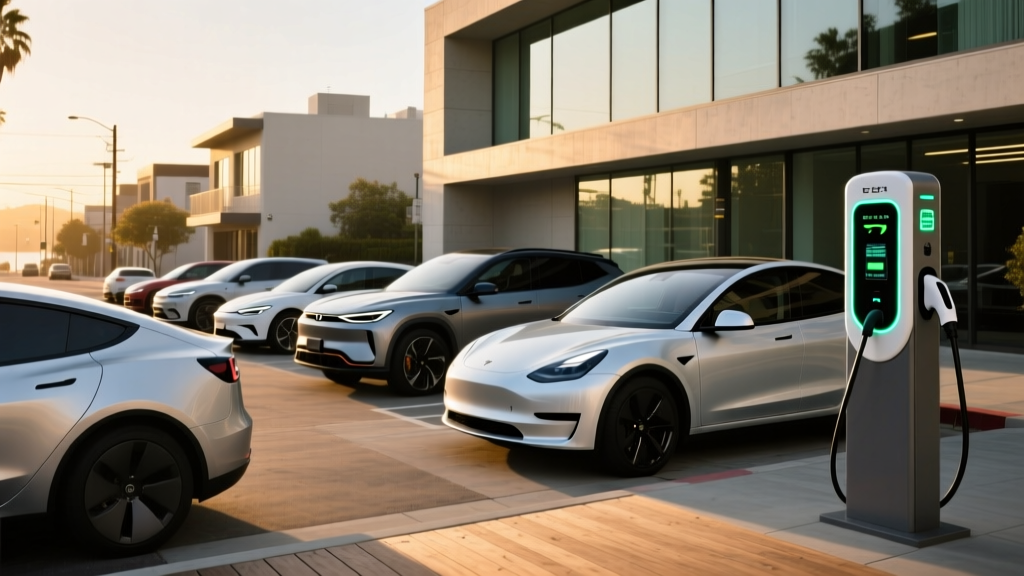
Let's compare a realistic five-year TCO for a popular EV and a comparable gas vehicle that a Bay Area commuter might cross-shop. We'll use a 2026 Tesla Model Y Long Range AWD (base MSRP ~$44,990) against a 2026 Toyota RAV4 AWD (base MSRP ~$31,500) — two of the best-selling vehicles in the region.
| Cost Category | Tesla Model Y LR AWD | Toyota RAV4 AWD |
|---|---|---|
| Base MSRP | $44,990 | $31,500 |
| Federal Tax Credit (§30D) | −$7,500 (if eligible) | $0 |
| Net Purchase Price | $37,490 | $31,500 |
| Estimated Sales Tax (8.5% avg) | $3,187 | $2,678 |
| Fuel / Charging (5 years) | $3,960 | $10,500 |
| Insurance (5 years) | $12,600 | $9,000 |
| Maintenance (5 years) | $1,500 | $4,500 |
| Estimated Depreciation | $16,500 | $11,000 |
| 5-Year Total Cost | $75,237 | $69,178 |
Assumptions: Electricity at $0.28/kWh (PG&E residential EV rate avg), gas at $4.80/gal (Bay Area 2026 avg), Model Y efficiency 3.5 mi/kWh, RAV4 at 30 MPG combined. Insurance based on Bay Area average premiums. Depreciation estimates based on industry data. Actual costs vary by driver, location, and usage.
The Model Y's federal credit and lower fuel/maintenance costs close much of the purchase-price gap, but higher insurance and steeper depreciation keep the total cost close. For buyers who don't qualify for the full §30D credit, the RAV4 pulls further ahead on pure TCO.
Charging vs. Gas: Per-Mile Cost Breakdown
The Bay Area has some of the highest gasoline prices in the nation and relatively expensive electricity — but electrons still beat molecules on a per-mile basis for most drivers.
| Energy Source | Unit Cost | Efficiency | $/Mile |
|---|---|---|---|
| Home charging (PG&E EV2-A rate) | $0.28/kWh avg | 3.5 mi/kWh | $0.080 |
| Home charging (off-peak super off) | $0.18/kWh | 3.5 mi/kWh | $0.051 |
| Public DC fast charging (avg) | $0.48/kWh | 3.5 mi/kWh | $0.137 |
| Tesla Supercharger (avg Bay Area) | $0.38/kWh | 3.5 mi/kWh | $0.109 |
| Gasoline (regular unleaded) | $4.80/gal | 30 MPG | $0.160 |
Home charging on an off-peak rate saves a Bay Area driver roughly $0.11/mile versus gas — about $1,320 per year at 12,000 miles. But if you rely primarily on public DC fast charging, the savings shrink to pennies per mile. This is the critical variable: EVs are cheapest to run when you charge at home. Bay Area condo dwellers and apartment renters without home charging access face a fundamentally different cost equation.
Also factor in that kW (power — your charge rate) and kWh (energy — what you're billed for) are different units. A 150 kW charger delivers power quickly, but you pay per kWh consumed, not per kW of capacity.
Maintenance Savings: Where EVs Genuinely Win
EVs have dramatically fewer moving parts than internal-combustion vehicles — no engine oil, no transmission fluid, no spark plugs, no timing belts, no exhaust system. Regenerative braking also significantly reduces brake pad wear.
| Maintenance Item | EV Cost | Gas Vehicle Cost |
|---|---|---|
| Oil changes (6 total) | $0 | $480 |
| Transmission fluid | $0 | $250 |
| Brake pads (1-2 replacements) | $0–$200 | $600–$1,200 |
| Spark plugs | $0 | $300 |
| Engine air filter | $0 | $150 |
| Cabin air filter | $150 | $150 |
| Tire rotation/replacement | $1,200 | $900 |
| Coolant service | $100 | $200 |
| Wipers, misc. | $150 | $150 |
| Total Estimated | $1,500–$1,800 | $4,000–$4,800 |
The one area where EVs can cost more is tires. Heavier vehicles with instant torque wear tires faster — expect to replace tires every 25,000–35,000 miles on an EV versus 40,000–50,000 on a lighter gas vehicle. EV-specific tires (like Michelin Pilot Sport EV or Hankook iON) cost more per set but are engineered for lower rolling resistance and noise reduction.
Insurance: The Uncomfortable Reality
EV insurance premiums in the Bay Area typically run 15–40% higher than equivalent gas vehicles. Several factors drive this:
- Higher repair costs: Battery pack damage can total a vehicle that would otherwise be repairable; specialized EV repair training is still limited
- Higher vehicle values: Greater replacement cost translates to higher premiums
- Parts availability: OEM EV body panels and structural components can have longer lead times
- Claims data: Insurers are still building actuarial models for EVs, and early data shows higher average claim severity
For a Bay Area driver with a clean record, expect annual EV insurance in the $2,200–$2,800 range for a Model Y or similar, versus $1,600–$2,000 for a RAV4. Some insurers (notably Tesla Insurance, GEICO, and State Farm) have started offering more competitive EV-specific rates — always get quotes from at least three carriers before purchasing.
Depreciation and Resale Value Trends
EV depreciation has been volatile. Early EVs suffered steep drops as battery technology rapidly improved, making older models less desirable. Tesla's aggressive price cuts in 2023–2024 further compressed used EV values across the board.
As of 2026, the depreciation picture has stabilized somewhat, but EVs still tend to lose value faster than comparable gas vehicles:
- Average 5-year EV depreciation: 45–55% of purchase price
- Average 5-year gas vehicle depreciation: 35–45% of purchase price
- Key depreciation factors: Battery health uncertainty, rapidly improving new-model specs, federal credit reducing effective "new" price (making used prices adjust downward)
Leasing can be a smart hedge against depreciation risk in the Bay Area market — you capture the fuel and maintenance savings without absorbing the resale-value hit. Many Bay Area dealers offer competitive EV leases that factor in the §30D credit (passed through as a capitalized-cost reduction by the leasing company).
Finding the Best Electric Car Deals in the Bay Area Right Now
If you're actively shopping, here's a practical framework for identifying genuine deals versus marketing noise:
Choose Your EV Strategy
Choose a new EV purchase if: You qualify for the full $7,500 §30D credit, have home Level 2 charging access, drive 10,000+ miles/year (maximizing fuel savings), and plan to keep the vehicle 5+ years.
Choose a lease if: You want to hedge depreciation risk, the manufacturer's lease money factor is competitive, and the leasing company passes through the tax credit as a cap-cost reduction.
Choose a used EV if: You qualify for the up-to-$4,000 used-EV credit (income caps apply: $75,000 single / $150,000 joint), want a lower entry price, and can verify battery state of health (SoH) before purchase.
Wait or choose a PHEV if: You lack home charging, frequently drive beyond 200+ miles one-way, or your household income exceeds §30D caps.
Bay Area dealerships in Fremont, San Jose, Daly City, and Concord often have competitive inventory. Check manufacturer websites for current lease and finance APR specials — OEMs frequently subsidize rates on EVs to move inventory. Stack these with any available utility rebates for home charger installation (PG&E and SVP have periodically offered $500–$1,500 toward Level 2 equipment and installation).
Frequently Asked Questions
How much does it really cost to own an EV over 5 years in the Bay Area?
For a mainstream EV like the Tesla Model Y or Hyundai Ioniq 5, expect a 5-year total cost between $65,000–$80,000 depending on trim, insurance profile, and charging habits. After the federal tax credit, the gap versus a comparable gas vehicle narrows to $3,000–$8,000, with the EV's lower fuel and maintenance costs partially offset by higher insurance and depreciation.
Do I qualify for the $7,500 federal EV tax credit?
You may qualify if your modified AGI is below $150,000 (single) or $300,000 (joint), the vehicle's MSRP is within caps ($55,000 for sedans, $80,000 for SUVs/trucks/vans), the battery meets critical-mineral and component sourcing requirements, and final assembly occurred in North America. Check your specific vehicle at fueleconomy.gov and consult a tax professional for your personal situation.
How much do I save on fuel and maintenance?
A Bay Area driver charging primarily at home on an off-peak rate saves approximately $1,000–$1,400/year on fuel versus a 30 MPG gas vehicle. Maintenance savings add another $500–$700/year. Combined: roughly $1,500–$2,100 in annual operating savings, or $7,500–$10,500 over five years.
Are EVs more expensive to insure in the Bay Area?
Yes — typically 15–40% more than comparable gas vehicles. Higher repair costs, battery replacement risk, and limited EV-specialized body shops drive premiums up. Budget $600–$1,000 more per year for insurance, and always compare quotes from multiple carriers.
How well do EVs hold their value?
EVs currently depreciate faster than gas vehicles — expect 45–55% value loss over five years versus 35–45% for gas. Rapid tech improvements, price wars, and battery-health uncertainty contribute. Leasing is a practical way to avoid this risk while still capturing operational savings.
Can I charge at home if I live in a Bay Area apartment or condo?
It depends on your building's electrical infrastructure and HOA rules. California's Civil Code §4745 protects your right to install a charger in your assigned parking space, but you'll typically bear the installation cost. Many Bay Area multifamily buildings are adding shared Level 2 charging — check with your property manager and explore utility multifamily EV programs.