The Quick Answer: Are Electric Car Conversions Worth It?
Bottom line: An electric car conversion replaces a gas vehicle's engine, fuel tank, and exhaust with an electric motor, battery pack, and controller. In 2026, a professional conversion typically costs $20,000 to $50,000+ on top of the donor vehicle price, yielding 80–200 miles of real-world range depending on battery size and vehicle weight. Most conversions use 50–100 kWh of battery capacity and charge at Level 2 speeds (6.6–19.2 kW); DC fast charging is rarely supported.
Conversions make sense for classic car enthusiasts, specialty vehicles, or sentimental restorations where no factory EV equivalent exists. For daily transportation, a new or used production EV almost always delivers better range, charging speed, safety features, warranty coverage, and federal tax credit eligibility at a lower total cost.
Electric car conversions — sometimes called EV swaps — have grown from a niche hobby into a small but real industry. Companies like EV West, Electric Classic Cars, and Zero EV have professionalized the process, and kits from suppliers like NetGain Motors and Cascadia Motion have made components more accessible. But accessibility doesn't automatically mean practicality. Let's break down exactly what you get, what you spend, and how a conversion stacks up against simply buying a production EV.
How Electric Car Conversions Work: The Technical Basics
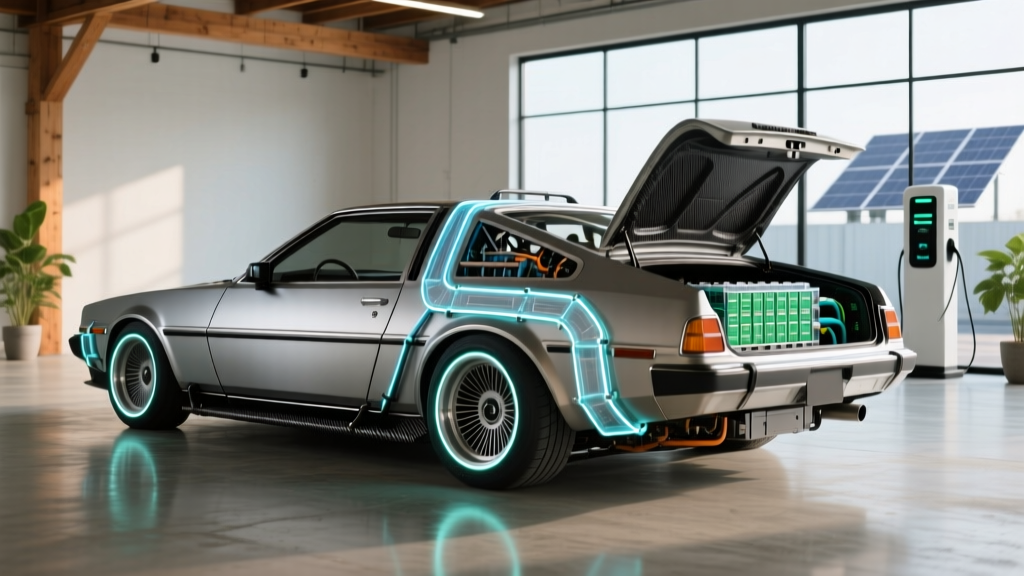
A conversion strips the donor vehicle's internal combustion engine, transmission (sometimes retained, sometimes replaced with a single-speed reduction gear), fuel tank, exhaust system, and radiator. In their place, the shop installs:
- Electric motor: Typically an AC induction or permanent magnet synchronous motor producing 80–300+ horsepower. Popular choices include the NetGain HyPer 9, Tesla drive units salvaged from wrecked Model S/3 vehicles, and Cascadia Motion iDM systems.
- Battery pack: Lithium-ion modules (often repurposed Tesla, Nissan Leaf, or Chevy Bolt modules, or new LFP cells from CATL or EVE Energy). Pack sizes range from 30 kWh for short-range city cars to 100+ kWh for heavier classics targeting 200+ miles.
- Motor controller/inverter: Converts DC battery power to AC for the motor. Common units include the AEM EV Controls, Sevcon Gen4, or Tesla-derived inverters.
- Onboard charger: Handles Level 1 (1.4 kW / 120V) and Level 2 (up to 19.2 kW / 240V) AC charging. Most conversions use a J1772 inlet for public and home compatibility.
- BMS (Battery Management System): Monitors cell voltages, temperatures, and balancing. Critical for safety and longevity — never skip this.
- DC-DC converter: Steps the high-voltage pack down to 12V to run lights, wipers, infotainment, and the auxiliary battery.
- Thermal management: Higher-end conversions include liquid cooling/heating for the battery pack; budget conversions may rely on passive air cooling, which accelerates degradation and limits charge rates.
The result is a vehicle that drives like an EV — instant torque, regenerative braking, no exhaust — but retains the original chassis, body, and interior of the donor car.
Electric Car Conversion Cost Breakdown: What You'll Actually Spend
The total cost of a conversion depends heavily on whether you DIY, use a partial kit, or hire a professional shop. Here's what 2026 pricing looks like:
| Component / Service | Budget DIY | Mid-Range Kit Build | Professional Shop |
|---|---|---|---|
| Donor vehicle | $2,000–$8,000 | $5,000–$20,000 | $5,000–$50,000+ |
| Battery pack (modules + BMS) | $4,000–$8,000 (40 kWh) | $8,000–$15,000 (60–80 kWh) | $12,000–$25,000 (80–100+ kWh) |
| Motor + controller | $3,000–$5,000 | $5,000–$9,000 | $7,000–$15,000 |
| Charger + J1772 inlet | $800–$1,500 | $1,500–$3,000 | $2,000–$4,000 |
| Wiring, DC-DC, accessories | $1,500–$3,000 | $2,500–$5,000 | $3,000–$7,000 |
| Fabrication & labor | $0 (your time) | $3,000–$8,000 | $10,000–$25,000+ |
| Engineering / programming | $0–$500 | $1,000–$3,000 | $3,000–$8,000 |
| Registration & inspection | $200–$800 | $200–$800 | $200–$800 |
| TOTAL (approx.) | $11,500–$26,800 | $25,200–$63,800 | $42,200–$134,800 |
For context, a well-executed professional conversion of a classic Porsche 911, VW Bus, or Ford Bronco typically lands between $60,000 and $120,000 all-in — and high-profile builds from shops like Icon or Lunaz have exceeded $250,000.
Also factor in ongoing costs: converted vehicles generally lack the over-the-air updates, advanced thermal management, and integrated software of production EVs. Battery module replacement down the road (if individual cells fail out of balance) can run $2,000–$6,000 depending on pack design.
Range, Charging & Performance: Real-World Numbers
This is where conversions diverge sharply from production EVs. Without EPA testing, range figures are estimates based on pack size, vehicle weight, aerodynamics, and driving conditions.
| Spec | Typical Conversion (70 kWh pack) | 2026 Tesla Model 3 RWD | 2026 Hyundai Ioniq 6 SE |
|---|---|---|---|
| Usable battery | ~65 kWh (NMC, passive cooling) | 57.5 kWh (LFP) | 77.4 kWh (NMC) |
| Estimated range | 130–180 mi (real-world) | EPA 272 mi (real-world ~240 mi hwy) | EPA 361 mi (real-world ~310 mi hwy) |
| Motor output | 120–200 HP typical | 271 HP | 225 HP |
| 0–60 mph | 7–12 sec (weight dependent) | 5.8 sec | 6.2 sec |
| Max Level 2 charge | 6.6–11.5 kW (typical) | 11.5 kW | 10.9 kW |
| DC fast charging | Rarely available; some CCS at 50 kW | 170 kW peak | 240 kW peak |
| 10–80% DC charge time | N/A or 60+ min | ~25 min | ~18 min |
| Thermal management | Often passive / air-cooled | Active liquid | Active liquid (heat pump std.) |
| Regen braking | Basic, 1–2 settings | Adjustable + one-pedal | Adjustable via paddles |
| Warranty | None (shop-dependent) | 4 yr/50k mi basic, 8 yr/100k mi battery | 5 yr/60k mi basic, 10 yr/100k mi battery |
| Starting MSRP | $42,000+ (all-in conversion) | $38,990 | $37,500 |
Cold-weather reality check: Conversions with passive air-cooled battery packs suffer significant range loss in freezing temperatures — expect 30–45% range reduction below 32°F, compared to 20–30% for production EVs with active thermal management and heat pumps. If you live in a cold climate, this is a major practical limitation.
Charging curve reality: Without sophisticated thermal management, most conversion packs cannot sustain high charge rates. Even if a CCS port is installed at 50 kW, the BMS will typically taper charging aggressively above 60–70% State of Charge to protect cells. Expect long charge sessions on road trips — if DC charging is available at all.
Legal, Registration & Safety Considerations
Registering a converted vehicle varies significantly by state. Key issues to research before starting a project:
- VIN retention: Most states require the original VIN to remain with the vehicle. The converted car is typically registered as the original make/model/year, with a notation of the powertrain change.
- Emissions exemptions: Once converted, the vehicle no longer requires emissions testing in most jurisdictions — but some states require a special inspection to verify the conversion was done safely.
- Safety inspections: States like New York, Massachusetts, and Virginia require annual safety inspections. Inspectors may flag non-standard high-voltage wiring, missing crash structures, or absent airbags (if the donor car originally had them).
- Federal tax credit ineligibility: Converted vehicles do not qualify for the IRS §30D Clean Vehicle Credit. The credit applies only to new vehicles from qualified manufacturers with specific battery sourcing and MSRP/income requirements. This means you forfeit up to $7,500 in potential savings that a production EV buyer might receive.
- Insurance: Specialty insurers like Hagerty or Grundy American can cover converted vehicles, often at agreed-value policies. Expect premiums 20–50% higher than a comparable production EV, as insurers factor in the non-standard powertrain and limited crash-test data.
- Crash safety: The donor vehicle's original crash structures, crumple zones, and airbag systems may be compromised or removed during conversion. There is no NHTSA or IIHS crash-test data for converted vehicles.
Electric Car Conversion vs. Buying a Production EV: The Decision
Here's how the economics and practicality stack up for someone considering a conversion versus purchasing a new or used production EV:
| Factor | EV Conversion | New Production EV | Used Production EV |
|---|---|---|---|
| Total upfront cost | $25,000–$135,000+ | $30,000–$80,000 | $12,000–$45,000 |
| Federal tax credit | $0 | Up to $7,500 (§30D) | Up to $4,000 (used EV credit) |
| Real-world range | 80–200 mi | 220–400+ mi | 150–350 mi |
| DC fast charging | Rarely | Standard | Standard (most models) |
| Warranty | None / shop only | 3–10 yr coverage | Remaining factory or CPO |
| Safety tech (ADAS) | None (donor era) | AEB, LKA, BSM standard | Varies by year/model |
| Maintenance | Specialty / DIY | Dealer + independent EV shops | Same as new |
| Resale market | Niche / collector | Broad / depreciating | Broad / depreciating |
| Build time | 3–18 months | Immediate / order | Immediate |
Common Electric Car Conversion Myths — Debunked with Facts
| Myth | Fact |
|---|---|
| "Conversions are cheaper than buying an EV." | A professional conversion almost always costs more than a comparable new EV. A 2026 Chevy Equinox EV starts at ~$33,000 with 319 mi EPA range and full warranty. Even a budget DIY conversion rarely undercuts $15,000 all-in, and delivers far less range and no warranty. |
| "You can use any old car as a donor." | Lightweight, simple vehicles (VW Beetle, early Porsche 911, Mazda Miata) convert best. Heavy SUVs and trucks require enormous battery packs to achieve usable range, driving cost past $80,000+. Rusty or structurally compromised donors are unsafe. |
| "Converted EVs charge at Tesla Superchargers." | Superchargers require Tesla's proprietary communication protocol. Unless the conversion uses a salvaged Tesla drive unit with intact Tesla firmware (rare and legally gray), Supercharger access is not available. Most conversions rely on J1772 Level 2 and, occasionally, CCS DC chargers. |
| "The battery will last forever." | Lithium-ion cells degrade with time and cycles. Repurposed EV modules may already have 30–50% degradation before installation. Expect 8–15 years of usable life depending on chemistry, thermal management, and usage patterns. Production EVs warrant 70% capacity retention at 8 years/100,000 miles — conversions offer no such guarantee. |
| "You can do it in your garage over a weekend." | A basic conversion requires high-voltage electrical work, custom fabrication, motor alignment, controller programming, and safety testing. Even experienced mechanics typically need 200–500+ hours. High-voltage systems (100–400V) carry lethal shock risk without proper training and PPE. |
Who Should (and Shouldn't) Consider an Electric Car Conversion
Consider a conversion if:
- You own a classic or sentimental vehicle with no factory EV equivalent and want to preserve it while eliminating gas, oil changes, and emissions.
- You have access to a qualified conversion shop or have advanced electrical/fabrication skills and a dedicated workspace.
- You understand the vehicle will be a passion project, not a primary daily driver for long road trips.
- You're comfortable with limited range (under 200 mi), no DC fast charging, and no ADAS safety features.
- Budget is secondary to the experience and uniqueness of the build.
Buy a production EV instead if:
- You need a reliable daily commuter with 250+ miles of range and DC fast charging for road trips.
- You want warranty coverage, crash-tested safety, and modern ADAS (automatic emergency braking, lane keeping, blind spot monitoring).
- You want to take advantage of the federal §30D tax credit (up to $7,500 for new EVs, subject to MSRP, income, and battery sourcing requirements).
- You live in a cold climate where active battery thermal management is essential for range preservation.
- Total cost of ownership matters — a $35,000 production EV with tax credits, warranty, and low maintenance will almost always beat a $50,000+ conversion over 5 years.
Frequently Asked Questions
How long does an electric car conversion take?
A professional shop typically takes 3–12 months depending on complexity, parts sourcing, and fabrication. A DIY build by an experienced hobbyist can take 6–18 months of part-time work. Supply chain delays for specific battery modules or controllers can add months.
Can I convert a truck or SUV to electric?
Yes, but the physics work against you. A 5,000-lb truck needs a 100+ kWh battery pack to achieve 150+ miles of range, pushing conversion costs past $80,000–$100,000. For comparison, the 2026 Ford F-150 Lightning starts around $55,000 with 240 mi EPA range, DC fast charging at 150+ kW, full warranty, and potential §30D tax credit eligibility. The production truck is cheaper, more capable, and far more practical.
Do converted EVs qualify for any tax credits or incentives?
No. The federal §30D Clean Vehicle Credit applies only to new vehicles from qualified manufacturers meeting specific battery component and critical mineral sourcing requirements. The used EV credit (§25E, up to $4,000) similarly requires the vehicle to be from a qualified manufacturer. Converted vehicles meet neither criterion. Some state or local incentives for EV registration may apply — check your state's DMV and energy office — but don't count on it.
Is it safe to drive a converted electric car?
A well-engineered conversion by a reputable shop can be safe for normal driving. However, converted vehicles lack crash-test certification, may have compromised structural integrity from component removal, and typically lack modern safety features like airbags (if removed), AEB, or stability control integration with the new powertrain. They are not held to FMVSS standards in their converted form. If safety is a priority, a production EV is the clear choice.
What's the best donor car for an EV conversion?
Lightweight, simple, well-supported vehicles convert best. Popular donor platforms include the VW Beetle and Bus (air-cooled era), Porsche 911 (classic), Mazda Miata (NA/NB), Fiat 500 (classic), early Ford Broncos, and lightweight kit cars. The ideal donor has a light curb weight (under 3,000 lbs), strong aftermarket parts availability, and a chassis that can accommodate battery modules without compromising structural rigidity.
How much does it cost to charge a converted EV at home?
Charging costs depend on your local electricity rate and battery size. At the US average of ~$0.17/kWh (2026), fully charging a 70 kWh conversion pack costs about $11.90, yielding roughly 140–160 miles of range. That's approximately $0.07–$0.09 per mile — comparable to a production EV and roughly 60–70% cheaper per mile than a 25 MPG gas car at $3.50/gallon ($0.14/mile). The savings are real, but they don't offset the higher upfront conversion cost.