The Short Answer on Electric Car Conversion VW Bug Projects
Converting a classic Volkswagen Beetle to electric power in 2026 typically costs $15,000 to $40,000 in parts and labor on top of the donor car price, yields 60 to 150 miles of real-world range depending on battery pack size (20–50 kWh), and charges on a standard Level 2 home charger at 3.3–7.2 kW. The result is a zero-tailpipe-emission classic that costs roughly $0.04–$0.06 per mile to "fuel" on average US electricity rates — but it will not qualify for the federal §30D new or used EV tax credit, and it will not match the range, charging speed, safety, or ADAS features of a modern production EV. A conversion makes sense as a passion project or daily light-duty commuter; it does not make financial sense as a cost-saving alternative to buying a new or used production EV.
What an Electric Car Conversion VW Bug Actually Involves
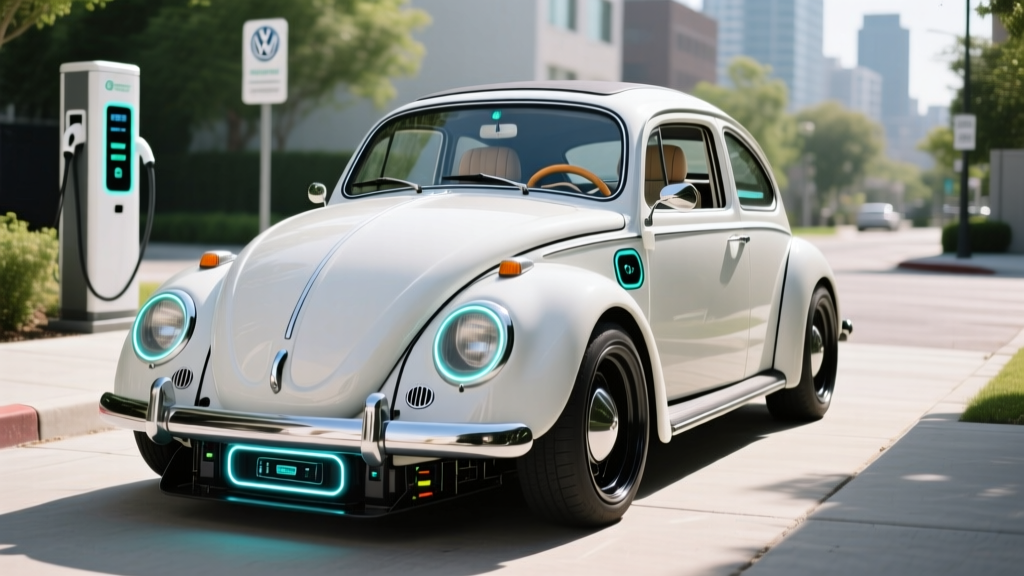
A VW Beetle EV conversion replaces the air-cooled flat-four engine, fuel tank, and exhaust system with an electric motor, motor controller, high-voltage battery pack, onboard charger, and a DC-DC converter to run the 12V accessories (lights, wipers, gauges). The Beetle's simple mechanical layout, rear-engine weight bias, and lightweight chassis (curb weight roughly 1,800–2,000 lbs depending on year) make it one of the most popular conversion platforms alongside the old VW Bus and Porsche 914.
Most 2026 Beetle conversions fall into two camps:
- Budget DIY builds ($10,000–$18,000 in parts): Using salvaged Tesla Model S drive units or NetGain Hyper9 motors, lead-acid or second-life Nissan Leaf battery modules, and basic controllers. Range: 40–70 miles. Top speed: 70–85 mph.
- Premium turnkey conversions ($25,000–$40,000+ in parts and labor): Companies like EV West (now part of the broader aftermarket ecosystem), Zelectric Motors, and Sacramento-based EV specialists offer bolt-in kits or full builds using new LFP or NMC modules, CCS or NACS charge ports, regenerative braking integration, and upgraded brakes and suspension to handle the instant torque. Range: 100–150+ miles. Top speed: 90–110 mph.
Electric Car Conversion VW Bug: Cost Breakdown
Here is where the rubber meets the road — or where the spreadsheet kills the dream. Below is a realistic 2026 cost breakdown for a mid-tier conversion using a NetGain Hyper9 motor and a 30 kWh LFP battery pack:
| Component | Typical Cost Range |
|---|---|
| Donor VW Beetle (running, decent body) | $5,000 – $15,000 |
| Electric motor (Hyper9 or salvaged Tesla SDU) | $2,500 – $4,500 |
| Motor controller | $1,500 – $3,000 |
| Battery pack (30 kWh LFP modules + BMS) | $5,000 – $9,000 |
| Onboard charger (3.3–7.2 kW) + charge port | $800 – $1,500 |
| DC-DC converter, wiring, contactors, fuses | $1,000 – $2,000 |
| Throttle interface, gauges, instrumentation | $500 – $1,200 |
| Brake upgrade (disc conversion recommended) | $800 – $1,500 |
| Fabrication, mounts, adapters | $1,500 – $3,000 |
| Professional labor (if not DIY, 80–150 hrs) | $8,000 – $18,000 |
| TOTAL (parts only, DIY) | $18,600 – $30,700 |
| TOTAL (turnkey shop build) | $30,000 – $55,000+ |
For comparison, a new 2026 Chevrolet Equinox EV starts around $33,600 before incentives and delivers an EPA-estimated 319 miles of range, DC fast charging at up to 150 kW (10–80% in ~29 minutes), a full suite of Level 2 ADAS (Chevy Super Cruise available), and a 8-year/100,000-mile battery warranty. A converted Beetle has none of these.
Range, Efficiency, and Charging: The Numbers
A VW Beetle's aerodynamics (drag coefficient ~0.48 — roughly double that of a modern EV) and narrow, high-rolling-resistance tires mean efficiency is modest. Expect 3.0–4.5 miles per kWh in mixed driving, dropping to 2.5–3.0 mi/kWh at sustained highway speeds above 65 mph.
| Metric | Stock 1970s Beetle (Gas) | EV Conversion (30 kWh LFP) | 2026 Chevy Equinox EV (Reference) |
|---|---|---|---|
| Range | ~250 mi (10.6 gal tank, ~24 MPG) | 90–135 mi (real-world) | 319 mi (EPA) |
| Energy cost per mile | ~$0.14 (at $3.40/gal) | ~$0.05 (at $0.16/kWh avg US) | ~$0.04 (at $0.16/kWh) |
| 0–60 mph | ~20 seconds | 8–12 seconds | 7.8 seconds |
| "Refuel" time | 5 minutes | 4–9 hours (Level 2, 0–100%) | ~29 min (10–80% DCFC at 150 kW) |
| Regenerative braking | None | Yes (mild, one-pedal possible) | Yes (adjustable) |
| Safety features | Minimal (lap belts, no airbags in early models) | Unchanged from donor car | AEB, lane-keep, blind-spot, available Super Cruise (SAE Level 2) |
| Warranty | None (50-year-old car) | Component warranties only (1–3 yr typical) | 3 yr/36K basic, 8 yr/100K battery |
Charging is Level 2 only for nearly all conversions. A typical 6.6 kW onboard charger will replenish a 30 kWh pack from empty in about 5 hours. DC fast charging is technically possible with CCS-compatible aftermarket setups (adding $2,000–$4,000 and significant packaging complexity), but most builders skip it. You will not be pulling up to a Tesla Supercharger or Electrify America station in a converted Beetle and charging at 150 kW.
Tax Credits, Registration, and Insurance: What Converts Can (and Can't) Claim
This is where many conversion-curious buyers get tripped up. Under current IRS §30D rules for 2026:
- Federal new EV credit (§30D): NOT available. The credit applies only to new vehicles from qualified manufacturers with specific battery-sourcing and critical-minerals requirements. A home-converted Beetle does not qualify.
- Federal used EV credit (§25E): NOT available. This credit requires the vehicle to be sold by a licensed dealer, priced under $25,000, and on an IRS-approved model list. A converted classic does not appear on this list.
- State incentives: Vary by jurisdiction. Some states (California, Colorado, New York) offer rebates for EV conversions, but these are typically $1,000–$4,000 and require specific documentation. Check your state's energy or DMV website for current programs.
- Registration: Most states require a converted vehicle to pass a special inspection and be re-titled as an electric vehicle. Requirements vary widely — some states (like California) have clear processes; others are more ambiguous. Budget $200–$800 and several weeks for this process.
- Insurance: Specialty insurers like Hagerty and Grundy cover classic car conversions, but premiums are typically $800–$1,800/year — higher than insuring a standard classic Beetle and often comparable to insuring a new EV. Agreed-value policies are essential to protect your conversion investment.
For authoritative guidance on federal credits, refer to the IRS clean vehicle credit page.
Common Misconceptions About VW Bug EV Conversions
| Myth | Fact |
|---|---|
| "I'll save money compared to buying a new EV." | A mid-tier conversion costs $30,000–$55,000 total and yields 90–135 miles of range with no warranty, no ADAS, and no tax credit. A new Equinox EV at a similar price point gives 319 miles, full warranty, and potential §30D credit eligibility. |
| "I can use Tesla Superchargers." | Superchargers authenticate via the vehicle's VIN in Tesla's system. Converted vehicles cannot access the Supercharger network unless the builder integrates a Tesla charge port AND the vehicle is recognized — which is extremely rare and unofficial. Plan on Electrify America, ChargePoint, or home charging. |
| "It's basically maintenance-free." | You eliminate oil changes and exhaust repairs, but you gain new maintenance concerns: battery cell balancing, contactor wear, cooling system checks (if equipped), brake upgrades needed for the added weight and torque, and potential 12V system issues. Budget $500–$1,000/year for upkeep. |
| "Any mechanic can fix it." | Most general mechanics will not touch a one-off EV conversion. You need either the original builder or a specialist EV shop. This is a real ownership limitation if you move or the builder goes out of business. |
| "LFP batteries last forever." | LFP chemistry offers excellent cycle life (3,000–5,000+ cycles to 80% capacity) and is a smart choice for conversions, but degradation still occurs — especially without active thermal management. Expect 85–90% capacity retention after 8–10 years of typical use. |
Decision Framework: Should You Convert or Buy?
Choose a VW Bug EV Conversion If:
- You already own or can acquire a Beetle you love and want to preserve it while eliminating tailpipe emissions.
- Your daily driving is under 60 miles round-trip and you have reliable home Level 2 charging (a 240V/30A+ circuit).
- You enjoy the build process or have a trusted conversion shop — this is as much a hobby as a transportation decision.
- You accept that this vehicle will not have modern crash safety, airbags (in pre-1990 Beetles), ABS, or driver-assist features.
- You live in a mild climate or accept significant winter range reduction.
Choose a New or Used Production EV If:
- You need 200+ miles of range, DC fast charging for road trips, and a manufacturer warranty.
- You want to claim the federal §30D credit (up to $7,500 for qualifying new EVs, subject to IRS income, MSRP, and sourcing rules).
- You need modern safety: automatic emergency braking, lane-keeping, and crash-test ratings from NHTSA or IIHS.
- You want financing options — banks and credit unions readily finance production EVs; conversion projects typically require personal loans or cash.
- You do not have the time, skills, or budget for a multi-month custom build project.
5-Year Total Cost Comparison: Conversion vs. New EV
| Category | VW Bug EV Conversion (Mid-Tier) | 2026 Chevy Equinox EV 2LT |
|---|---|---|
| Purchase price (after any credits) | $35,000 – $55,000 (no tax credit) | $36,600 (MSRP) – up to $7,500 §30D = ~$29,100 |
| Fuel/energy (60K mi) | ~$3,000 (at 3.5 mi/kWh, $0.16/kWh) | ~$2,700 (at 3.8 mi/kWh, $0.16/kWh) |
| Maintenance | ~$4,000 (specialty, brake, battery checks) | ~$1,800 (tire rotation, cabin filter, fluid top-off) |
| Insurance (5 years) | ~$6,500 (specialty classic EV) | ~$7,500 (standard EV rates) |
| Depreciation | Low (classic car market, agreed-value) | ~$12,000 (typical EV depreciation curve) |
| Estimated 5-yr total cost | $48,500 – $68,500 | ~$41,100 (before depreciation), ~$53,100 (incl. depreciation) |
The conversion's strongest financial argument is low depreciation — well-executed classic EV conversions hold value in the collector market. But on pure transportation economics, the production EV wins on cost per mile of range, warranty coverage, and tax-credit savings.
Frequently Asked Questions
How long does a VW Beetle EV conversion take?
A professional shop build typically takes 3–6 months from start to delivery. A DIY build by an experienced hobbyist working weekends can take 6–18 months. Sourcing specific components (custom adapter plates, battery modules) often causes the longest delays.
Can I add DC fast charging to a converted Beetle?
Technically yes, using aftermarket CCS-compatible charge controllers and liquid-cooled charge ports, but it adds $2,000–$4,000, significant weight, and packaging challenges in the Beetle's small chassis. Most builders stick with Level 2 (6.6–7.2 kW) and plan trips around the 90–135 mile range.
What battery chemistry is best for a conversion?
LFP (lithium iron phosphate) is the preferred chemistry for conversions in 2026 due to its thermal stability, long cycle life (3,000–5,000+ cycles), and lower cost per kWh compared to NMC. The trade-off is lower energy density — LFP packs are heavier and bulkier for the same kWh capacity. For a lightweight car like the Beetle, this weight penalty is manageable at 30–40 kWh but becomes problematic above 50 kWh.
Is a converted VW Bug street-legal in all 50 states?
Not automatically. Each state has different requirements for re-titling a converted vehicle as electric. California, Oregon, Washington, and Colorado have relatively clear processes. Some states require a special inspection by a state-certified referee station. A few states have ambiguous or restrictive rules. Check your state DMV's specific EV conversion requirements before starting the build.
What's the biggest regret conversion owners report?
Based on builder community reports (EV forums, DIY Electric Car community), the most common regrets are: underestimating total cost (budget builds rarely stay under $20K once you account for brake upgrades, wiring revisions, and fabrication surprises), insufficient range for their actual driving needs, and difficulty finding a mechanic who understands their specific one-off build when something goes wrong on a road trip.
Editorial note: AutoEdgeView covers production EVs, PHEVs, and charging infrastructure as our primary focus. This conversion guide is provided for readers researching the EV aftermarket space. For daily-driver recommendations with full warranty and tax-credit eligibility, see our 2026 EV buyer's guides.