The Quick Answer: What You'll Actually Pay to Charge an EV
For most US drivers, home Level 2 charging costs between $0.10 and $0.18 per kWh depending on your utility rate, translating to roughly $0.03–$0.06 per mile driven in a typical mid-size EV like the Hyundai Ioniq 5 or Tesla Model Y. Public DC fast charging runs $0.30–$0.60 per kWh (or $0.09–$0.18 per mile), which can approach or exceed gasoline costs in some regions. A full home charge for a 77 kWh battery (Model Y Long Range) costs about $11–$14 at average residential rates, while the same fill-up at a 350 kW Electrify America station could run $35–$46.
Bottom line: Home charging is where the economics win. Public fast charging is a convenience premium, not a savings play.
Breaking Down the Charges for Electric Cars by Charging Type
The phrase "charges for electric cars" covers three very different cost structures. Understanding the difference between Level 1, Level 2, and DC fast charging — and what each costs per mile — is the foundation of realistic EV ownership budgeting.
Level 1 Charging (120V Standard Outlet)
Plugging into a standard household outlet delivers roughly 1.4 kW of power, adding about 3–5 miles of range per hour. It's slow, but the cost is simply your residential electricity rate — typically $0.10–$0.18/kWh nationally. For a plug-in hybrid like the Toyota RAV4 Prime with its 18.1 kWh battery, a full Level 1 overnight charge costs around $2–$3 and restores the full 42 miles of EPA electric range. For a full-size BEV, Level 1 is impractical as a primary strategy but works as a backup or for low-mileage drivers covering under 30 miles daily.
Level 2 Charging (240V Home or Workplace)
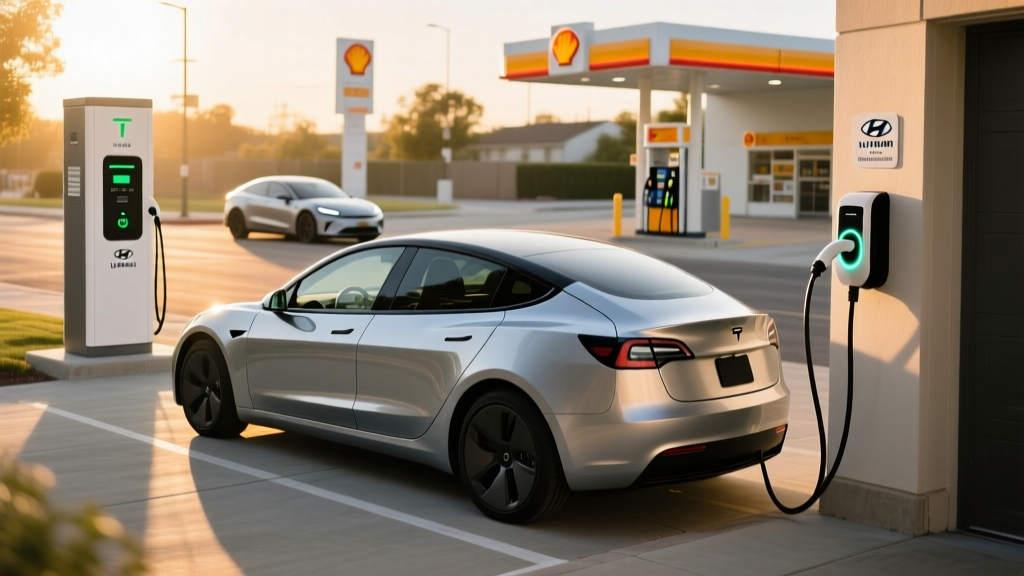
This is where most EV owners do 80–90% of their charging. A Level 2 home charger delivers 7.2 kW to 11.5 kW, adding 25–44 miles of range per hour. Costs mirror your residential electricity rate. According to the U.S. Energy Information Administration, the national average residential rate sits around $0.165/kWh as of early 2026, though rates vary dramatically: roughly $0.11/kWh in Louisiana, $0.30/kWh in California, and $0.22/kWh in Massachusetts.
DC Fast Charging (Public Networks)
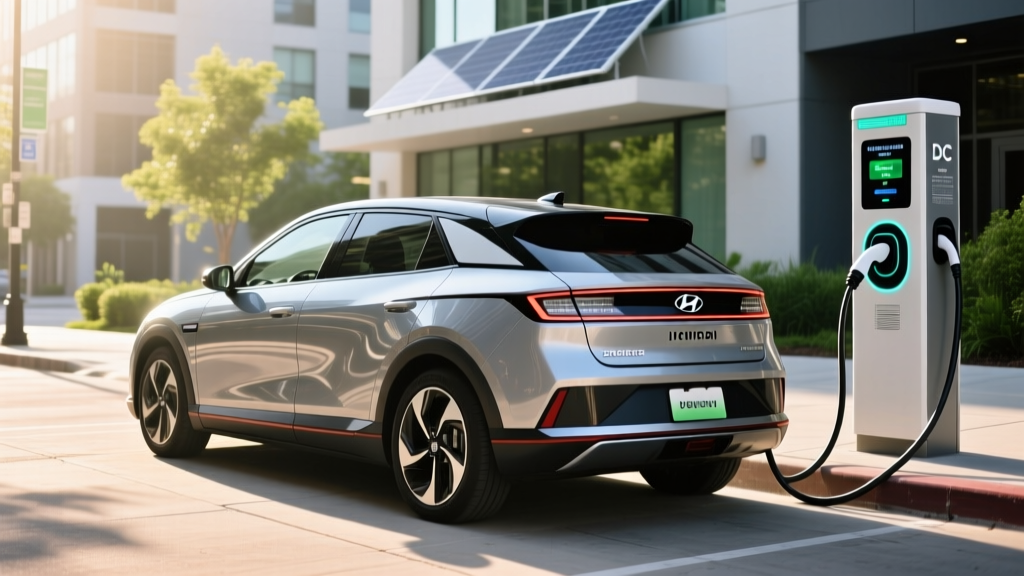
DC fast chargers (50 kW–350 kW) are the most expensive option. Networks like Electrify America, EVgo, and Tesla Superchargers typically charge $0.30–$0.60/kWh depending on location, time of day, and membership tier. Some stations impose idle fees of $0.50–$1.00/minute if you remain plugged in after reaching your target State of Charge.
| Charging Level | Power (kW) | Miles Added/Hour | Cost per kWh | Cost per Mile* | Full Charge Cost (77 kWh Battery) |
|---|---|---|---|---|---|
| Level 1 (120V) | 1.4 kW | 3–5 mi | $0.10–$0.18 | $0.03–$0.06 | $7.70–$13.86 |
| Level 2 Home (240V) | 7.2–11.5 kW | 25–44 mi | $0.10–$0.18 | $0.03–$0.06 | $7.70–$13.86 |
| Level 2 Public | 6.6–19.2 kW | 22–70 mi | $0.20–$0.35 | $0.06–$0.11 | $15.40–$26.95 |
| DC Fast (50–150 kW) | 50–150 kW | 150–400 mi/hr | $0.30–$0.48 | $0.09–$0.15 | $23.10–$36.96 |
| DC Ultra-Fast (250–350 kW) | 250–350 kW | 600–1,000+ mi/hr | $0.35–$0.60 | $0.11–$0.18 | $26.95–$46.20 |
*Cost per mile based on an average EV efficiency of 3.0–3.5 miles per kWh (e.g., Tesla Model Y, Hyundai Ioniq 5). Actual cost varies by vehicle efficiency and local electricity pricing.
EV Charging Costs vs. Gasoline: The Real Per-Mile Showdown
This is the comparison that drives most purchase decisions. Let's use concrete numbers rather than marketing claims.
Take the 2026 Tesla Model Y Long Range AWD: EPA-rated at 320 miles of range with a roughly 77 kWh usable battery, yielding about 3.5 miles/kWh (or 119 MPGe combined per fueleconomy.gov). At $0.165/kWh (national average home rate), fueling costs $0.047 per mile.
Now compare a 2026 Toyota RAV4 AWD (gas): EPA-rated at 30 MPG combined. At $3.25/gallon (2026 national average), fueling costs $0.108 per mile.
| Vehicle | Energy Source | Efficiency | Unit Cost | Cost/Mile | Annual Cost |
|---|---|---|---|---|---|
| Tesla Model Y LR (home L2) | Electricity | 3.5 mi/kWh | $0.165/kWh | $0.047 | $564 |
| Tesla Model Y LR (DC fast only) | Electricity | 3.5 mi/kWh | $0.45/kWh | $0.129 | $1,543 |
| Toyota RAV4 AWD (gas) | Gasoline | 30 MPG | $3.25/gal | $0.108 | $1,296 |
| Toyota RAV4 Prime PHEV | Electric + Gas | 42 mi EV / 38 MPG gas | Mixed | ~$0.058 | ~$696 |
| Ford F-150 Lightning (home L2) | Electricity | 2.0 mi/kWh | $0.165/kWh | $0.083 | $990 |
| Ford F-150 4WD (gas, 5.0L V8) | Gasoline | 19 MPG | $3.25/gal | $0.171 | $2,053 |
Key takeaway: Home-charged EVs save $600–$1,100 per year on fueling versus comparable gas vehicles. But if you rely exclusively on DC fast charging, that advantage narrows dramatically — and in some cases disappears. The Ford F-150 Lightning charged at home still beats its gas counterpart by over $1,000/year, but a less efficient EV charged exclusively on expensive public networks could cost more to fuel than a thrifty hybrid.
Total EV Ownership Costs: Beyond the Charger
Fueling is just one line item. A complete ownership picture requires factoring in purchase price, maintenance, insurance, depreciation, and available incentives.
Purchase Price and Federal Tax Credits
The 2026 Hyundai Ioniq 5 SE starts at $42,600 MSRP. Under current IRS §30D rules, qualifying buyers may be eligible for up to $7,500 in federal clean vehicle credits, transferable to the dealer as a point-of-sale discount. However, eligibility depends on multiple factors:
- MSRP caps: $55,000 for sedans, $80,000 for SUVs/trucks/vans
- Buyer income caps: $150,000 single / $225,000 head of household / $300,000 joint
- Battery sourcing: Critical minerals and battery components must meet phased-in domestic/free-trade-ally thresholds that tighten annually
Not every EV qualifies for the full credit, and some qualify for only $3,750 or nothing at all depending on battery sourcing. Always verify current eligibility on the IRS website or with your tax professional before assuming a credit.
Maintenance Costs
EVs eliminate oil changes, spark plugs, timing belts, and exhaust system repairs. Brake pad life extends significantly thanks to regenerative braking — many EV owners report original brake pads at 80,000+ miles. Typical annual EV maintenance runs $300–$500 (cabin air filter, tire rotation, wiper fluid, software updates) versus $700–$1,200 for a comparable gas vehicle.
Insurance Premiums
This is where EV ownership can sting. EV insurance premiums run 15–30% higher than equivalent gas vehicles on average, driven by higher repair costs after collisions (specialized high-voltage safety protocols, expensive sensor recalibration, and battery-pack replacement risk). A Model Y might cost $2,200–$2,800/year to insure versus $1,600–$2,000/year for a RAV4. Always get a quote before purchasing.
Depreciation
EV depreciation has been volatile. Following aggressive Tesla price cuts in 2023–2024 and rapid model turnover, some used EVs lost 40–50% of value in their first two years. As of 2026, depreciation is stabilizing but still generally steeper than Toyota/Honda gas vehicles. Plan for 45–55% value loss over 5 years on most mainstream EVs, with Tesla and luxury brands on the higher end.
5-Year Total Cost Snapshot
| Cost Category | Tesla Model Y LR (Home Charged) | Toyota RAV4 AWD (Gas) |
|---|---|---|
| Purchase (after est. credit) | $39,490 | $33,500 |
| Fueling (5 years) | $2,820 | $6,480 |
| Maintenance (5 years) | $1,800 | $4,500 |
| Insurance (5 years) | $12,500 | $9,000 |
| Est. Depreciation (5 yr) | -$19,745 | -$13,400 |
| Net 5-Year Cost | $36,865 | $40,080 |
Assumes $7,500 point-of-sale credit applied to Model Y; actual credit depends on IRS §30D eligibility. Depreciation estimates based on 50% for Model Y, 40% for RAV4. Your mileage — literally — will vary.
Real-World Charging Considerations Most Buyers Overlook
Home Charging Access Is the Make-or-Break Factor
If you have a garage or dedicated parking spot with access to a 240V circuit, EV ownership is convenient and economical. If you live in an apartment, rely on street parking, or lack electrical panel capacity for a Level 2 install, your experience will be fundamentally different — and more expensive.
A typical home Level 2 charger installation costs $800–$2,500 including equipment (a quality smart charger like the ChargePoint Home Flex or Emporia Vue runs $500–$700), electrician labor, and permits. If your electrical panel needs an upgrade from 100A to 200A service, add $1,500–$3,000.
Cold Weather Hits Range and Charging Speed
Battery chemistry is temperature-sensitive. In sub-freezing conditions, expect 15–30% range reduction compared to EPA estimates, depending on severity and whether you use cabin heating. An Ioniq 5 rated at 303 miles EPA may deliver 210–250 miles on a 20°F highway drive. DC fast charging also slows in cold weather unless the vehicle preconditions the battery — a feature Tesla, Hyundai/Kia, and BMW handle well, but not all manufacturers implement equally.
The Charging Curve Taper Is Real
Advertised peak charge rates (e.g., "up to 250 kW") apply only to a narrow State of Charge window, typically 10–40%. Above 80%, charging speed drops dramatically to protect battery health. A session from 10–80% at a 250 kW Supercharger may take 18–22 minutes in a Model Y, but charging from 80–100% could add another 25–30 minutes. Plan road-trip stops around the 10–80% window for efficiency.
Public Charging Reliability Varies
While Tesla's Supercharger network maintains roughly 99%+ uptime, third-party networks like Electrify America and EVgo have historically struggled with broken stalls, payment-system failures, and connector issues. The situation has improved since 2024, and the widespread adoption of the NACS (North American Charging Standard) connector is consolidating access — but always have a backup charging plan on road trips.
Common Misconceptions About EV Charging Costs
| Myth | Fact |
|---|---|
| "EVs are always cheaper to fuel than gas cars." | True for home charging. On DC fast charging alone, a less-efficient EV (like the F-150 Lightning at ~2.0 mi/kWh) can cost more per mile than a 40 MPG hybrid like the Toyota Prius. |
| "You need to charge to 100% every time." | Most EV batteries (NMC chemistry) last longest when kept between 20–80% SoC for daily use. LFP batteries (found in base Model 3/Y and some others) tolerate regular 100% charges better. Check your owner's manual. |
| "Fast charging ruins the battery." | Occasional DC fast charging has minimal impact. Modern thermal management systems protect the battery. Studies show 5–10% degradation over 150,000 miles is typical even with regular fast charging use. All major manufacturers warranty batteries for 8 years/100,000 miles at minimum 70% capacity retention. |
| "Electricity rates will make EVs more expensive to run." | Residential electricity rates have risen ~3% annually over the past decade — far slower and more predictably than gasoline prices, which can swing 30–50% in a single year due to geopolitical events. |
| "Charging takes too long." | At home, you plug in for 10 seconds and wake up to a full battery every morning — zero time spent at a gas station. On road trips, a 20-minute DC fast charge every 2–3 hours aligns naturally with rest stops. |
Decision Framework: Should You Go Electric, Hybrid, or Stick With Gas?
Choose a Battery EV (BEV) If:
- You have reliable access to home Level 2 charging (garage, driveway, or workplace charger)
- Your daily driving is under 250 miles and you take road trips fewer than 6 times per year
- You want the lowest per-mile fueling cost and minimal maintenance
- You qualify for the federal §30D tax credit or state incentives that offset the higher purchase price
- Example: 2026 Hyundai Ioniq 5 SE — 303 mi EPA, ~$42,600 MSRP, ~$0.047/mile home-charged
Choose a Plug-In Hybrid (PHEV) If:
- You want electric-only commuting (25–45 miles) but need gas-engine flexibility for frequent long trips
- You lack reliable home charging but can plug in occasionally
- You live in a region with extreme cold or limited public charging infrastructure
- Example: 2026 Toyota RAV4 Prime — 42 mi EV range, 38 MPG gas, ~$44,500 MSRP, still eligible for partial credits
Choose a Standard Hybrid (HEV) If:
- You have no access to any charging (apartment, street parking, no workplace charger)
- You want maximum fuel efficiency with zero behavior change
- Upfront budget is tight — no plug-in premium
- Example: 2026 Toyota Prius — 57 MPG combined, ~$29,000 MSRP, no charging needed
Stick With Gas (For Now) If:
- You regularly tow heavy loads over long distances (though the F-150 Lightning and Rivian R1T are closing this gap)
- You drive in extreme remote areas with no charging infrastructure
- Your annual mileage is very low (under 5,000 miles) — fuel savings won't offset the EV purchase premium
Frequently Asked Questions
How much does it cost to charge an electric car at home per month?
For an average driver covering 1,000 miles/month in an EV averaging 3.3 mi/kWh, you'll use roughly 303 kWh. At the national average rate of $0.165/kWh, that's about $50/month — compared to roughly $108/month for a 30 MPG gas car at $3.25/gallon.
Is it cheaper to charge an EV at home or at a public station?
Home charging is nearly always cheaper. Residential rates average $0.10–$0.18/kWh, while public DC fast chargers typically charge $0.30–$0.60/kWh — a 2x to 4x markup. Public charging is a convenience for road trips, not a daily strategy.
Do electric cars save you money in the long run?
Yes, if you can charge at home. Over 5 years and 60,000 miles, a home-charged EV typically saves $3,000–$5,000 in fueling and maintenance versus a comparable gas vehicle. However, higher insurance premiums, potentially steeper depreciation, and the upfront purchase premium (before tax credits) can offset some of those savings. Run the numbers for your specific situation.
What happens if I can't install a home charger?
You can still own an EV, but your costs will be higher and your routine less convenient. Options include workplace charging (many employers offer free or subsidized Level 2), public Level 2 chargers at grocery stores and gyms, and DC fast charging for quick top-ups. If you drive under 40 miles daily, even a standard 120V outlet (Level 1) can replenish enough overnight. If none of these work, a PHEV or HEV may be a better fit.
How long do EV batteries last, and what does replacement cost?
Modern EV batteries are designed to last the life of the vehicle. Real-world data shows most batteries retain 85–92% capacity after 150,000 miles. Federal law mandates a minimum warranty of 8 years/100,000 miles (10 years/150,000 miles in CARB states) at 70% capacity retention. Full battery replacement — rarely needed — costs $8,000–$18,000 depending on the vehicle, though prices continue to decline.
Does charging an EV cost more in certain states?
Significantly so. Hawaii and California average above $0.30/kWh for residential electricity, making home charging roughly $0.09/mile — still cheaper than gas in most cases but less dramatically so. In Louisiana, Washington, and Idaho, rates below $0.12/kWh make EV fueling exceptionally cheap at under $0.04/mile.
Sources: fueleconomy.gov (EPA range and efficiency data), IRS §30D Clean Vehicle Credit, EIA electricity pricing data. All pricing and incentive figures reflect 2026 estimates and are subject to change. Consult a tax professional for credit eligibility.