The Short Answer: No Electric Can-Am Spyder Exists Yet
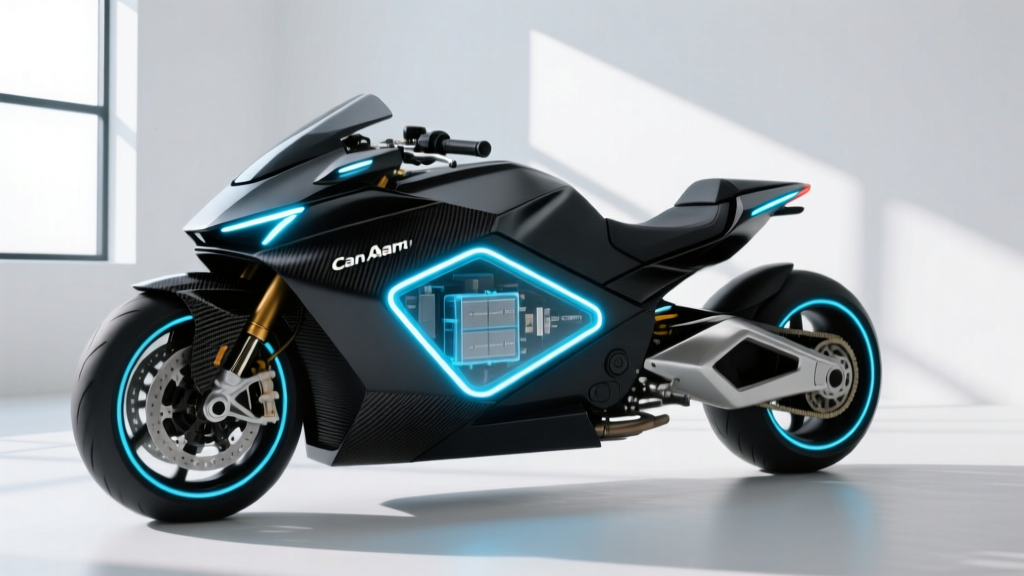
As of early 2026, there is no electric Can-Am Spyder available for purchase. BRP (Bombardier Recreational Products), the parent company, has confirmed plans to electrify its entire product lineup by 2026, including the Can-Am 3-wheel motorcycle range. However, no production electric Spyder has been announced with a release date, pricing, or specifications. BRP unveiled the Can-Am Origin and Pulse electric motorcycles (2-wheel) for 2026, but the 3-wheel Spyder platform remains gas-powered for now. If you need an electric 3-wheel motorcycle today, your closest alternatives are the Triac EV trike or converting a used Spyder — neither of which matches the Spyder's performance or refinement.
BRP's Electrification Roadmap: What We Know
BRP's commitment to electrification is real, but the timeline for a Can-Am Spyder EV specifically remains vague. In 2022, the company pledged to offer electric models in each of its product lines by the end of 2026. That pledge has materialized in some segments but not others.
What BRP Has Delivered So Far
- Can-Am Pulse (2026): A street-legal electric motorcycle with a liquid-cooled motor producing 47 HP, a 10.5 kWh battery (usable ~9 kWh), and an estimated city range of ~100 miles. MSRP starts around $13,999.
- Can-Am Origin (2026): A dual-sport electric motorcycle sharing the Pulse powertrain, tuned for off-road capability with longer suspension travel. MSRP ~$14,499.
- Alma e-Bike platform: BRP acquired the e-bike company and has integrated it into their electric portfolio.
The Pulse and Origin represent BRP's first production electric vehicles and use the company's new ROTAX E-POWER electric drivetrain. This platform is significant because it demonstrates BRP's capability in electric motorcycle engineering — but it is a 2-wheel architecture.
Why the Spyder Is a Harder EV Problem
The Can-Am Spyder is not a motorcycle in the traditional sense. It is a 3-wheel roadster (two wheels front, one rear — the "Y" configuration) that weighs between 800 and 1,000 lbs depending on the model. That mass, combined with the vehicle's performance expectations, creates engineering challenges that the lighter Pulse and Origin don't face:
- Weight and battery sizing: The gas Spyder F3 uses a 1,330cc Rotax triple producing 105 HP and achieves roughly 35 MPG combined. To replicate that performance electrically while maintaining acceptable range would require a battery pack likely in the 15–20 kWh range, adding 200–300 lbs.
- Range expectations: Spyder owners commonly tour 200+ miles per day. Even with a generous 20 kWh pack, real-world highway range at 70 mph would likely land around 100–130 miles before accounting for cold-weather losses of 15–25%.
- Charging logistics: A 20 kWh battery on a standard Level 2 (7.2 kW) charger would take roughly 3 hours for a full charge. DC fast charging on a motorcycle is still rare in public infrastructure — most public chargers are designed for cars, with cable routing and parking geometry that don't accommodate 3-wheelers well.
- Vehicle dynamics: The Spyder's stability control, ABS, and vehicle stability system (VSS) are calibrated around the weight distribution of the Rotax ICE. Shifting to a heavy battery pack low in the chassis changes the center of gravity and requires full recalibration.
According to BRP's investor communications, the company is investing over $1 billion in electrification across all product lines through 2026. But the Spyder's complexity likely places it later in the queue than simpler platforms like snowmobiles, personal watercraft, and 2-wheel motorcycles.
Current Gas Can-Am Spyder: 2026 Specs and Costs
Since the electric version doesn't exist yet, here's what you can actually buy today. The 2026 Can-Am Spyder lineup includes the F3, RT, and Ryker models, all powered by Rotax engines.
| Spec | Spyder F3-S | Spyder RT Limited | Ryker (900) |
|---|---|---|---|
| Engine | Rotax 1330 ACE (1,330cc I3) | Rotax 1330 ACE (1,330cc I3) | Rotax 900 ACE (899cc I2) |
| Horsepower | 105 HP | 105 HP | 77 HP |
| Transmission | SE6 semi-auto | SE6 semi-auto | CVT |
| Curb Weight | ~894 lbs | ~987 lbs | ~616 lbs |
| Fuel Capacity | 7.1 gal | 7.0 gal | 5.0 gal |
| Est. Combined MPG | ~35 MPG | ~32 MPG | ~40 MPG |
| Est. Total Range | ~248 mi | ~224 mi | ~200 mi |
| 0–60 mph (est.) | ~5.5 sec | ~6.2 sec | ~7.5 sec |
| Base MSRP | $19,999 | $29,299 | $10,499 |
Annual Operating Cost: Gas Spyder F3-S
For a rider putting on 5,000 miles per year (a reasonable estimate for a recreational roadster):
- Fuel: 5,000 mi ÷ 35 MPG × $3.75/gal = $536/year
- Oil changes: 2 per year at ~$80 each = $160/year
- Insurance: Varies widely; average $400–$800/year for a Spyder (source: NHTSA safety data and industry averages)
- Total estimated annual operating cost: ~$1,100–$1,500/year
What an Electric Spyder Would Cost to Own (Projected)
Based on the Pulse/Origin powertrain data and reasonable engineering extrapolations, here is what a hypothetical electric Spyder might look like financially. These are projections, not confirmed specs.
| Cost Category | Gas Spyder F3-S | Electric Spyder (Projected) |
|---|---|---|
| Fuel / Electricity | $536 | $175 (at $0.14/kWh, 4 mi/kWh) |
| Oil Changes | $160 | $0 |
| Brake Pad Replacement | $120 (every 2 yrs avg) | $60 (regen braking extends pad life) |
| Coolant / Fluids | $50 | $20 (fewer fluids) |
| Insurance (est.) | $600 avg | $650 avg (EV premium ~8% higher) |
| Annual Total | $1,466 | $905 |
| Annual Savings (EV) | ~$561/year | |
The fuel savings are meaningful but modest because the Spyder is a low-mileage recreational vehicle. At $561 in annual savings, it would take roughly 10–14 years to recoup a hypothetical $6,000–$8,000 EV price premium over the gas F3-S. The math favors gas unless you ride significantly more than 5,000 miles per year or electricity costs in your area are very low (e.g., solar-powered home charging).
Federal Tax Credit Considerations
Under current IRS §30D rules, the federal clean vehicle credit of up to $7,500 applies to new qualified plug-in electric vehicles. However, 3-wheel motorcycles occupy a complex classification space:
- The credit requires the vehicle to have four wheels to qualify as a "new clean vehicle" under §30D. Three-wheel vehicles like the Spyder are classified as motorcycles under federal law.
- A separate credit for 2- and 3-wheeled plug-in electric vehicles (IRC §30D(g), formerly §30D(e)) existed but expired and has had inconsistent renewal. Check current IRS guidance before assuming eligibility.
- Even if eligible, buyer income caps ($150K single / $300K joint), MSRP caps, and battery critical-mineral sourcing requirements apply.
Bottom line: Do not count on a federal tax credit for an electric 3-wheel Spyder unless Congress renews the 2/3-wheel EV credit specifically. Consult a tax professional for your situation.
Real Electric Alternatives to Consider Today
If the electric Can-Am Spyder is a must-have and you're willing to wait, that's your call. But if you want electric open-air motoring now, here are real options with confirmed specs:
Can-Am Pulse (2026) — BRP's Actual Electric Motorcycle
- Motor: ROTAX E-POWER, liquid-cooled, 47 HP (35 kW)
- Battery: ~10.5 kWh total (usable ~9 kWh), NMC chemistry
- Range: ~100 mi city / ~65 mi highway (estimated, not EPA-certified for motorcycles)
- Charging: Level 2 (J1772 adapter), ~1.5 hours 0–100% at 7.2 kW; DC fast charge capable (10–80% in ~20 min at ~30 kW peak)
- 0–60 mph: ~4.5 seconds (est.)
- MSRP: $13,999
- Trade-off: Two wheels, not three. No stability system. Requires a motorcycle endorsement.
Electric 3-Wheel Options (Limited Market)
- Arcimoto FUV (Forward Utility Vehicle): A tandem-seat electric 3-wheeler with ~75 mi range (at 45 mph), 75 mph top speed, and a ~$17,900 MSRP. Production has been intermittent — check current availability.
- ElectraMeccanica Solo: A single-seat electric 3-wheeler with 100 mi range and 80 mph top speed. Production status uncertain as of 2026.
- DIY EV conversion: Companies like EV West offer conversion kits, but converting a gas Spyder is complex, expensive ($10,000–$20,000+), and voids all factory warranties. Not recommended for most buyers.
Decision Framework: Should You Wait or Buy Now?
If/Then Buying Guide
- If you want an electric Can-Am Spyder specifically and can wait 2–4 years: Monitor BRP's official Can-Am site for announcements. Sign up for their newsletter and follow investor presentations for electrification updates.
- If you want a BRP electric vehicle now and accept 2 wheels: The 2026 Can-Am Pulse is a real, shipping product at $13,999. Test-ride one at a dealer and assess whether the ~65–100 mi range fits your riding patterns.
- If you need a 3-wheel roadster today and range flexibility matters: Buy the gas Spyder F3-S at $19,999 or the Ryker at $10,499. The refueling infrastructure for road trips is unmatched, and you won't face charging-desert anxiety on rural routes.
- If you want electric open-air fun and don't need 3 wheels: Consider the Zero SR/S (126 mi combined range, $23,995) or LiveWire ONE (146 mi city, $21,999) as proven electric motorcycles with dealer support.
- If you want a 3-wheel EV and don't mind low speed: The Arcimoto FUV or similar NEV-adjacent trikes offer electric 3-wheel motoring, but at city speeds only.
Common Misconceptions About an Electric Spyder
| Myth | Fact |
|---|---|
| "The electric Spyder is already available." | No production electric Spyder exists as of 2026. BRP has only announced electric 2-wheel motorcycles (Pulse and Origin). |
| "An electric Spyder would have 200+ miles of range." | Unlikely. Even with a large 20 kWh battery, highway range at 70 mph would be closer to 100–130 miles. The Pulse's 10.5 kWh pack achieves only ~65 mi on the highway. |
| "I'll get the $7,500 federal tax credit on an electric Spyder." | The §30D credit requires four wheels. 3-wheel vehicles are classified as motorcycles and fall under a separate (and currently expired) credit provision. |
| "I can charge an electric Spyder at any public charger." | Most DC fast charging stations are designed for cars. Cable length, parking space geometry, and connector height may not accommodate a 3-wheel roadster. Level 2 chargers are more accessible but slower. |
| "Electric means zero maintenance." | EVs eliminate oil changes and reduce brake wear, but still require tire replacement, suspension service, brake fluid checks, coolant service, and software updates. Budget $200–$400/year for non-fuel maintenance. |
What First-Time EV Buyers (of Any Vehicle) Should Know
Whether you're eyeing a future electric Spyder or a current EV car, these ownership realities apply universally:
Home Charging Is Non-Negotiable for Satisfaction
Public charging alone is viable but inconvenient. For a motorcycle or roadster, home Level 2 charging (240V, 7.2–11.5 kW) is the most practical setup. Installation costs vary:
- Level 2 charger (hardware): $300–$700
- Electrician installation (240V outlet + wiring): $500–$2,000 depending on panel capacity and distance
- Panel upgrade (if needed for 200A service): $1,500–$4,000
If you live in an apartment or lack garage/outdoor outlet access, an electric Spyder will be significantly less convenient than a gas model.
Cold Weather Reduces Range 15–30%
Lithium-ion batteries lose efficiency in cold temperatures. A hypothetical electric Spyder rated for 120 miles of range in 70°F weather might deliver only 85–100 miles at 30°F. If you ride in northern climates through shoulder seasons, plan for this loss.
Insurance Costs More for EVs (Usually)
Industry data shows EV insurance premiums run 8–15% higher than equivalent gas vehicles due to higher repair costs and battery replacement expense. For a $25,000+ electric Spyder, expect quotes in the $600–$900/year range depending on your riding history and state.
Frequently Asked Questions
When will the electric Can-Am Spyder be released?
BRP has not announced a release date for an electric Spyder. The company's 2026 electrification target has produced the Pulse and Origin electric motorcycles (2-wheel), but the 3-wheel Spyder platform has no confirmed EV timeline. A reasonable estimate, based on BRP's product cadence and engineering complexity, would be 2027–2029 at the earliest.
How much would an electric Can-Am Spyder cost?
No pricing has been announced. Based on the $13,999 Pulse (with a smaller battery) and the $19,999+ gas Spyder F3-S, a production electric Spyder would likely land in the $22,000–$28,000 range depending on battery size and trim. Larger battery packs for touring range would push the price higher.
Can I convert a gas Can-Am Spyder to electric?
Technically yes, but it is expensive, complex, and not recommended for most owners. An EV conversion requires removing the Rotax engine, SE6 transmission, and fuel system, then installing an electric motor, controller, battery pack, and charging system. Costs typically run $10,000–$25,000+ with no warranty, uncertain reliability, and potential registration/insurance complications. You also lose the Spyder's factory-calibrated stability and ABS systems.
Does the Can-Am Pulse count as a Spyder alternative?
Only if you're comfortable on two wheels. The Pulse is a conventional motorcycle with no third wheel, no vehicle stability system, and no reverse gear (the Spyder has all three). It's a compelling electric BRP product, but it serves a fundamentally different use case than the roadster-style Spyder.
What's the best 3-wheel vehicle I can buy that's electric?
The market for electric 3-wheelers is extremely limited in 2026. The Arcimoto FUV is the most established option, but it's a low-speed neighborhood vehicle, not a highway-capable roadster. There is currently no electric 3-wheel vehicle that matches the Can-Am Spyder's combination of performance, range, and touring capability.
Is BRP's stock a good bet on the electric Spyder?
That's a financial question outside our scope as an EV buyer's guide. We recommend consulting a licensed financial advisor and reviewing BRP's latest quarterly filings before making investment decisions.
Bottom Line
The electric Can-Am Spyder is one of the most anticipated vehicles in the 3-wheel community, and BRP's electrification investment suggests it will eventually arrive. But "eventually" is the operative word. No production model, no specs, no pricing, and no timeline have been confirmed for a battery-electric Spyder as of 2026.
If you need a 3-wheel roadster today, the gas Spyder lineup is excellent and will remain supported for years. If you want an electric BRP product now, the Pulse is real and available. And if you're set on an electric Spyder specifically, your best move is patience — and keeping your expectations grounded on range and price realities when it finally arrives.