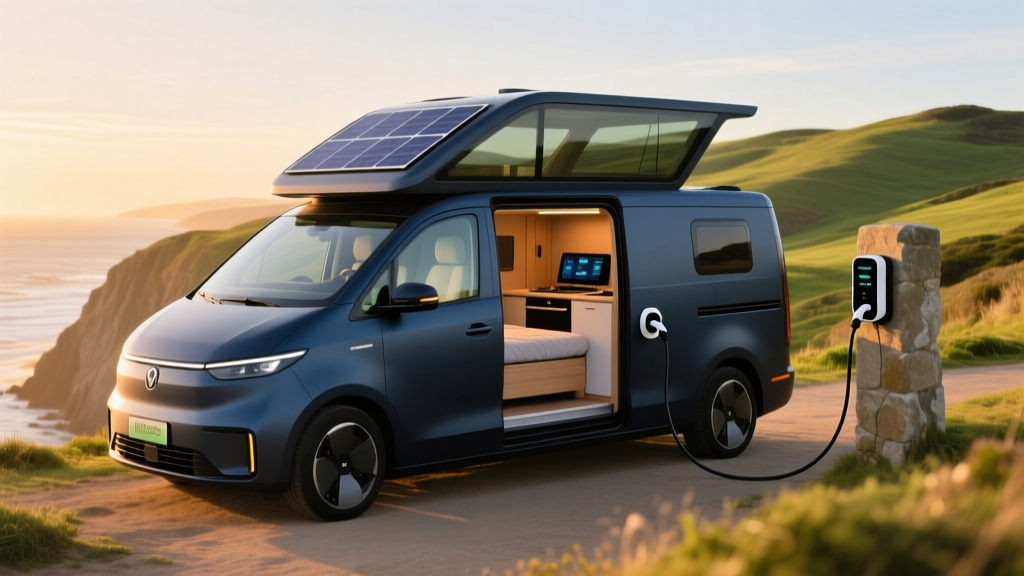
Quick Answer: Electric campervans in 2026 are viable for weekend trips, regional travel, and campground-hopping with shore power — but not yet for remote boondocking or cross-country vanlife. Expect 150–230 miles of real-world range (vs. 250–310 EPA), $55,000–$120,000+ purchase prices, and a heavy reliance on planned DC fast-charging stops or campground Level 2 outlets. If your trips stay within ~200 miles of home and you can charge overnight at destinations, an electric campervan delivers dramatically lower fuel and maintenance costs. If you frequently drive remote desert routes, tow heavy loads, or travel in sub-freezing weather, a gas or diesel van remains the more practical choice today.
The Current State of Electric Campervans
The electric campervan market in 2026 remains small but growing. Most offerings fall into two categories: factory-built electric vans from major automakers, and third-party conversions built on electric chassis like the Ford E-Transit or Mercedes-Benz eSprinter. Purpose-built electric RVs with full living amenities are still largely in the startup and concept phase, with companies like Winnebago, Thor, and Grounded Power Solutions leading limited production runs.
Here is what is actually available or in confirmed production for the 2026 model year:
| Model / Platform | Usable Battery (kWh) | EPA Range (mi) | Real-World Range* | Max DC Charge (kW) | 10–80% Time | Base MSRP (Van Only) |
|---|---|---|---|---|---|---|
| Ford E-Transit (148" WB, low roof) | 68 kWh (NMC) | 126 mi | 95–110 mi | 115 kW | ~45 min | ~$47,000 |
| Mercedes-Benz eSprinter (170" WB) | 113 kWh (NMC) | ~200 mi (est.) | 150–175 mi | 115 kW | ~42 min | ~$72,000 |
| BrightDrop Zevo 600 | 165 kWh (NMC) | ~250 mi | 190–220 mi | 120 kW | ~50 min | Fleet only |
| Winnebago e-RV (E-Transit based) | 68 kWh (NMC) | 108 mi (loaded) | 80–95 mi | 115 kW | ~45 min | ~$125,000 (announced) |
| Thor Project T (concept eSprinter) | 113 kWh (NMC) | ~170 mi (loaded est.) | 130–155 mi | 115 kW | ~42 min | TBD (announced) |
*Real-world range accounts for added conversion weight (typically 2,000–4,000 lbs of cabin build-out, water tanks, batteries for house systems), highway speeds of 65–75 mph, and moderate climate control use. Cold weather (below 32°F) can reduce these figures by an additional 20–30%.
The critical takeaway: adding a campervan conversion to an electric van chassis significantly reduces range. A fully loaded conversion with a galley, bed platform, water system, and auxiliary house battery can add enough weight to cut EPA range by 15–25%. This is the single biggest factor separating electric campervan ownership from a stock electric van.
Electric Campervan vs. Gas Van: The Numbers
The most common comparison buyers face is between an electric van platform and a traditional gas-powered alternative like the Ford Transit (3.5L EcoBoost V6) or the Mercedes-Benz Sprinter (2.0L turbo gas or 3.0L diesel). Here is how the economics stack up for a typical campervan conversion used 8,000 miles per year:
| Factor | Electric (eSprinter Conversion) | Gas (Sprinter 2.0T Conversion) | Diesel (Sprinter 3.0L Conversion) |
|---|---|---|---|
| Base Van MSRP | ~$72,000 | ~$48,000 | ~$55,000 |
| Typical Conversion Cost | $30,000–$55,000 | $25,000–$50,000 | $25,000–$50,000 |
| Total Build Cost | $102,000–$127,000 | $73,000–$98,000 | $80,000–$105,000 |
| Fuel / Energy Cost per Mile | $0.08–$0.14 (home/public mix) | $0.18–$0.22 | $0.16–$0.20 |
| Annual Fuel/Energy (8,000 mi) | $640–$1,120 | $1,440–$1,760 | $1,280–$1,600 |
| Annual Maintenance | $200–$400 | $800–$1,200 | $900–$1,400 |
| 5-Year Fuel + Maintenance | $4,200–$7,600 | $11,200–$14,800 | $10,900–$15,000 |
| EPA Efficiency | ~1.8–2.2 kWh/mi (loaded) | ~14–16 MPG (loaded) | ~17–19 MPG (loaded) |
The math: An electric campervan saves roughly $1,000–$1,500 per year in fuel and maintenance compared to gas or diesel. Over five years, that totals $5,000–$7,500 in savings. However, the upfront cost premium of $20,000–$35,000 means the payback period on fuel savings alone is 13–35 years — far longer than most owners will keep the vehicle. The electric campervan purchase is driven by environmental values, quieter operation, campground compatibility, and lower day-to-day running costs, not by pure financial payback.
Charging Logistics: Where the Rubber Meets the Road
Charging is the make-or-break factor for electric campervan ownership. Unlike passenger EVs, campervans face unique constraints: they are tall (many DC fast-charger canopies have clearance issues at 9+ feet), heavy (which slows charging curves), and often travel to areas with limited charging infrastructure.
Charging Speeds and What They Mean for Vanlife
| Level | Power (kW) | Miles Added per Hour (Loaded Van) | Where You Find It | Practical Use |
|---|---|---|---|---|
| Level 1 (120V) | 1.0–1.4 kW | ~2–3 mi/hr | Any standard outlet | Emergency trickle; not viable for daily use |
| Level 2 (240V, 32A) | 7.7 kW | ~17–20 mi/hr | Campgrounds, home, RV parks (NEMA 14-50) | Overnight charging: ~6–8 hrs for full charge |
| Level 2 (240V, 48A) | 11.5 kW | ~25–30 mi/hr | Home hardwired, some public stations | Overnight: ~5–6 hrs for full charge |
| DC Fast Charge | 115 kW peak | ~130–150 mi in 30 min (10–60%) | Electrify America, EVgo, Tesla Supercharger (with adapter) | Road-trip pit stops; tapers heavily above 80% |
Critical charging-curve reality: The eSprinter and E-Transit both peak at around 115 kW, but this rate is only sustained between roughly 15–55% state of charge. Above 60%, the curve tapers sharply — charging from 80–100% can take as long as 10–80%. Plan road-trip stops around 10–70% charges for the fastest turnaround. A 30-minute DC fast-charge stop typically adds 80–110 real-world miles of range in a loaded van, not the 150+ miles some marketing materials imply.
The Campground Charging Advantage
Most developed campgrounds and RV parks offer 30-amp or 50-amp 240V outlets (NEMA 14-50 or TT-30). This is a genuine advantage for electric campervans: plug in at your site overnight and wake up with a full battery. At a 50-amp / 240V hookup delivering ~11.5 kW, an eSprinter with a 113 kWh battery charges from 10–100% in roughly 9 hours. The catch: these outlets are designed for RV house systems, and some older campgrounds have circuits that cannot sustain full amperage. Always carry a portable EVSE with multiple adapter plugs (14-50, 14-30, TT-30, 5-15) and verify amperage before setting your charge rate.
Public DC Fast Charging Challenges
Not all DC fast-charging stations accommodate large vans. Common issues include:
- Canopy clearance: Many Electrify America and EVgo stations have canopies with 7–8 foot clearance. The eSprinter (high roof) is 115.5 inches tall — nearly 10 feet. Look for pull-through or open-air stations.
- Cable reach: Charge ports on the E-Transit (front grille) and eSprinter (front grille/driver side) may require specific parking orientation. Short cables at some stations make this difficult.
- Station reliability: According to J.D. Power's EV Experience Index, public DC charging satisfaction remains below 650 out of 1,000 points nationally. Plan backup charging stops on long routes.
Real-World Ownership Considerations
Before committing to an electric campervan, honestly assess these factors:
Home Charging Access
You will need a dedicated Level 2 home charger to make electric campervan ownership practical. A NEMA 14-50 outlet on a 50-amp circuit, installed near your parking spot, typically costs $800–$2,500 installed by a licensed electrician (before any potential panel upgrade, which can add $1,500–$4,000 if your home has a 100-amp service). If you live in an apartment, rely on street parking, or lack a garage/driveway, daily electric van ownership becomes significantly harder.
Climate Impact
Cold weather is an electric campervan's biggest enemy. NMC lithium-ion batteries lose 20–30% of usable range at temperatures below 20°F, and running cabin heat (which draws 2–5 kW continuously) compounds the loss. If you plan to ski-camp in Colorado in January or winter in the Pacific Northwest, expect real-world range of 100–130 miles from an eSprinter that delivers 170 miles in mild weather. A heat pump (available on some configurations) mitigates this by 5–10% but does not eliminate cold-weather range loss.
Weight and Payload
Electric van chassis are already heavy — the E-Transit has a curb weight of ~5,800 lbs and a GVWR of 9,500 lbs, leaving roughly 3,700 lbs of payload for conversion. A full campervan build (insulation, cabinetry, bed, water tanks, house battery, solar panels, propane system) can easily consume 2,500–3,500 lbs. This leaves very little margin for passengers, gear, and groceries. Overloading not only reduces range further but can void the chassis warranty. The eSprinter offers more payload headroom with its heavier-duty chassis.
House Battery vs. Traction Battery
Electric campervans require two battery systems: the traction battery (68–165 kWh) that propels the van, and a separate house battery (typically 200–400 Ah / 2.5–5 kWh LFP) that powers lights, fridge, outlets, and appliances. These systems are independent. The house battery charges from solar panels (200–600W typical), a DC-DC charger drawing from the traction battery while driving, or shore power. Do not confuse the two — running your house systems does not drain your driving range (unless you are using a DC-DC charger to top up the house battery from the traction pack while stationary, which is inefficient and generally not recommended).
Federal Tax Credits and Incentives
The IRS §30D Clean Vehicle Credit applies to qualifying new electric vans, but campervan buyers face specific nuances:
- Vehicle classification: Vans like the E-Transit and eSprinter qualify as light-duty trucks (GVWR under 14,000 lbs), making them eligible for up to $7,500 in federal tax credits — $3,750 for critical minerals + $3,750 for battery components, subject to sourcing requirements.
- MSRP cap: Vans/trucks/SUVs must have an MSRP below $80,000. A stock E-Transit (~$47,000) qualifies. A fully converted campervan priced at $125,000 may exceed the cap depending on how the manufacturer classifies the sale.
- Buyer income limits: Modified AGI must be below $150,000 (single) or $300,000 (joint) to claim the credit.
- Battery sourcing: As of 2026, increasing percentages of critical minerals and battery components must be sourced from the U.S. or FTA partners. Check the fueleconomy.gov tax credit lookup for specific model eligibility before purchasing.
- Point-of-sale transfer: You can transfer the credit to the dealer at purchase, reducing your out-of-pocket cost immediately — even if your tax liability is less than the credit amount.
- Commercial vehicles: Vans purchased for business use (e.g., mobile workspace, commercial tours) may qualify under §45W instead of §30D, with different rules. Consult a tax professional.
Tax credit eligibility changes frequently. Always verify current-year rules with the IRS and a qualified tax advisor before making a purchase decision.
Decision Framework: Is an Electric Campervan Right for You?
Choose an electric campervan if:
- Your typical trips are under 200 miles round-trip, or you plan routes around DC fast chargers and campgrounds with shore power
- You have reliable Level 2 home charging (garage or driveway with 240V access)
- You prioritize quiet, emission-free operation at campgrounds (no generator noise, no idling)
- You value lower per-mile energy costs ($0.08–$0.14/mi vs. $0.18–$0.22/mi for gas)
- You can absorb the $20,000–$35,000 upfront cost premium over a gas van
- You travel primarily in mild-to-warm climates, or accept significant winter range reduction
Stick with a gas or diesel campervan if:
- You frequently boondock in remote areas far from charging infrastructure (BLM land, national forests, desert routes)
- You need 300+ miles of range without planning stops (cross-country road trips, seasonal migrations)
- You tow a trailer (electric vans lose 30–50% of range when towing — an already limited range becomes impractical)
- You lack home charging access and cannot install a Level 2 outlet
- You travel in extreme cold (below 20°F) regularly and need reliable range
- Your budget is under $80,000 total for van + conversion
Common Misconceptions About Electric Campervans
| Myth | Fact |
|---|---|
| "You can go off-grid forever with solar panels on the roof." | Typical van roof solar (400–600W) generates 1.5–3 kWh per day in good sun — enough for house systems (lights, fridge, phone charging) but nowhere near enough to recharge the 68–113 kWh traction battery. Solar extends house battery life, not driving range. |
| "Electric vans are cheaper overall." | Lower operating costs are real, but the $20,000–$35,000 purchase premium means total cost of ownership breaks even only after 13+ years of typical use. The savings are real but modest relative to the upfront investment. |
| "You can charge at any RV park." | Most RV parks have 30A or 50A outlets designed for RV house systems. These work for EV charging with the right adapter, but older parks may have degraded wiring, shared circuits, or 120V-only (TT-30) hookups that charge painfully slowly. |
| "The battery will need expensive replacement." | Ford and Mercedes-Benz warranty their EV batteries for 8 years / 100,000 miles with a capacity retention threshold of 70%. Real-world NMC degradation data from commercial fleets suggests 10–15% capacity loss over 100,000 miles. Replacement, if needed out of warranty, runs $12,000–$20,000 — a real but infrequent cost. |
| "Electric campervans can tow like gas vans." | The E-Transit has a max towing rating of 7,500 lbs, and the eSprinter can tow up to 7,500 lbs in some configurations — but towing at capacity reduces range by 30–50%. A 170-mile eSprinter may deliver only 85–110 miles while towing a 3,500-lb trailer. |
The Bottom Line
Electric campervans in 2026 occupy a narrow but real niche. They excel for regional travel, campground-to-campground touring with shore power access, and owners who value silent, fume-free camping and lower per-mile costs. They fall short for remote boondocking, cold-weather touring, towing, and buyers on a tight budget. The technology is improving — the eSprinter's 113 kWh battery and 200-mile range is a meaningful step forward from the E-Transit's 126-mile EPA figure — but the fundamental constraints of weight, range, and charging infrastructure mean that gas and diesel vans remain the default choice for most vanlife builds today.
If you are seriously considering an electric campervan, start by mapping your three most common trips on a charging-network app (PlugShare, A Better Routeplanner) and see whether viable charging exists along each route. If the answer is yes for all three, an electric build may work. If even one route has a 100+ mile gap without charging, think twice.
Frequently Asked Questions
Can I convert a gas van to electric myself?
Technically yes, but it is extremely expensive and complex. Professional EV conversion shops charge $50,000–$100,000+ to swap a gas powertrain for an electric motor and battery pack, and the result often lacks the thermal management, regenerative braking, and warranty support of a factory electric van. For most buyers, starting with an E-Transit or eSprinter chassis is far more practical and cost-effective.
How long does it take to charge an electric campervan at a campground?
At a 50-amp / 240V RV hookup delivering ~11.5 kW, expect 9–10 hours for a full charge on a 113 kWh eSprinter battery, or 5–6 hours on a 68 kWh E-Transit. Most vanlifers plug in upon arrival and charge overnight. At a 30-amp hookup (~7.2 kW), add roughly 50% more time.
Do electric campervans qualify for the $7,500 federal tax credit?
The underlying van chassis may qualify if it meets all §30D requirements (MSRP under $80,000 for trucks/vans, buyer income limits, battery sourcing rules). However, a completed campervan conversion sold as a single unit at $100,000+ may exceed the MSRP cap. The classification depends on how the manufacturer or converter structures the sale. Always verify specific vehicle eligibility on fueleconomy.gov and consult a tax professional.
What happens if the traction battery runs out in a remote area?
Unlike a gas van where you can carry a spare fuel can, a depleted EV traction battery requires a flatbed tow to the nearest charger. Roadside assistance coverage (included for 5 years / 60,000 miles with Ford and Mercedes-Benz) typically covers out-of-charge towing. Plan routes with a 20–30% range buffer, especially in areas with sparse charging.
Can solar panels on the van roof charge the driving battery?
Not in any practical sense. A typical van-roof solar array (400–600W) produces roughly 2–3 kWh per day of usable energy. Recharging a 113 kWh battery at that rate would take 38–57 days of full sun. Roof solar on a campervan is for house systems — lights, fridge, fans, device charging — not for extending driving range.